Little bluestem 'The Blues'
Schizachyrium scoparium 'The Blues'. Family Poaceae. Ornamental grass.
Also called Schizachyrium scoparium 'The Blues', 'The Blues' little bluestem.
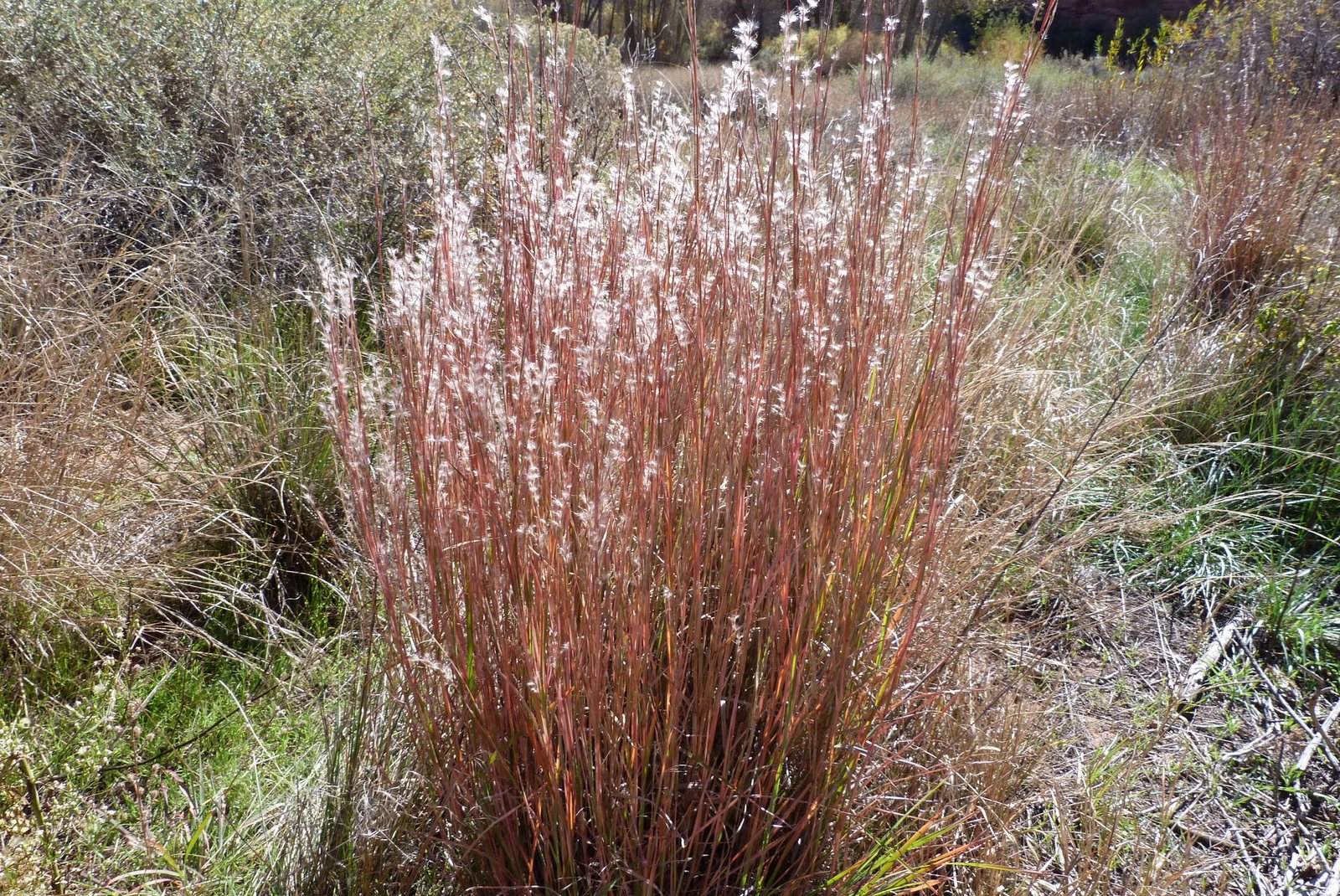
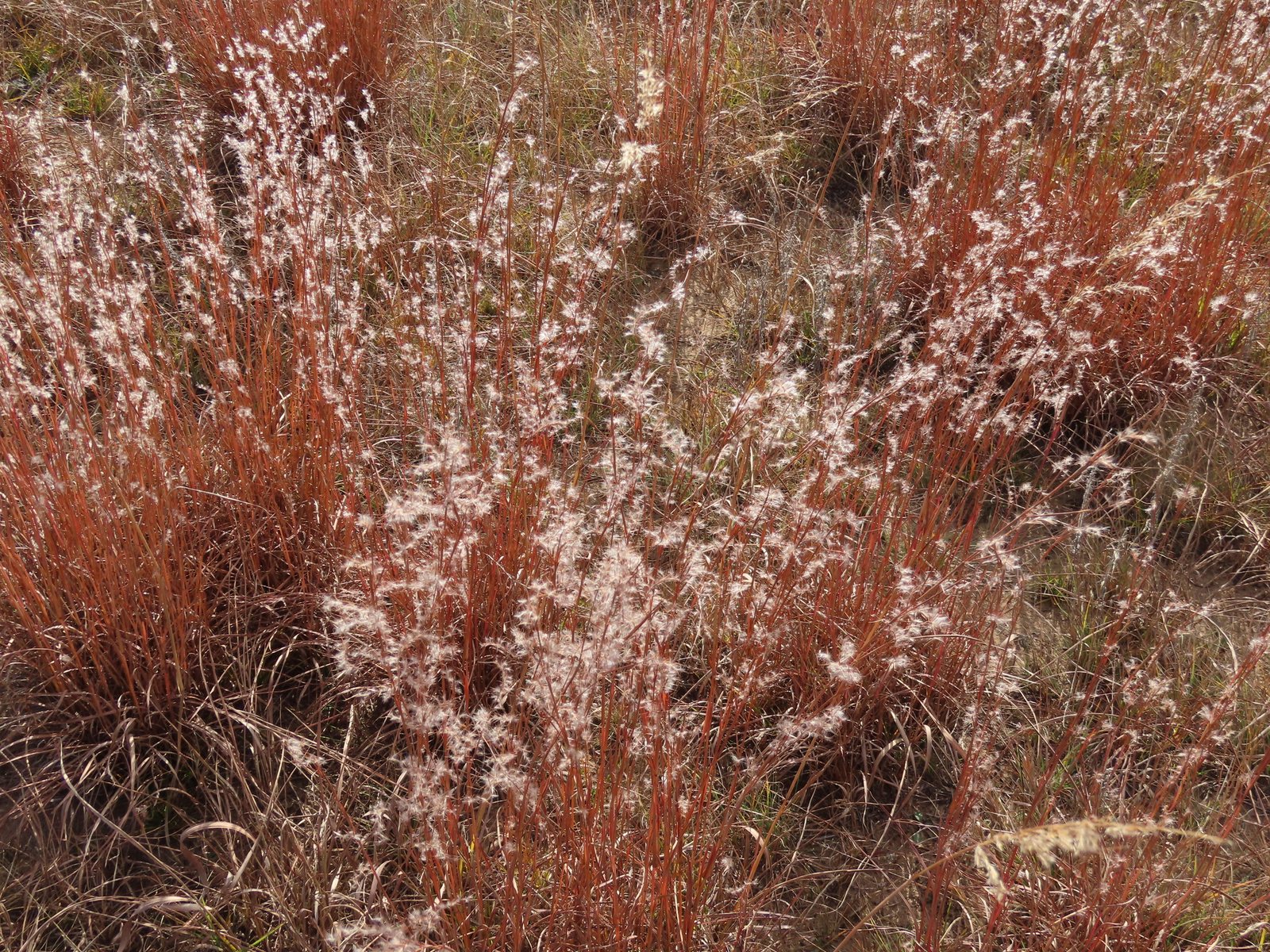
'The Blues' is a clump-forming, warm-season perennial grass selected for its strongly blue foliage, which turns orange, burgundy and reddish purple in autumn. Gardeners grow it for its upright texture, drought tolerance and seed heads that remain attractive through winter.
At a glance
- Sun
- Full sun; shade weakens the stems and reduces foliage colour.
- Water
- Water regularly during the first growing season, letting the soil dry between waterings. Established plants tolerate drought and usually need watering only during prolonged dry spells.
- Soil
- Well-drained soil, including sandy, gravelly or rocky ground. Tolerates clay if it drains freely; avoid wet winter soil and rich, heavily fertilised beds.
- Height
- 2-3 ft (0.6-0.9 m)
- Spread
- 1.5-2 ft (0.45-0.6 m)
- Flowers
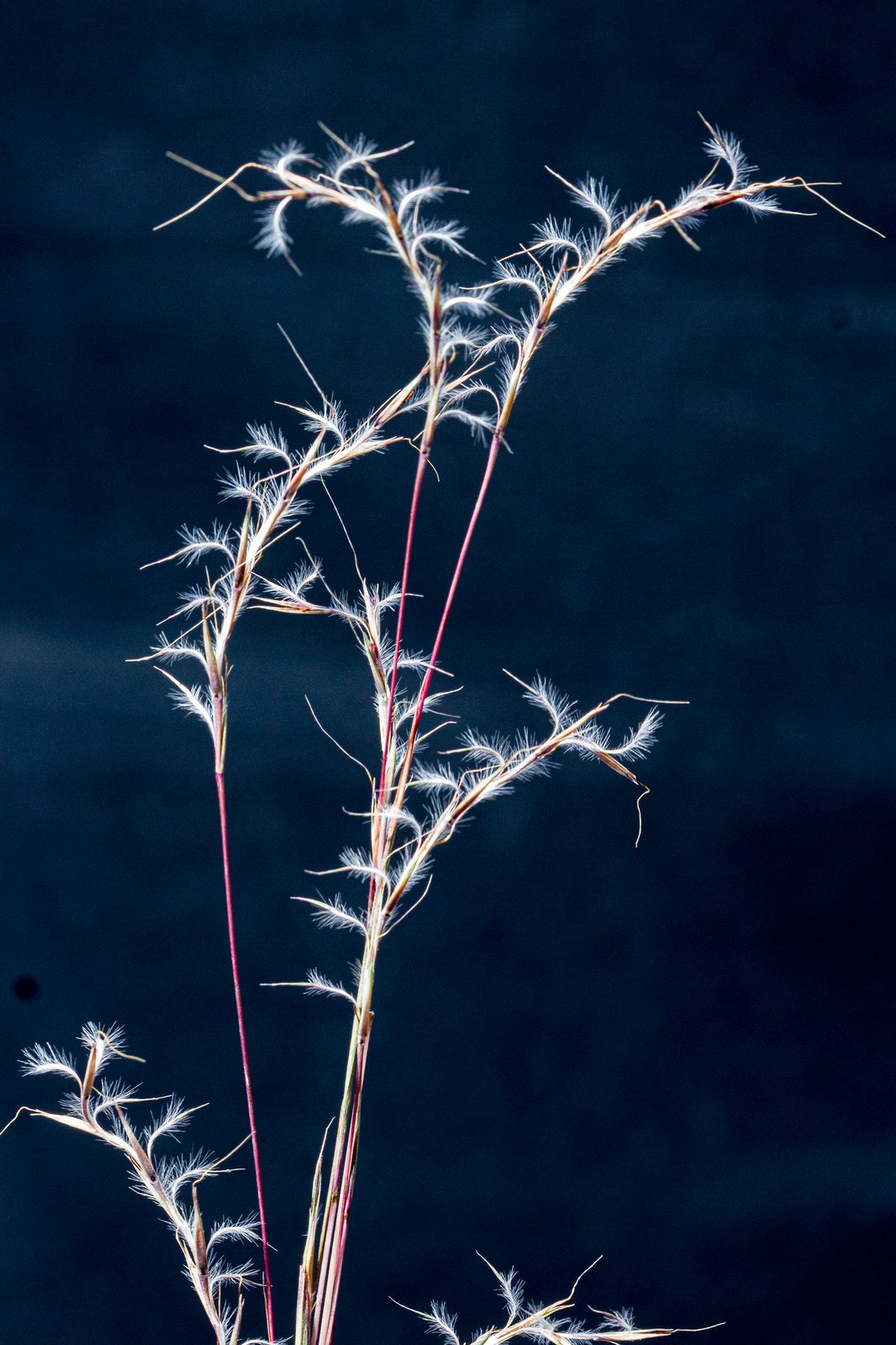
- Late summer to autumn; small purplish-bronze flowers develop into fluffy, silvery-white seed heads.
- Foliage
- Narrow, upright, powder-blue to blue-green leaves, often with purple tints; orange, burgundy and reddish purple in autumn, fading to tan in winter.
- Growth
- Moderate; starts growing relatively late in spring and grows most actively in warm weather.
- Care needed
- Low
The year at a glance
- Deer resistant
- Drought tolerant
- Cold hardy
- Heat tolerant
- Wildlife
| J | F | M | A | M | J | J | A | S | O | N | D | |
|---|---|---|---|---|---|---|---|---|---|---|---|---|
| Flowers | ||||||||||||
| Fruit | ||||||||||||
| Plant |
Northern hemisphere months. In Australia, shift them by six.
- Difficulty
- Easy
- Toughness
- Very tough
Will it suit your garden?
Pick your zone, country, light and whether you have pets.
Full sun is 6 or more hours of direct sun a day, part shade 3 to 6 hours, shade under 3.
How it grows
Planting day
1.1 ft (0.35 m)
After 1 year
1.7 ft (0.51 m)
After 2 years
2.2 ft (0.67 m)
After 3 years
2.5 ft (0.75 m)
full size
About 3 years to full size.
From a typical nursery size, at an average rate for this kind of plant. A rule of thumb, not a forecast.
Good to know
- Cats and dogs
- Safe
- Native to
- the US and Canada
- Growth rate
- Moderate
Care
Jobs through the year
- WaterApr–May, Sep–Oct, every 28 days
- Water established ground-grown clumps only in prolonged drought; water young plants when the root zone dries.
- WaterJun–Aug, every 21 days
- Soak established clumps only during extended drought; let soil dry between waterings and water new plants more often.
- PruneFeb–Mar
- Cut standing stems to 8–15 cm before new shoots lengthen.
- DivideApr–May
- Divide only oversized clumps or those with dead centres as spring growth begins.
- DeadheadSep–Oct
- Remove seed heads before shedding only if seedlings are troublesome; otherwise leave them for wildlife.
- Water new plants deeply when the root zone dries; reduce watering once established.
- Do not routinely fertilise; rich feeding encourages floppy growth.
- Keep mulch away from the crown, especially in damp climates.
- Avoid staking by providing full sun and lean soil.
- Divide in spring if the centre dies out or the clump becomes too large.
Pruning. Leave the dry stems standing through winter, then cut the clump to 3-6 in (8-15 cm) above ground in late winter or early spring, before new shoots lengthen. Take care not to cut emerging green growth.
Through the year
- Late winter
- Enjoy the standing seed heads, then cut back before spring growth begins.
- Spring
- Plant or divide once the soil is workable and beginning to warm.
- Late spring
- Check for new growth; this warm-season grass emerges later than many border perennials.
- Summer
- Water young plants during dry weather; avoid feeding established clumps.
- Late summer
- Leave flowers to develop into silvery seed heads.
- Autumn
- Leave coloured foliage and stems standing for winter structure and wildlife.
In the garden
- Repeat small groups through sunny borders with coneflowers and asters for blue summer foliage and warm autumn colour.
- Plant in prairie-style drifts with other clumping grasses and drought-tolerant perennials.
- Use in gravel gardens where lean soil helps keep the stems upright.
- Place where low autumn or winter sunlight can shine through the fluffy seed heads.
- Use as a low, informal edging along broad sunny paths, allowing room for the mature clumps.
Garden styles it suits: Native meadow, New perennial (prairie), Midwest prairie, Dry gravel garden, Low-maintenance and Winter interest.
Plant it with: Purple coneflower, Butterfly milkweed, Prairie dropseed, Rattlesnake master, Black-eyed Susan and Aromatic aster.
Wildlife: In its native North American range, little bluestem supports several grass-feeding skipper butterfly caterpillars. Seeds feed small birds, and standing clumps provide winter cover for insects and other small wildlife. Flowers are wind-pollinated rather than a nectar source.
Problems to watch for
- Flopping stems: usually caused by shade, rich soil or excessive watering; move to full sun, stop feeding and reduce irrigation.
- Crown rot in wet soil: improve drainage or move the plant to a raised, freely draining position; replace badly rotted clumps.
- Unwanted seedlings: remove seedlings while small, or cut off seed heads before they shed if self-seeding becomes troublesome.
Safety
Not known to be toxic to cats, dogs, horses or people. No part is recognised as poisonous; eating coarse leaves may still cause minor digestive irritation in pets.
Easily confused with
Big bluestem (Andropogon gerardii)
Usually much taller, with broader leaves and distinctive seed heads divided into several finger-like branches.
Switchgrass (Panicum virgatum)
Has broader leaves and open, airy, branching flower panicles rather than narrow flowering stems with fluffy seed clusters.
Broomsedge (Andropogon virginicus)
Often has straw-orange winter stems and fluffy seeds, but its leaves are usually green rather than strongly blue, and its flowering stems have conspicuous enclosing leaf sheaths.
The name
Little bluestem refers to the bluish lower stems and its smaller size compared with big bluestem; 'The Blues' refers to this cultivar's blue foliage.
Propagation. Divide established clumps in spring as growth begins, keeping roots and live shoots on each division. Division preserves 'The Blues'; seedlings may differ in colour and habit and should not be labelled as this cultivar.
Checked against open data
- Accepted botanical name
- Schizachyrium scoparium
- In the US and Canada
- Native in Canada and the lower 48 states. Introduced in Hawaii.
- Native range
- Alabama, Alberta, Arkansas, British Columbia, California, Colorado, Connecticut, Delaware, District of Columbia, Florida, Georgia and Idaho.
- Measured
- Soil pH 5.5 to 8.4. Average height 41 cm.
Sources: GBIF (CC BY 4.0), USDA PLANTS and Trefle (CC BY 4.0). The care and design notes are LandscapeGPT's own.
See it in your own yard.
Upload a photo of your yard and see it redesigned with plants that suit your climate, each checked against your zone.