Longleaf pine
Pinus palustris. Family Pinaceae. Tree.
Also called Southern yellow pine, Longstraw pine.
Longleaf pine is a large evergreen native to the southeastern United States, grown for its long, soft-looking needles, upright trunk and open crown. It suits spacious gardens with hot summers and freely draining soil; young plants may spend several years as a low tuft before beginning strong upward growth. It is generally unsuitable for small gardens, and growth can be disappointing in cool-summer climates.
At a glance
- Sun
- Full sun; avoid shade from buildings or other trees.
- Water
- Water regularly during establishment, allowing the soil to drain between soakings. Established trees tolerate drought on suitable soils.
- Soil
- Acidic, freely draining sandy or sandy-loam soil is best. Tolerates low fertility but struggles in waterlogged, compacted or strongly alkaline ground.
- Height
- 60-100 ft (18-30 m)
- Spread
- 25-40 ft (7.5-12 m)
- Foliage
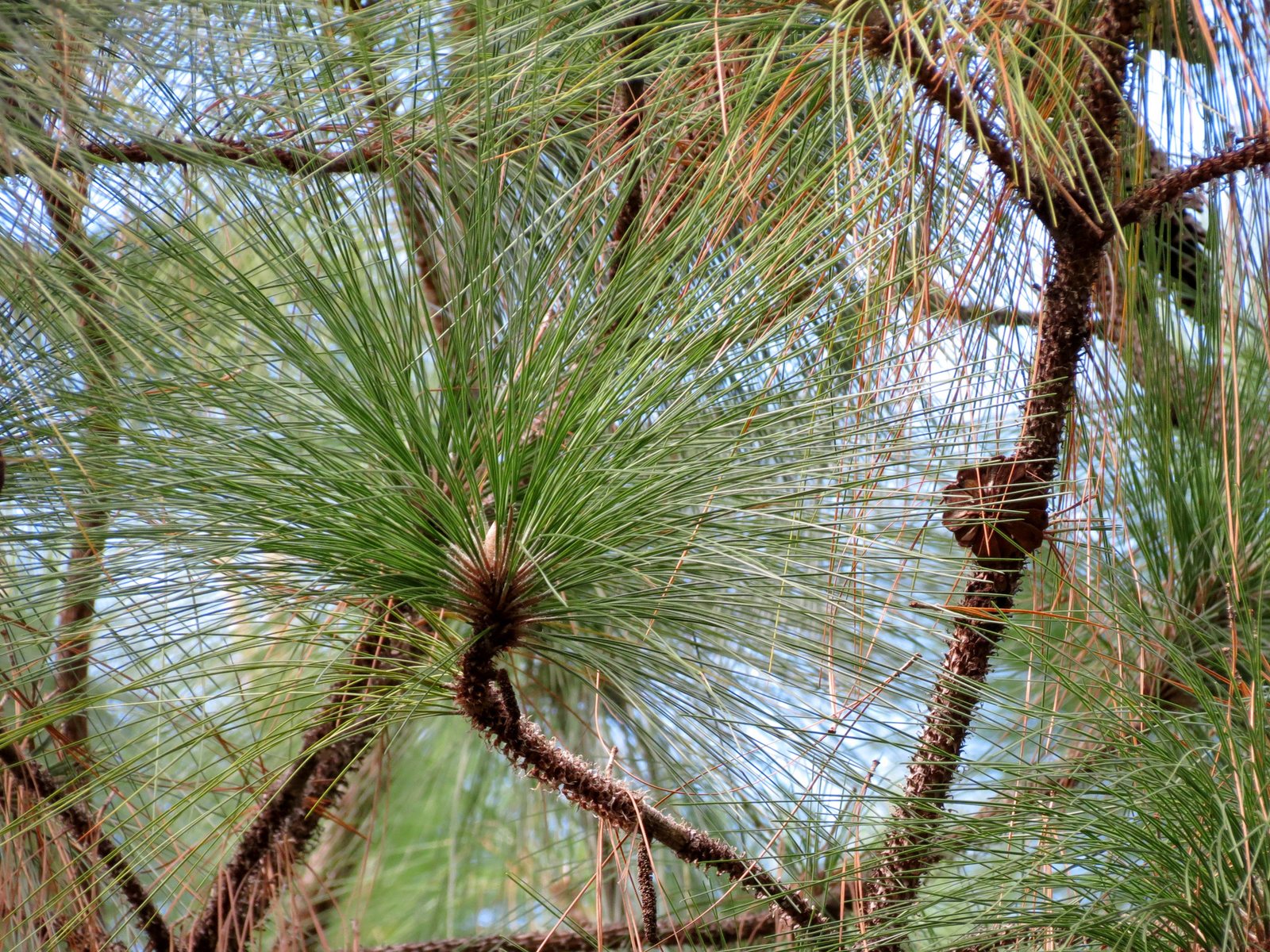
- Evergreen, yellow-green to dark green needles, usually in bundles of three, 8-18 in (20-45 cm) long and clustered toward branch tips.
- Growth
- Slow during the juvenile grass stage, which can last several years; moderate to fast upward growth once established.
- Care needed
- Low
The year at a glance
- Drought tolerant
- Heat tolerant
- Wildlife
| J | F | M | A | M | J | J | A | S | O | N | D | |
|---|---|---|---|---|---|---|---|---|---|---|---|---|
| Fruit | ||||||||||||
| Plant |
Northern hemisphere months. In Australia, shift them by six.
- Difficulty
- Moderate
- Toughness
- Fairly tough
Will it suit your garden?
Pick your zone, country, light and whether you have pets.
Full sun is 6 or more hours of direct sun a day, part shade 3 to 6 hours, shade under 3.
How it grows
Planting day
9 ft (2.9 m)
After 1 year
13 ft (3.9 m)
After 2 years
16 ft (5 m)
After 3 years
20 ft (6 m)
After 5 years
27 ft (8.2 m)
About 20 years to full size.
From a typical nursery size, at an average rate for this kind of plant. A rule of thumb, not a forecast.
Good to know
- Cats and dogs
- Mildly toxic: may upset a stomach
- Native to
- the US
- Growth rate
- Moderate
Care
Jobs through the year
- WaterApr–May, Sep–Oct, every 28 days
- Water established trees only during prolonged drought; young trees need more frequent deep watering.
- WaterJun–Aug, every 21 days
- Deep-water established trees only in extended drought; water regularly during the first two summers.
- PruneFeb
- Remove only minor dead or damaged branches in dry weather; preserve the central leader.
- MulchApr
- Maintain a light mulch over weed-free soil, leaving the trunk and seedling central bud exposed.
- ProtectJan–Feb, Oct–Dec
- Keep grass-stage buds free of leaves and mulch; shelter young trees from severe cold at the range margin.
- Plant a small, container-grown tree in its permanent position; avoid disturbing or bending its deep developing root.
- Keep the root collar at ground level and the central bud exposed, especially on grass-stage seedlings.
- Water deeply through dry spells during the first two growing seasons, without keeping the soil constantly wet.
- Keep grass and weeds away from young trees; use a light mulch layer clear of the trunk and central bud.
- Do not routinely fertilise; investigate soil conditions before feeding a poorly growing tree.
Pruning. Prune only to remove dead, damaged or badly placed branches, preferably in late winter during dry weather. Preserve the central leader, never top the tree, and use a qualified arborist for large branches.
Through the year
- Late autumn
- In mild climates, plant small container-grown trees while the soil is workable and drainage is good.
- Late winter
- Inspect the leader and branches; remove minor dead or damaged growth without cutting into the branch collar.
- Spring
- Plant in colder parts of its range and clear competing weeds from around young trees.
- Summer
- Water establishing trees deeply during dry spells and check young needles for spotting or premature browning.
- Autumn
- Check mulch depth and keep accumulated needles away from the central bud of grass-stage seedlings.
In the garden
- Use as a specimen in a large, sunny lawn where its mature crown has room to develop.
- Plant in loose groups to create an open pine woodland with grasses and low native shrubs beneath.
- Combine with little bluestem, wiregrass and flowering perennials in southeastern US native landscapes.
- Use on freely draining sandy sites for year-round structure and a high, lightly shading canopy.
Garden styles it suits: Southern, Woodland, Wildlife garden, Native meadow, Grand estate and Coastal.
Plant it with: Wiregrass, Little bluestem, Butterfly weed, Dwarf palmetto, Yaupon holly and American beautyberry.
Wildlife: Seeds feed birds and small mammals, and mature trees provide nesting and roosting sites. In its native range, old living pines can support endangered red-cockaded woodpeckers, although suitable cavity trees take many decades to develop.
Problems to watch for
- Brown spot needle blight can repeatedly brown needles and delay growth in grass-stage seedlings. Provide full sun and good airflow, avoid overhead watering, and seek local advice if damage recurs.
- Waterlogged soil causes root decline and poor establishment. Choose a naturally well-drained site rather than trying to correct a wet planting hole with gravel.
- Pine bark beetles may attack stressed trees, causing fading crowns, resin deposits and boring dust. Avoid trunk injury and severe drought stress; have suspected attacks assessed promptly by an arborist.
- Grass-stage seedlings can be smothered by turf, weeds or deep mulch. Keep the central bud exposed and maintain a weed-free area around the plant.
Safety
Not known to be poisonous to people, cats, dogs or horses, but species-specific safety information is limited. Needles, cones and resin are not food; chewing or swallowing them can cause mouth or digestive irritation, and swallowed material can cause a blockage.
Easily confused with
Slash pine (Pinus elliottii)
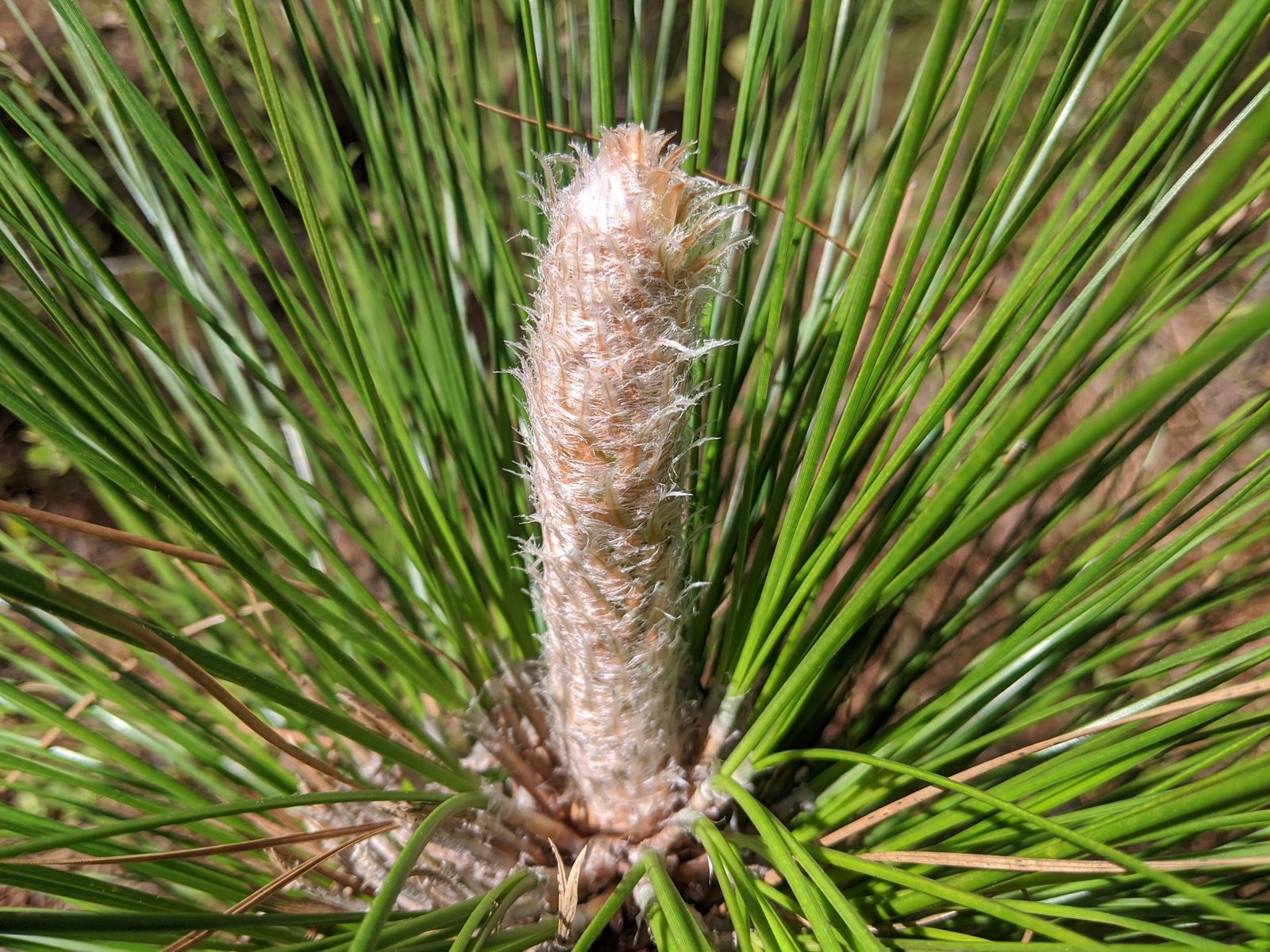
Usually has needles in bundles of two or three and smaller cones. Longleaf pine usually has three longer needles per bundle and conspicuous silvery-white terminal buds.
Loblolly pine (Pinus taeda)
Also usually has three needles per bundle, but its needles and cones are shorter. Its terminal buds lack the large, silvery-white appearance typical of longleaf pine.
The name
The common name refers to its exceptionally long needles, while the Latin palustris means 'of marshes', despite the tree's strong association with well-drained uplands.
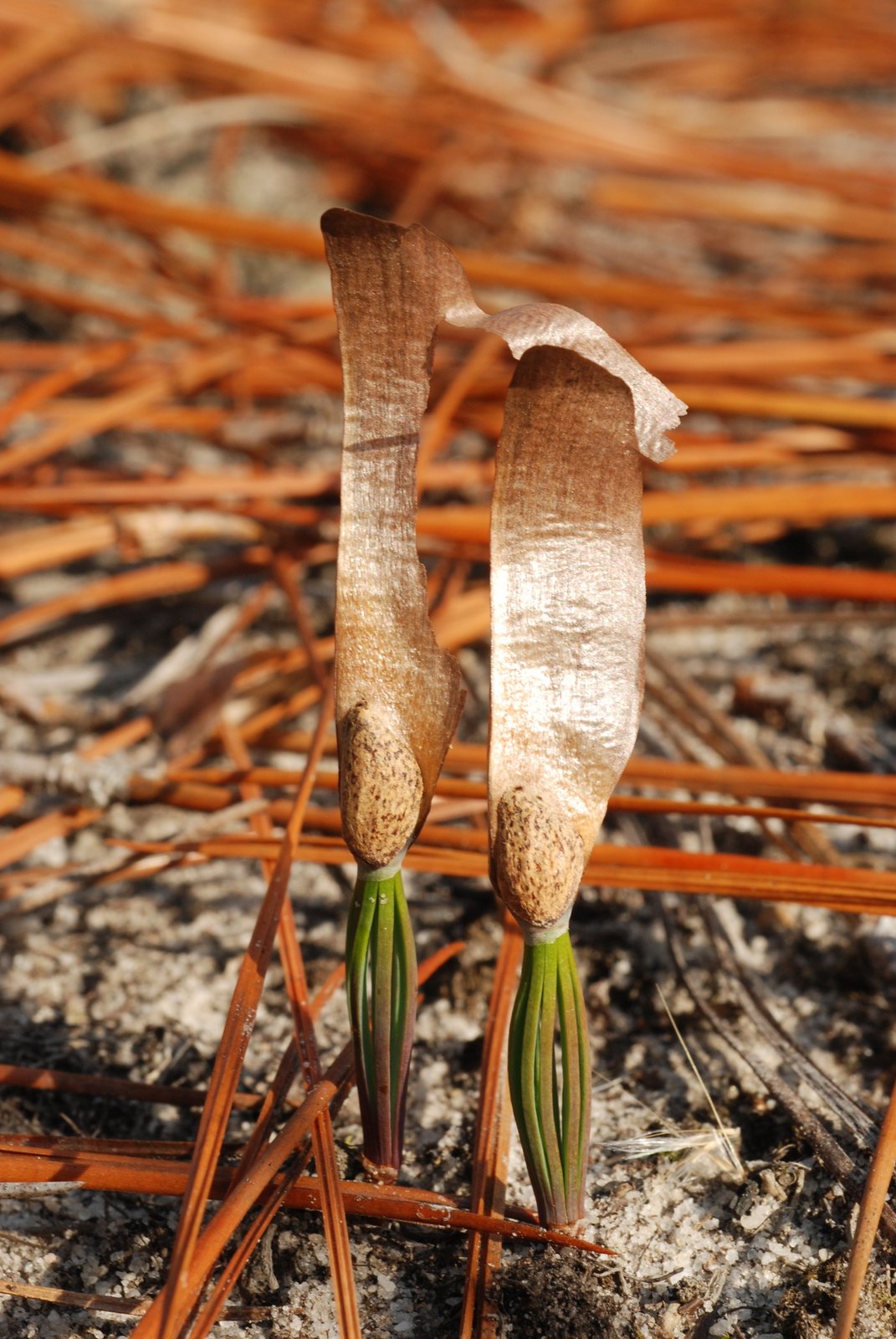
Propagation. Grow from fresh seed collected from mature cones, using deep containers that allow the root to develop straight. Keep seedlings in full sun, avoid waterlogging and plant out while small; seed-grown trees may remain in the grass stage for several years.
Checked against open data
- Accepted botanical name
- Pinus palustris
- In the US and Canada
- Native in the lower 48 states.
- Native range
- Alabama, Florida, Georgia, Louisiana, Mississippi, North Carolina, South Carolina, Texas and Virginia.
- Measured
- Soil pH 6 to 7. Average height 1590 cm.
Sources: GBIF (CC BY 4.0), USDA PLANTS and Trefle (CC BY 4.0). The care and design notes are LandscapeGPT's own.
See it in your own yard.
Upload a photo of your yard and see it redesigned with plants that suit your climate, each checked against your zone.