Low Scape Mound chokeberry
Aronia melanocarpa 'UCONNAM165'. Family Rosaceae. Shrub.
Also called Aronia melanocarpa 'UCONNAM165', Low Scape Mound black chokeberry.
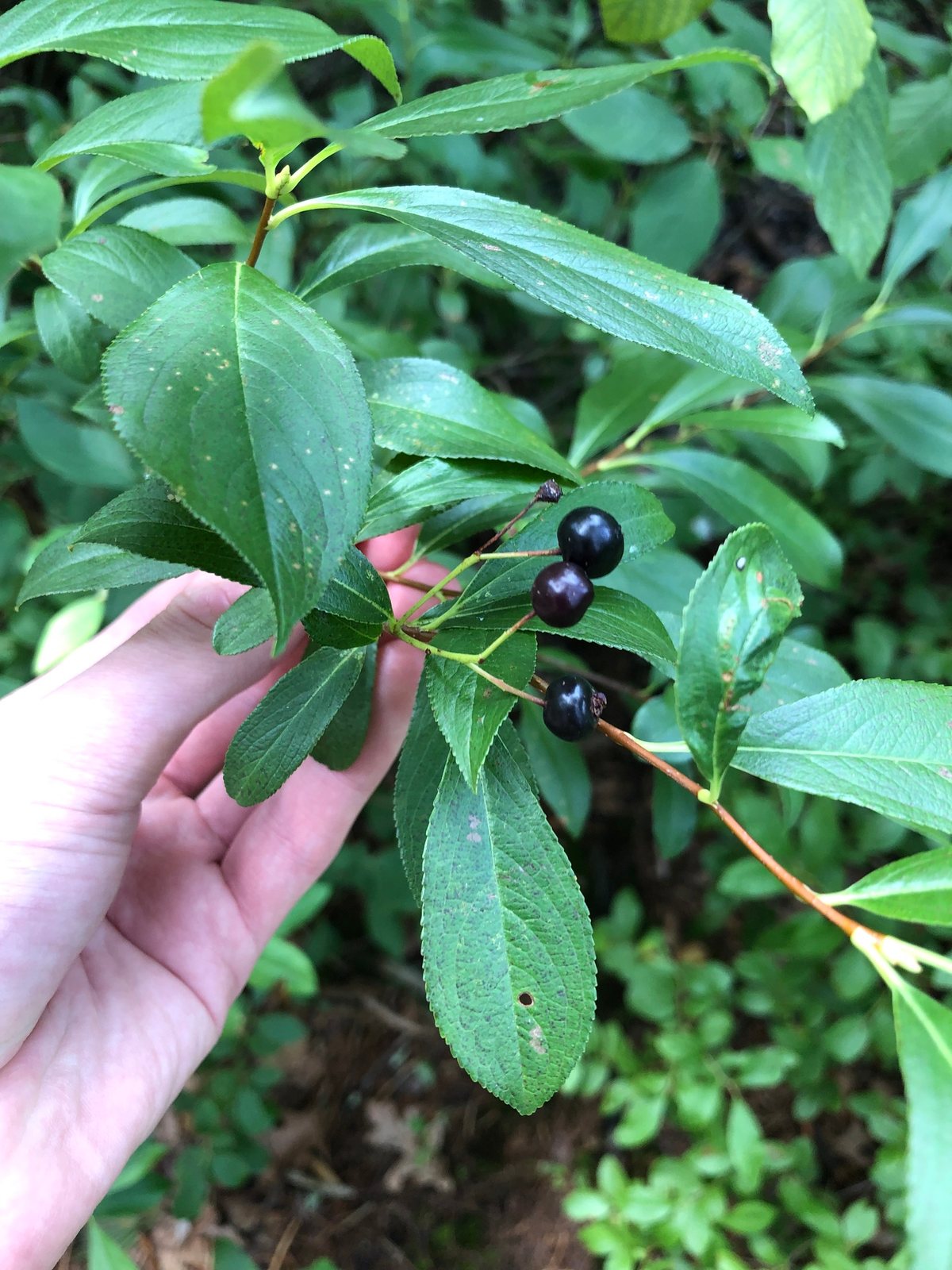
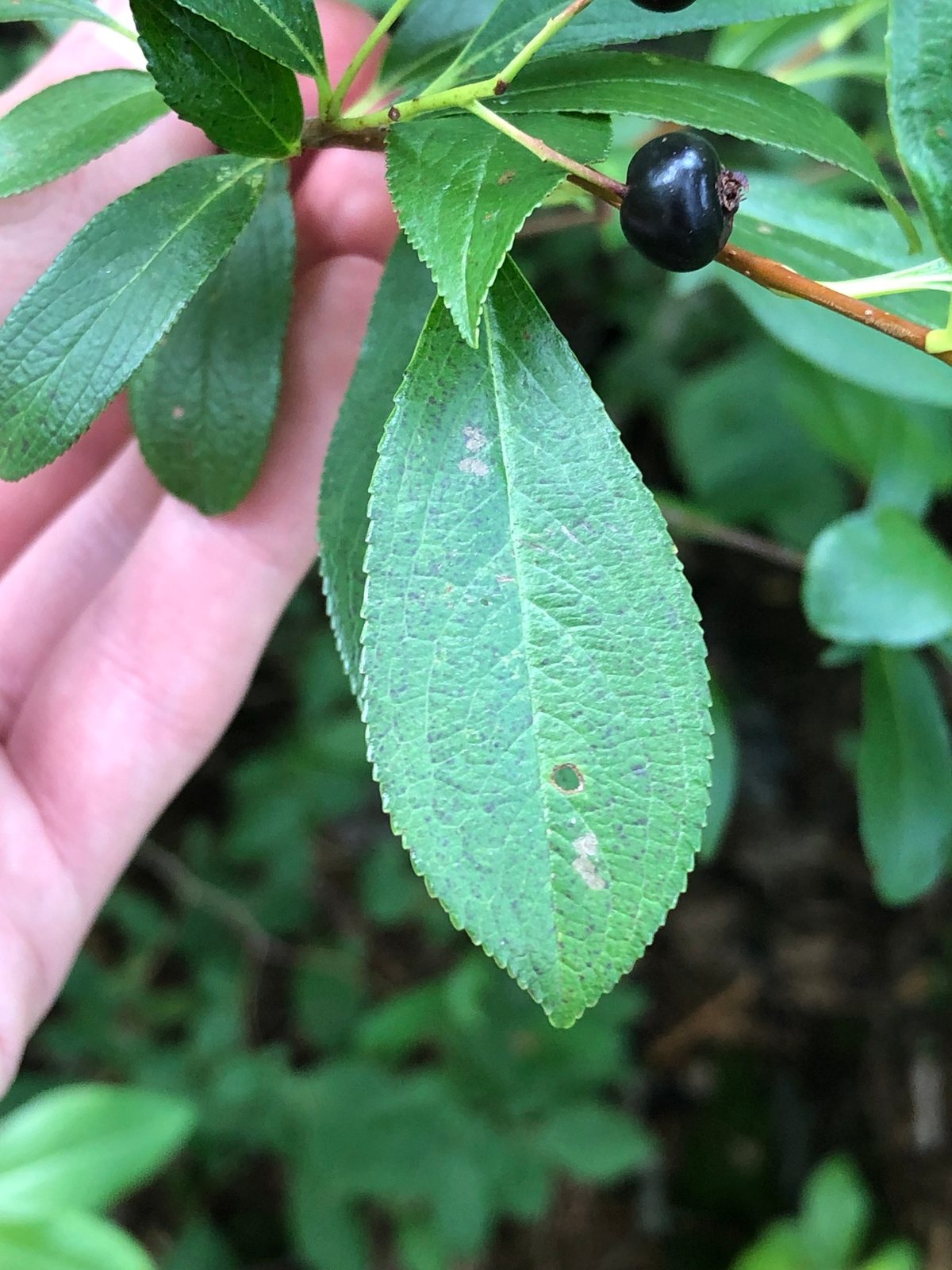
This dwarf, deciduous chokeberry forms a low, rounded mound with white spring flowers, glossy green leaves and red to orange autumn colour. It is grown mainly as an ornamental shrub for edging and mass planting, with good tolerance of cold, heavy soil and occasional wet conditions.
At a glance
- Sun
- Full sun to partial shade; flowering and autumn colour are usually best in full sun.
- Water
- Water regularly while establishing. Once rooted, it tolerates short dry spells as well as periodically wet soil, but grows best with reasonably consistent moisture.
- Soil
- Adaptable to sandy, loamy or clay soils, preferably acidic to neutral. Tolerates heavy soil and occasional waterlogging; avoid permanently stagnant conditions.
- Height
- 1-2 ft (0.3-0.6 m)
- Spread
- 2-3 ft (0.6-0.9 m)
- Flowers
- Clusters of small white flowers in mid- to late spring.
- Foliage
- Small, glossy, dark green leaves turn orange and red in autumn before falling.
- Growth
- Moderate
- Care needed
- Low
The year at a glance
- Pollinators
- Cold hardy
- Disease resistant
- Wildlife
- Low allergen
| J | F | M | A | M | J | J | A | S | O | N | D | |
|---|---|---|---|---|---|---|---|---|---|---|---|---|
| Flowers | ||||||||||||
| Fruit | ||||||||||||
| Plant |
Northern hemisphere months. In Australia, shift them by six.
- Difficulty
- Easy
- Toughness
- Very tough
Will it suit your garden?
Pick your zone, country, light and whether you have pets.
Full sun is 6 or more hours of direct sun a day, part shade 3 to 6 hours, shade under 3.
How it grows
Planting day
1.5 ft (0.45 m)
full size
About 5 years to full size.
From a typical nursery size, at an average rate for this kind of plant. A rule of thumb, not a forecast.
Good to know
- Cats and dogs
- Mildly toxic: may upset a stomach
- Native to
- the US and Canada
- Growth rate
- Moderate
Care
Jobs through the year
- WaterApr–May, Sep–Oct, every 14 days
- Water established shrubs if soil is drying out; check young plants more frequently.
- WaterJun–Aug, every 7 days
- During prolonged dry weather, water established shrubs deeply; skip when soil remains moist.
- FeedApr
- Apply a light balanced feed only if growth is weak; avoid excess nitrogen.
- PruneFeb–Mar
- Remove dead or damaged branches and unwanted suckers; routine shaping is unnecessary.
- MulchApr
- Spread 5–8 cm of organic mulch over the root zone, keeping stems clear.
- Water deeply during the first growing season whenever the root zone begins to dry.
- Apply 2-3 in (5-8 cm) of organic mulch, keeping it clear of the stems.
- Feed only if growth is weak; use a light application of balanced fertiliser in spring rather than heavy nitrogen feeding.
- Water during prolonged drought, especially in hot sites or containers.
- Remove unwanted suckers at ground level if you need to keep the planting within a fixed edge.
Pruning. Little pruning is needed. Remove dead or damaged wood in late winter; if shaping is necessary, prune lightly just after flowering, accepting that this will remove some potential fruit.
Through the year
- Early spring
- Plant when the soil is workable and not waterlogged; water thoroughly after planting.
- Spring
- Refresh mulch and feed lightly only if growth indicates a need.
- Late spring
- After flowering, lightly trim any branches that extend beyond the intended outline.
- Summer
- Check new plants during dry spells and water deeply rather than giving frequent light sprinklings.
- Autumn
- Plant or transplant while the soil remains workable, and leave any berries for birds.
- Late winter
- Remove dead or damaged branches and cut out unwanted suckers.
In the garden
- Plant in repeated groups along paths for a low, informal edge with autumn colour.
- Mass on gentle banks to cover soil without blocking views.
- Use at the front of mixed borders with taller grasses and flowering perennials.
- Include on the upper edges of rain gardens where soil alternates between wet and dry.
- Plant beneath open-canopied trees where there is enough light for flowering.
Garden styles it suits: Low-maintenance, Wildlife garden, Pollinator garden, New perennial (prairie), Autumn colour and Small-space.
Plant it with: Switchgrass, Little bluestem, Purple coneflower, Black-eyed Susan, Wild geranium and Blue flag iris.
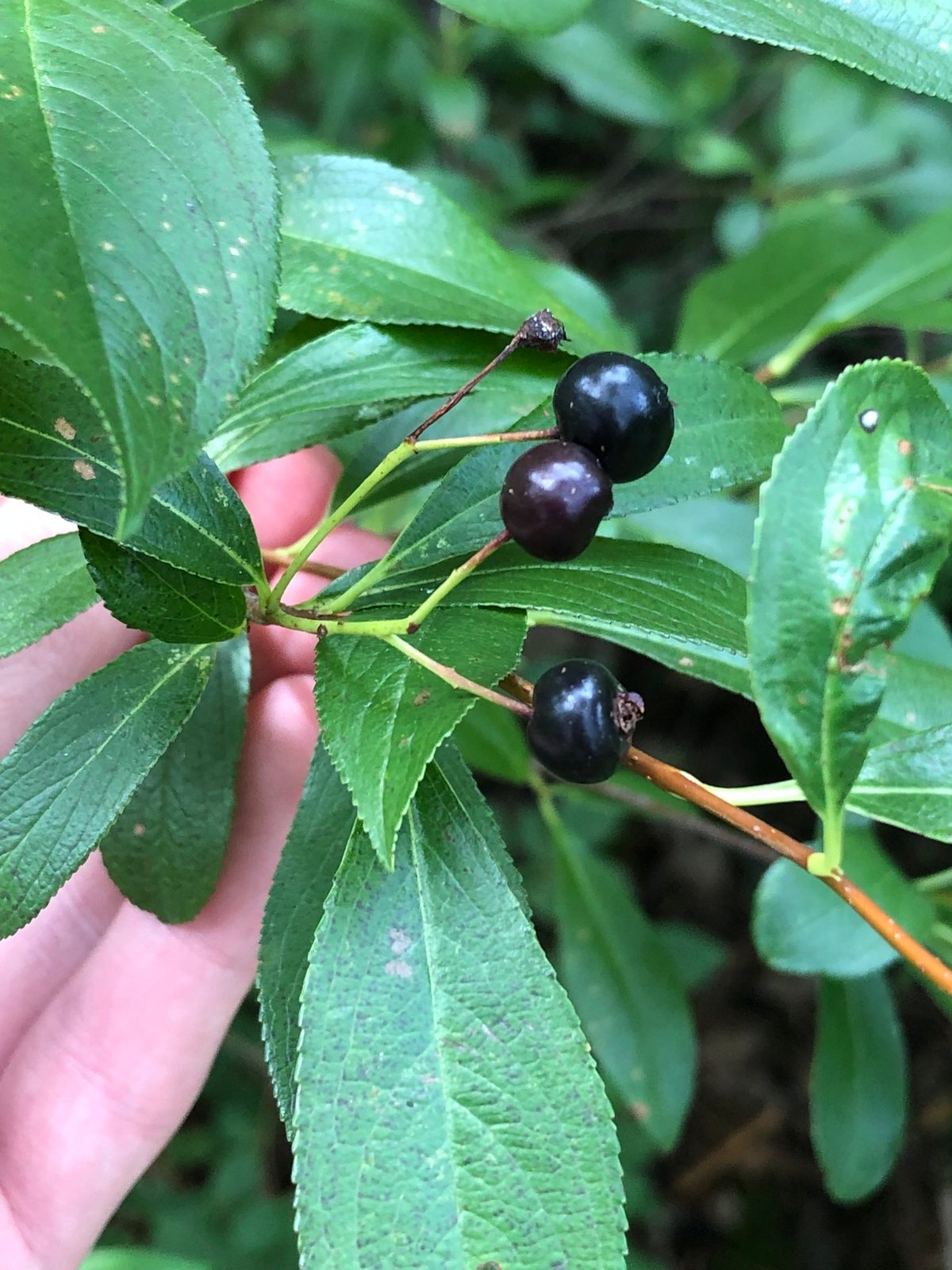
Wildlife: Spring flowers provide pollen and nectar for visiting insects. Small black berries may follow and are eaten by birds; the branching growth provides low cover.
Problems to watch for
- Leaf spots can develop in damp, crowded plantings; allow airflow, water at soil level and clear badly affected fallen leaves.
- Aphids may gather on soft new shoots; wash them off with water and avoid unnecessary insecticides.
- Hot, dry conditions can cause leaf scorch or early leaf drop; water deeply and maintain mulch.
- Very alkaline soil can cause yellow leaves with greener veins; test the soil and move the plant to a more suitable site if necessary.
Safety
Not known to be toxic to people, cats, dogs or horses. The ripe berries are edible but strongly astringent; eating large quantities may cause stomach upset. Do not confuse chokeberry with chokecherry, which has different toxicity risks.
Easily confused with
Chokecherry (Prunus virginiana)
Chokecherry becomes a much larger shrub or tree and bears flowers and fruit along elongated hanging clusters, rather than chokeberry's short, branched clusters.
Red chokeberry (Aronia arbutifolia)
Red chokeberry has red rather than black ripe fruit, hairy leaf undersides and a much taller, more upright habit.
Black chokeberry (Aronia melanocarpa)
Ordinary black chokeberry has similar flowers, leaves and fruit but usually grows much taller. A reliable cultivar label is the best way to confirm Low Scape Mound.
The name
The species name melanocarpa means 'black-fruited', while chokeberry refers to the dry, puckering sensation caused by its astringent fruit.
Propagation. Commercially propagated vegetatively to preserve its dwarf habit. Seedlings will not come true to the cultivar; this is a patented cultivar, so check current plant-protection restrictions before propagating it.
Checked against open data
- Accepted botanical name
- Aronia melanocarpa
- In the US and Canada
- Native in Canada and the lower 48 states.
- Native range
- Alabama, Arkansas, Connecticut, Delaware, District of Columbia, Florida, Georgia, Illinois, Indiana, Iowa, Kentucky and Maine.
- Measured
- Average height 50 cm.
Sources: GBIF (CC BY 4.0), USDA PLANTS and Trefle (CC BY 4.0). The care and design notes are LandscapeGPT's own.
See it in your own yard.
Upload a photo of your yard and see it redesigned with plants that suit your climate, each checked against your zone.