Mango
Mangifera indica. Family Anacardiaceae. Tree.
Also called Indian mango.
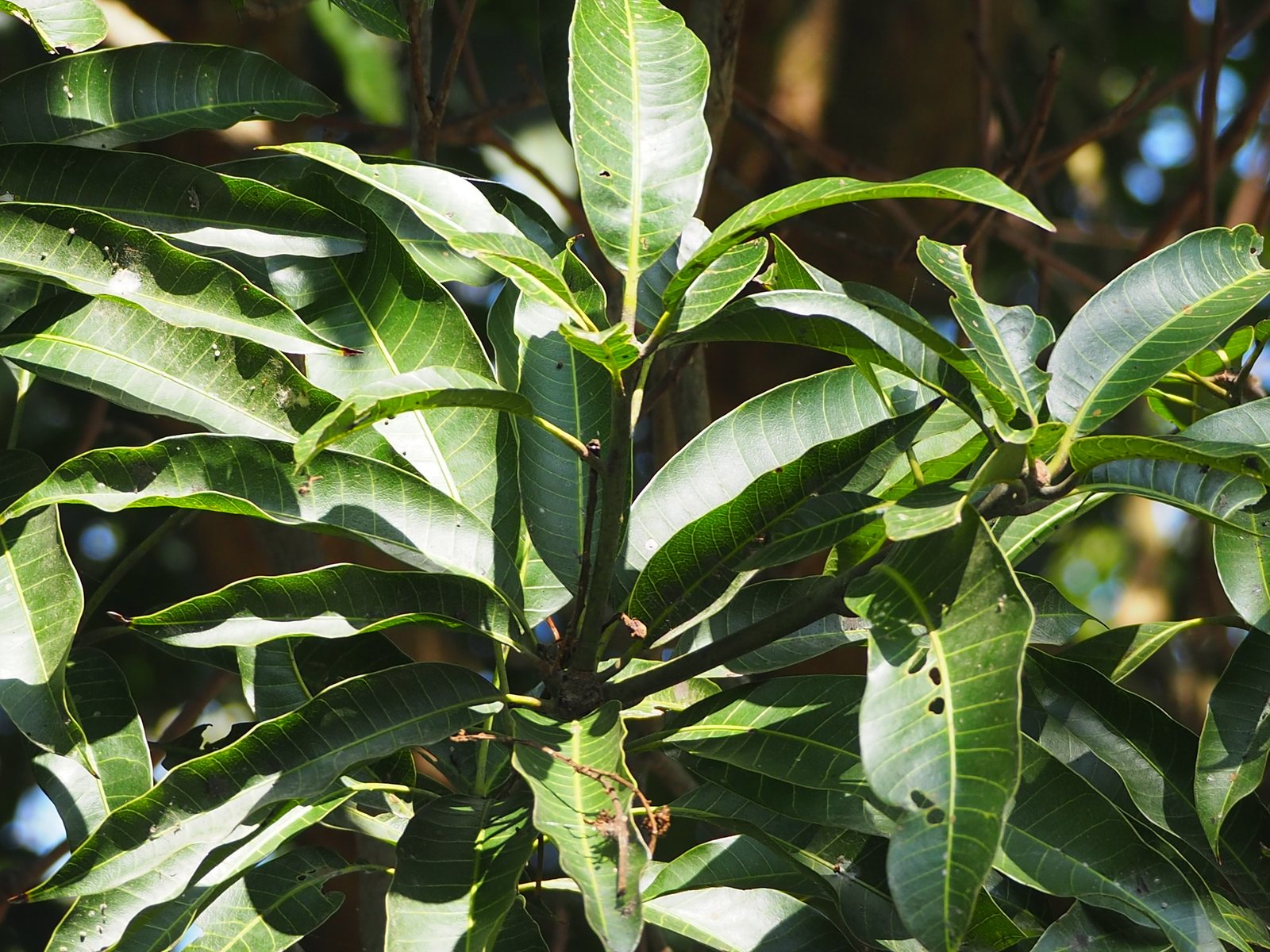
Mango is a large tropical evergreen tree grown for its sweet fruit, glossy foliage and dense shade. Grafted varieties are more manageable and bear sooner than seedlings, but reliable cropping needs a warm, largely frost-free climate. In the United Kingdom and most of Canada, it needs a heated greenhouse and may not fruit.
At a glance
- Sun
- Full sun; give greenhouse plants the brightest available position.
- Water
- Water young trees regularly while roots establish. Established trees tolerate dry spells, but benefit from deep watering during prolonged drought and fruit development; avoid waterlogged soil.
- Soil
- Deep, well-drained soil, preferably slightly acidic to neutral. Poor drainage and strongly alkaline soil can cause root problems and nutrient deficiencies.
- Height
- 30-60 ft (9-18 m), sometimes taller; compact grafted trees can be maintained at 8-15 ft (2.4-4.6 m)
- Spread
- 25-50 ft (7.6-15 m); compact grafted trees can be maintained at 8-15 ft (2.4-4.6 m)
- Flowers
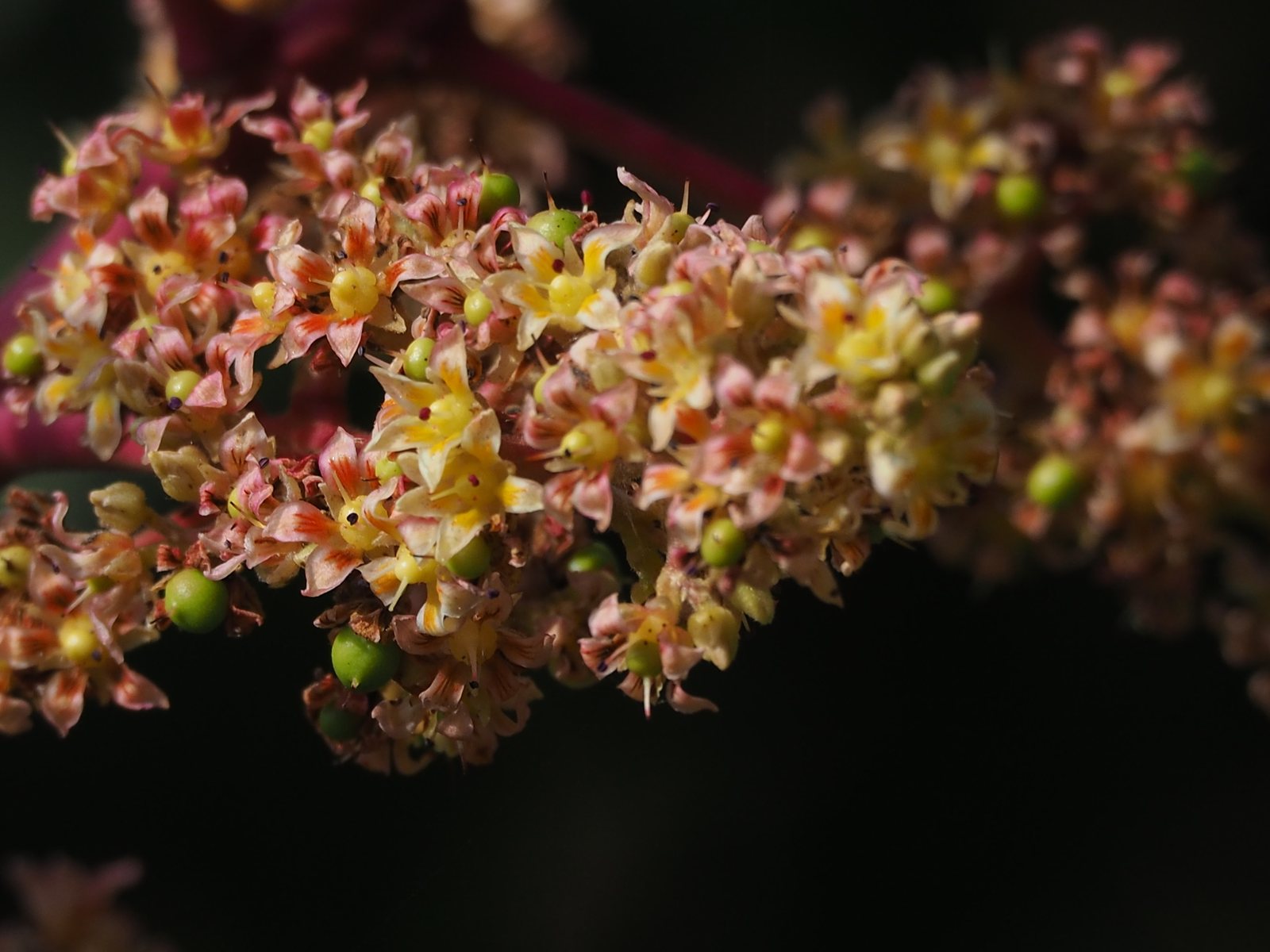
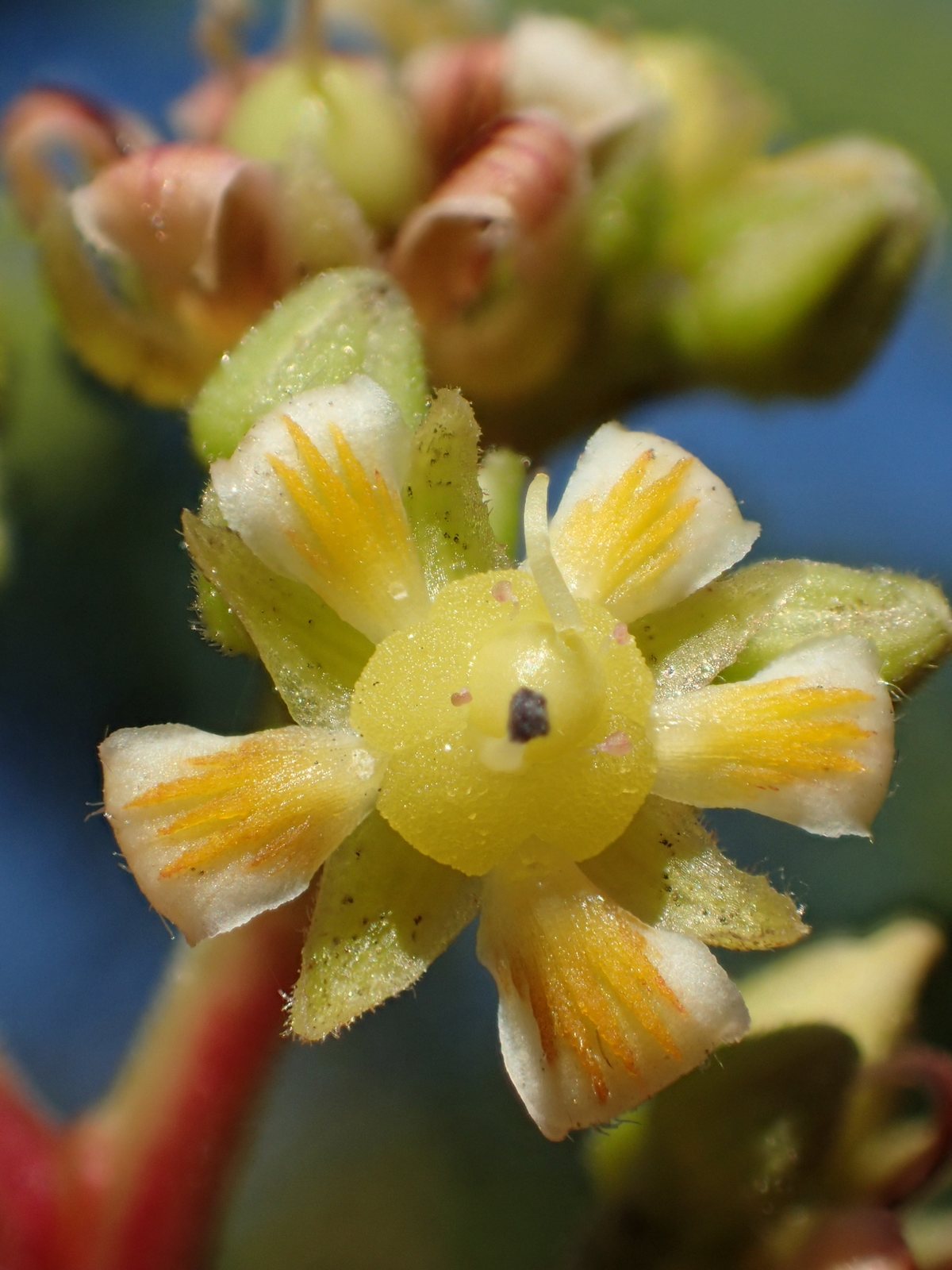
- Usually winter to spring, depending on climate and variety; branching clusters of tiny cream, yellowish or pink-tinged flowers.
- Foliage
- Evergreen. Long, leathery, glossy green leaves; new growth is often bronze, copper-red or purple before turning green.
- Growth
- Moderate to fast in warm weather; slow in cool conditions.
- Care needed
- Medium
The year at a glance
- Pollinators
- Drought tolerant
- Heat tolerant
- Low allergen
- Edible
| J | F | M | A | M | J | J | A | S | O | N | D | |
|---|---|---|---|---|---|---|---|---|---|---|---|---|
| Flowers | ||||||||||||
| Fruit | ||||||||||||
| Plant |
Northern hemisphere months. In Australia, shift them by six.
- Difficulty
- Hard
- Toughness
- Needs looking after
Will it suit your garden?
Pick your zone, country, light and whether you have pets.
Full sun is 6 or more hours of direct sun a day, part shade 3 to 6 hours, shade under 3.
How it grows
Planting day
7 ft (2 m)
After 1 year
8 ft (2.6 m)
After 2 years
10 ft (3.2 m)
After 3 years
12 ft (3.7 m)
After 5 years
16 ft (4.9 m)
About 20 years to full size.
From a typical nursery size, at an average rate for this kind of plant. A rule of thumb, not a forecast.
Good to know
- Cats and dogs
- Safe
- Growth rate
- Moderate
Care
Jobs through the year
- ProtectJan–May, Sep–Dec
- Use a heated greenhouse; this tree cannot overwinter outdoors locally, and summer fruiting is unreliable.
- ProtectJun–Jul
- If moving a container outdoors, acclimatize gradually and choose a warm, sheltered spot.
- WaterMar–May, Sep–Oct, every 7 days
- For locally necessary container culture, check compost and water when the surface dries; never leave standing water.
- WaterJun–Aug, every 3 days
- Check container moisture frequently during warm growth and fruit development; water only as needed.
- WaterJan–Feb, Nov–Dec, every 14 days
- Check sheltered container plants and water sparingly without letting the root ball dry completely.
- FeedApr–Aug, every 28 days
- Use a balanced fruit-tree feed during active growth, following its label and avoiding excess nitrogen.
- MulchMay
- Apply a light organic mulch, keeping it away from the trunk.
- HarvestJul–Sep, every 7 days
- If fruit develops, clip full, mature fruit with rounded shoulders and ripen indoors.
- PruneSep
- After any harvest, lightly shorten vigorous shoots and remove crossing growth; avoid heavy pruning.
- Plant in a warm, sheltered position with room for the mature canopy, away from buildings and overhead wires.
- Water newly planted trees deeply when the root zone begins to dry; never leave roots sitting in water.
- Apply a balanced fruit-tree fertiliser during active growth according to its label; avoid heavy nitrogen feeding.
- Spread 2-4 in (5-10 cm) of organic mulch over the root area, keeping it clear of the trunk.
- Protect young trees from cold snaps; move container plants into bright, frost-free shelter before nights become cold.
- Use a large container with drainage holes for compact varieties, and expect less fruit than from a tree planted in suitable ground.
Pruning. Prune lightly after harvest to shorten vigorous shoots, remove crossing branches and keep fruit within reach. Avoid heavy pruning before flowering, and have large limbs assessed by a qualified arborist.
Harvest
Harvest mangoes mainly in summer to early autumn in warm US regions and November–April in Australia; in the UK and most of Canada, fruiting needs a heated greenhouse and is unreliable. Pick full, plump fruit with shoulders rounded beside the stalk and skin beginning to lighten or change colour for the variety; clip rather than pull, and let firm, mature fruit soften indoors before eating.
Through the year
- Spring
- Plant once the soil is warm and frost risk has passed; in Australia, follow your local spring rather than Northern Hemisphere dates.
- Spring
- Feed established trees as active growth begins, avoiding excessive nitrogen.
- Summer
- Check soil moisture during fruit development and inspect new growth for scale insects and mealybugs.
- Summer to autumn
- Harvest according to the variety's season; judge maturity by filled-out shoulders and developing background colour, not red blush alone.
- After harvest
- Prune lightly to control size and remove dead or crowded growth; collect fallen fruit.
- Autumn
- Move container plants into bright, frost-free shelter before cold nights arrive.
- Winter
- Reduce watering for sheltered container plants, but do not let the root ball dry completely; keep flowers dry where practical.
In the garden
- Use as a shade tree in a large tropical garden, leaving lawn or a mulched area beneath the canopy.
- Include in a warm-climate home orchard, with access around the tree for harvesting and pruning.
- Grow a compact grafted variety in a large container on a sunny, sheltered terrace.
- Combine with bananas and hibiscus for layered tropical planting, keeping companions outside the immediate trunk area.
Garden styles it suits: Modern tropical, Tropical, Backyard orchard, Edible landscape, Food forest and Luxury resort.
Plant it with: Banana, Hibiscus, Lemongrass and Pigeon pea.
Wildlife: Flowers attract flies, bees and other insects. Ripe fruit attracts birds, fruit bats and mammals where these occur; harvest promptly and use wildlife-safe exclusion netting if needed.
Problems to watch for
- Anthracnose causes flower blight and dark fruit spots, especially in wet weather: open the canopy, remove infected debris and choose locally recommended resistant varieties.
- Powdery mildew coats flower clusters and can prevent fruit set: improve airflow and, where necessary, use a locally approved treatment labelled for edible mangoes.
- Scale insects and mealybugs weaken shoots and encourage sooty mould: manage tending ants and treat accessible infestations with horticultural oil labelled for mango, avoiding hot weather and open flowers.
- Poor fruit set can follow cold, wet flowering weather or insufficient warmth: choose a locally proven variety and a sunny, sheltered site; greenhouse trees may still crop poorly.
Safety
Ripe flesh is not known to be toxic to people, cats or dogs. Sap, peel and other plant parts can cause allergic contact dermatitis in susceptible people, particularly those sensitive to poison ivy; wear gloves when pruning or handling sap. The large stone is a choking or intestinal-obstruction hazard for pets. Toxicity to horses is not well established, so do not offer leaves, bark or stones as feed.
Easily confused with
Avocado (Persea americana)
Avocado usually has broader leaves with less closely spaced side veins; mango leaves are narrower, leathery and marked by many fine, nearly parallel side veins.
Indian mast tree (Monoon longifolium)
Its long leaves have conspicuously wavy margins and often hang from narrow, drooping branches; mango leaves have mostly flat margins and form a broader canopy.
The name
The English name mango came through Portuguese from a South Indian name for the fruit, while Mangifera means mango-bearing and indica means Indian.
Propagation. Named varieties are propagated by grafting onto seedling rootstocks. Sow fresh stones in warm conditions for seedlings, but seed-grown trees may differ from the parent, become very large and take many years to fruit.
Checked against open data
- Accepted botanical name
- Mangifera indica
- In the US and Canada
- Introduced in Hawaii, the lower 48 states, Pacific Basin, Puerto Rico and US Virgin Islands.
- Native range
- Assam, China South-Central, East Himalaya, Myanmar and Thailand.
- Measured
- Soil pH 4 to 7. Average height 880 cm.
Sources: GBIF (CC BY 4.0), USDA PLANTS and Trefle (CC BY 4.0). The care and design notes are LandscapeGPT's own.
See it in your own yard.
Upload a photo of your yard and see it redesigned with plants that suit your climate, each checked against your zone.