Manzanita 'Emerald Carpet'
Arctostaphylos 'Emerald Carpet'. Family Ericaceae. Groundcover.
Also called Emerald Carpet manzanita.
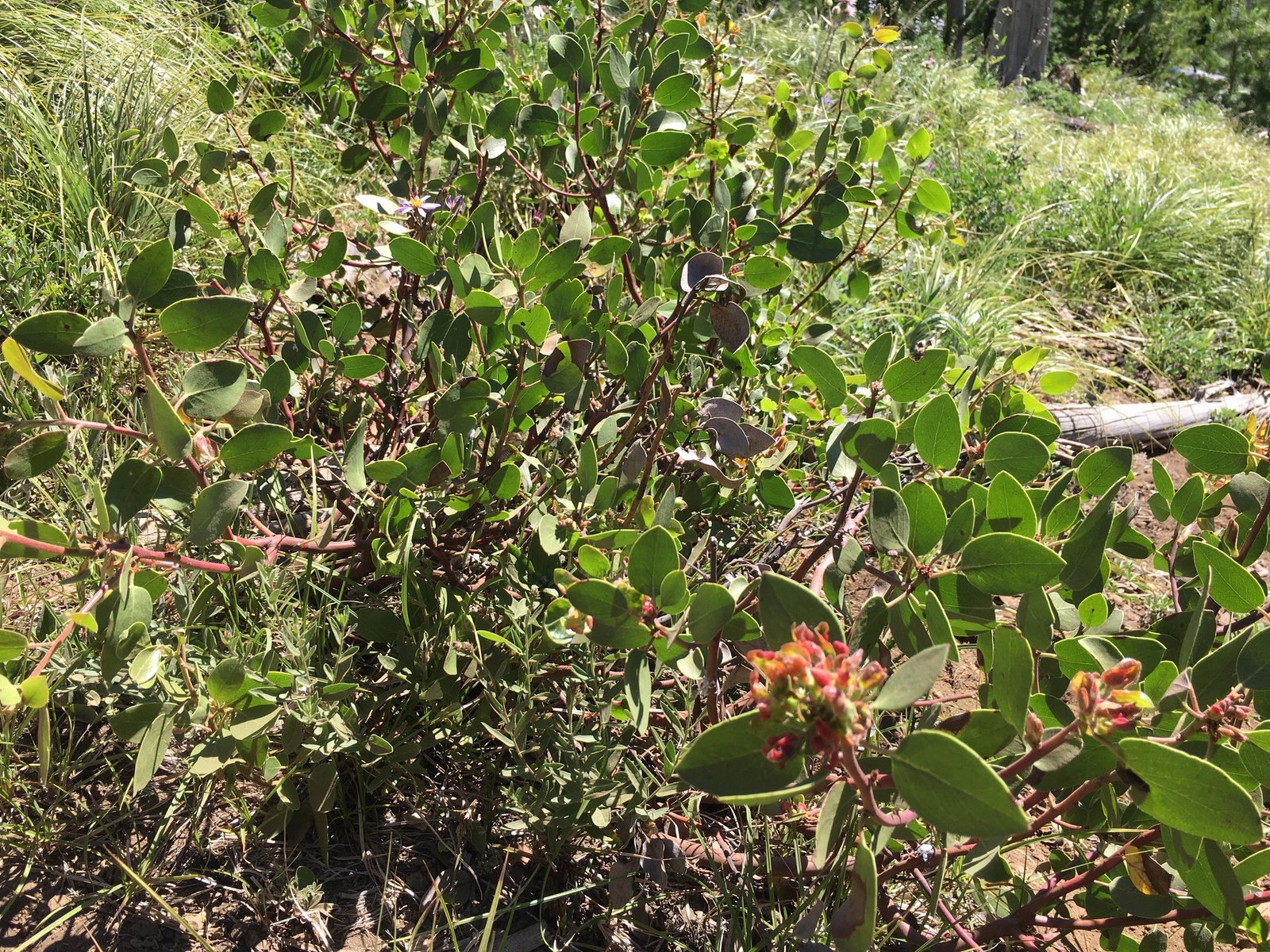
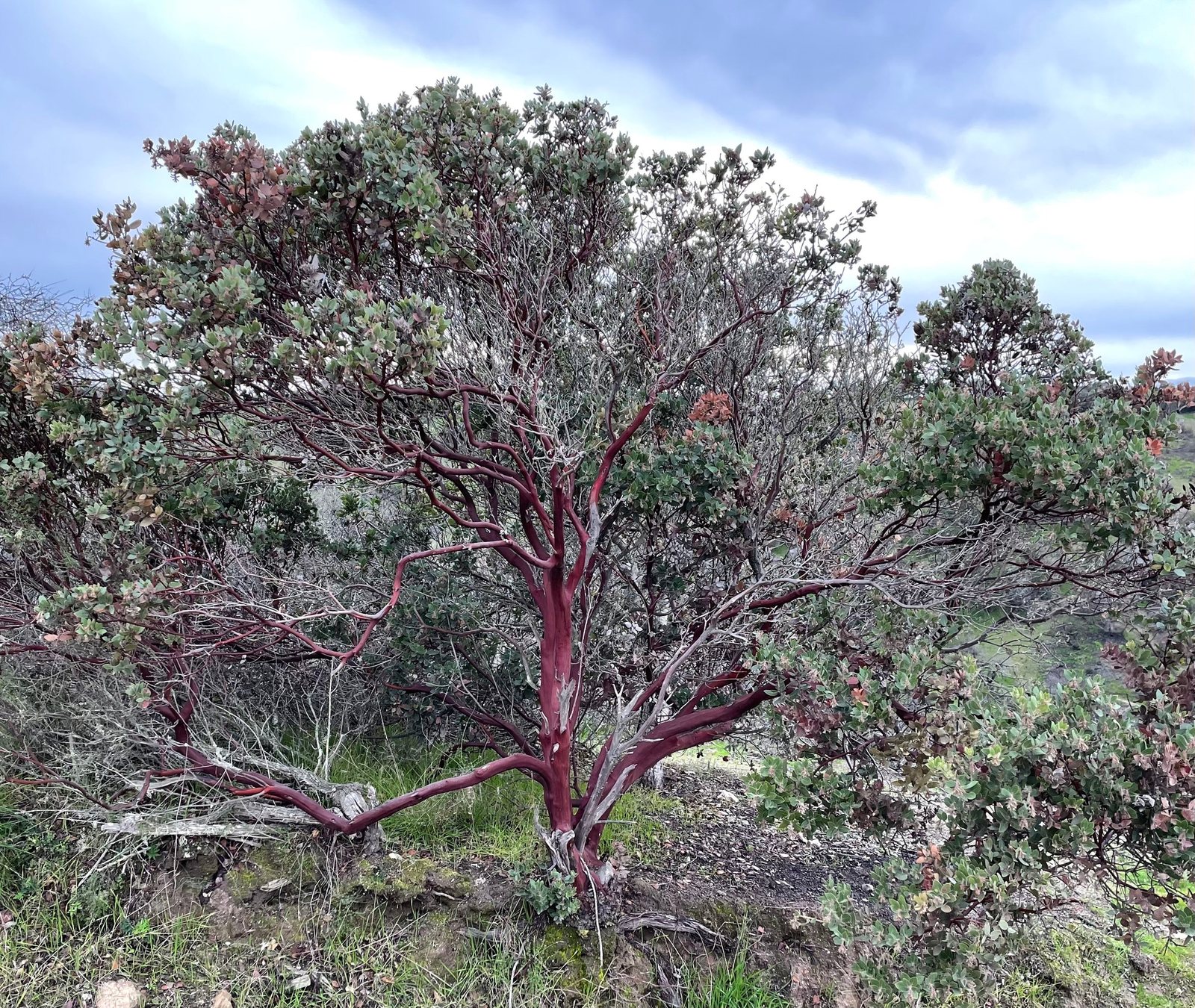
'Emerald Carpet' is a low, spreading evergreen manzanita grown for its dense, glossy green foliage and small winter-to-spring flowers. It makes a woody groundcover for mild-climate gardens, especially near the coast, but needs good drainage and more summer moisture than many upright manzanitas.
At a glance
- Sun
- Full sun in cool coastal gardens; light afternoon shade in hot inland locations.
- Water
- Water regularly while establishing. Once rooted, give occasional deep watering during prolonged dry weather; avoid constantly wet soil and frequent shallow irrigation.
- Soil
- Well-drained, slightly acidic soil is best. Avoid waterlogged clay, strongly alkaline soil and heavily enriched planting holes.
- Height
- 0.5-1 ft (0.15-0.3 m)
- Spread
- 3-6 ft (0.9-1.8 m)
- Flowers
- Small white to pale pink, urn-shaped flowers in late winter and spring.
- Foliage
- Evergreen. Small, rounded to oval, glossy emerald-green leaves on densely branching woody stems.
- Growth
- Slow to moderate; takes several years to form a broad, dense mat.
- Care needed
- Low
The year at a glance
- Pollinators
- Deer resistant
- Drought tolerant
- Heat tolerant
- Wildlife
- Low allergen
| J | F | M | A | M | J | J | A | S | O | N | D | |
|---|---|---|---|---|---|---|---|---|---|---|---|---|
| Flowers | ||||||||||||
| Fruit | ||||||||||||
| Plant |
Northern hemisphere months. In Australia, shift them by six.
- Difficulty
- Hard
- Toughness
- Needs looking after
Will it suit your garden?
Pick your zone, country, light and whether you have pets.
Full sun is 6 or more hours of direct sun a day, part shade 3 to 6 hours, shade under 3.
How it grows
Planting day
0.2 ft (0.06 m)
After 1 year
0.4 ft (0.11 m)
After 2 years
0.5 ft (0.16 m)
After 3 years
0.7 ft (0.21 m)
After 5 years
0.7 ft (0.22 m)
full size
About 3 years to full size.
From a typical nursery size, at an average rate for this kind of plant. A rule of thumb, not a forecast.
Good to know
- Cats and dogs
- Safe
- Growth rate
- Slow
Care
Jobs through the year
- WaterApr–May, Sep, every 21 days
- For established plants in suitable ground, water only if dry; new plants need closer monitoring.
- WaterJun–Aug, every 14 days
- Water deeply only during prolonged dry weather, letting surface soil dry between waterings.
- MulchApr–May
- Apply a thin mulch layer without covering the crown or main stems.
- PruneApr–May
- After flowering, trim stray leafy shoots in dry weather; never cut into bare old wood.
- ProtectJan–Apr, Oct–Dec
- Not reliably hardy in zones 6–7; grow in a movable container and overwinter bright, cool and frost-free.
- Plant in autumn or spring, keeping the root crown level with the surrounding soil.
- Water the root zone deeply during establishment, allowing the surface soil to dry between waterings.
- In dry summers, check beneath the foliage and water occasionally rather than letting the root ball become completely dry.
- Use a thin mulch layer to suppress weeds, keeping it clear of the main stems.
- Avoid routine feeding; excessive fertilizer encourages soft growth.
- Keep foot traffic off the plants and avoid disturbing established roots.
Pruning. After flowering, lightly shorten shoots that extend beyond their space and remove dead or damaged twigs in dry weather. Do not shear hard or cut back into bare old wood, which may not regrow.
Through the year
- Late winter
- Check for winter damage and make sure water is not collecting around the root crown.
- Spring
- Plant where winters are wet or cold, and water new plants thoroughly.
- Late spring
- After flowering, trim stray shoots lightly and remove dead growth.
- Summer
- Check soil moisture during dry spells; water deeply when needed without keeping the crown wet.
- Early autumn
- Take semi-ripe cuttings if you want to propagate the cultivar.
- Autumn
- Plant in mild, well-drained gardens and remove fallen debris that smothers the foliage.
In the garden
- Plant in broad drifts beneath widely spaced shrubs to create a continuous evergreen ground layer.
- Use on gently sloping banks where drainage is good and foot traffic is absent.
- Let stems spread over low retaining walls or along raised-bed edges.
- Combine with rocks, low grasses and other coastal California plants for a restrained, year-round planting.
Garden styles it suits: California native, Coastal, Modern Mediterranean, Dry gravel garden, Green on green and Low-maintenance.
Plant it with: California fescue, Blue grama grass, Douglas iris, Seaside daisy and California coffeeberry.
Wildlife: Flowers provide nectar and pollen for bees when relatively few other shrubs are flowering. Small fruits, when produced, may be eaten by birds and other wildlife; the low foliage also provides shelter for small animals.
Problems to watch for
- Root and crown rot in wet soil: improve drainage before planting, keep the crown exposed and avoid frequent irrigation.
- Leaf spots during damp weather: remove affected fallen leaves, improve air circulation and keep irrigation off the foliage.
- Yellowing leaves in alkaline soil: check soil pH and drainage; choose a more suitable planting site rather than repeatedly feeding.
- Sparse growth or dieback after hard pruning: trim only leafy shoots and replace plants that have become extensively bare.
Safety
Not known to be toxic to people, cats, dogs or horses. Cultivar-specific safety information is limited, and the leaves and fruits should not be treated as food; eating large amounts of plant material may cause stomach upset.
Easily confused with
Bearberry (Arctostaphylos uva-ursi)
Usually has more elongated, spoon-shaped leaves and conspicuous red berries. 'Emerald Carpet' generally has rounder, glossier leaves; nursery labels are the safest way to identify the cultivar.
Creeping blueblossom (Ceanothus thyrsiflorus var. repens)
Forms a similar evergreen mound but carries clusters of blue flowers rather than small white or pink urn-shaped flowers.
The name
Arctostaphylos comes from Greek words meaning 'bear grape', while manzanita is Spanish for 'little apple', referring to the small rounded fruits.
Propagation. Take semi-ripe cuttings in late summer or early autumn and root them in a free-draining medium with controlled humidity. Rooting can be slow and unreliable; seed will not reliably reproduce this cultivar.
Checked against open data
- Accepted botanical name
- Arctostaphylos
Sources: GBIF (CC BY 4.0). The care and design notes are LandscapeGPT's own.
See it in your own yard.
Upload a photo of your yard and see it redesigned with plants that suit your climate, each checked against your zone.