Mayapple
Podophyllum peltatum. Family Berberidaceae. Perennial.
Also called American mandrake, Wild mandrake.
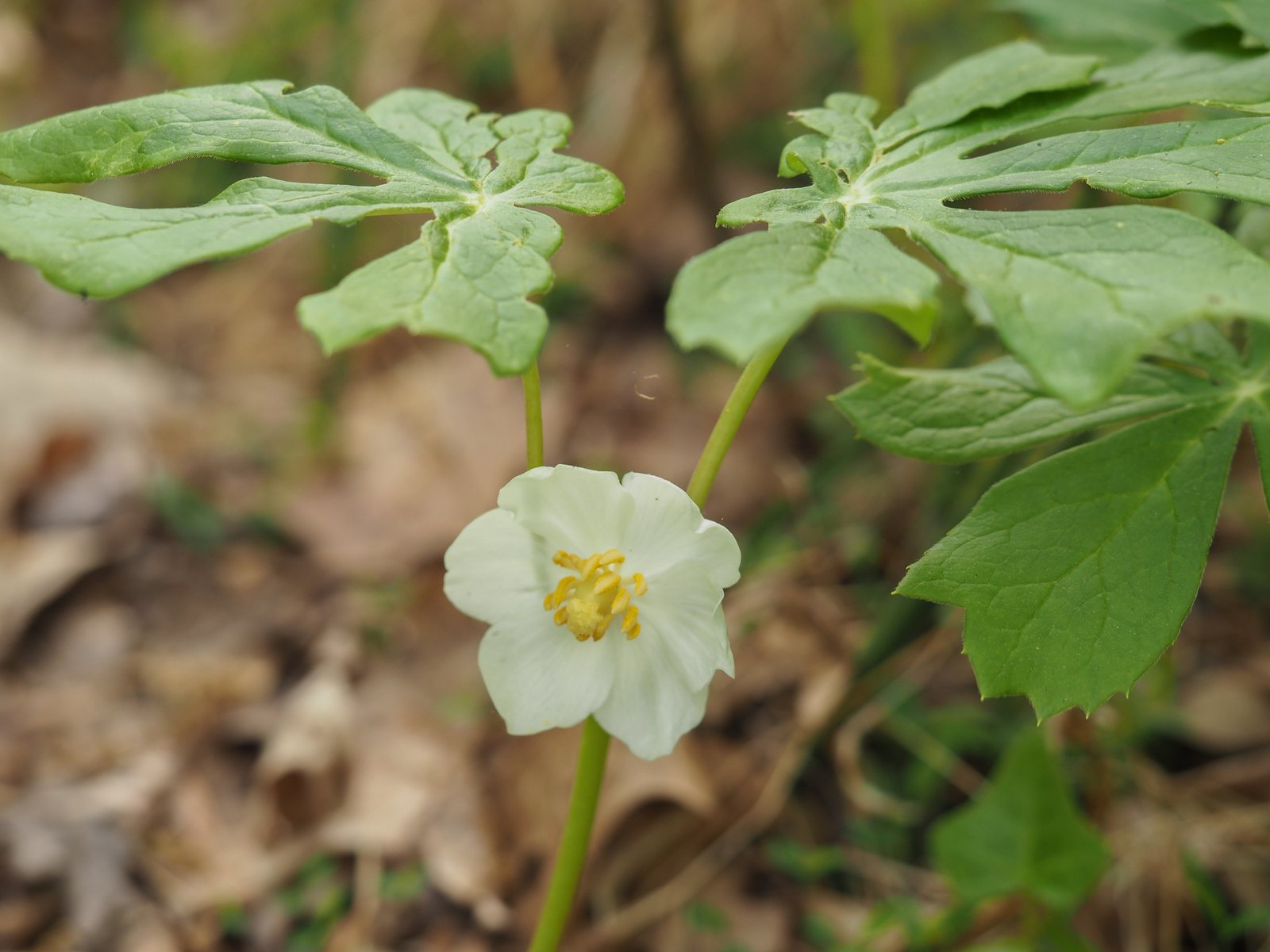
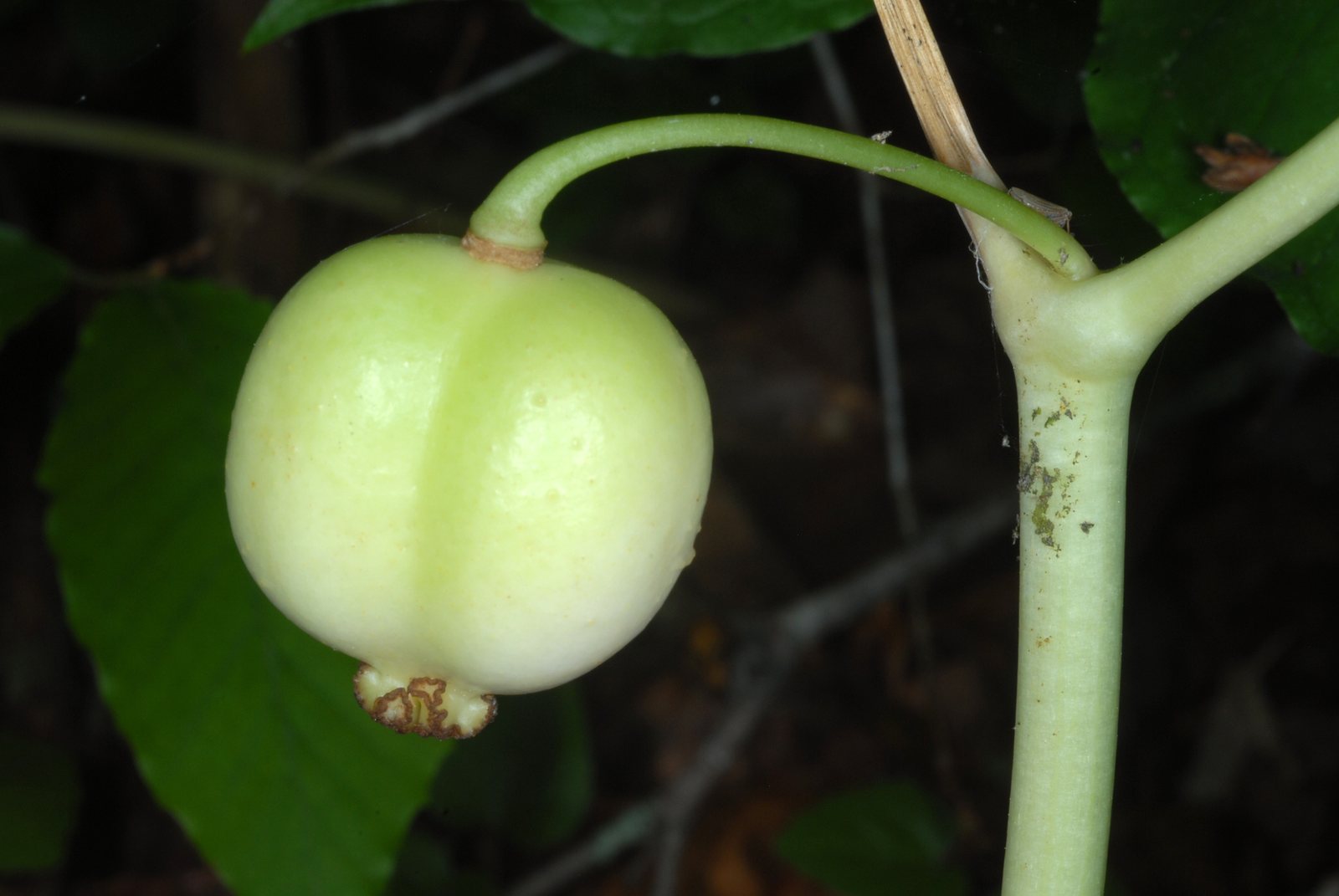
Mayapple is a woodland perennial native to eastern North America, grown for its large, umbrella-like leaves and spreading colonies. White flowers hang beneath the leaves in spring, followed occasionally by yellow fruit. It usually dies back in summer, so plant it among companions that fill the gap, and keep its poisonous parts away from children and pets.
At a glance
- Sun
- Partial to full shade; morning sun is suitable where the soil stays moist.
- Water
- Moderate; keep evenly moist during spring growth, without waterlogging.
- Soil
- Humus-rich, well-drained soil, preferably slightly acidic to neutral; tolerates clay if drainage is adequate.
- Height
- 1-1.5 ft (0.3-0.45 m)
- Spread
- 1-2 ft (0.3-0.6 m) initially; underground rhizomes eventually form much wider colonies.
- Flowers
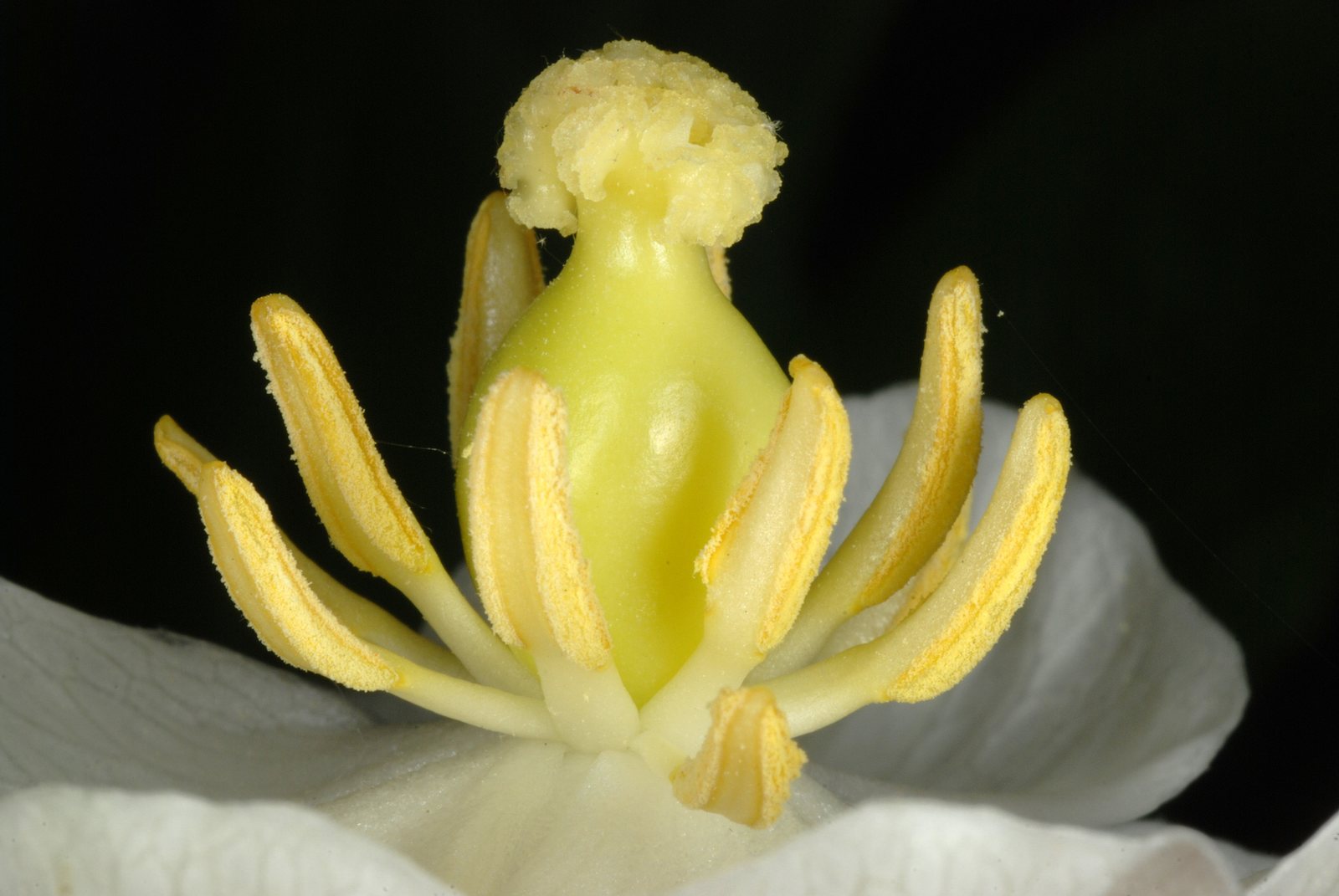
- Mid- to late spring; solitary white flowers beneath paired leaves on mature flowering stems.
- Foliage
- Large, deeply lobed green leaves held like umbrellas; non-flowering stems usually carry one leaf, while flowering stems carry two. Leaves yellow and disappear in summer, particularly in dry conditions.
- Growth
- Moderate once established; slow to settle after planting.
- Care needed
- Low
The year at a glance
- Pollinators
- Deer resistant
- Cold hardy
- Wildlife
- Low allergen
| J | F | M | A | M | J | J | A | S | O | N | D | |
|---|---|---|---|---|---|---|---|---|---|---|---|---|
| Flowers | ||||||||||||
| Fruit | ||||||||||||
| Plant |
Northern hemisphere months. In Australia, shift them by six.
- Difficulty
- Easy
- Toughness
- Fairly tough
Will it suit your garden?
Pick your zone, country, light and whether you have pets.
Full sun is 6 or more hours of direct sun a day, part shade 3 to 6 hours, shade under 3.
How it grows
Planting day
1 ft (0.3 m)
After 1 year
1 ft (0.32 m)
After 2 years
1.1 ft (0.34 m)
After 3 years
1.2 ft (0.36 m)
After 5 years
1.2 ft (0.38 m)
full size
About 4 years to full size.
From a typical nursery size, at an average rate for this kind of plant. A rule of thumb, not a forecast.
Good to know
- Cats and dogs
- Toxic
- Native to
- the US and Canada
- In the garden
- Spreads vigorously: plan to contain it.
- Growth rate
- Slow
Care
Jobs through the year
- WaterMar–May, every 7 days
- Check established colonies during active growth; water if soil is drying, keeping it moist but not waterlogged.
- WaterJun, every 7 days
- Water during dry spells only while leaves remain green; newly planted rhizomes need closer moisture checks.
- MulchMar
- Apply a light layer of leaf mould or well-rotted compost before shoots expand.
- ProtectMar–Apr
- Check emerging shoots for slugs; hand-pick or use labelled iron-phosphate bait if needed.
- PruneJul–Aug
- Wearing gloves, remove fully yellowed or collapsed stems; mark the dormant colony's position.
- DivideSep–Oct
- Divide dormant rhizomes only to propagate or contain spreading colonies.
- Water during dry spring weather while leaves are actively growing.
- Apply leaf mould or well-rotted compost as a light mulch each spring.
- Avoid routine feeding in fertile woodland soil.
- Mark the planting area before summer dormancy so you do not dig through the rhizomes.
- Divide dormant colonies in autumn if they spread beyond their allotted space.
Pruning. No shaping is needed. Cut away fully yellowed or collapsed stems at ground level, wearing gloves; leave green foliage to replenish the rhizomes.
Through the year
- Early spring
- Apply a light mulch of leaf mould or compost before the shoots fully expand.
- Spring
- Check emerging shoots for slug damage and water if the soil becomes dry.
- Late spring
- Look beneath paired leaves for flowers; avoid disturbing the shallow rhizomes.
- Summer
- Allow natural dormancy; remove dead foliage and mark the colony's position.
- Autumn
- Plant or divide dormant rhizomes and remove sections advancing into neighbouring plants.
In the garden
- Plant in broad colonies beneath deciduous trees for bold spring foliage.
- Combine with ferns and Solomon's seal, which remain visible after mayapple becomes dormant.
- Use in eastern North American native woodland gardens with wild ginger and foamflower.
- Place beside a shaded path where the umbrella-like leaves can be seen closely, away from areas used by young children or pets.
Garden styles it suits: Woodland, Wildlife garden, Secret garden and Green on green.
Plant it with: Christmas fern, Solomon's seal, Wild ginger, Foamflower, Virginia bluebells and White wood aster.
Wildlife: Bumblebees and other bees visit the pollen-bearing flowers. Some mammals eat the ripe fruit and disperse the seeds; wildlife consumption does not make the plant safe for people or pets.
Problems to watch for
- Slugs and snails can damage emerging foliage; hand-pick them and use iron-phosphate bait according to its label if needed.
- Dry soil or strong sun causes scorched leaves and earlier dormancy; provide shade and maintain spring moisture.
- Waterlogged soil can rot rhizomes; improve drainage or move plants to a better-drained position.
- Colonies can crowd smaller woodland plants; lift and remove unwanted rhizomes during autumn dormancy.
Safety
Toxic to people, cats, dogs and horses. Roots, rhizomes, leaves, stems, seeds and unripe fruit contain poisonous compounds; ingestion can cause severe digestive illness and potentially life-threatening poisoning. Fully ripe fruit pulp is traditionally eaten, but seeds and other tissues remain toxic, so do not treat this garden plant as a casual edible. Sap may irritate skin; wear gloves when dividing.
Where it spreads. Spreads assertively by rhizomes in moist woodland gardens, including within its native eastern US and southeastern Canadian range, and can crowd small neighbours. This colony-forming habit is not the same as being a listed invasive species.
Easily confused with
Chinese mayapple (Dysosma versipellis)
Has thicker, often glossy leaves and clusters of reddish-purple flowers beneath them, rather than mayapple's solitary white flower.
Umbrella plant (Darmera peltata)
Forms much larger waterside clumps with rounded, scalloped leaves and upright clusters of pink flowers that appear before the foliage.
Mandrake (Mandragora officinarum)
Forms a ground-level rosette of undivided leaves, not upright stems topped by deeply lobed umbrellas.
The name
Podophyllum refers to the stalked leaves, peltatum describes their shield-like attachment, and mayapple refers to the spring flowering season and apple-like fruit.
Propagation. Divide dormant rhizomes in autumn, keeping a healthy bud and roots on each section, and replant at their previous depth. Fresh seed can be sown outdoors, but germination is slow and plants may take several years to flower.
Checked against open data
- Accepted botanical name
- Podophyllum peltatum
- In the US and Canada
- Native in Canada and the lower 48 states.
- Native range
- Alabama, Arkansas, Connecticut, Delaware, District of Columbia, Florida, Georgia, Illinois, Indiana, Iowa, Kansas and Kentucky.
- Measured
- Average height 41 cm.
Sources: GBIF (CC BY 4.0), USDA PLANTS and Trefle (CC BY 4.0). The care and design notes are LandscapeGPT's own.
See it in your own yard.
Upload a photo of your yard and see it redesigned with plants that suit your climate, each checked against your zone.