Mexican blue palm
Brahea armata. Family Arecaceae. Tree.
Also called Blue hesper palm, Blue fan palm.
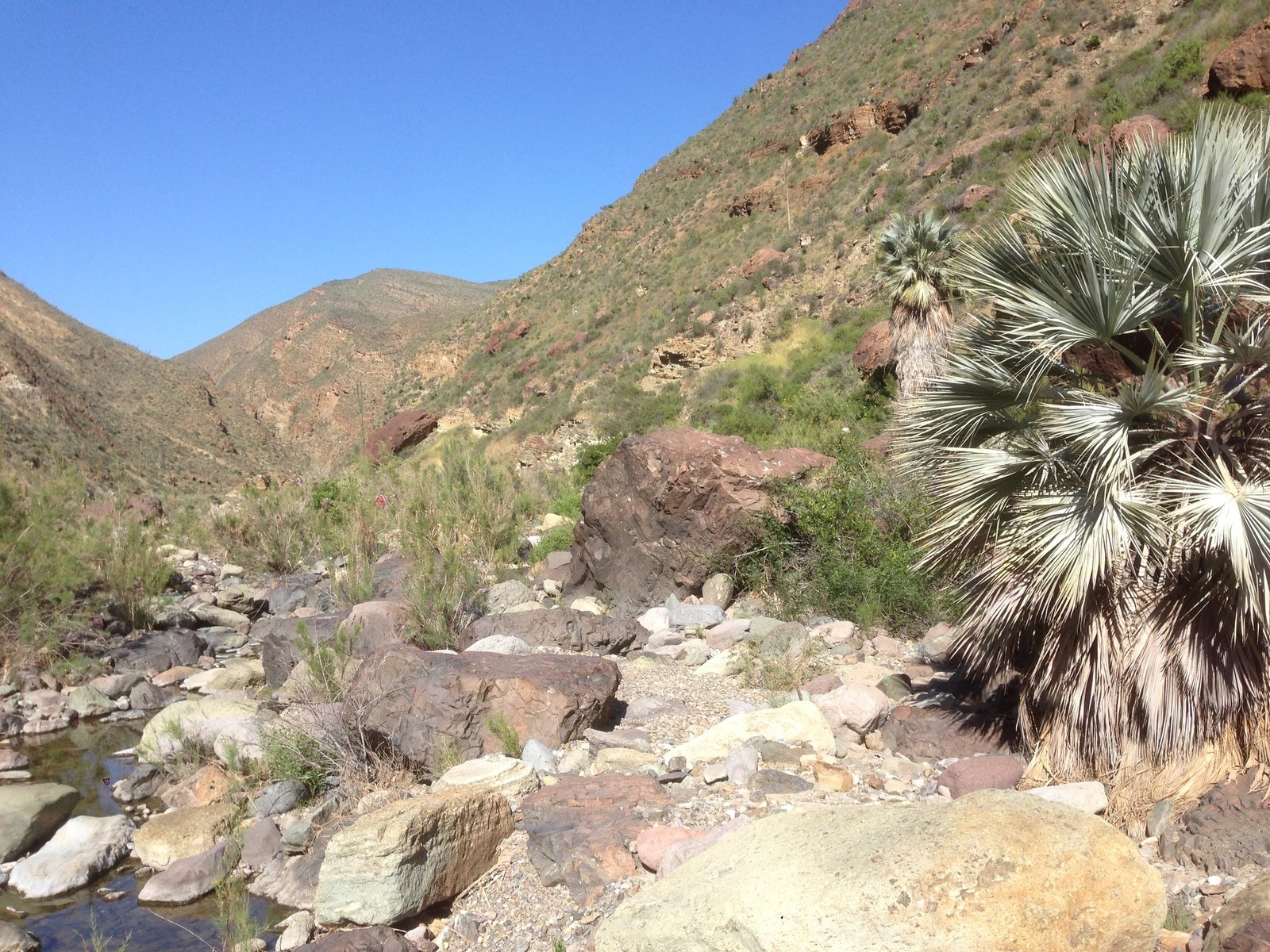
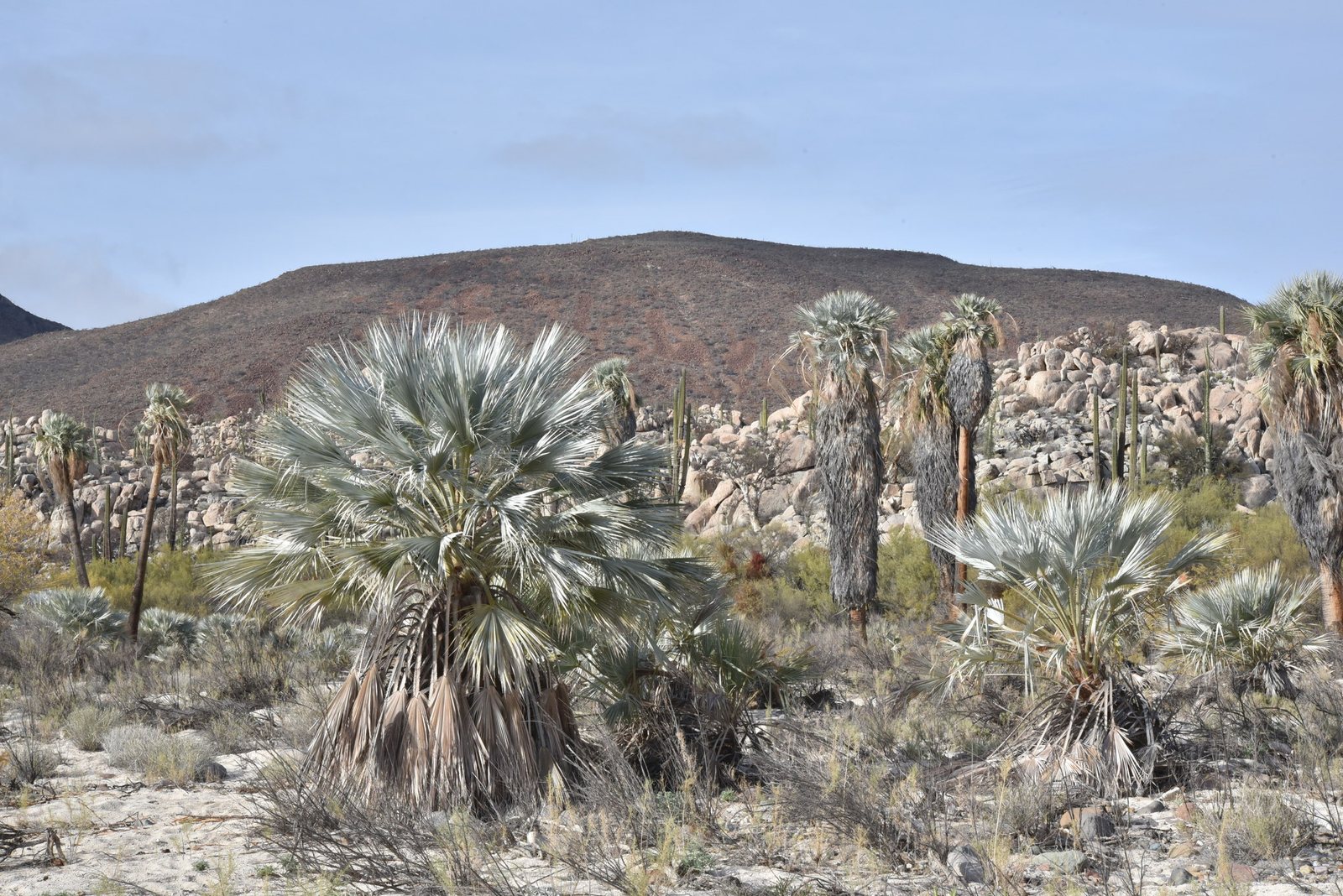
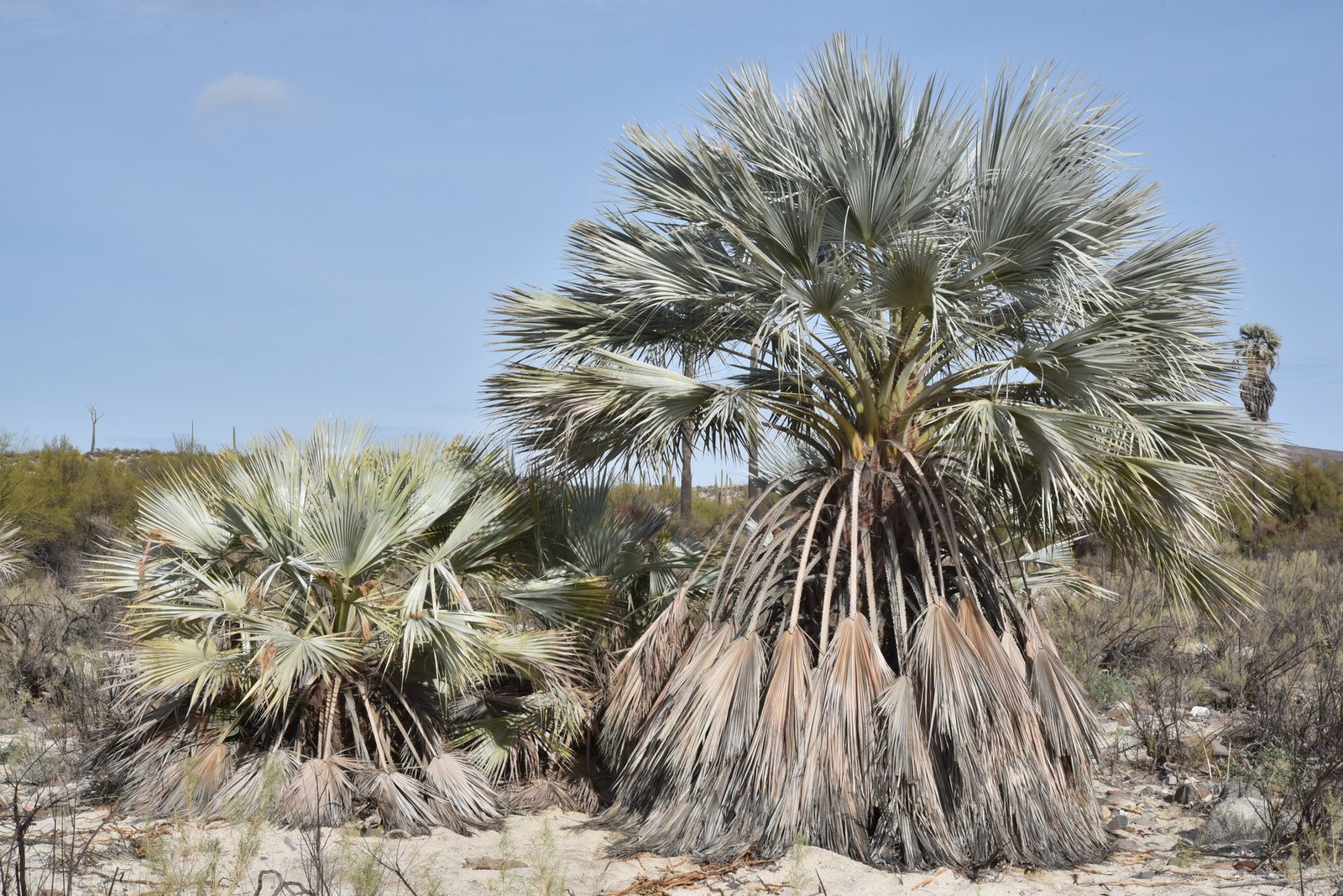
Mexican blue palm is a slow-growing evergreen palm from northwestern Mexico, valued for its stiff, silver-blue fan leaves and stout trunk. It suits hot, dry gardens with excellent drainage; cool, wet winters are more troublesome than brief dry frosts. Its broad crown and sharply toothed leaf stalks need generous clearance from paths.
At a glance
- Sun
- Full sun; strongest blue colouring develops in bright, sunny conditions.
- Water
- Drought-tolerant once established. Water young palms deeply during dry weather, allowing the soil to dry between waterings; established palms benefit from occasional deep summer watering.
- Soil
- Very well-drained sandy, gravelly or rocky soil; tolerates alkaline conditions. Avoid heavy, persistently wet ground.
- Height
- 20-40 ft (6-12 m)
- Spread
- 10-15 ft (3-4.6 m)
- Flowers
- Mature palms produce long, arching sprays of small cream flowers in spring or summer, often extending beyond the leaves.
- Foliage
- Evergreen. Large, stiff, deeply divided fan leaves, usually silver-blue to blue-grey, on sharply toothed stalks.
- Growth
- Slow, especially in cool climates; trunk development takes many years.
- Care needed
- Low
The year at a glance
- Pollinators
- Drought tolerant
- Heat tolerant
- Wildlife
| J | F | M | A | M | J | J | A | S | O | N | D | |
|---|---|---|---|---|---|---|---|---|---|---|---|---|
| Flowers | ||||||||||||
| Fruit | ||||||||||||
| Plant |
Northern hemisphere months. In Australia, shift them by six.
- Difficulty
- Hard
- Toughness
- Fairly tough
Will it suit your garden?
Pick your zone, country, light and whether you have pets.
Full sun is 6 or more hours of direct sun a day, part shade 3 to 6 hours, shade under 3.
How it grows
Planting day
7 ft (2 m)
After 1 year
7 ft (2.2 m)
After 2 years
8 ft (2.4 m)
After 3 years
9 ft (2.7 m)
After 5 years
10 ft (3.1 m)
About 32 years to full size.
From a typical nursery size, at an average rate for this kind of plant. A rule of thumb, not a forecast.
Good to know
- Cats and dogs
- Safe
- Growth rate
- Slow
Care
Jobs through the year
- WaterApr–May, Sep, every 21 days
- Water established roots only if dry; young and container plants need more frequent checks.
- WaterJun–Aug, every 14 days
- Soak during dry spells, then let soil dry; water young palms more often.
- WaterJan–Mar, Oct–Dec, every 30 days
- Check sheltered containers and water sparingly if dry; keep water out of the crown.
- FeedMay–Jul
- Use palm fertiliser only for confirmed deficiency, following label rates and intervals.
- PruneMay–Jul
- Remove fully brown fronds only; wear heavy gloves and eye protection.
- MulchMay
- Refresh gravel mulch without covering the trunk base.
- ProtectJan–Apr, Oct–Dec
- Not reliably ground-hardy here; overwinter containers in bright, cool, frost-free shelter.
- Plant in spring after frost risk has passed, keeping the existing root-ball surface level with the surrounding soil.
- Water deeply through the first few growing seasons, then reduce watering as roots establish.
- Keep irrigation away from the crown and do not allow water to stand around the roots.
- If growth or leaf colour indicates a deficiency, use a palm fertiliser with magnesium and micronutrients at the labelled rate during active growth.
- Keep mulch clear of the trunk; gravel mulch suits dry gardens.
- In marginal climates, protect young palms from severe frost and persistent winter rain; move container plants to bright, frost-free shelter.
Pruning. In late spring or summer, remove only completely brown leaves, cutting the stalk without damaging the trunk. Leave green and partly green leaves in place, and wear heavy gloves and eye protection against the stalk teeth.
Through the year
- Spring
- Plant once the soil has warmed and frost risk has passed.
- Late spring
- Remove fully dead leaves and inspect leaf bases for scale insects.
- Summer
- Water young palms deeply during dry spells, letting the soil dry between soakings.
- Summer
- Check older leaves for persistent yellowing and address confirmed nutrient deficiencies with a suitable palm fertiliser.
- Autumn
- Reduce watering as growth slows and check that winter rain can drain freely.
- Winter
- Protect vulnerable young palms during severe cold; keep container plants bright, cool and relatively dry under cover.
In the garden
- Use as a single focal point in a sunny gravel garden, with space for the mature crown.
- Pair with agaves, yuccas and low succulents for contrasting leaf shapes in a dry garden.
- Set against a dark wall or evergreen backdrop to emphasise the silver-blue foliage.
- Use a young specimen in a large, freely draining container on a sunny terrace, away from walkways.
Garden styles it suits: Architectural minimal, Desert modern, Modern Mediterranean, Dry gravel garden, Desert / xeriscape and Mexican hacienda.
Plant it with: Whale's tongue agave, Red yucca, Lavender, Rosemary, Blue fescue and Trailing ice plant.
Wildlife: Flowers attract bees and other insects. The small fruits may be eaten by birds where the palm flowers and sets seed.
Problems to watch for
- Root or crown rot in wet conditions: improve drainage, stop frequent irrigation and keep water out of the crown; badly rotted palms may not recover.
- Frost damage: protect young plants during cold spells and wait until spring growth resumes before judging damage or removing affected leaves.
- Scale insects: inspect leaf undersides and stalks; treat accessible infestations with a horticultural oil labelled for palms, avoiding hot sun.
- Nutrient deficiencies: persistent yellowing or spotting on older leaves can indicate potassium or magnesium shortage; check soil conditions and use a balanced palm fertiliser rather than removing affected green leaves.
Safety
Not known to be toxic to people, cats, dogs or horses, although species-specific poisoning information is limited. The sharply toothed leaf stalks can cause serious cuts and puncture wounds; fallen fruits may present a choking hazard to small children or pets.
Easily confused with
Guadalupe palm (Brahea edulis)
Usually has green rather than silver-blue fan leaves, and its flower sprays generally remain within the crown rather than trailing far beyond it.
California fan palm (Washingtonia filifera)
Has greener leaves with conspicuous curling white threads along the segment edges, and usually grows faster and taller.
The name
Brahea honours the Danish astronomer Tycho Brahe, while armata means 'armed', referring to the sharp teeth on the leaf stalks.
Propagation. Grow from fresh seed in a warm, freely draining seed mix. Germination is slow and uneven and can take several months or longer; keep the mix lightly moist, not wet. This solitary palm cannot be divided.
Checked against open data
- Accepted botanical name
- Brahea armata
- Native range
- Mexico Northwest.
Sources: GBIF (CC BY 4.0) and Trefle (CC BY 4.0). The care and design notes are LandscapeGPT's own.
See it in your own yard.
Upload a photo of your yard and see it redesigned with plants that suit your climate, each checked against your zone.