Mexican fan palm
Washingtonia robusta. Family Arecaceae. Tree.
Also called Mexican washingtonia, Skyduster palm.
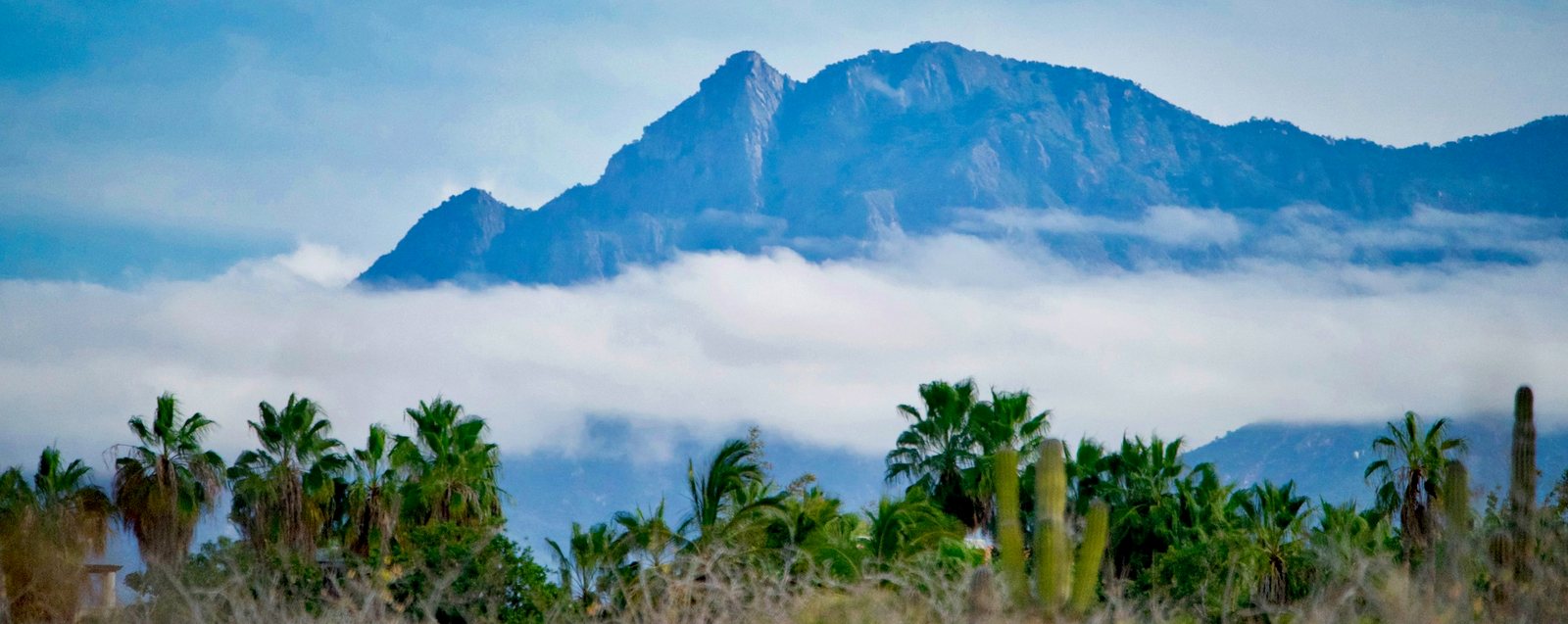
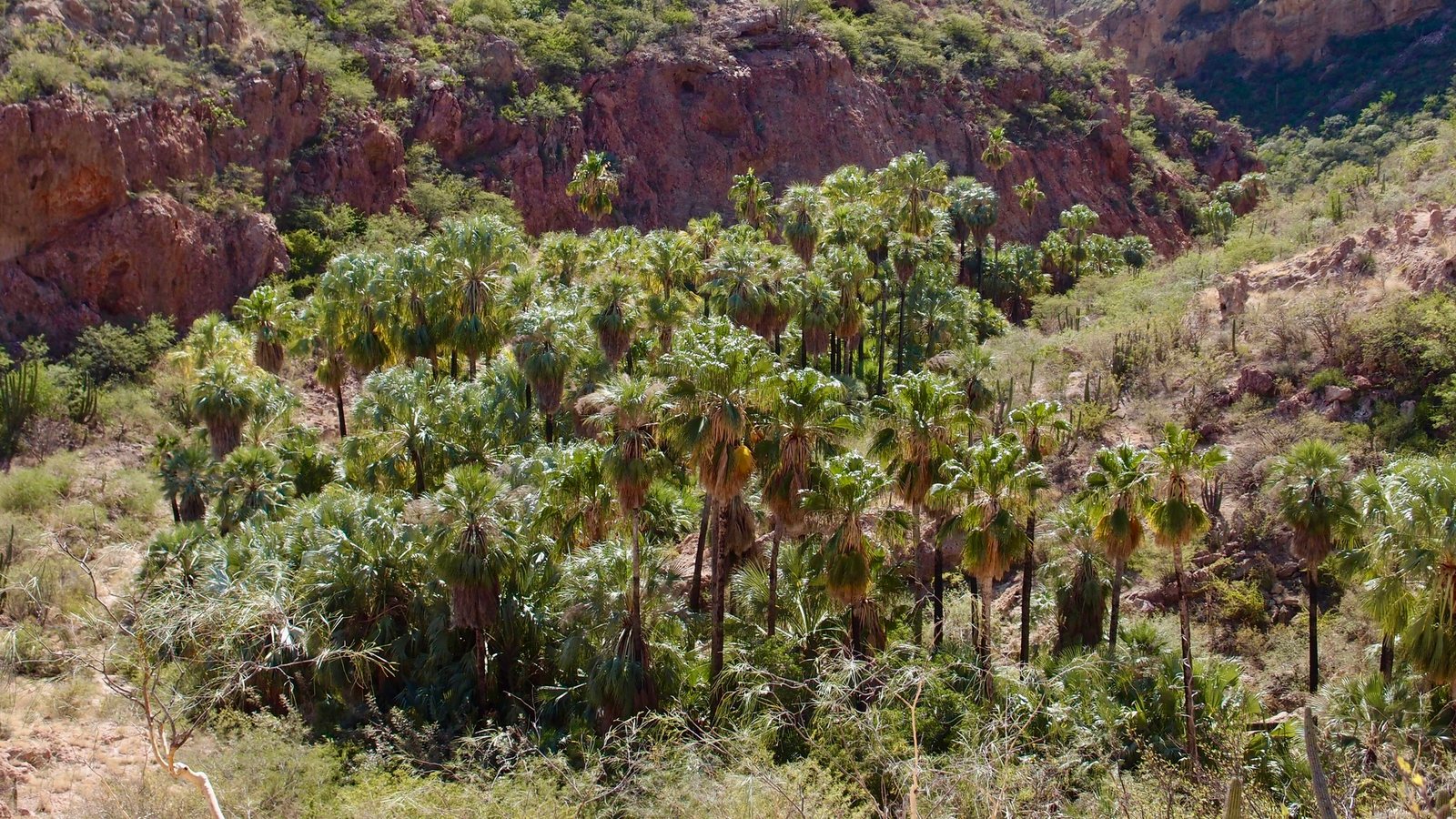
A fast-growing evergreen palm from northwestern Mexico, with a slender trunk and a high crown of fan-shaped leaves. Gardeners grow it for strong vertical accents and a subtropical skyline, but its eventual height, spiny leaf stalks and falling fronds make it unsuitable for small gardens or positions close to buildings. It performs best in warm climates; prolonged freezes and cold, wet winters can seriously damage it.
At a glance
- Sun
- Full sun; young plants tolerate light shade.
- Water
- Water regularly while establishing. Established palms tolerate drought, but grow better with occasional deep watering during prolonged dry weather.
- Soil
- Well-drained sandy, loamy or gravelly soil; tolerates alkaline conditions. Avoid waterlogged ground.
- Height
- 70-100 ft (21-30 m)
- Spread
- 10-15 ft (3-4.6 m)
- Flowers
- Creamy-white flowers on long, branching sprays in late spring and summer, followed by small black fruits.
- Foliage
- Evergreen. Large, bright green, fan-shaped leaves with some threadlike fibres along their margins; leaf stalks carry sharp, hooked teeth. Dead leaves can remain as a hanging skirt around the trunk.
- Growth
- Fast in warm weather with adequate water and nutrients.
- Care needed
- Medium
The year at a glance
- Pollinators
- Drought tolerant
- Heat tolerant
- Wildlife
| J | F | M | A | M | J | J | A | S | O | N | D | |
|---|---|---|---|---|---|---|---|---|---|---|---|---|
| Flowers | ||||||||||||
| Fruit | ||||||||||||
| Plant |
Northern hemisphere months. In Australia, shift them by six.
- Difficulty
- Hard
- Toughness
- Needs looking after
Will it suit your garden?
Pick your zone, country, light and whether you have pets.
Full sun is 6 or more hours of direct sun a day, part shade 3 to 6 hours, shade under 3.
How it grows
Planting day
10 ft (3.1 m)
After 1 year
16 ft (4.8 m)
After 2 years
21 ft (6.5 m)
After 3 years
27 ft (8.2 m)
After 5 years
38 ft (11.7 m)
About 13 years to full size.
From a typical nursery size, at an average rate for this kind of plant. A rule of thumb, not a forecast.
Good to know
- Cats and dogs
- Safe
- Invasive in
- the US and Australia
- In the garden
- Spreads vigorously: plan to contain it.
- Growth rate
- Fast
Care
Jobs through the year
- WaterApr–May, Sep–Oct, every 21 days
- For established ground plants in frost-free climates, water during dry spells; young plants and pots need more.
- WaterJun–Aug, every 14 days
- Deeply water established ground plants in prolonged drought; check containers more frequently.
- WaterJan–Mar, Nov–Dec, every 28 days
- Check sheltered pots and water sparingly without allowing the root ball to dry completely.
- FeedMay
- Apply slow-release palm fertiliser with magnesium and micronutrients if needed.
- MulchMay
- Mulch outdoor root zones, leaving the trunk base clear.
- PruneMay–Jul
- Remove fully brown fronds only; use an arborist for tall palms or hazardous dead skirts.
- ProtectJan–Apr, Oct–Dec
- Not reliably winter-hardy in this climate; overwinter young container palms in bright, frost-free shelter.
- Plant in spring once the soil is warming, leaving generous clearance from buildings, paths and overhead wires.
- Water newly planted palms deeply whenever the upper soil begins to dry; gradually reduce watering as roots establish.
- Use a slow-release palm fertiliser with magnesium and micronutrients during the growing season, following the label.
- Mulch the root area, but keep mulch away from the trunk and avoid burying the trunk base.
- Grow young container plants in free-draining compost and move them under bright, frost-free cover where winters are cold.
- Keep children and pets away from the toothed leaf stalks, and use a qualified arborist for work above safe ground reach.
Pruning. Remove fully brown fronds and unwanted flower or fruit stalks in late spring or summer; leave green fronds in place and never cut the central growing spear. Do not strip the crown into a narrow 'hurricane cut'; have tall palms and hazardous dead skirts managed professionally.
Through the year
- Spring
- Plant or repot young palms after frost risk has passed and the soil has warmed.
- Late spring
- Apply palm fertiliser if needed and check new foliage for yellowing or distorted growth.
- Summer
- Water establishing palms deeply during dry spells; allow the soil to drain between waterings.
- Summer
- Arrange removal of hazardous dead fronds and unwanted flower stalks before fruit develops.
- Autumn
- Pull out unwanted seedlings while small and collect fallen fruit near paths.
- Late autumn
- Move container plants into bright, frost-free shelter in cold climates.
- Winter
- Keep sheltered container plants on the dry side without letting the root ball dry out completely.
In the garden
- Use as a tall vertical accent in a large, sunny garden, with ample room for its mature crown.
- Plant in widely spaced avenues on large properties to create a strong skyline and repeated rhythm.
- Combine with agaves, yuccas and gravel for contrasting leaf shapes in a dry-climate planting.
- Use behind lower subtropical planting to create a high canopy without a broad, spreading crown.
- Grow young specimens in large containers as temporary accents, with a plan for their eventual size.
Garden styles it suits: Architectural minimal, Modern Mediterranean, Desert modern, Luxury resort, Mexican hacienda and Tropical.
Plant it with: Spineless yucca, Foxtail agave, Red yucca, Rosemary, African lily and Bird of paradise.
Wildlife: Flowers attract visiting insects, and birds eat the fruits and disperse the seeds. Retained dead fronds can shelter birds, bats and rodents, but may also create a fire or falling-debris hazard.
Problems to watch for
- Cold injury: frost can scorch leaves or damage the growing point. Choose a sheltered, warm site, protect small specimens during brief freezes and wait for new growth before removing damaged foliage.
- Root or crown rot: persistent wet soil encourages decay. Improve drainage, avoid overwatering and keep soil or mulch off the trunk; a collapsing central spear needs professional assessment.
- Nutrient deficiency: potassium or magnesium shortages can cause spotting, yellowing and premature death of older leaves. Use an appropriate palm fertiliser and retain partly green leaves while correcting the shortage.
- Palm weevils where present: larvae tunnel inside the crown or trunk, causing wilting or collapse. Seek prompt advice from a local arborist or plant-health authority; treatment and reporting requirements vary by region.
Safety
Not known to be toxic to cats, dogs, horses or people. The sharp teeth on leaf stalks can cause cuts and puncture wounds, and falling fronds or heavy cut sections can cause serious injury.
Where it spreads. Seeds freely in suitable climates and is invasive in parts of California and Hawaii. It is also regarded as an environmental weed in parts of Western Australia and Queensland. Avoid planting near waterways or natural vegetation where it escapes, and check local guidance.
Easily confused with
California fan palm (Washingtonia filifera)
Usually has a much thicker trunk, a broader crown and greyer-green leaves with more conspicuous white threads. Young plants can be difficult to distinguish.
Hybrid Washingtonia (Washingtonia × filibusta)
A hybrid of Mexican and California fan palms, generally showing intermediate trunk thickness and leaf characters. Appearance varies, so confident identification may require known parentage.
Chinese fan palm (Livistona chinensis)
Usually shorter and slower-growing, with fan leaves whose long segment tips droop conspicuously, giving the crown a fountain-like appearance.
The name
Washingtonia honours George Washington, robusta means robust or stout, and Mexican fan palm refers to its native country and fan-shaped leaves.
Propagation. Raise from fresh seed in a warm, free-draining seed mix, keeping it lightly moist. It does not produce offsets and cannot be propagated from trunk or leaf cuttings.
Checked against open data
- Accepted botanical name
- Washingtonia robusta
- In the US and Canada
- Introduced in the lower 48 states.
Sources: GBIF (CC BY 4.0) and USDA PLANTS. The care and design notes are LandscapeGPT's own.
See it in your own yard.
Upload a photo of your yard and see it redesigned with plants that suit your climate, each checked against your zone.