Mexican fence post cactus
Pachycereus marginatus. Family Cactaceae. Succulent.
Also called Fence post cactus, Organ cactus, Lophocereus marginatus.
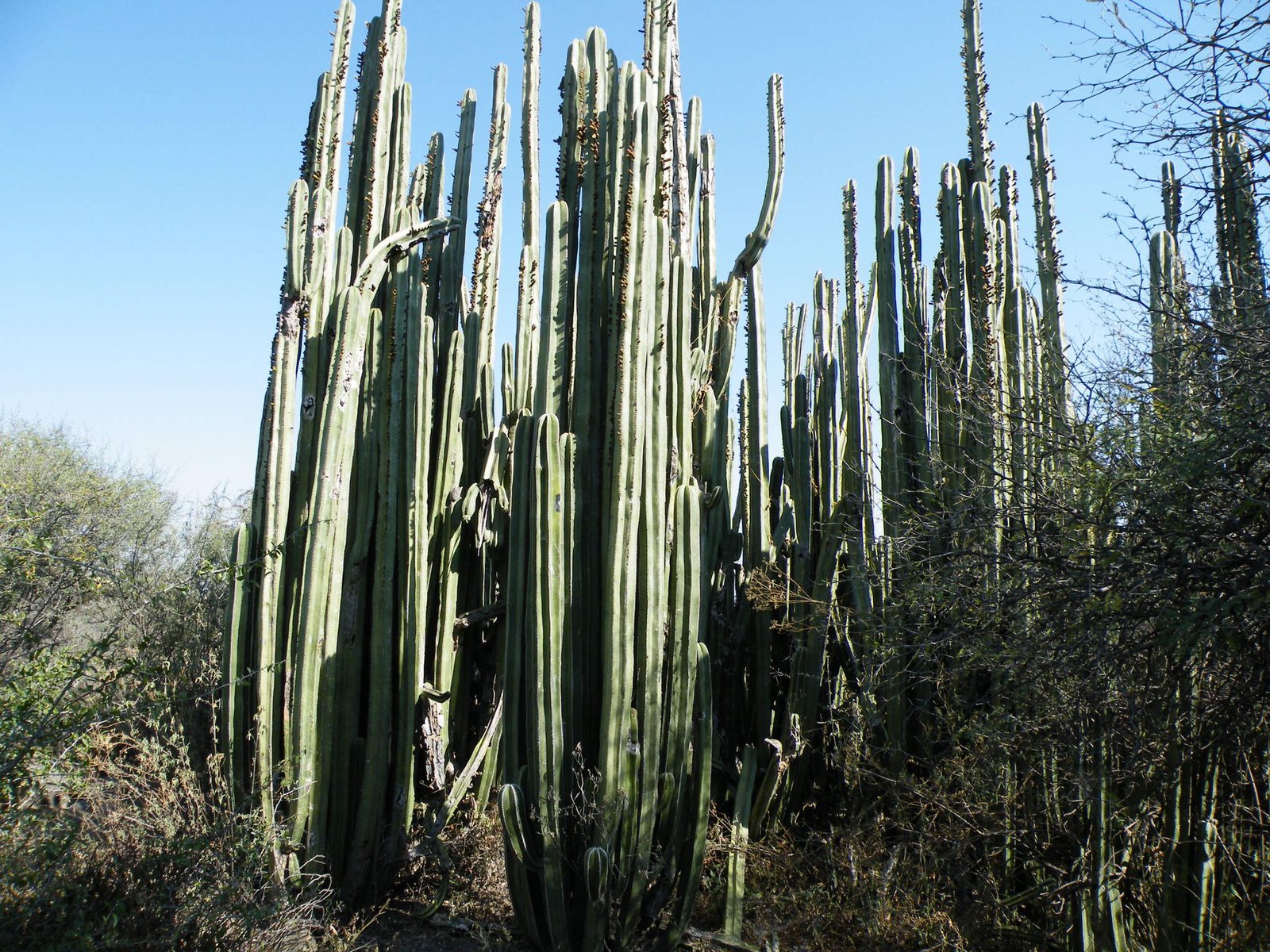
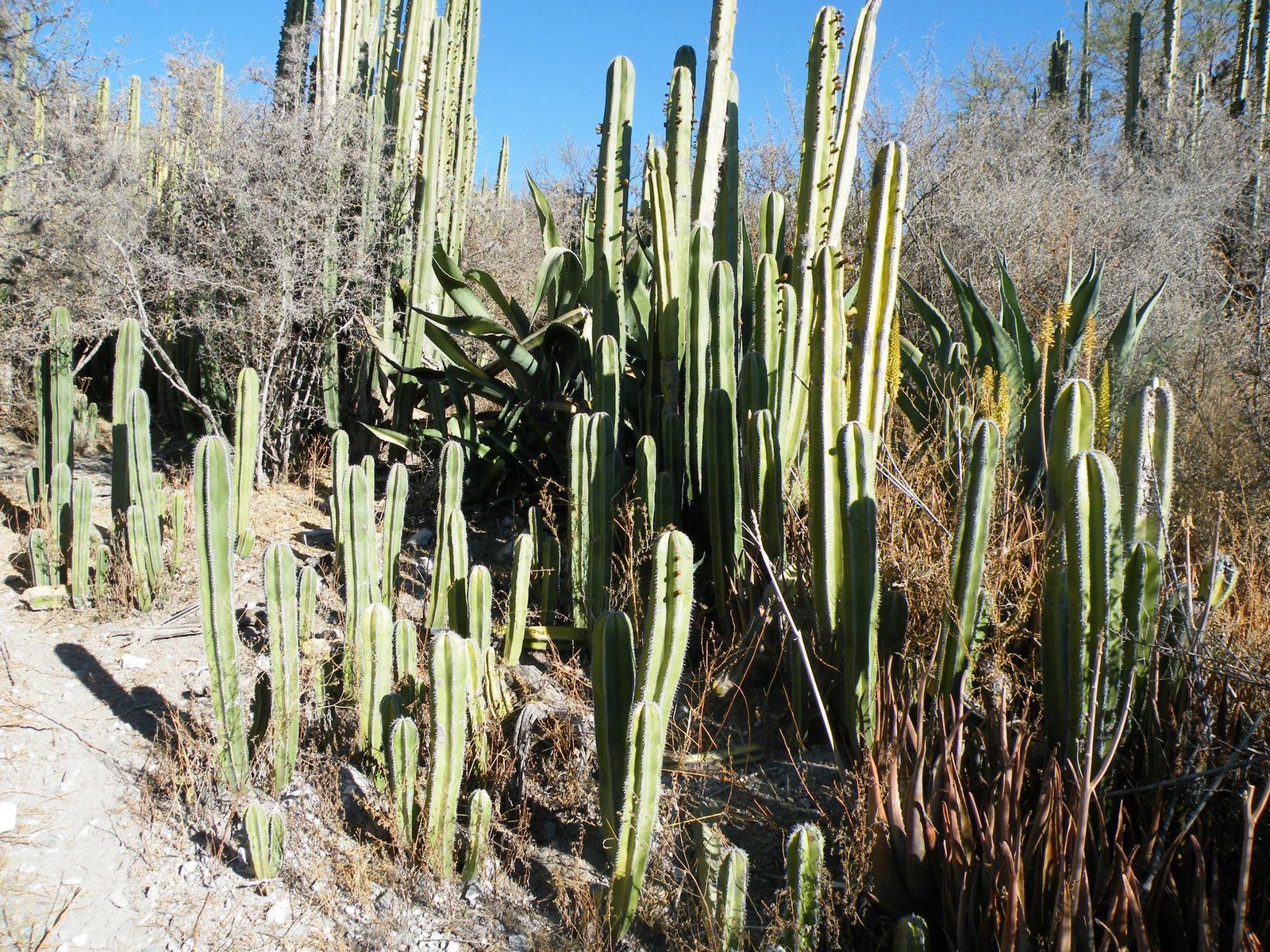
Mexican fence post cactus forms upright green columns with neatly outlined ribs and short spines. Gardeners grow it for strong vertical structure, especially in dry gardens and living fences. Outside frost-light climates, keep it in a container that can move into a bright, frost-free space for winter.
At a glance
- Sun
- Full sun; acclimatise indoor-grown plants gradually to direct sunlight. Young plants may benefit from light afternoon shade in very hot climates.
- Water
- Low once established. Water deeply during active growth, then let the soil dry completely; keep almost dry in cool winter conditions.
- Soil
- Sharply drained sandy or gravelly soil. In containers, use cactus compost with added pumice, grit or perlite, and a pot with drainage holes.
- Height
- 10-20 ft (3-6 m), occasionally taller in frost-free ground; usually much smaller in containers
- Spread
- 3-6 ft (0.9-1.8 m) as a mature clump
- Flowers
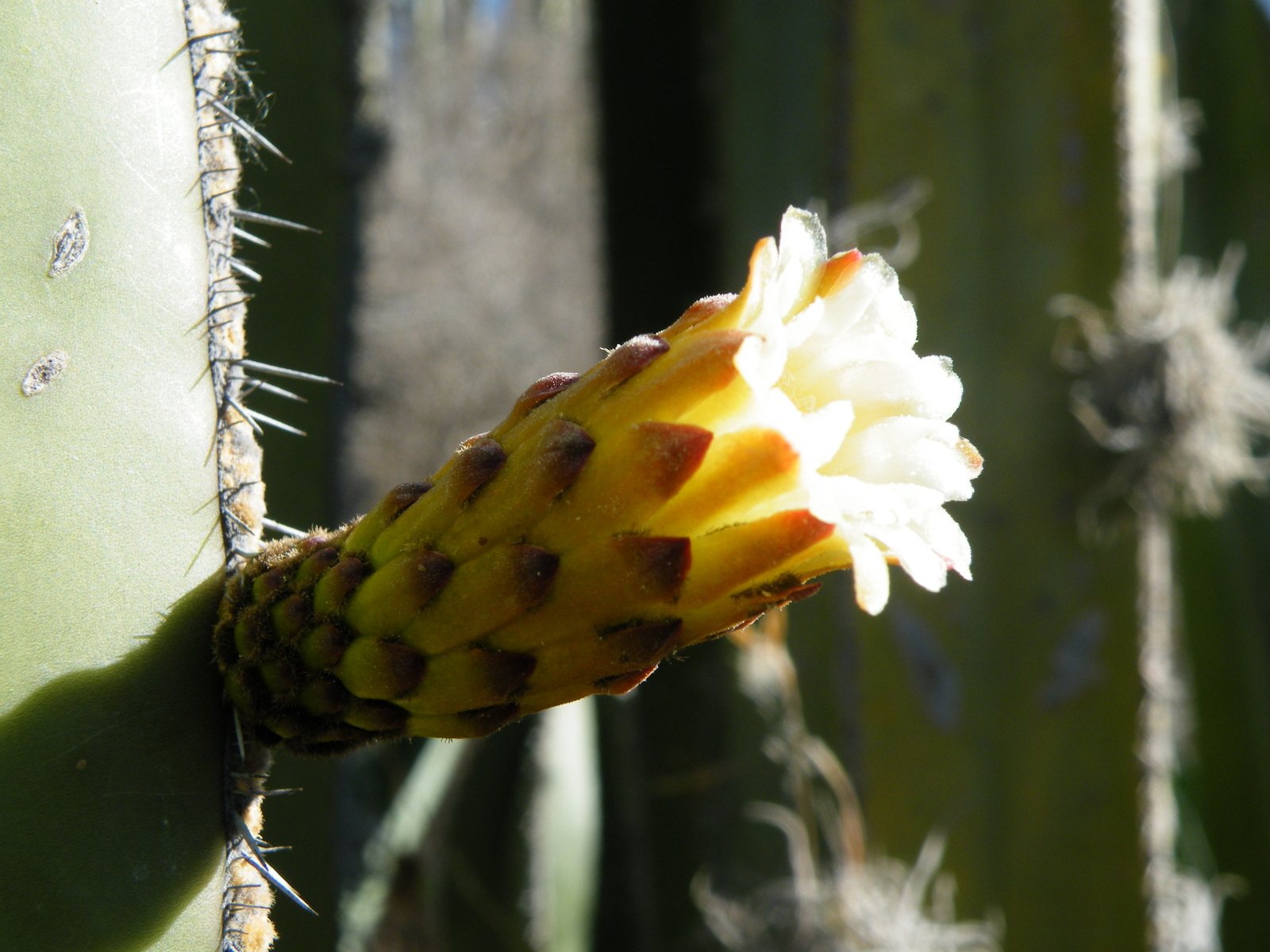
- Pink to reddish flowers near the upper ribs, usually in spring or early summer on mature outdoor plants; flowering is uncommon indoors.
- Foliage
- Evergreen. Leafless, dark to mid-green upright stems, usually with five to seven broad ribs edged by closely spaced, pale woolly areoles and short spines.
- Growth
- Slow to moderate in warm conditions; slow in containers or cool climates.
- Care needed
- Low
The year at a glance
- Pollinators
- Deer resistant
- Drought tolerant
- Heat tolerant
- Wildlife
- Low allergen
| J | F | M | A | M | J | J | A | S | O | N | D | |
|---|---|---|---|---|---|---|---|---|---|---|---|---|
| Flowers | ||||||||||||
| Fruit | ||||||||||||
| Plant |
Northern hemisphere months. In Australia, shift them by six.
- Difficulty
- Moderate
- Toughness
- Fairly tough
Will it suit your garden?
Pick your zone, country, light and whether you have pets.
Full sun is 6 or more hours of direct sun a day, part shade 3 to 6 hours, shade under 3.
How it grows
Planting day
1.8 ft (0.54 m)
After 1 year
3 ft (1 m)
After 2 years
5 ft (1.6 m)
After 3 years
7 ft (2.1 m)
After 5 years
10 ft (3.1 m)
About 8 years to full size.
From a typical nursery size, at an average rate for this kind of plant. A rule of thumb, not a forecast.
Good to know
- Cats and dogs
- Safe
- Growth rate
- Slow
Care
Jobs through the year
- WaterApr–May, Sep, every 30 days
- Water established plants only when warm and completely dry; check containers and new plants more often.
- WaterJun–Aug, every 21 days
- Water thoroughly only after the root zone dries completely; skip after rain.
- FeedMay–Aug, every 45 days
- Feed actively growing container plants with dilute low-nitrogen cactus fertiliser.
- MulchMay
- Use a thin gravel mulch, leaving stem bases clear.
- ProtectMay–Jun
- After frost risk passes, acclimatise sheltered plants gradually to outdoor sun.
- ProtectJan–Apr, Sep–Dec
- Overwinter in bright, frost-free shelter; keep cool plants almost dry.
- Plant slightly high in sharply drained ground; avoid hollows where rain collects.
- Water only after the root zone has dried, and never leave a pot standing in water.
- Feed container plants lightly with a low-nitrogen cactus fertiliser during spring and summer.
- Use gravel rather than moisture-holding organic mulch against the stems.
- Move containers under bright, frost-free cover before frosts; protect outdoor plants from prolonged cold rain.
Pruning. Routine pruning is unnecessary. In warm, dry weather, remove damaged or unwanted stems with a clean saw, wearing thick gloves and using folded cardboard or similar protection to handle the stems.
Through the year
- Early spring
- Check for rot and pests, and repot crowded containers into a slightly larger pot with fresh, gritty cactus compost.
- Spring
- Resume watering gradually as growth starts and temperatures rise.
- Late spring
- After frost risk has passed, move sheltered plants outdoors gradually to prevent sunburn.
- Summer
- Water thoroughly only when dry, and give container plants an occasional dilute cactus feed.
- Early autumn
- Stop feeding and reduce watering as temperatures fall.
- Late autumn
- Bring pots into bright, frost-free shelter before the first frost.
- Winter
- Keep cool plants almost dry and check stem bases for soft or discoloured patches.
In the garden
- Plant repeated columns along a sunny boundary to create a living fence in frost-light climates.
- Use a small group against a plain wall to emphasise the stems' straight lines and shadows.
- Combine with rounded barrel cacti and low succulents for contrasting shapes in a gravel garden.
- Grow a single specimen in a heavy, well-drained container as a courtyard focal point, away from paths and doorways.
Garden styles it suits: Desert modern, Architectural minimal, Desert / xeriscape, Southwestern, Mexican hacienda and Contemporary minimal.
Plant it with: Golden barrel cactus, Whale's tongue agave, Red yucca, Desert spoon and Blue chalksticks.
Wildlife: Flowers can provide nectar and pollen for visiting insects, and ripe fruits may be eaten by birds. A plant kept indoors offers little wildlife value.
Problems to watch for
- Root or stem rot in wet soil: improve drainage, stop watering affected plants and remove rotten tissue; salvage a healthy stem cutting if the base is lost.
- Mealybugs or scale: inspect ribs and stem bases, remove small infestations carefully and use a labelled treatment suitable for cacti if needed.
- Frost damage: protect from freezing weather and keep cold plants dry; remove dead tissue once damage is clear and conditions are warm and dry.
- Sunburn after moving outdoors: introduce direct sun gradually over several weeks; existing pale or brown scars usually remain.
Safety
Not known to be toxic to people, cats, dogs or horses, although species-specific toxicity information is limited. The stems and their spines can cause painful punctures and eye injuries; keep them away from children, pets and livestock routes.
Easily confused with
Organ pipe cactus (Stenocereus thurberi)
Usually has many more, narrower ribs and longer, more conspicuous spines; its stems lack the fence post cactus's tidy pale lines along a few broad ribs.
Mexican giant cardon (Pachycereus pringlei)
Develops much thicker, often grey-green stems with more ribs and eventually a massive, branching tree-like framework.
The name
The common name refers to its use in living fences in Mexico, while marginatus means bordered or edged, referring to the pale lines along the stem ribs.
Propagation. Take stem cuttings in warm weather. Let the cut surface dry and form a firm callus in a shaded, airy place, then set the cutting upright in dry, gritty cactus mix; water sparingly while roots develop. Seed propagation is possible but slow.
Checked against open data
- Accepted botanical name
- Marginatocereus marginatus Pachycereus marginatus is an older name for Marginatocereus marginatus.
- Native range
- Mexico Central, Mexico Gulf, Mexico Northeast and Mexico Southwest.
Sources: GBIF (CC BY 4.0) and Trefle (CC BY 4.0). The care and design notes are LandscapeGPT's own.
See it in your own yard.
Upload a photo of your yard and see it redesigned with plants that suit your climate, each checked against your zone.