Mussaenda
Mussaenda philippica. Family Rubiaceae. Shrub.
Also called Philippine mussaenda, Bangkok rose.
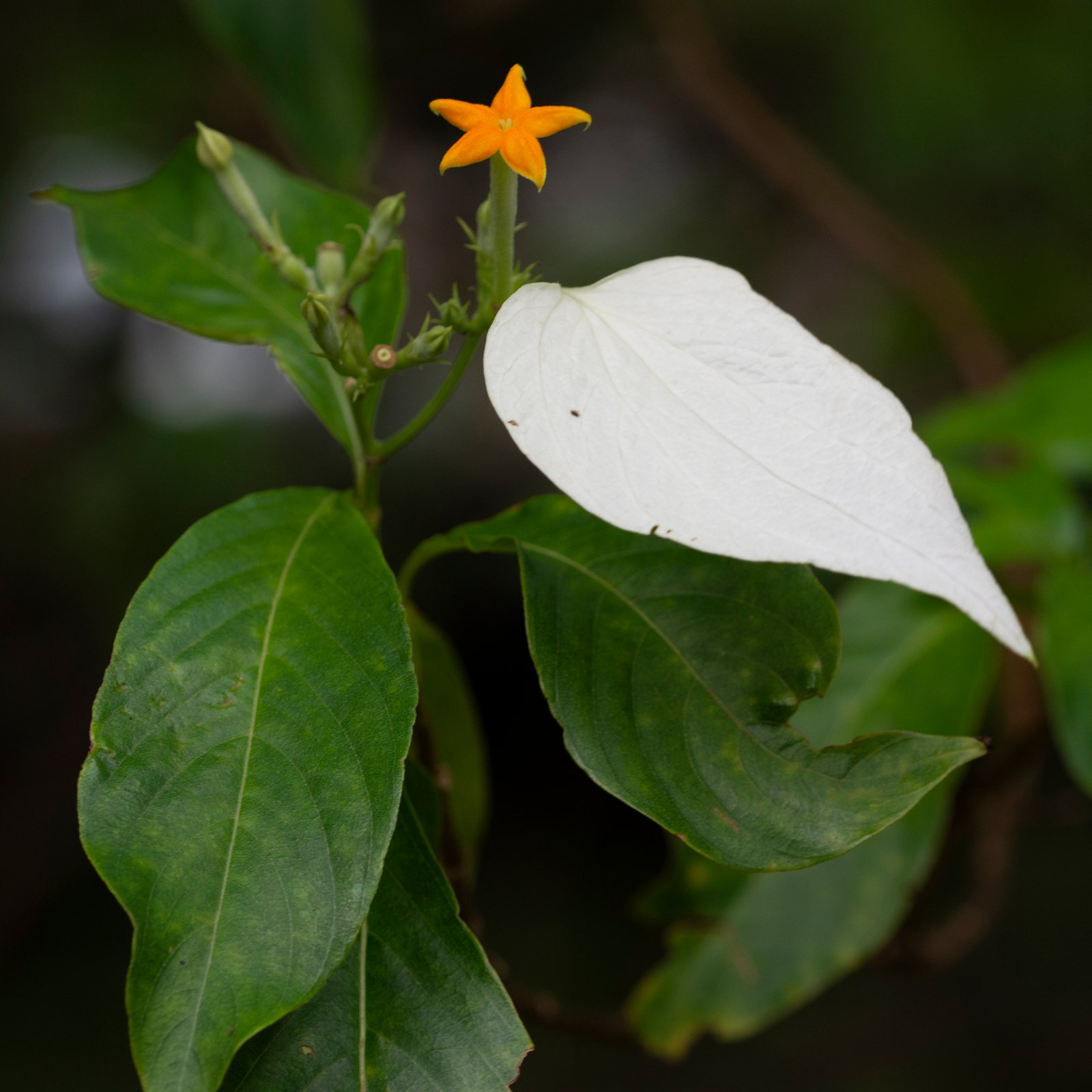
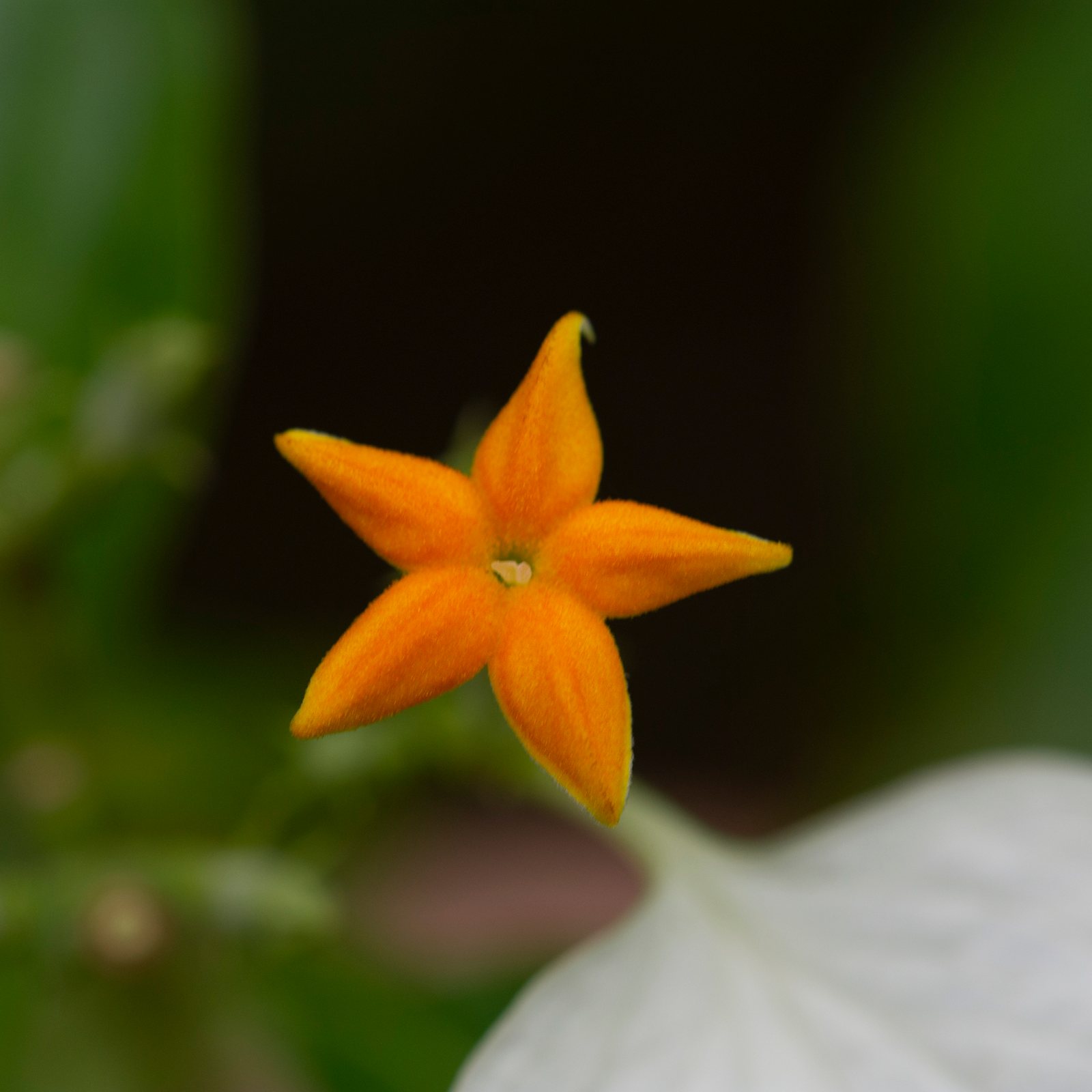
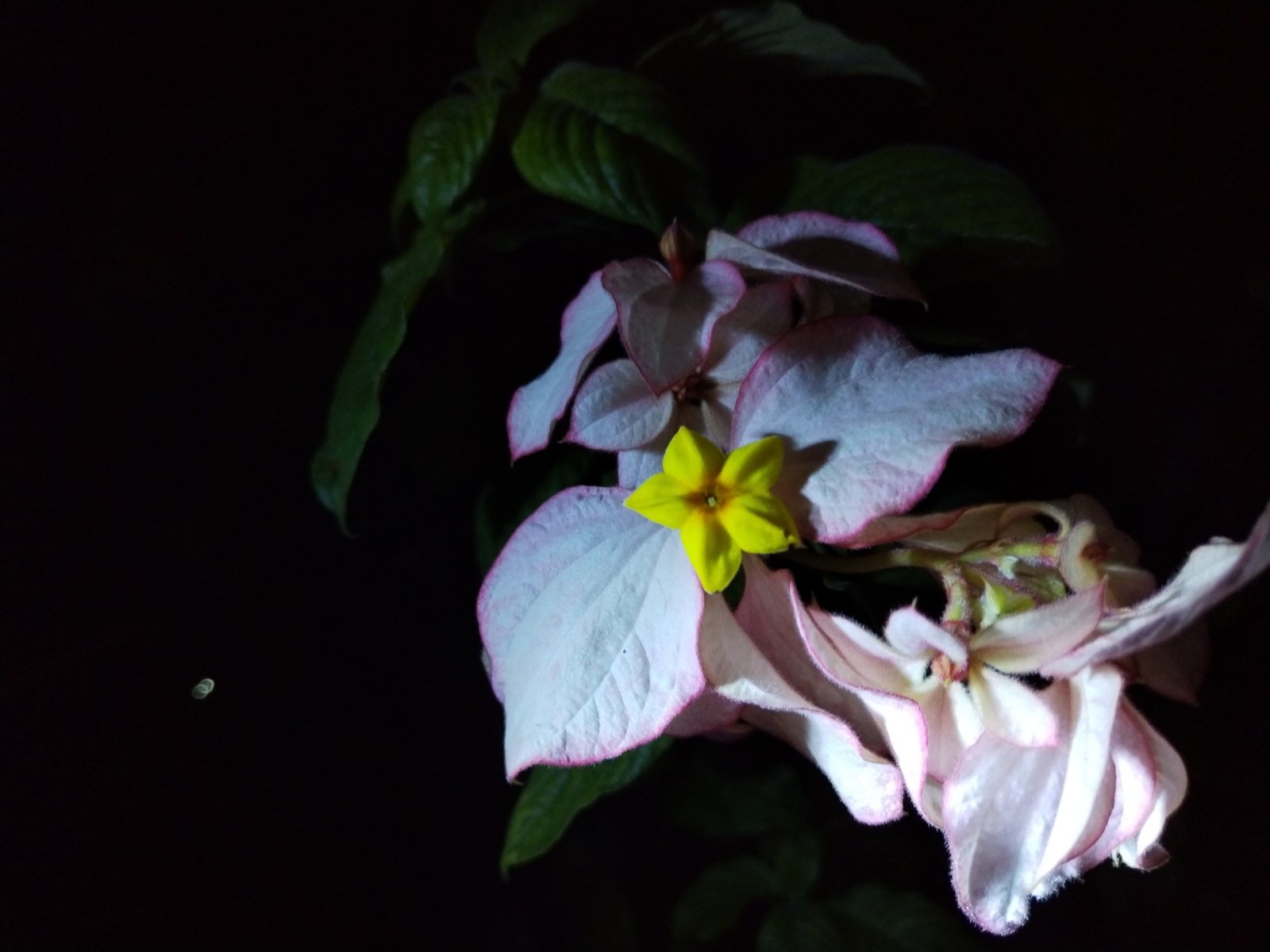
Mussaenda philippica is a tropical shrub grown for its large, colourful, leaf-like flower parts, which surround small yellow to orange flowers. These enlarged sepals are white in the typical species, while cultivated selections can have pink, salmon or red displays. It needs frost-free warmth; in cooler regions, grow it in a container with heated winter shelter.
At a glance
- Sun
- Full sun to light partial shade; afternoon shade is helpful in very hot, dry locations.
- Water
- Keep the root zone evenly moist during active growth, but never waterlogged. Reduce watering in winter without letting the root ball dry out completely.
- Soil
- Fertile, humus-rich, well-drained soil, preferably slightly acidic. Use a free-draining potting mix for containers.
- Height
- 6-12 ft (1.8-3.7 m)
- Spread
- 6-10 ft (1.8-3 m)
- Flowers
- Mainly late spring through autumn, potentially longer in tropical climates; small yellow to orange flowers surrounded by showy white, pink, salmon or red enlarged sepals, depending on the selection.
- Foliage
- Evergreen. Large, opposite, oval green leaves with prominent veins and a softly hairy surface.
- Growth
- Fast in warm, humid conditions.
- Care needed
- Medium
The year at a glance
- Pollinators
- Heat tolerant
- Low allergen
| J | F | M | A | M | J | J | A | S | O | N | D | |
|---|---|---|---|---|---|---|---|---|---|---|---|---|
| Flowers | ||||||||||||
| Plant |
Northern hemisphere months. In Australia, shift them by six.
- Difficulty
- Hard
- Toughness
- Needs looking after
Will it suit your garden?
Pick your zone, country, light and whether you have pets.
Full sun is 6 or more hours of direct sun a day, part shade 3 to 6 hours, shade under 3.
How it grows
Planting day
1.6 ft (0.5 m)
After 1 year
4 ft (1.2 m)
After 2 years
6 ft (1.9 m)
After 3 years
8 ft (2.6 m)
After 5 years
9 ft (2.8 m)
full size
About 3 years to full size.
From a typical nursery size, at an average rate for this kind of plant. A rule of thumb, not a forecast.
Good to know
- Cats and dogs
- Safe
- Growth rate
- Fast
Care
Jobs through the year
- WaterMar–May, Sep–Oct, every 7 days
- In this climate grow in a pot; water when the surface begins drying, then drain.
- WaterJun–Aug, every 3 days
- Check pots daily in heat; water as the surface dries without leaving standing water.
- WaterJan–Feb, Nov–Dec, every 14 days
- Under warm shelter, water sparingly when the surface dries; never dry the root ball completely.
- FeedApr–Sep, every 28 days
- Apply flowering-shrub fertilizer at the label rate while actively growing.
- PruneMar–Apr
- Remove weak or dead stems and shorten straggly shoots as growth resumes.
- MulchJun
- Add a light surface mulch, keeping it clear of the stems.
- ProtectJan–May, Sep–Dec
- Keep in bright, warm shelter when nights fall below 10°C; outdoor ground overwintering is unsuitable.
- ProtectJun
- Acclimatize gradually to outdoor light once nights remain above 10°C.
- Plant in a warm position sheltered from cold, drying winds.
- Water deeply when the soil surface begins to dry; check containers frequently during hot weather.
- Apply a balanced flowering-shrub fertiliser during active growth, following the label rate.
- Mulch the root zone, keeping mulch clear of the main stems.
- Move container plants into bright, frost-free shelter before nights become persistently cooler than 50°F (10°C).
- Keep sheltered plants away from cold glass and reduce watering while growth is slow.
Pruning. In early spring, as active growth resumes, remove dead or weak stems and shorten long shoots to shape the shrub. Pinch young shoots to encourage branching, but avoid repeated late pruning that removes developing flower heads.
Through the year
- Early spring
- Prune weak or straggly growth as new shoots begin to develop.
- Spring
- Refresh container compost or repot if root-bound, and begin feeding when growth is active.
- Late spring
- Move sheltered plants outdoors gradually once nights are consistently warm.
- Summer
- Water regularly and inspect soft shoots and leaf undersides for sap-feeding pests.
- Early autumn
- Bring containers under cover before cold nights; check for pests first.
- Winter
- Provide bright, warm shelter in cold climates and water less while growth slows.
In the garden
- Use as a flowering specimen in a sheltered tropical courtyard.
- Plant behind lower foliage plants such as crotons and coleus for contrasting leaf colour.
- Group with hibiscus and ixora in a warm-climate shrub border.
- Grow in a large patio container where the flower display can be seen closely and winter shelter is available.
Garden styles it suits: Tropical, Modern tropical, Luxury resort, Modern courtyard, Caribbean and Florida subtropical.
Plant it with: Hibiscus, Ixora, Croton, Coleus, Ginger lilies and Cordyline.
Wildlife: The small true flowers can attract butterflies and other nectar-feeding insects in warm climates.
Problems to watch for
- Cold damage and leaf drop: protect from chilly nights and frost; wait for new growth before cutting back damaged stems.
- Whiteflies, aphids or mealybugs: inspect leaf undersides and shoot tips; use insecticidal soap labelled for the pest, covering affected surfaces thoroughly.
- Spider mites in dry indoor conditions: look for fine webbing and stippled leaves; rinse foliage and treat persistent infestations with a labelled product.
- Root rot in wet soil: improve drainage, empty standing water from saucers and let the surface begin to dry between waterings.
Safety
Not known to be toxic to people, cats, dogs or horses, but reliable species-specific safety information is limited. No particular poisonous part is established; do not treat the leaves, flowers or fruit as edible.
Easily confused with
Red flag bush (Mussaenda erythrophylla)
Usually has red enlarged sepals around small cream or white flowers and a more scrambling habit. Check the true flowers rather than sepal colour alone, because cultivated mussaendas can look similar.
Dwarf yellow mussaenda (Pseudomussaenda flava)
Usually a smaller shrub with yellow flowers and relatively small cream to pale yellow enlarged sepals, rather than the broad, conspicuous displays of cultivated Mussaenda philippica.
The name
The species name philippica refers to the Philippines, where the plant is native.
Propagation. Take softwood or semi-ripe stem cuttings during warm weather and root them in a free-draining medium with high humidity and gentle bottom heat. Cuttings preserve the characteristics of named selections.
Checked against open data
- Accepted botanical name
- Mussaenda philippica
- In the US and Canada
- Native in Pacific Basin. Introduced in Pacific Basin.
- Native range
- Philippines.
Sources: GBIF (CC BY 4.0), USDA PLANTS and Trefle (CC BY 4.0). The care and design notes are LandscapeGPT's own.
See it in your own yard.
Upload a photo of your yard and see it redesigned with plants that suit your climate, each checked against your zone.