New Jersey tea
Ceanothus americanus. Family Rhamnaceae. Shrub.
Also called Redroot, Jersey tea.
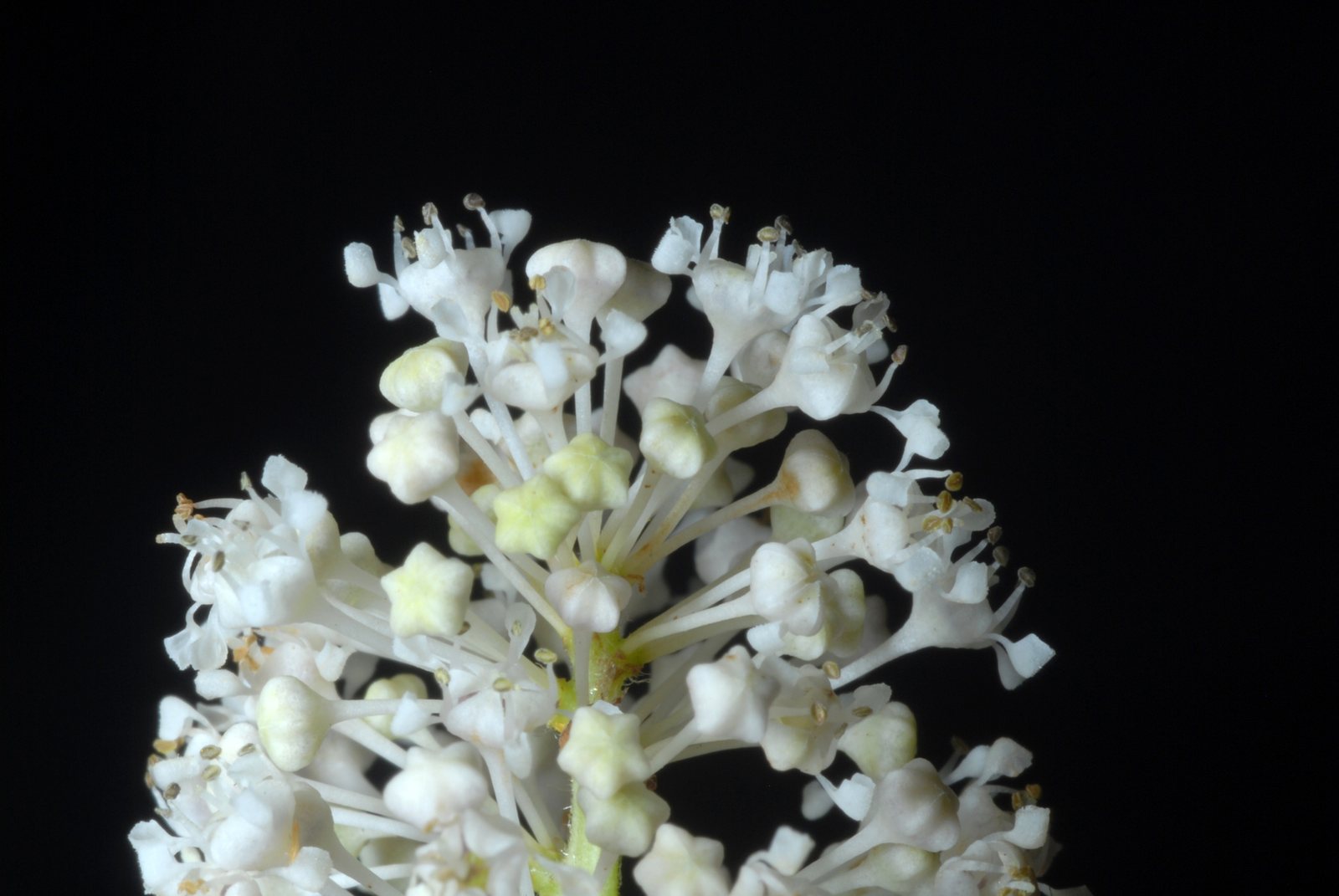
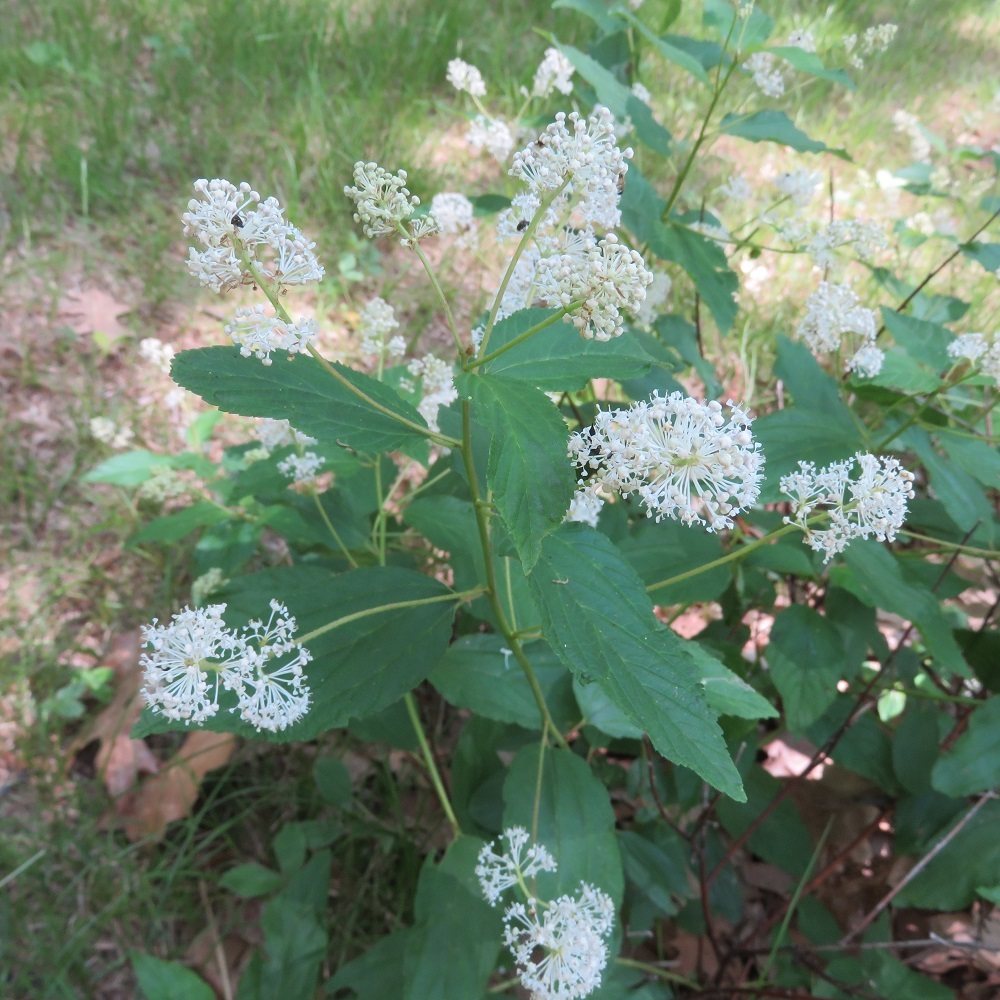
New Jersey tea is a compact, deciduous shrub native to eastern and central North America, grown for its clusters of small white flowers and value to pollinating insects. Its deep roots help established plants tolerate drought, making it useful in sunny, well-drained borders and naturalistic plantings.
At a glance
- Sun
- Full sun to partial shade; flowering and growth are usually best in full sun.
- Water
- Water regularly during establishment; established plants usually need extra water only during prolonged drought.
- Soil
- Well-drained sandy, gravelly or loamy soil, including relatively poor soil. Tolerates dry, rocky sites but dislikes persistent winter wet.
- Height
- 3-4 ft (0.9-1.2 m)
- Spread
- 3-5 ft (0.9-1.5 m)
- Flowers
- Late spring to midsummer, depending on climate; rounded clusters of tiny creamy-white flowers.
- Foliage
- Alternate, oval, finely toothed green leaves with three prominent veins arising near the leaf base; autumn colour is usually modest yellow or yellow-brown.
- Growth
- Slow to moderate; young plants often establish roots before making much top growth.
- Care needed
- Low
The year at a glance
- Pollinators
- Drought tolerant
- Cold hardy
- Wildlife
- Low allergen
| J | F | M | A | M | J | J | A | S | O | N | D | |
|---|---|---|---|---|---|---|---|---|---|---|---|---|
| Flowers | ||||||||||||
| Fruit | ||||||||||||
| Plant |
Northern hemisphere months. In Australia, shift them by six.
- Difficulty
- Easy
- Toughness
- Very tough
Will it suit your garden?
Pick your zone, country, light and whether you have pets.
Full sun is 6 or more hours of direct sun a day, part shade 3 to 6 hours, shade under 3.
How it grows
Planting day
1.6 ft (0.5 m)
After 1 year
1.9 ft (0.58 m)
After 2 years
2.2 ft (0.67 m)
After 3 years
2.5 ft (0.75 m)
After 5 years
3 ft (0.92 m)
About 7 years to full size.
From a typical nursery size, at an average rate for this kind of plant. A rule of thumb, not a forecast.
Good to know
- Cats and dogs
- Safe
- Native to
- the US and Canada
- Growth rate
- Slow
Care
Jobs through the year
- WaterApr–May, Sep, every 21 days
- Established shrubs need water only in prolonged drought; keep young plants evenly moist.
- WaterJun–Aug, every 14 days
- Deep-water established shrubs only during prolonged drought; avoid watering already moist soil.
- PruneFeb–Mar
- Remove dead, damaged or crossing stems; lightly shorten wayward shoots only if needed.
- MulchMay
- Refresh a thin organic mulch, keeping the crown and stem bases uncovered.
- ProtectJan–Dec
- Where deer or rabbits browse, maintain a securely supported wire guard around young shrubs.
- Plant while young in a permanent position; its deep root system makes established plants difficult to move.
- Water deeply when the root zone begins to dry during the first growing season.
- Avoid rich feeding; this nitrogen-fixing shrub usually needs no routine fertiliser.
- Apply a thin mulch, keeping it clear of the stems.
- Keep grass and vigorous weeds away from young plants.
Pruning. In late winter or early spring, remove dead, damaged or crossing stems and lightly shorten wayward growth if needed. It flowers on new growth, but routine hard pruning is unnecessary.
Through the year
- Late winter
- Check for winter damage and prune out dead or broken stems.
- Spring
- Plant young container-grown shrubs once the soil is workable, and water them in thoroughly.
- Late spring
- Weed around the base and refresh a thin mulch without covering the crown.
- Summer
- Water new plants during dry spells; give established shrubs water only if drought is prolonged.
- Late summer
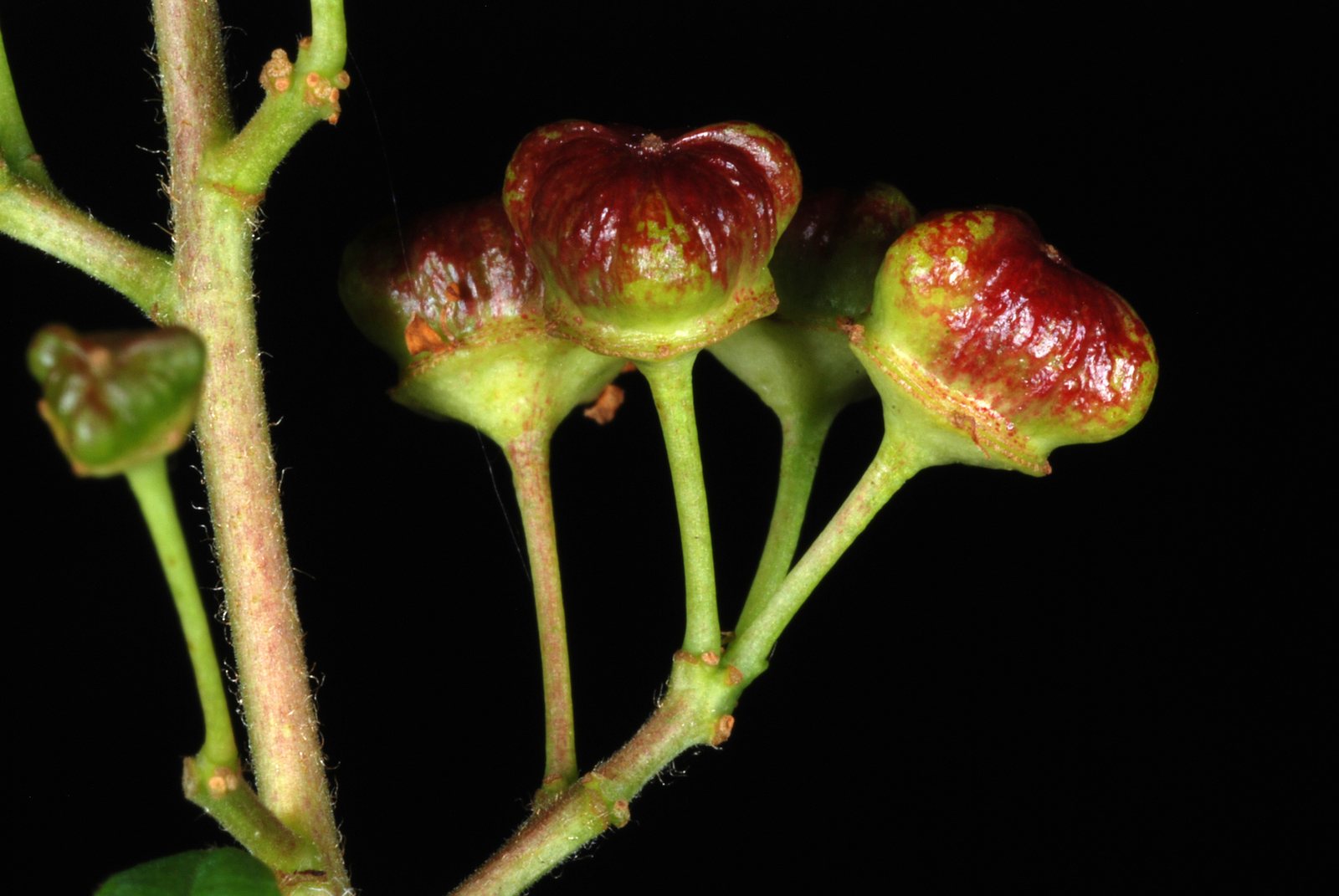
- Collect mature seed capsules before they split if you want to propagate more plants.
- Autumn
- Check that runoff is not collecting around the roots before the wet season.
In the garden
- Plant in small groups among little bluestem and prairie flowers for a low, flowering layer.
- Use along a sunny woodland edge where its white flowers stand out against darker foliage.
- Place near a path or seating area to watch the insects visiting its flowers.
- Use in a dry, informal border where a compact shrub provides structure without regular clipping.
Garden styles it suits: Native meadow, Wildlife garden, Pollinator garden, New perennial (prairie), Low-maintenance and Midwest prairie.
Plant it with: Little bluestem, Prairie dropseed, Butterfly weed, Purple coneflower, Wild bergamot and Aromatic aster.
Wildlife: Flowers attract native bees, butterflies and many small beneficial insects. In its native range, the foliage supports caterpillars of several butterflies and moths, including spring and summer azures; deer and rabbits may browse the shoots.
Problems to watch for
- Root decline in waterlogged soil: improve drainage or choose a drier planting position rather than watering more.
- Deer and rabbit browsing: protect young shrubs with a securely supported wire guard.
- Leaf spot in humid conditions: allow airflow, avoid wetting the leaves and remove badly affected fallen foliage.
- Poor establishment after transplanting: start with a young plant, disturb the roots as little as possible and maintain even moisture during its first season.
Safety
Not known to be toxic to cats, dogs, horses or people. Species-specific safety information is limited, particularly for roots and seeds, so do not assume that any part is suitable for eating or making home remedies.
Easily confused with
Prairie redroot (Ceanothus herbaceus)
Usually has narrower leaves and flower clusters on more conspicuous stalks. New Jersey tea generally has broader, more egg-shaped leaves.
Blueblossom (Ceanothus thyrsiflorus)
An evergreen shrub, often much larger, usually with blue flowers; New Jersey tea loses its leaves in winter and has white flowers.
The name
The common name recalls the use of its leaves as a tea substitute during the American Revolutionary period.
Propagation. Grow from seed or take softwood cuttings in early summer. Seeds have a hard coat and dormancy; scarification followed by cold, moist stratification is commonly used. Buy young plants rather than digging established wild shrubs.
Checked against open data
- Accepted botanical name
- Ceanothus americanus
- In the US and Canada
- Native in Canada and the lower 48 states.
- Native range
- Alabama, Arkansas, Connecticut, Delaware, District of Columbia, Florida, Georgia, Illinois, Indiana, Iowa, Kansas and Kentucky.
- Measured
- Soil pH 6.5 to 8. Average height 91 cm.
Sources: GBIF (CC BY 4.0), USDA PLANTS and Trefle (CC BY 4.0). The care and design notes are LandscapeGPT's own.
See it in your own yard.
Upload a photo of your yard and see it redesigned with plants that suit your climate, each checked against your zone.