Norfolk Island pine
Araucaria heterophylla. Family Araucariaceae. Tree.
Also called Norfolk pine, Living Christmas tree.
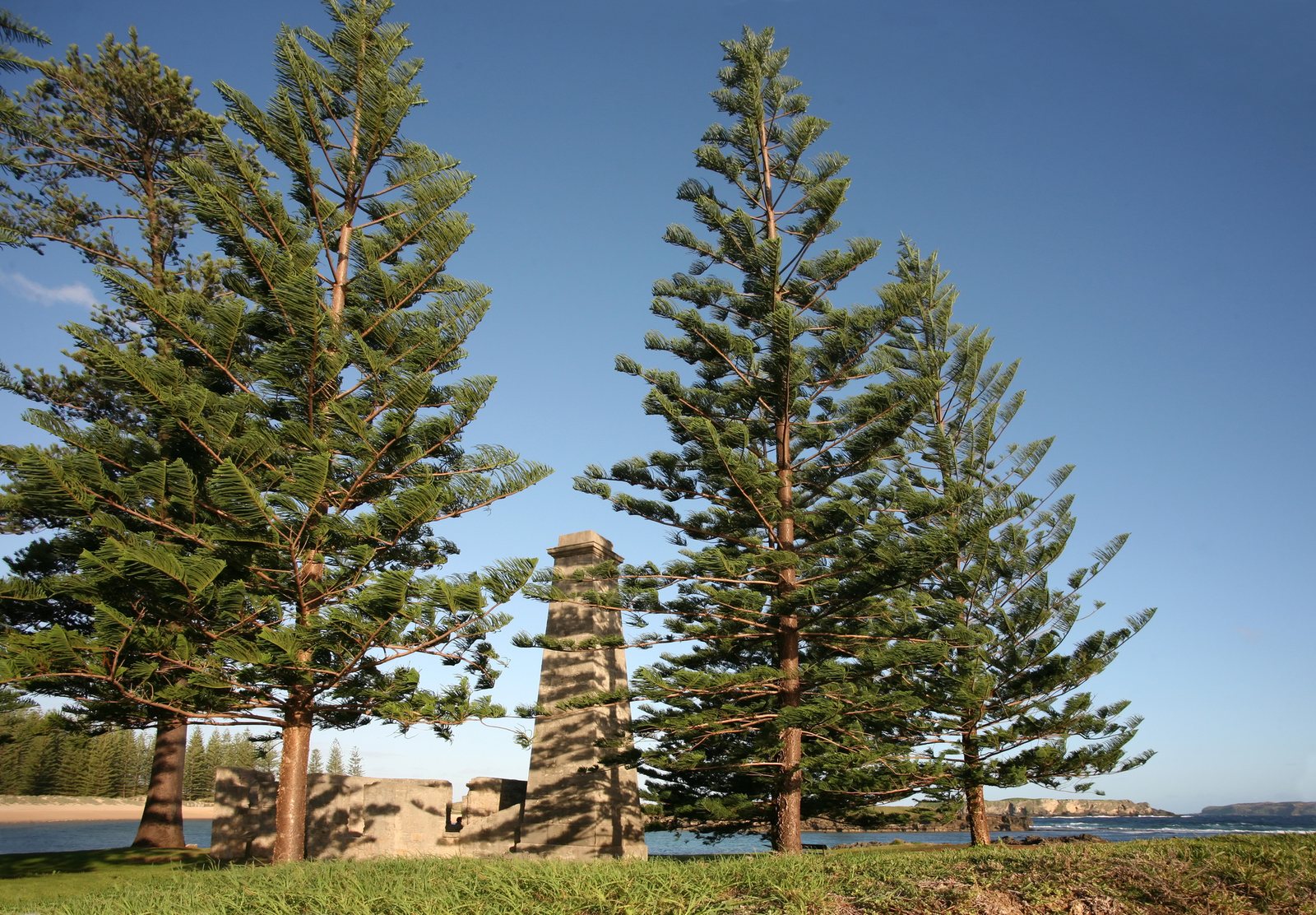
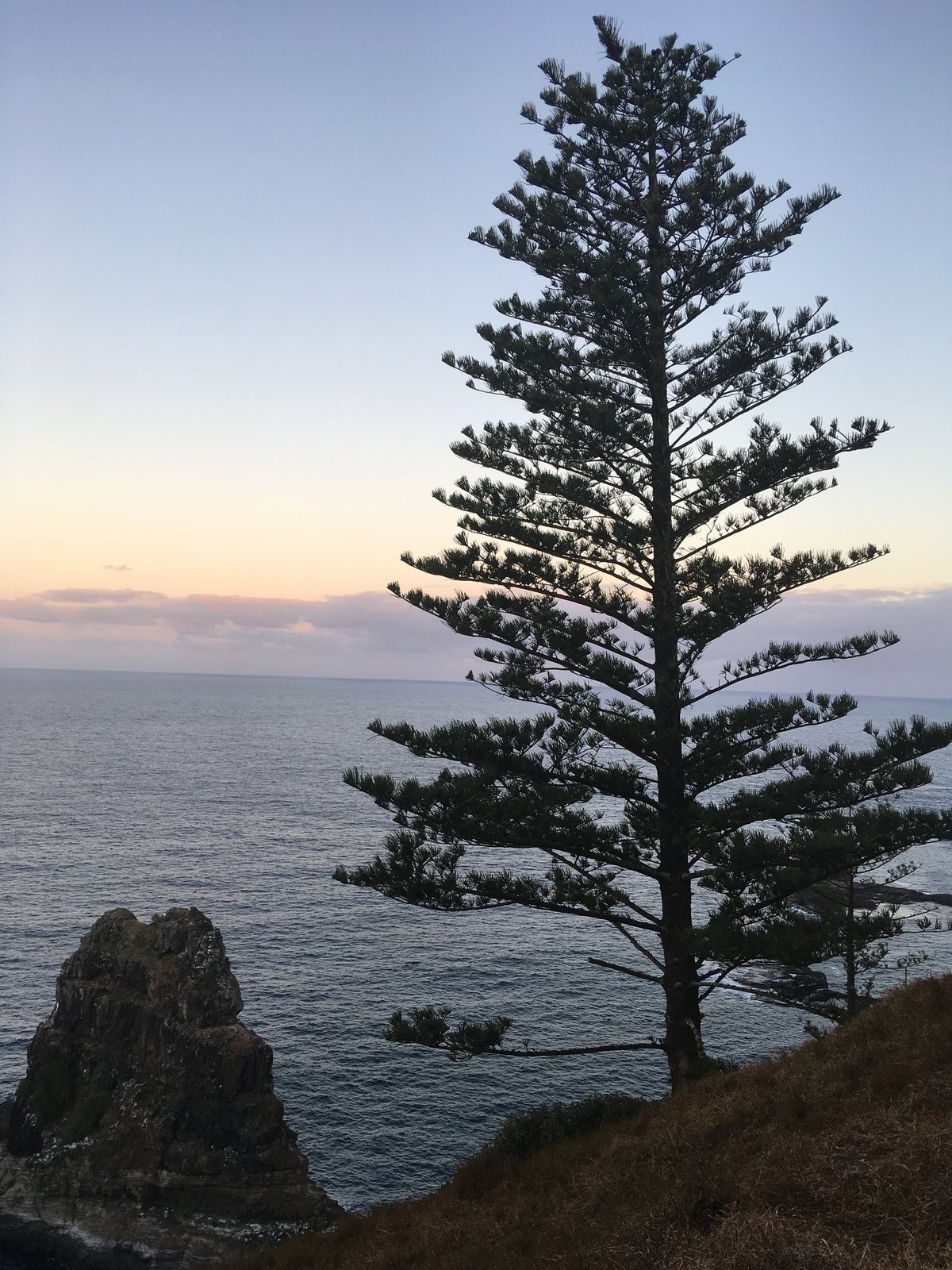
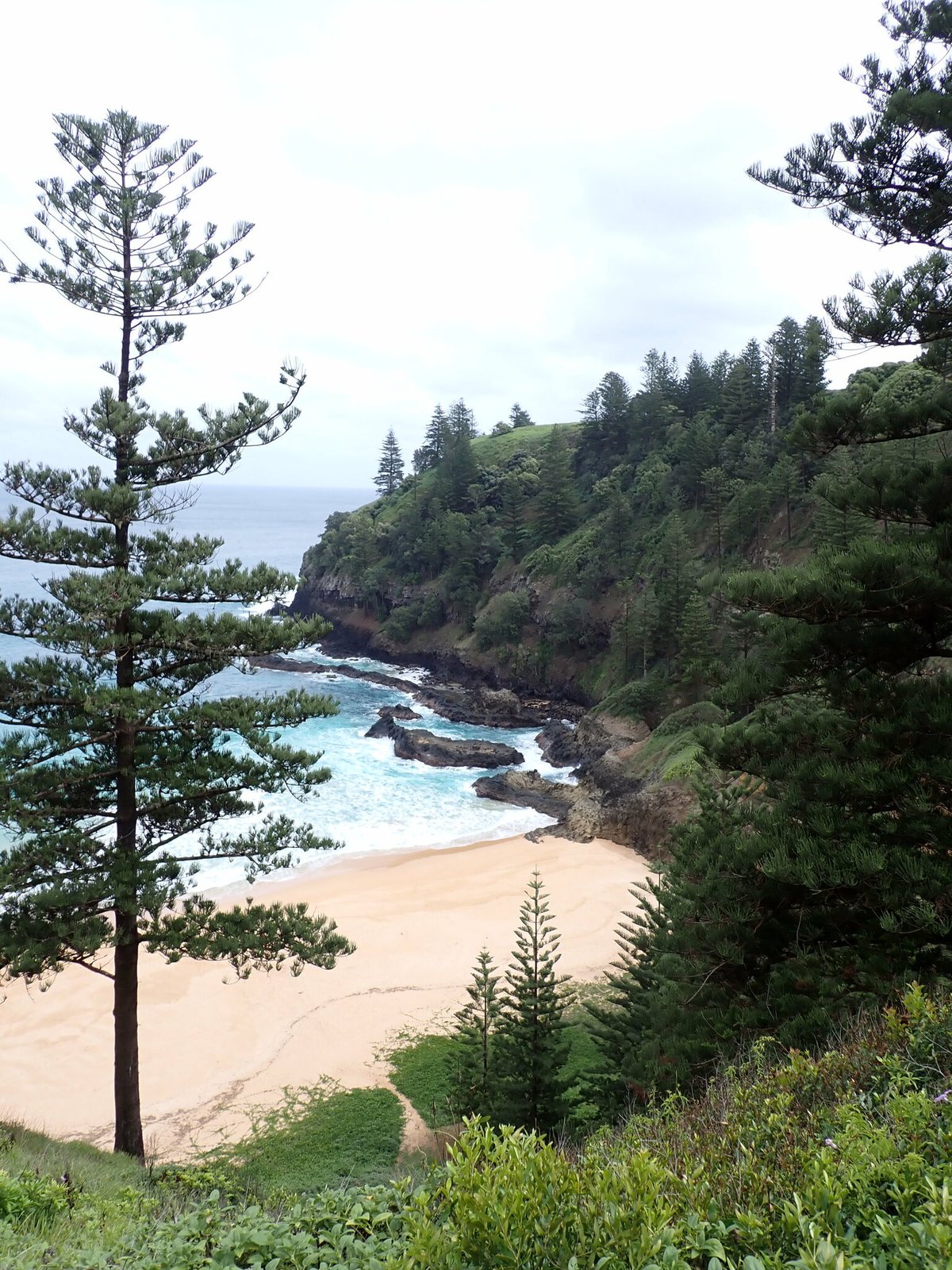
This evergreen conifer from Norfolk Island has a straight trunk and regular tiers of spreading branches, giving it a distinctive, symmetrical outline. Grow it as a large specimen in frost-free coastal gardens, or as a container plant indoors in colder regions; it is not a true pine.
At a glance
- Sun
- Full sun outdoors once established; protect young plants from harsh afternoon sun. Indoors, provide bright light with some gentle direct sun.
- Water
- Water young trees regularly while roots establish. For containers, water thoroughly when the top 1 in (2.5 cm) of compost feels dry, then let excess water drain; reduce watering in winter.
- Soil
- Well-drained sandy or loamy soil, preferably slightly acidic. Use a free-draining potting mix in containers; avoid waterlogged ground.
- Height
- 50-100 ft (15-30 m) in gardens, potentially taller in ideal conditions; usually 3-10 ft (0.9-3 m) indoors
- Spread
- 20-40 ft (6-12 m) outdoors; usually 2-5 ft (0.6-1.5 m) indoors
- Foliage
- Evergreen, soft-looking green needles arranged densely around the branchlets. Young leaves are narrow and awl-shaped; mature foliage becomes shorter, broader and overlapping.
- Growth
- Moderate outdoors in warm climates; slow indoors
- Care needed
- Medium
Will it suit your garden?
Pick your zone, country, light and whether you have pets.
Full sun is 6 or more hours of direct sun a day, part shade 3 to 6 hours, shade under 3.
How it grows
Planting day
9 ft (2.7 m)
After 1 year
11 ft (3.5 m)
After 2 years
14 ft (4.2 m)
After 3 years
16 ft (5 m)
After 5 years
21 ft (6.5 m)
About 26 years to full size.
From a typical nursery size, at an average rate for this kind of plant. A rule of thumb, not a forecast.
Good to know
- Cats and dogs
- Toxic
- Growth rate
- Slow
Care
Jobs through the year
- WaterMar–May, Sep–Oct, every 10 days
- Grow in a container here; water thoroughly when the top 2.5 cm dries, then drain.
- WaterJun–Aug, every 7 days
- Check container moisture frequently and water when the top 2.5 cm dries; hot patios may need more.
- WaterJan–Feb, Nov–Dec, every 14 days
- Indoors, water when the surface dries without letting the whole root ball dry out.
- FeedApr–Aug, every 28 days
- Apply a dilute balanced liquid feed to moist compost while actively growing.
- PruneMar
- Remove only dead or broken branches; never top or shorten healthy branches.
- ProtectMay–Jun
- Optional patio move: wait for nights above 10°C and introduce brighter light gradually.
- ProtectSep–Oct
- Bring indoors before nights fall below 10°C; permanent outdoor planting is unsuitable here.
- ProtectJan–Mar, Nov–Dec
- Provide bright indoor light away from radiators, heating vents and cold draughts.
- Plant well away from buildings, overhead wires and confined courtyards; an outdoor tree eventually needs substantial space.
- Water deeply during establishment, allowing the soil surface to dry slightly between waterings.
- Feed container plants lightly with a balanced liquid fertiliser during spring and summer; do not feed a dry or stressed plant.
- Mulch outdoor trees over the root area, keeping mulch clear of the trunk.
- Keep indoor plants away from radiators, heating vents and cold draughts; rotate the pot regularly for even growth.
- Move summer patio plants indoors before nights fall below 50°F (10°C), and acclimatise them gradually when returning them outdoors.
Pruning. Remove dead or broken branches as needed, cutting cleanly near their origin without damaging the trunk. Do not top the tree or shorten healthy branches to control size: old bare wood rarely regrows, and cutting the central leader spoils its natural form.
Through the year
- Early spring
- Check container roots and repot one size larger only if the plant is becoming root-bound.
- Spring
- Begin light feeding as growth resumes, and renew mulch around outdoor trees.
- Late spring
- If moving a container plant outdoors, wait for mild nights and introduce brighter light gradually.
- Summer
- Check container moisture frequently and water newly planted outdoor trees deeply during dry spells.
- Autumn
- Bring patio plants inside before chilly nights and inspect branchlets for pests.
- Winter
- Provide the brightest practical indoor position, stop feeding and water less often without letting the root ball dry out completely.
In the garden
- Use as a single specimen in a large, frost-free coastal lawn, leaving room for its broad lower branches.
- Place among lower palms and broad-leaved plants to contrast its regular branching with looser tropical foliage.
- Use a young container-grown plant as a vertical accent on a sheltered, warm patio.
- Display indoors beside a bright window where its tiered outline has room to remain symmetrical.
Garden styles it suits: Architectural minimal, Coastal, Modern tropical, Luxury resort, Australian native and Winter interest.
Plant it with: Kentia palm, Bird of paradise, Lomandra, Agapanthus and Cast iron plant.
Wildlife: Large outdoor trees provide perching and shelter for birds. As a wind-pollinated conifer, it does not provide nectar for pollinators.
Problems to watch for
- Brown tips and shedding lower branches: check for a dry root ball, very dry heated air or inadequate light. Correct conditions promptly; lost lower branches usually do not return.
- Yellowing foliage in persistently wet compost: improve drainage, empty saucers and let the surface dry slightly between waterings. Root rot can be fatal if roots remain waterlogged.
- Spider mites, especially indoors in dry air: look for fine webbing and stippled foliage, rinse the plant and use insecticidal soap labelled for the pest if needed.
- Mealybugs or scale: inspect stems and branch junctions, isolate affected indoor plants and treat with a suitable labelled product, repeating as directed.
Safety
Reported toxic to cats and dogs: chewing foliage can cause vomiting and depression, while contact may cause skin irritation. Keep pets from eating it. Toxicity to horses is not well established. It is not known to be poisonous to people, but sap and sharp foliage may irritate skin; do not eat any part.
Easily confused with
Cook pine (Araucaria columnaris)
Usually forms a narrower, more column-like crown with shorter branches and often a leaning trunk. Young plants can be very difficult to distinguish reliably from Norfolk Island pine.
Monkey puzzle (Araucaria araucana)
Has thick, broad, sharply pointed triangular leaves that armour its stout branches, rather than Norfolk Island pine's finer, softer-looking juvenile foliage.
The name
The common name refers to its native Norfolk Island, while heterophylla means 'different-leaved', referring to the difference between juvenile and mature foliage.
Propagation. Usually grown from fresh seed, which loses viability quickly. Specialist growers can root upright leading shoots under controlled conditions; cuttings from side branches generally retain sideways growth and do not form a normal upright tree.
Checked against open data
- Accepted botanical name
- Araucaria heterophylla
- In the US and Canada
- Introduced in the lower 48 states and Pacific Basin.
- Native range
- Norfolk Is..
- Measured
- Soil pH 4.6 to 7.8. Average height 2700 cm.
Sources: GBIF (CC BY 4.0), USDA PLANTS and Trefle (CC BY 4.0). The care and design notes are LandscapeGPT's own.
See it in your own yard.
Upload a photo of your yard and see it redesigned with plants that suit your climate, each checked against your zone.