Northern bayberry
Morella pensylvanica. Family Myricaceae. Shrub.
Also called Bayberry, Candleberry, Myrica pensylvanica.
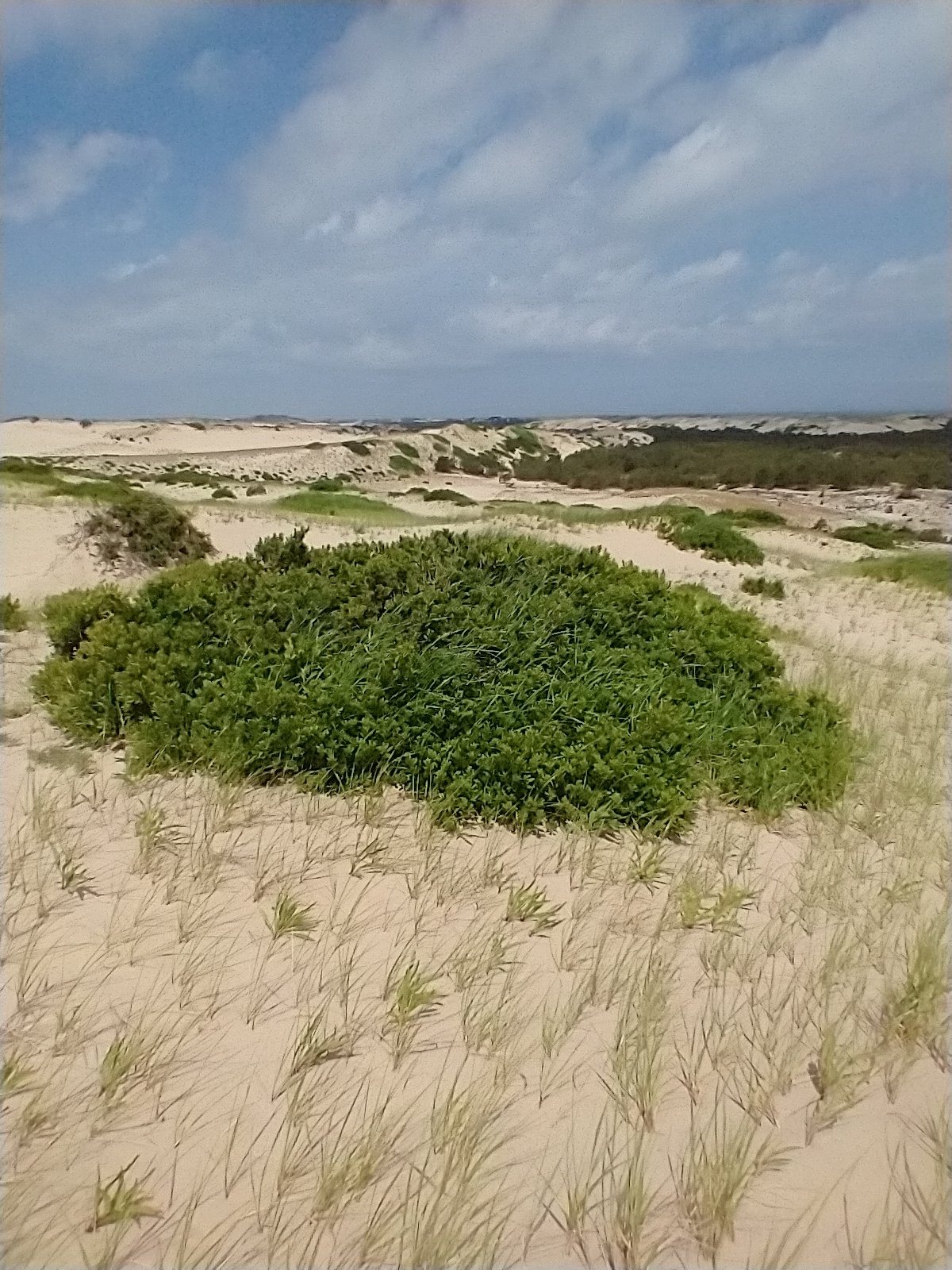
Northern bayberry is a suckering shrub native to eastern North America, grown for its aromatic leaves, salt tolerance and wildlife value. Female plants carry small, waxy grey fruits when a male plant is nearby, providing winter interest and food for birds.
At a glance
- Sun
- Full sun to partial shade; growth is denser and fruiting better in full sun.
- Water
- Water regularly while establishing; established plants tolerate drought and occasional wet soil.
- Soil
- Best in acidic, well-drained sandy soil, but tolerates poor, gravelly ground and a range of soil textures. Avoid persistently waterlogged sites.
- Height
- 5-10 ft (1.5-3 m)
- Spread
- 5-10 ft (1.5-3 m), eventually wider through suckering
- Flowers
- Small, inconspicuous yellowish-green to brownish catkins in spring, before or as the leaves emerge.
- Foliage
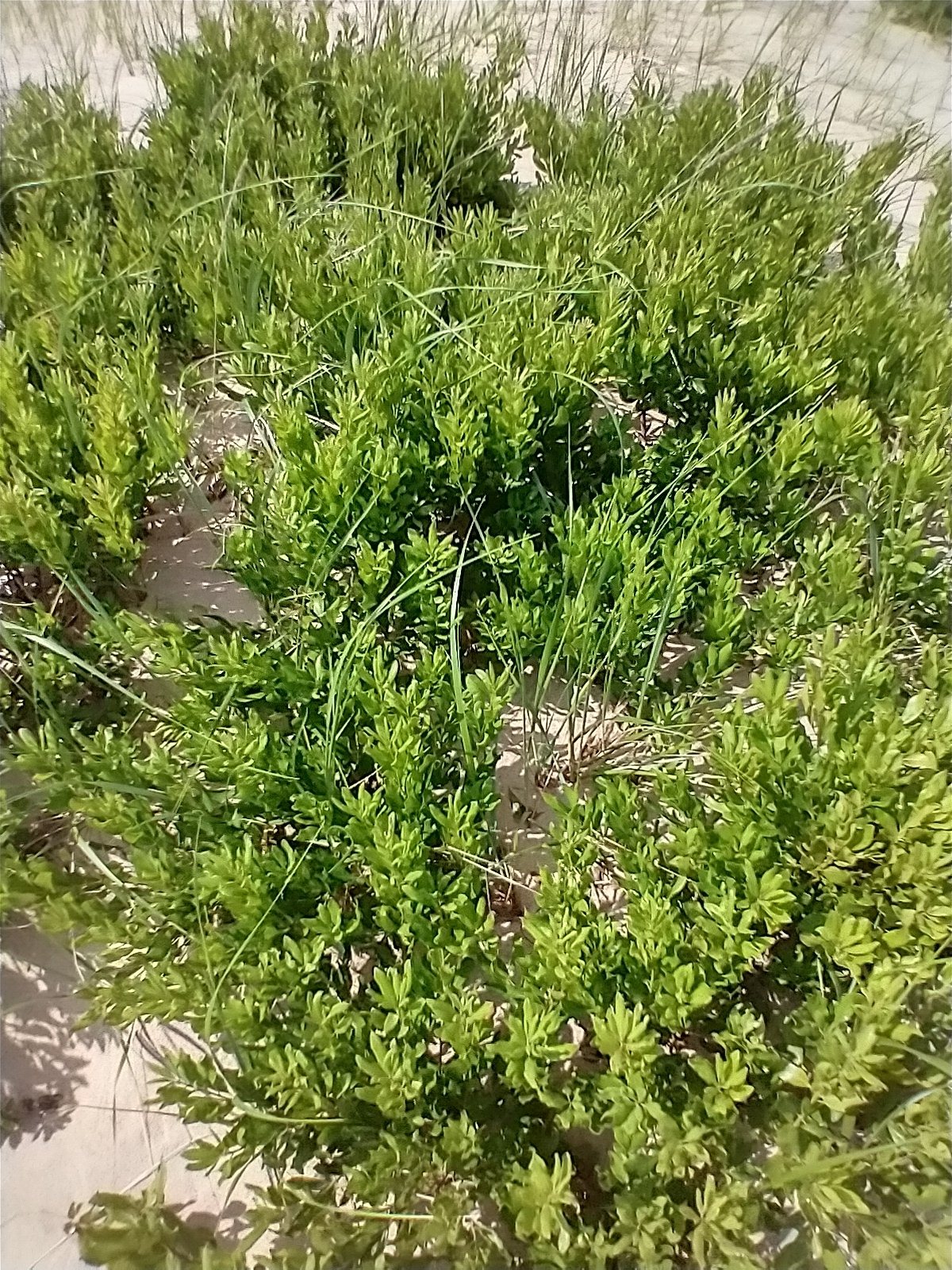
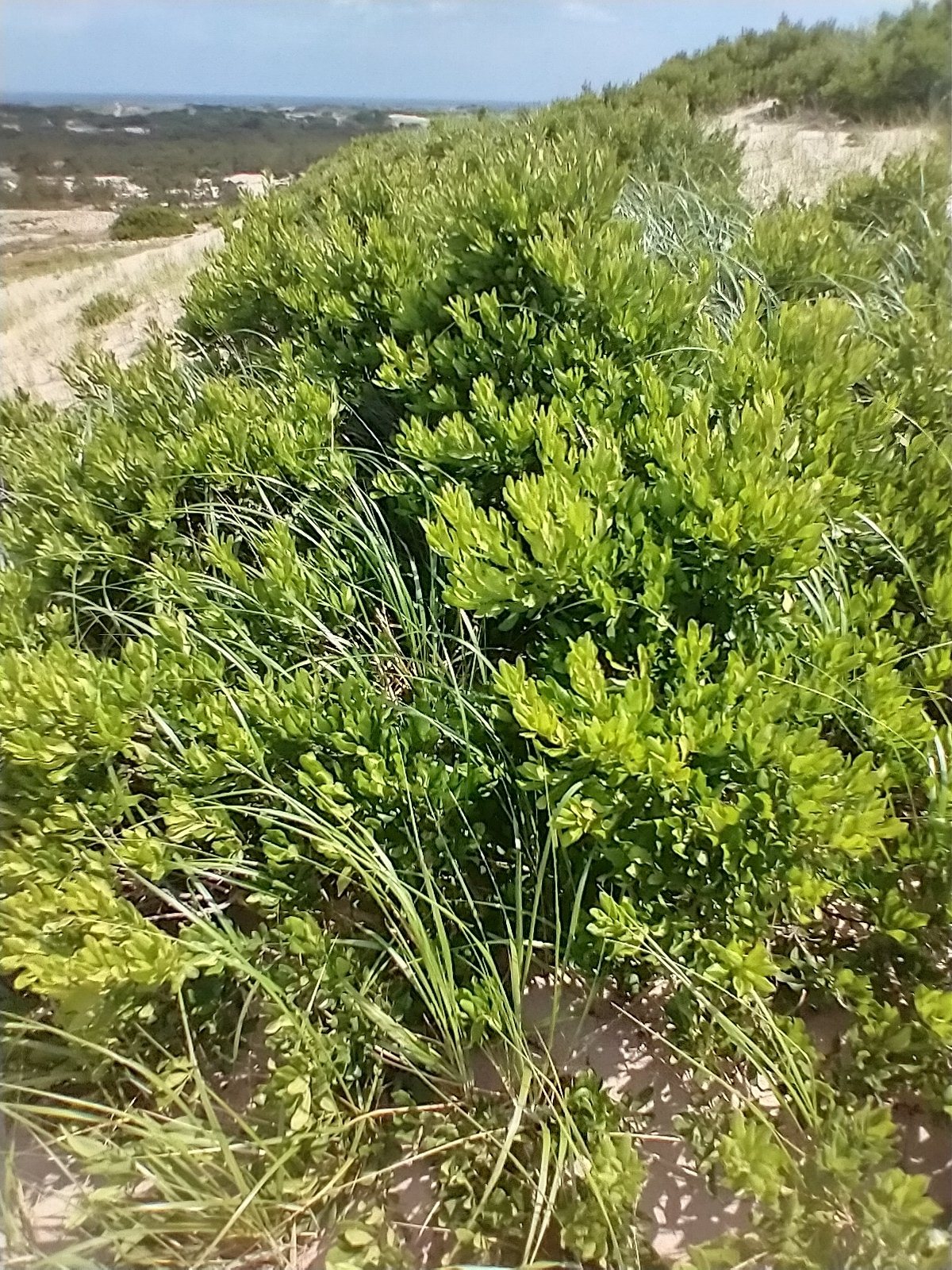
- Leathery, aromatic green leaves with scattered teeth near their tips; usually deciduous, but some leaves may persist in mild winters.
- Growth
- Moderate
- Care needed
- Low
The year at a glance
- Deer resistant
- Drought tolerant
- Cold hardy
- Wildlife
- Fragrant
| J | F | M | A | M | J | J | A | S | O | N | D | |
|---|---|---|---|---|---|---|---|---|---|---|---|---|
| Flowers | ||||||||||||
| Fruit | ||||||||||||
| Plant |
Northern hemisphere months. In Australia, shift them by six.
- Difficulty
- Easy
- Toughness
- Very tough
Will it suit your garden?
Pick your zone, country, light and whether you have pets.
Full sun is 6 or more hours of direct sun a day, part shade 3 to 6 hours, shade under 3.
How it grows
Planting day
1.6 ft (0.5 m)
After 1 year
2.8 ft (0.85 m)
After 2 years
4 ft (1.2 m)
After 3 years
5 ft (1.6 m)
After 5 years
7 ft (2.3 m)
full size
About 5 years to full size.
From a typical nursery size, at an average rate for this kind of plant. A rule of thumb, not a forecast.
Good to know
- Cats and dogs
- Mildly toxic: may upset a stomach
- Native to
- the US and Canada
- Growth rate
- Moderate
Care
Jobs through the year
- WaterApr–May, Sep–Oct, every 21 days
- Established shrubs rarely need water; water only in prolonged drought and more often in the first year.
- WaterJun–Aug, every 14 days
- Water established shrubs only during prolonged drought; water new shrubs as soil dries.
- MulchApr
- Maintain 5–8 cm of organic mulch, keeping it clear of stems.
- PruneFeb–Mar
- Remove dead wood and selected old stems if crowded; avoid shearing.
- PruneMay–Sep, every 30 days
- Remove unwanted suckers while young to contain the colony.
- Water deeply during dry spells in the first growing season; reduce watering once roots are established.
- Usually leave unfertilized; its nitrogen-fixing root associations help it grow in poor soil.
- Apply 2-3 in (5-8 cm) of organic mulch, keeping it away from the stems.
- Remove unwanted suckers while young if you need to contain the clump.
- For reliable fruiting, plant a known male near female plants; unsexed young plants may not provide both sexes.
Pruning. In late winter or early spring, remove dead wood and cut selected old stems to ground level if the shrub needs thinning. Avoid routine shearing, which spoils its natural shape and can reduce fruiting.
Through the year
- Late winter
- Thin crowded or ageing stems if needed, leaving a natural, open framework.
- Spring
- Plant while soil is workable, water thoroughly and mulch around the root zone.
- Late spring
- Check for unwanted suckers and remove them before they become established.
- Summer
- Water newly planted shrubs during dry weather; established plants usually need little extra water.
- Autumn
- Check female plants for grey fruits; persistent lack of fruit may mean no male plant is nearby.
- Winter
- Leave fruit-bearing branches intact for birds and winter interest.
In the garden
- Plant as an informal coastal hedge where salt spray and sandy soil limit other shrubs.
- Use in a mixed native shrub border with serviceberry and arrowwood viburnum for layered wildlife habitat.
- Allow colonies to develop on roomy banks or sandy slopes where suckering growth is useful.
- Combine with little bluestem and switchgrass for a loose, naturalistic edge to an open garden.
Garden styles it suits: Coastal, New England, Wildlife garden, Native hedgerow, Low-maintenance and Winter interest.
Plant it with: Little bluestem, Switchgrass, Bearberry, Beach plum, Serviceberry and Arrowwood viburnum.
Wildlife: Waxy fruits feed birds, including yellow-rumped warblers, and may persist into winter. Dense, suckering growth provides shelter and nesting cover; flowers are wind-pollinated rather than showy nectar sources.
Problems to watch for
- Few or no fruits: grow both male and female plants within the same planting and provide good sunlight.
- Unwanted spreading: cut out suckers regularly or give the shrub a dedicated area where a colony can develop.
- Yellow leaves in alkaline soil: check soil pH and drainage; move to a more suitable acidic site rather than repeatedly feeding.
- Root decline in stagnant, waterlogged soil: improve drainage or replant on higher ground.
Safety
Not generally known to be toxic to people, cats, dogs or horses, although species-specific safety information is limited. The fruits and leaves are not ordinary food; discourage eating them, as ingestion may cause stomach upset.
Easily confused with
Southern wax myrtle (Morella cerifera)
Usually evergreen, with narrower leaves and often a taller, tree-like habit. Northern bayberry generally has broader leaves and loses most or all of them in winter; leaf retention alone is not decisive in mild climates.
Bog myrtle (Myrica gale)
Usually a smaller shrub of wet, acidic ground, with shorter, often blue-green leaves. Its fruits form small brown, cone-like clusters rather than northern bayberry's rounded, grey, wax-coated fruits.
The name
The epithet pensylvanica means 'of Pennsylvania', while candleberry refers to the wax traditionally extracted from its fruits for candles.
Propagation. Separate rooted suckers in early spring, or take softwood cuttings in early summer. Seed needs cleaning and cold, moist treatment and can germinate slowly; seedlings cannot be reliably sexed until they flower.
Checked against open data
- Accepted botanical name
- Morella pensylvanica
- In the US and Canada
- Native in Canada, the lower 48 states and St. Pierre and Miquelon.
Sources: GBIF (CC BY 4.0) and USDA PLANTS. The care and design notes are LandscapeGPT's own.
See it in your own yard.
Upload a photo of your yard and see it redesigned with plants that suit your climate, each checked against your zone.