Northern bush honeysuckle
Diervilla lonicera. Family Caprifoliaceae. Shrub.
Also called Dwarf bush honeysuckle, Low bush honeysuckle.
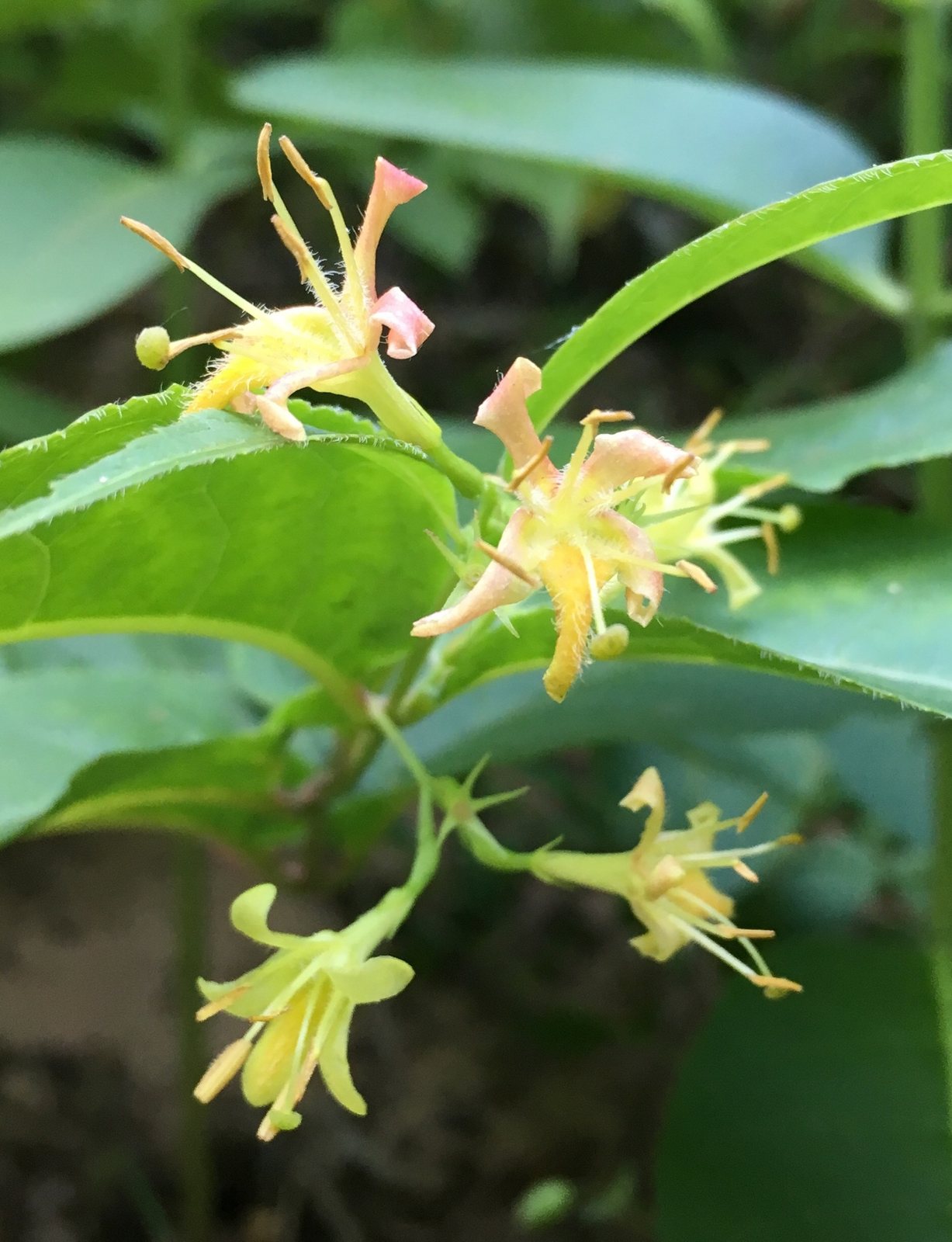
A small, deciduous shrub native to eastern North America, with yellow summer flowers and yellow, orange or red autumn foliage. Gardeners grow it for pollinators, informal groundcover and difficult dry banks; its suckering roots gradually form a thicket.
At a glance
- Sun
- Full sun to partial shade; tolerates deeper shade but flowers less.
- Water
- Moderate while establishing; tolerates dry spells once rooted.
- Soil
- Well-drained soil, including sandy, gravelly or rocky ground; tolerates poor soil and a broad pH range, but not prolonged waterlogging.
- Height
- 2-3 ft (0.6-0.9 m)
- Spread
- 2-4 ft (0.6-1.2 m), eventually wider through suckers
- Flowers
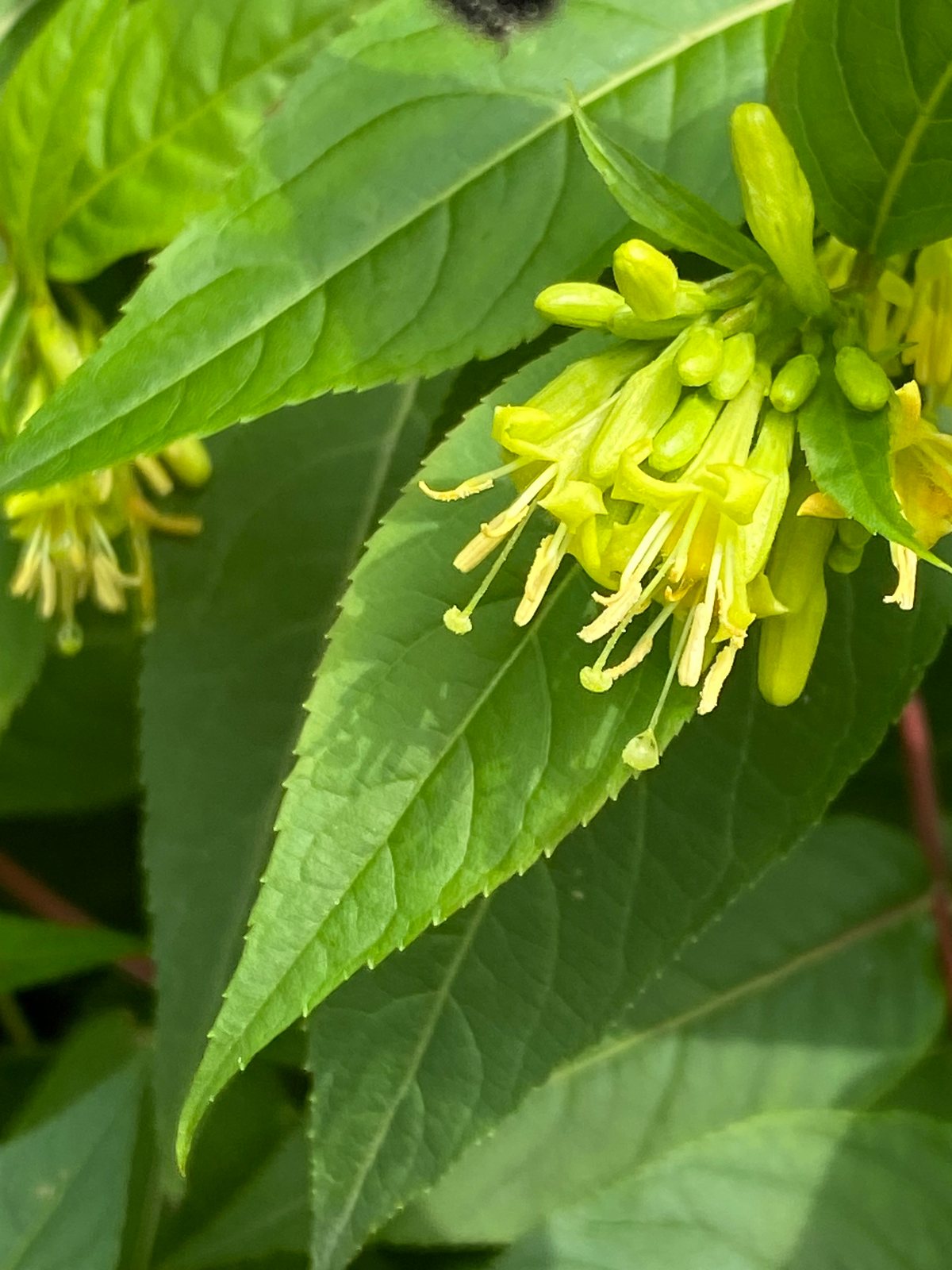
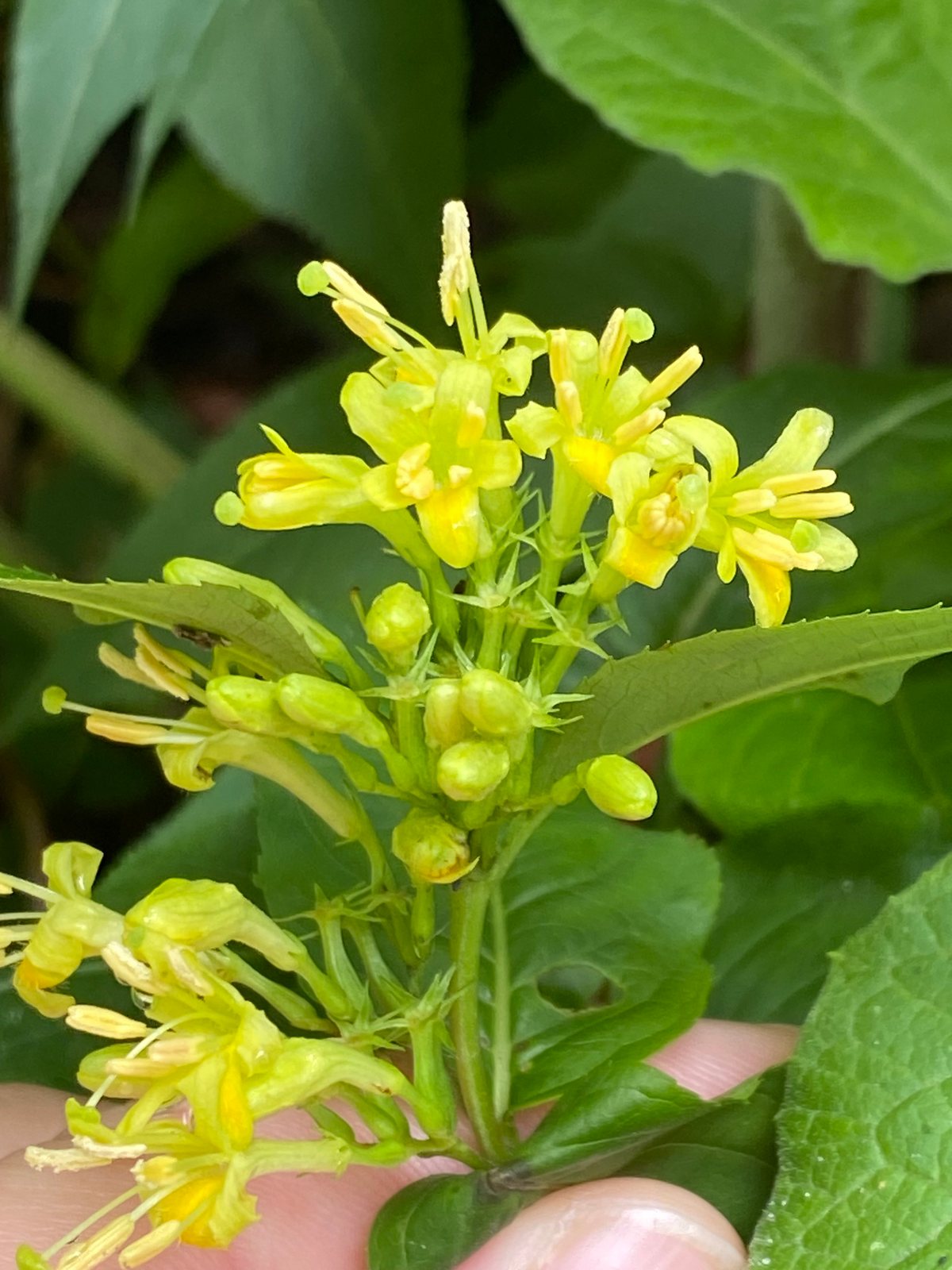
- Late spring to midsummer; small, tubular yellow flowers often deepen to orange-red as they age.
- Foliage
- Opposite, pointed, finely toothed green leaves; new growth may be bronze, with variable yellow, orange or red autumn colour.
- Growth
- Moderate to fast, especially in its sideways spread
- Care needed
- Low
The year at a glance
- Pollinators
- Deer resistant
- Drought tolerant
- Cold hardy
- Disease resistant
- Wildlife
- Low allergen
| J | F | M | A | M | J | J | A | S | O | N | D | |
|---|---|---|---|---|---|---|---|---|---|---|---|---|
| Flowers | ||||||||||||
| Plant |
Northern hemisphere months. In Australia, shift them by six.
- Difficulty
- Easy
- Toughness
- Very tough
Will it suit your garden?
Pick your zone, country, light and whether you have pets.
Full sun is 6 or more hours of direct sun a day, part shade 3 to 6 hours, shade under 3.
How it grows
Planting day
1.6 ft (0.5 m)
After 1 year
1.8 ft (0.56 m)
After 2 years
2.1 ft (0.63 m)
After 3 years
2.3 ft (0.69 m)
After 5 years
2.5 ft (0.75 m)
full size
About 4 years to full size.
From a typical nursery size, at an average rate for this kind of plant. A rule of thumb, not a forecast.
Good to know
- Cats and dogs
- Safe
- Native to
- the US and Canada
- In the garden
- Spreads vigorously: plan to contain it.
- Growth rate
- Fast
Care
Jobs through the year
- WaterApr–May, Sep–Oct, every 14 days
- Water established shrubs only if prolonged dryness causes wilting; water new plants more often.
- WaterJun–Aug, every 14 days
- Deep-water during prolonged drought; established shrubs otherwise need little supplementary water.
- MulchMar–Apr
- Apply a thin organic mulch, keeping the stem bases clear.
- PruneFeb–Mar
- Remove dead wood and some oldest stems at ground level; cut overgrown clumps back hard if needed.
- DivideMay, Sep–Oct
- Lift rooted suckers only to propagate or restrict the colony's spread.
- Water deeply during dry spells in the first growing season.
- After establishment, water during prolonged drought if leaves wilt or scorch.
- Apply a thin organic mulch, keeping it clear of the stem bases.
- Avoid routine feeding; rich soil and heavy fertilising are unnecessary.
- Remove rooted suckers at the edge of the clump if you need to limit its spread.
Pruning. In late winter or early spring, remove dead wood and cut some of the oldest stems to ground level. An overgrown clump can be cut back hard at the same time; flowers form on new growth.
Through the year
- Late winter
- Thin old stems or rejuvenate an overgrown clump before new growth begins.
- Spring
- Plant container-grown shrubs, water thoroughly and mulch lightly.
- Late spring
- Lift and transplant rooted suckers, or remove them where the clump is spreading too far.
- Summer
- Water new plants during dry weather; established plants usually need little supplementary water.
- Early summer
- Take softwood cuttings from healthy, non-flowering shoots.
- Autumn
- Plant or divide rooted suckers while the soil is workable and not waterlogged.
In the garden
- Mass on a sunny or partly shaded bank, where suckering growth helps cover exposed soil.
- Use along woodland edges with sedges and ferns for a low, informal shrub layer.
- Plant in a pollinator border with wild bergamot and asters for successive flowering.
- Use beneath widely spaced deciduous trees where established plants must tolerate some dry shade.
Garden styles it suits: Woodland, Wildlife garden, Pollinator garden, Low-maintenance, Rewilded and Autumn colour.
Plant it with: Pennsylvania sedge, Wild columbine, Wild geranium, Christmas fern, Wild bergamot and Heart-leaved aster.
Wildlife: Flowers provide nectar and pollen for bees and other insects. Dense colonies offer low cover for small wildlife; unlike true honeysuckles, it produces dry seed capsules rather than fleshy berries.
Problems to watch for
- Unwanted suckering: dig out rooted shoots beyond the intended planting area rather than simply clipping their tops.
- Sparse flowering in deep shade: move to a brighter position or accept it primarily as foliage cover.
- Wilting or scorched leaves on new plants: water the root zone deeply and mulch to reduce drying.
- Occasional powdery mildew or leaf spots: improve airflow, avoid wetting foliage when watering and remove badly affected fallen leaves.
Safety
Not known to be toxic to people, cats, dogs or horses. Species-specific safety information is limited, and no part should be treated as food.
Easily confused with
Southern bush honeysuckle (Diervilla sessilifolia)
Its leaves attach directly to the stems without leaf stalks; northern bush honeysuckle has short but distinct leaf stalks.
Tatarian honeysuckle (Lonicera tatarica)
Usually a much taller shrub with smooth-edged leaves, pink or white flowers and fleshy red or orange berries; northern bush honeysuckle has toothed leaves, yellow flowers and dry capsules.
The name
Diervilla honours the French surgeon and traveller Dièreville, while lonicera refers to its resemblance to true honeysuckles.
Propagation. Separate rooted suckers in spring or autumn, keeping roots attached and watering after replanting. Softwood cuttings taken in early summer are another practical method.
Checked against open data
- Accepted botanical name
- Diervilla lonicera
- In the US and Canada
- Native in Canada, the lower 48 states and St. Pierre and Miquelon.
- Native range
- Connecticut, Delaware, Georgia, Illinois, Indiana, Iowa, Labrador, Maine, Manitoba, Maryland, Masachusettes and Michigan.
- Measured
- Soil pH 4.8 to 7. Average height 22 cm.
Sources: GBIF (CC BY 4.0), USDA PLANTS and Trefle (CC BY 4.0). The care and design notes are LandscapeGPT's own.
See it in your own yard.
Upload a photo of your yard and see it redesigned with plants that suit your climate, each checked against your zone.