Orange stonecrop
Phedimus kamtschaticus. Family Crassulaceae. Groundcover.
Also called Kamchatka stonecrop, Russian stonecrop, Sedum kamtschaticum.
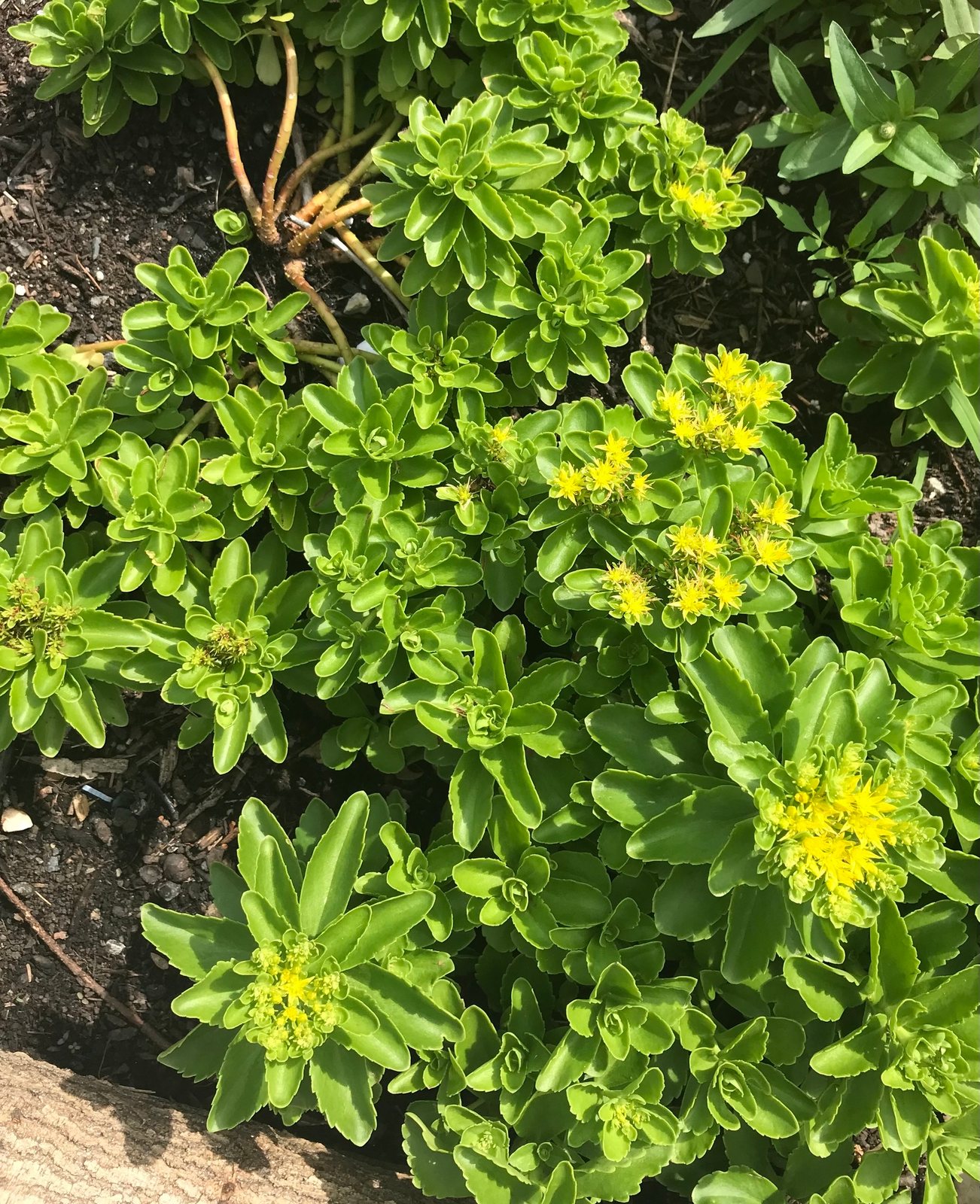
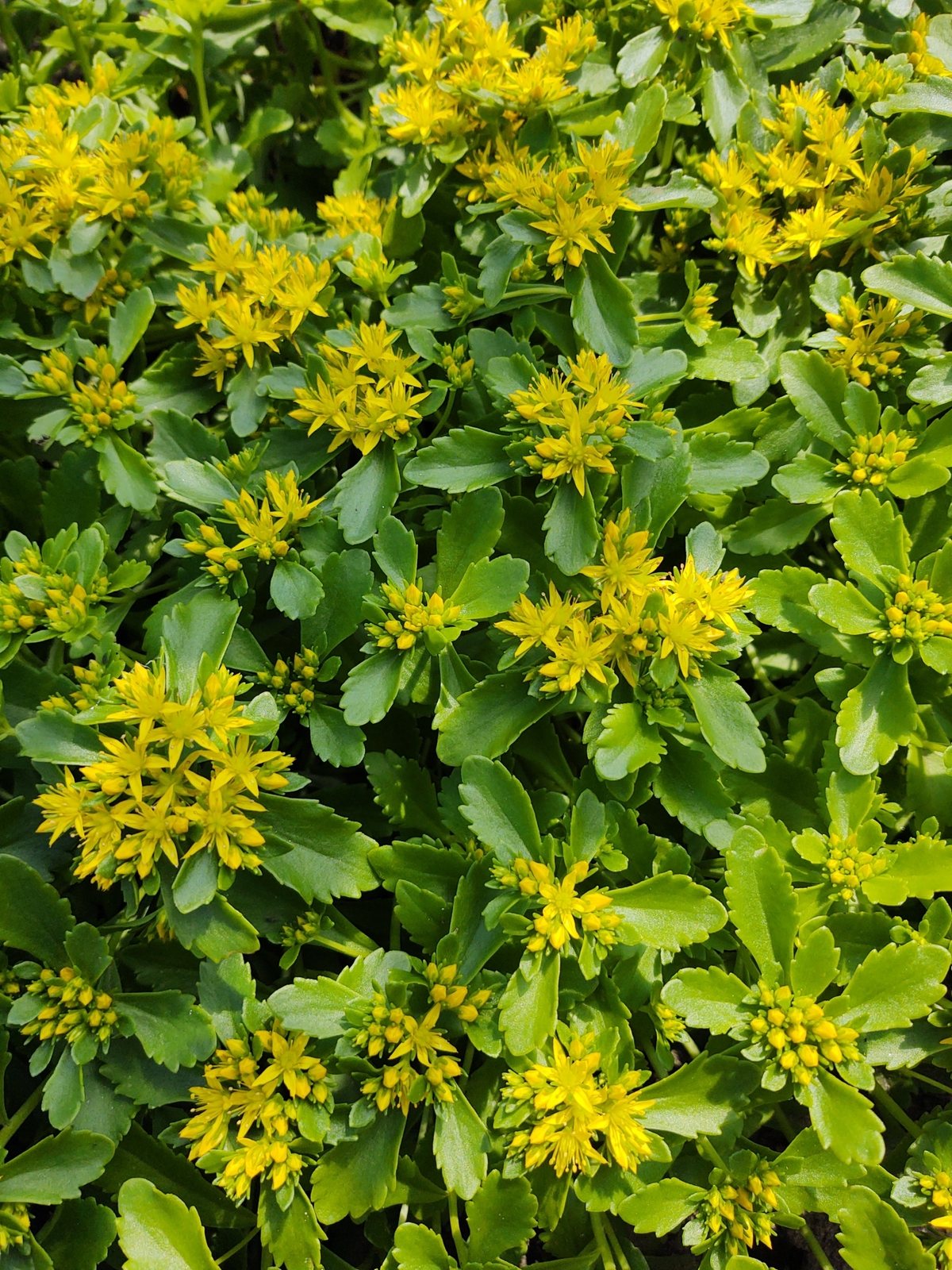
Orange stonecrop (Phedimus kamtschaticus) is a low-growing, succulent perennial that forms spreading patches of fleshy green leaves. Gardeners grow it for its yellow summer flowers, often followed by orange-red seedheads, and its ability to cover sunny, dry ground with little attention.
At a glance
- Sun
- Full sun to light partial shade; flowering and compact growth are best in full sun.
- Water
- Water regularly while establishing, allowing the soil to dry between waterings. Established plants usually need extra water only during prolonged drought.
- Soil
- Well-drained sandy, gravelly or rocky soil; tolerates poor soil but dislikes waterlogged ground, especially in winter.
- Height
- 0.3-0.5 ft (0.1-0.15 m)
- Spread
- 1-1.5 ft (0.3-0.45 m), gradually wider where stems root
- Flowers
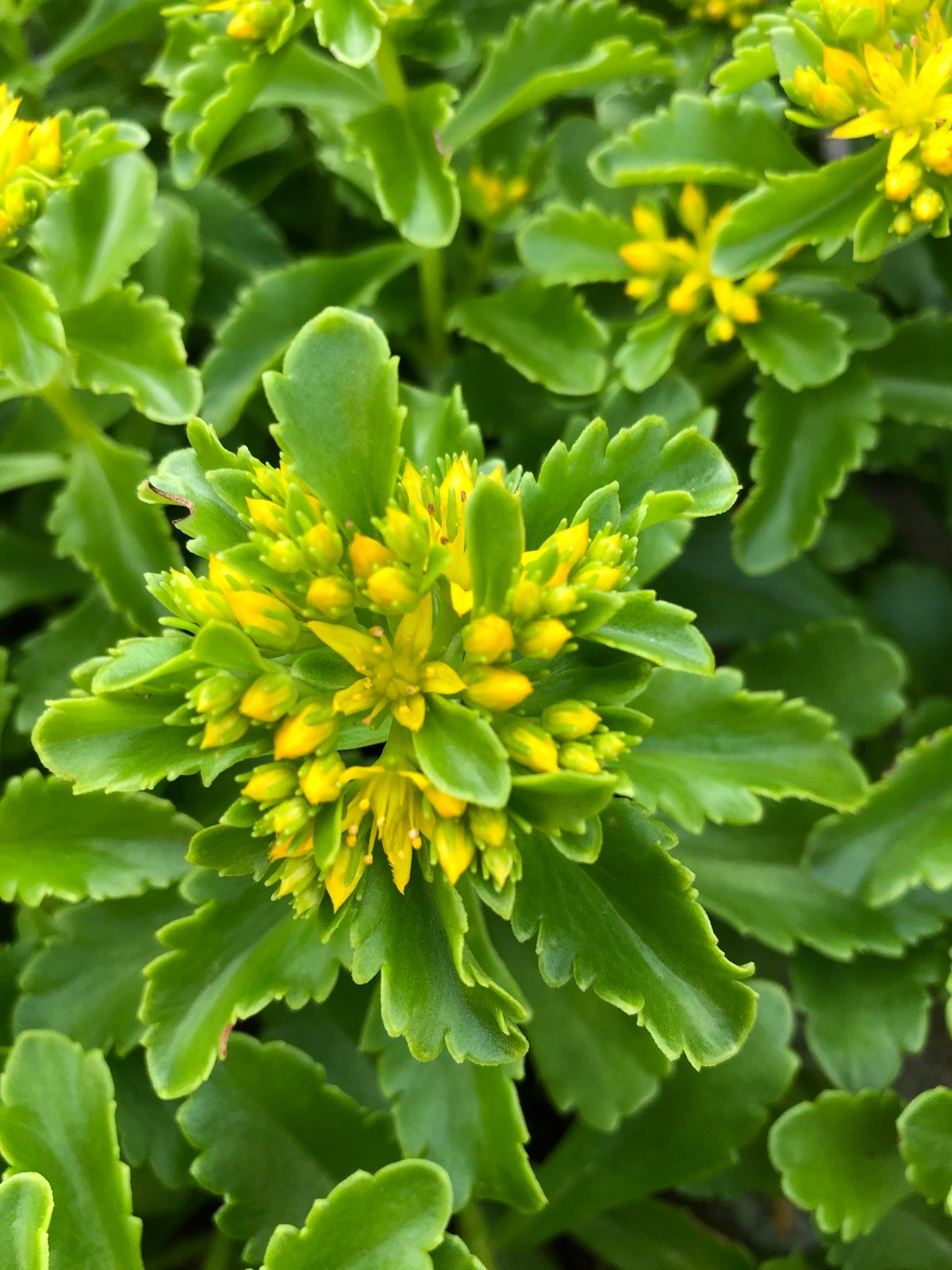
- Early to midsummer; clusters of small, star-shaped yellow flowers, followed by orange-red seedheads.
- Foliage
- Fleshy, spoon-shaped green leaves with teeth mainly toward their tips; foliage may develop bronze or reddish autumn colour. Usually deciduous in cold winters, sometimes partly evergreen in mild climates.
- Growth
- Moderate
- Care needed
- Low
The year at a glance
- Pollinators
- Drought tolerant
- Cold hardy
- Heat tolerant
- Low allergen
| J | F | M | A | M | J | J | A | S | O | N | D | |
|---|---|---|---|---|---|---|---|---|---|---|---|---|
| Flowers | ||||||||||||
| Fruit | ||||||||||||
| Plant |
Northern hemisphere months. In Australia, shift them by six.
- Difficulty
- Easy
- Toughness
- Very tough
Will it suit your garden?
Pick your zone, country, light and whether you have pets.
Full sun is 6 or more hours of direct sun a day, part shade 3 to 6 hours, shade under 3.
How it grows
Planting day
0.1 ft (0.03 m)
After 1 year
0.2 ft (0.07 m)
After 2 years
0.3 ft (0.11 m)
After 3 years
0.4 ft (0.13 m)
full size
About 3 years to full size.
From a typical nursery size, at an average rate for this kind of plant. A rule of thumb, not a forecast.
Good to know
- Cats and dogs
- Safe
- Growth rate
- Moderate
Care
Jobs through the year
- WaterApr–May, Sep, every 21 days
- Water established patches only in prolonged drought; water new plants when soil dries.
- WaterJun–Aug, every 14 days
- Water only during prolonged drought and only when the root zone is dry.
- PruneFeb–Mar
- Remove dead stems before new growth emerges.
- PruneSep–Oct
- Trim stems spreading beyond the intended patch.
- DivideMar–May
- Lift and divide crowded or thinning patches into healthy rooted sections.
- ProtectJan–Feb, Oct–Dec
- Clear wet leaves and keep thick organic mulch away from crowns.
- Water new plants when the root zone dries; reduce watering once they are established.
- Avoid rich compost and routine feeding, which can encourage loose, floppy growth.
- Keep the crown clear of wet leaves and thick organic mulch; use a light gravel mulch if needed.
- Lift and divide crowded or thinning patches in spring.
- Trim back stems that spread beyond the space you want them to fill.
Pruning. Remove dead stems in late winter or early spring before new growth develops. After flowering, clip off spent flower stems if you prefer a tidier patch, or leave the coloured seedheads in place.
Through the year
- Late winter
- Remove dead stems and clear wet leaves from around the crowns.
- Spring
- Plant or divide clumps in freely draining soil; water until new roots establish.
- Early summer
- Check young plants during dry spells and water deeply only when the soil has dried.
- Midsummer
- Leave developing orange-red seedheads for colour, or clip off spent flower stems.
- Autumn
- Trim unwanted spread and remove fallen leaves that could trap moisture over the plants.
In the garden
- Plant in rock gardens with small alpine plants for a low carpet of foliage and summer flowers.
- Use along sunny gravel paths with creeping thyme, keeping it away from regular foot traffic.
- Let it spill over low retaining walls or the edges of raised beds.
- Grow in shallow containers with other hardy succulents, using a gritty, freely draining mix.
Garden styles it suits: Dry gravel garden, Alpine rock garden, Desert / xeriscape, Low-maintenance, Pollinator garden and Small-space.
Plant it with: Creeping thyme, Houseleeks, Blue fescue, Moss phlox, Candytuft and Maiden pink.
Wildlife: The open flowers provide nectar and pollen for bees and other visiting insects.
Problems to watch for
- Root or crown rot in wet soil: improve drainage, reduce watering and replant healthy pieces above the surrounding soil level.
- Slugs and snails eating tender spring growth: remove hiding places, hand-pick pests and use labelled iron-phosphate bait if needed.
- Vine weevil larvae damaging roots, especially in containers: inspect failing plants and treat with suitable beneficial nematodes according to their temperature requirements.
- Loose growth and poor flowering in shade or rich soil: move to a sunnier position and stop feeding.
Safety
Not known to be toxic to people, cats, dogs or horses. It is not a culinary plant; eating substantial amounts of the leaves or stems may cause stomach upset.
Easily confused with
Two-row stonecrop (Phedimus spurius)
Usually has opposite pairs of rounded leaves and pink, red or white flowers; orange stonecrop has mostly alternate leaves and yellow flowers.
Goldmoss stonecrop (Sedum acre)
Forms a much finer, tighter mat with tiny, pointed leaves rather than broad, toothed, spoon-shaped leaves.
Aizoon stonecrop (Phedimus aizoon)
Usually grows taller and more upright, with longer, narrower leaves; orange stonecrop stays lower and spreads into patches.
The name
The species name kamtschaticus refers to Kamchatka in the Russian Far East, part of the plant's native range.
Propagation. Divide rooted patches in spring, or take short, non-flowering stem cuttings in late spring or summer. Root cuttings in a gritty mix kept barely moist; stems touching suitable soil may also root naturally.
Checked against open data
- Accepted botanical name
- Phedimus kamtschaticus
- Native range
- Amur, China North-Central, Inner Mongolia, Japan, Kamchatka, Khabarovsk, Korea, Kuril Is., Magadan, Manchuria, Primorye and Sakhalin.
Sources: GBIF (CC BY 4.0) and Trefle (CC BY 4.0). The care and design notes are LandscapeGPT's own.
See it in your own yard.
Upload a photo of your yard and see it redesigned with plants that suit your climate, each checked against your zone.