Palm sedge
Carex muskingumensis. Family Cyperaceae. Ornamental grass.
Also called Muskingum sedge.
Palm sedge is a deciduous, grass-like perennial native to central North America, where it grows in wet woods and floodplains. Gardeners grow it for the narrow leaves arranged around upright stems, giving each shoot a miniature palm-like outline.
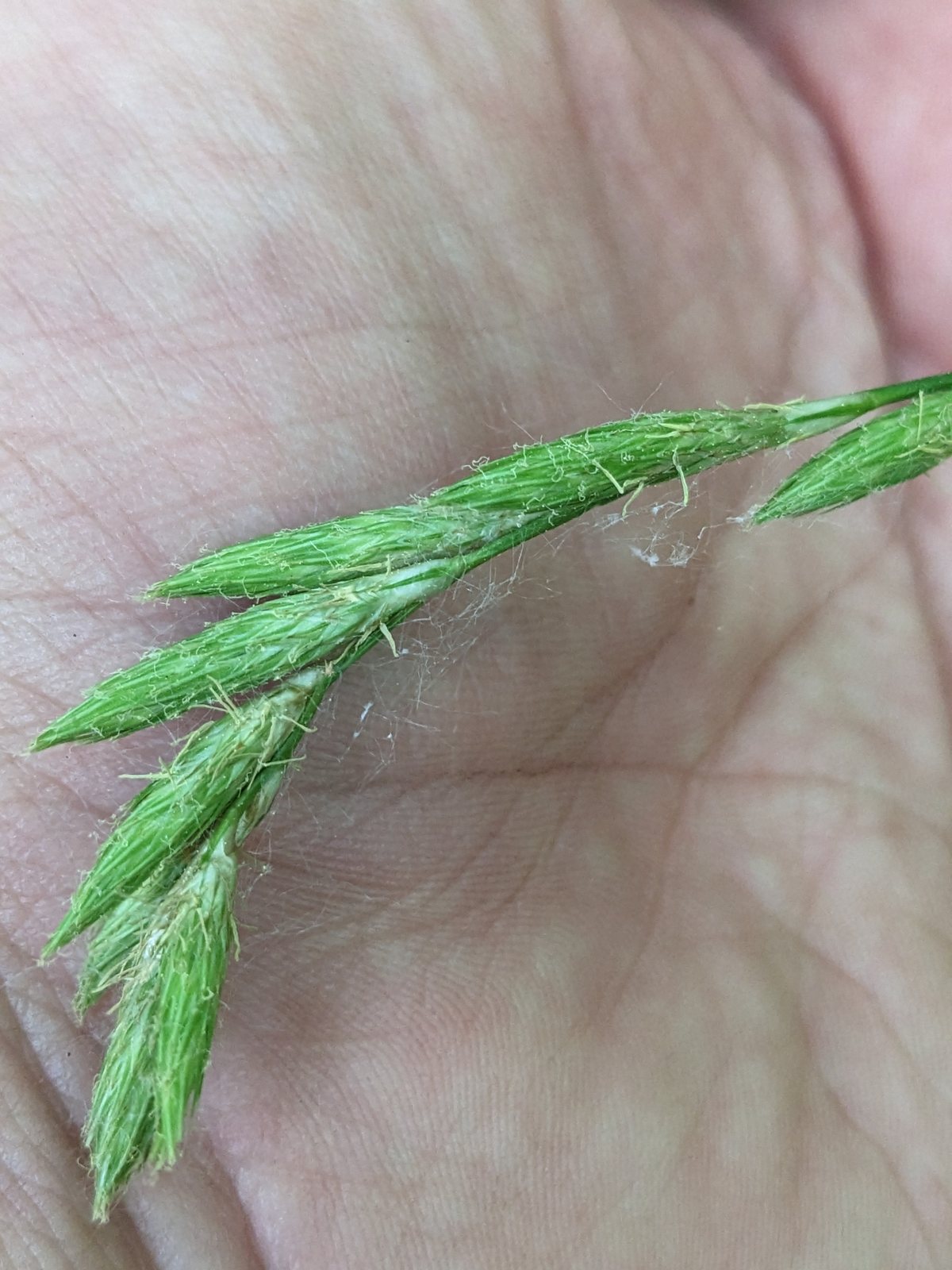
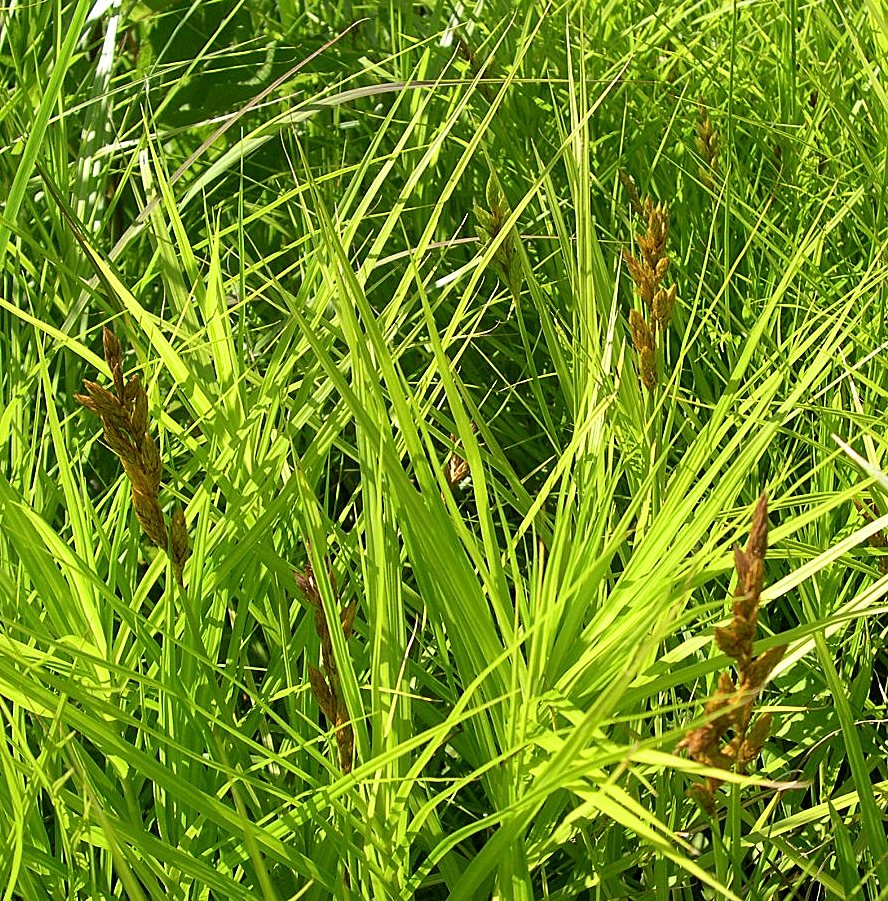
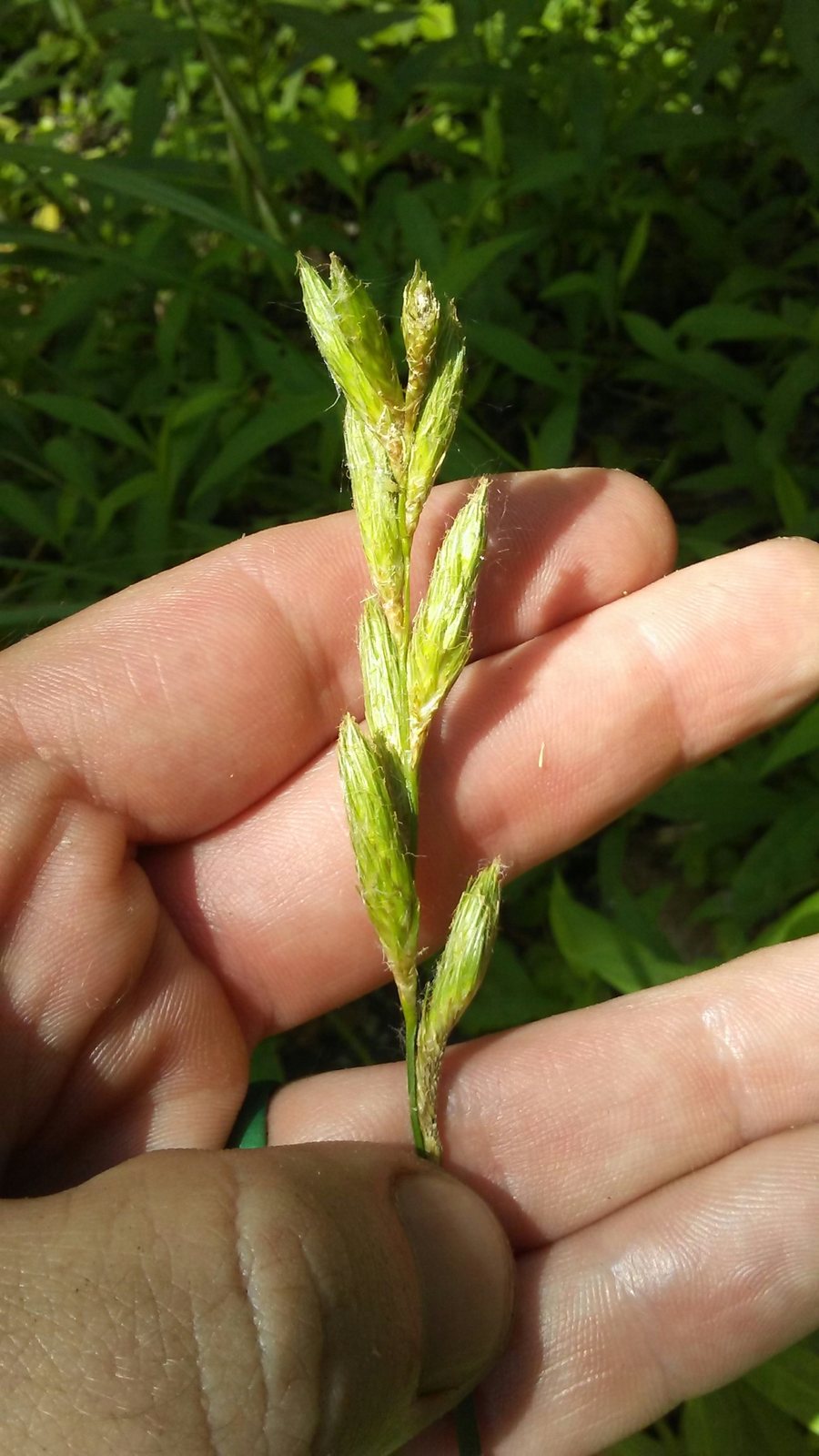
At a glance
- Sun
- Partial shade is ideal. Tolerates full sun if the soil stays consistently wet, but foliage may scorch in hot, dry positions.
- Water
- Keep consistently moist to wet. Established plants tolerate brief dry spells, but prolonged drought causes browning and early dormancy.
- Soil
- Moisture-retentive soil enriched with organic matter; tolerates clay, seasonal flooding and poor drainage.
- Height
- 2-3 ft (0.6-0.9 m)
- Spread
- 2-3 ft (0.6-0.9 m), gradually wider through short rhizomes
- Flowers
- Late spring to early summer; small greenish flower spikes mature to brown.
- Foliage
- Narrow, bright green leaves radiate around upright, three-sided stems. Foliage turns yellow to brown in autumn and dies back for winter.
- Growth
- Moderate
- Care needed
- Low
The year at a glance
- Deer resistant
- Cold hardy
- Heat tolerant
- Wildlife
| J | F | M | A | M | J | J | A | S | O | N | D | |
|---|---|---|---|---|---|---|---|---|---|---|---|---|
| Flowers | ||||||||||||
| Fruit | ||||||||||||
| Plant |
Northern hemisphere months. In Australia, shift them by six.
- Difficulty
- Easy
- Toughness
- Fairly tough
Will it suit your garden?
Pick your zone, country, light and whether you have pets.
Full sun is 6 or more hours of direct sun a day, part shade 3 to 6 hours, shade under 3.
How it grows
Planting day
1.1 ft (0.35 m)
After 1 year
1.7 ft (0.51 m)
After 2 years
2.2 ft (0.67 m)
After 3 years
2.5 ft (0.75 m)
full size
About 3 years to full size.
From a typical nursery size, at an average rate for this kind of plant. A rule of thumb, not a forecast.
Good to know
- Cats and dogs
- Mildly toxic: may upset a stomach
- Native to
- the US and Canada
- Growth rate
- Moderate
Care
Jobs through the year
- WaterApr–May, Sep–Oct, every 7 days
- Keep established clumps consistently moist; water when the surface begins drying, unless naturally wet.
- WaterJun–Aug, every 3 days
- Check established clumps frequently and water before soil dries; new plants may need more frequent watering.
- PruneFeb–Mar
- Cut dead stems to 5–10 cm before new shoots lengthen.
- MulchApr
- Add compost and moisture-retaining leaf mould or bark, leaving shoot bases uncovered.
- DivideMar–Apr
- Divide congested or oversized clumps and replant healthy sections in moist soil.
- DeadheadJun
- Remove flower stems before seed ripens only where self-seeding is unwanted.
- PruneAug–Sep
- Lift spreading edges if containment is needed and remove scorched stems at the base.
- Water deeply whenever the surface soil begins to dry, especially during the first growing season.
- Apply a thin layer of compost in spring; routine fertiliser is usually unnecessary.
- Mulch with leaf mould or composted bark to conserve moisture, keeping the shoot bases uncovered.
- Divide crowded clumps in spring if growth weakens or the patch exceeds its space.
- Remove unwanted seedlings and dig out spreading edges where a defined clump is needed.
Pruning. Cut dead stems and leaves to about 2-4 in (5-10 cm) above the ground in late winter or early spring, before new shoots lengthen. Remove scorched or broken stems at the base during the growing season.
Through the year
- Late winter
- Cut back dead growth before fresh shoots emerge.
- Spring
- Plant or divide clumps, water thoroughly and keep the soil moist while roots establish.
- Mid-spring
- Top-dress with compost and renew moisture-conserving mulch.
- Summer
- Check soil moisture during dry weather and water before leaves begin to brown.
- Late summer
- Remove unwanted seedlings or trim spreading edges if the planting needs containment.
- Autumn
- Leave fading stems standing for cover and texture, or remove them if they collapse across paths.
In the garden
- Plant in broad groups beside ponds or streams, with the crowns at the moist bank rather than in deep water.
- Use beneath deciduous trees where the soil stays damp, pairing its fine foliage with broad-leaved hostas.
- Repeat clumps through rain gardens with cardinal flowers and turtleheads to provide a consistent green framework.
- Edge damp woodland paths with its upright, leafy stems for a soft but clearly defined boundary.
Garden styles it suits: Woodland, Bog garden, New perennial (prairie), Wildlife garden, Green on green and Low-maintenance.
Plant it with: Hosta, Astilbe, Sensitive fern, Cardinal flower, Turtlehead and Siberian iris.
Wildlife: Dense clumps provide shelter for small animals and invertebrates, and seed may be eaten by birds. The flowers are wind-pollinated rather than a significant nectar source.
Problems to watch for
- Brown leaf tips or early dieback usually indicate dry soil or excessive sun; water deeply, mulch and move to partial shade if necessary.
- Rust can produce orange-brown spots or pustules on leaves; remove badly affected foliage and improve airflow without allowing the soil to dry out.
- Rhizomes and seedlings may expand beyond the intended patch; lift unwanted growth in spring and remove flower stems before seed ripens if necessary.
Safety
Not known to be toxic to people, cats, dogs or horses. No part is recognised as a serious poisoning hazard, although it is not a food plant and eating substantial amounts may cause digestive upset.
Easily confused with
Umbrella plant (Cyperus alternifolius)
Umbrella plant carries a conspicuous umbrella of leaf-like bracts mainly at the top of each tall stem. Palm sedge has leaves distributed along its stems and is much more cold-hardy.
Gray's sedge (Carex grayi)
Gray's sedge has broader, mostly basal leaves and distinctive inflated, spiky seed heads resembling small maces. Palm sedge has narrow leaves along the stems and slender, inconspicuous seed spikes.
The name
The common name refers to its palm-like leafy shoots, while muskingumensis refers to the Muskingum River region of Ohio.
Propagation. Divide clumps in spring as new growth begins, keeping roots moist and replanting promptly. The species can also be raised from seed; fresh seed sown outdoors in autumn receives the winter chilling that can help germination.
Checked against open data
- Accepted botanical name
- Carex muskingumensis
- In the US and Canada
- Native in Canada and the lower 48 states.
- Native range
- Arkansas, Illinois, Indiana, Iowa, Kansas, Kentucky, Michigan, Minnesota, Missouri, Ohio, Oklahoma and Ontario.
- Measured
- Soil pH 4.5 to 5. Average height 50 cm.
Sources: GBIF (CC BY 4.0), USDA PLANTS and Trefle (CC BY 4.0). The care and design notes are LandscapeGPT's own.
See it in your own yard.
Upload a photo of your yard and see it redesigned with plants that suit your climate, each checked against your zone.