Papaya
Carica papaya. Family Caricaceae. Tree.
Also called Pawpaw, Papaw.
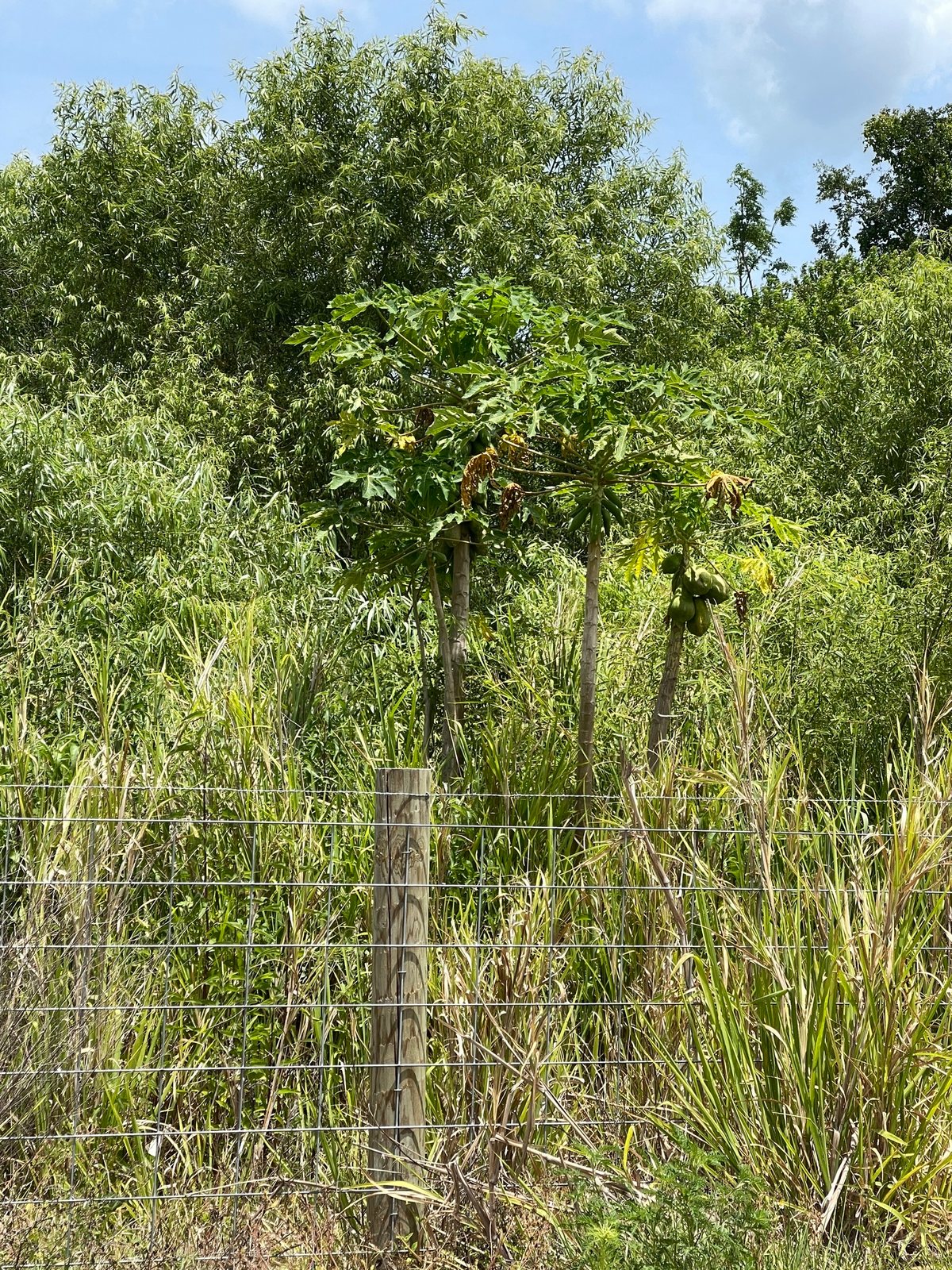
Papaya is a fast-growing, short-lived tropical fruit plant with a soft trunk, large lobed leaves and fruit clustered beneath the crown. Gardeners grow it for its sweet fruit and bold foliage, but it needs frost-free warmth to crop reliably. In the United Kingdom, Canada and cooler parts of the United States and Australia, it usually needs a heated greenhouse.
At a glance
- Sun
- Full sun, sheltered from strong winds; give greenhouse plants the brightest available position.
- Water
- Water regularly during warm growth, letting the surface soil dry slightly between waterings. Reduce watering in cool weather; never leave roots waterlogged.
- Soil
- Fertile, well-drained soil, preferably slightly acidic to neutral. Use a raised mound where drainage is doubtful and a free-draining potting mix in containers.
- Height
- 10-20 ft (3-6 m), sometimes taller in tropical conditions
- Spread
- 6-10 ft (1.8-3 m)
- Flowers
- Small cream to pale yellow flowers in the leaf axils throughout the year in tropical warmth; flowering slows or stops in cool weather.
- Foliage
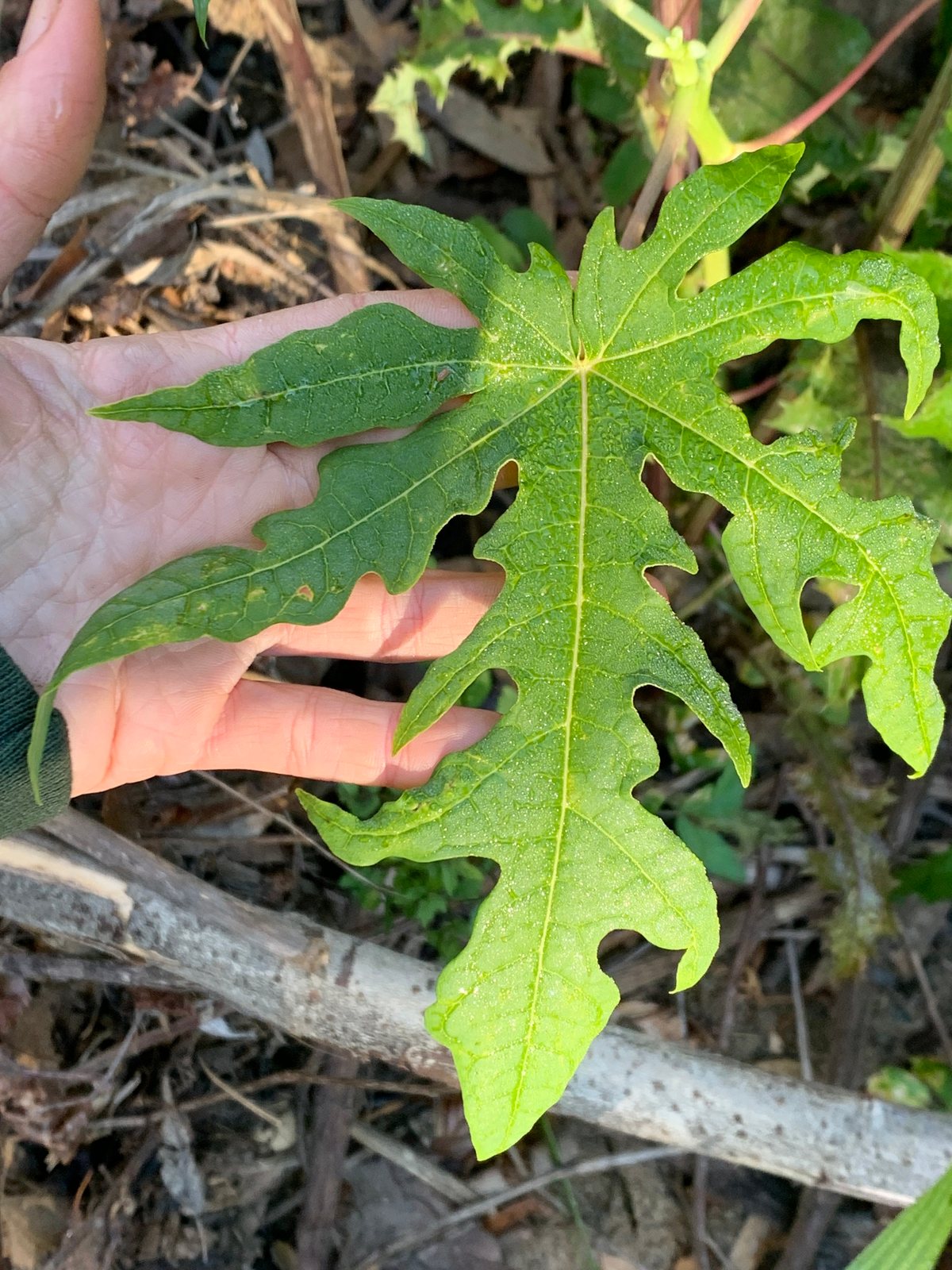
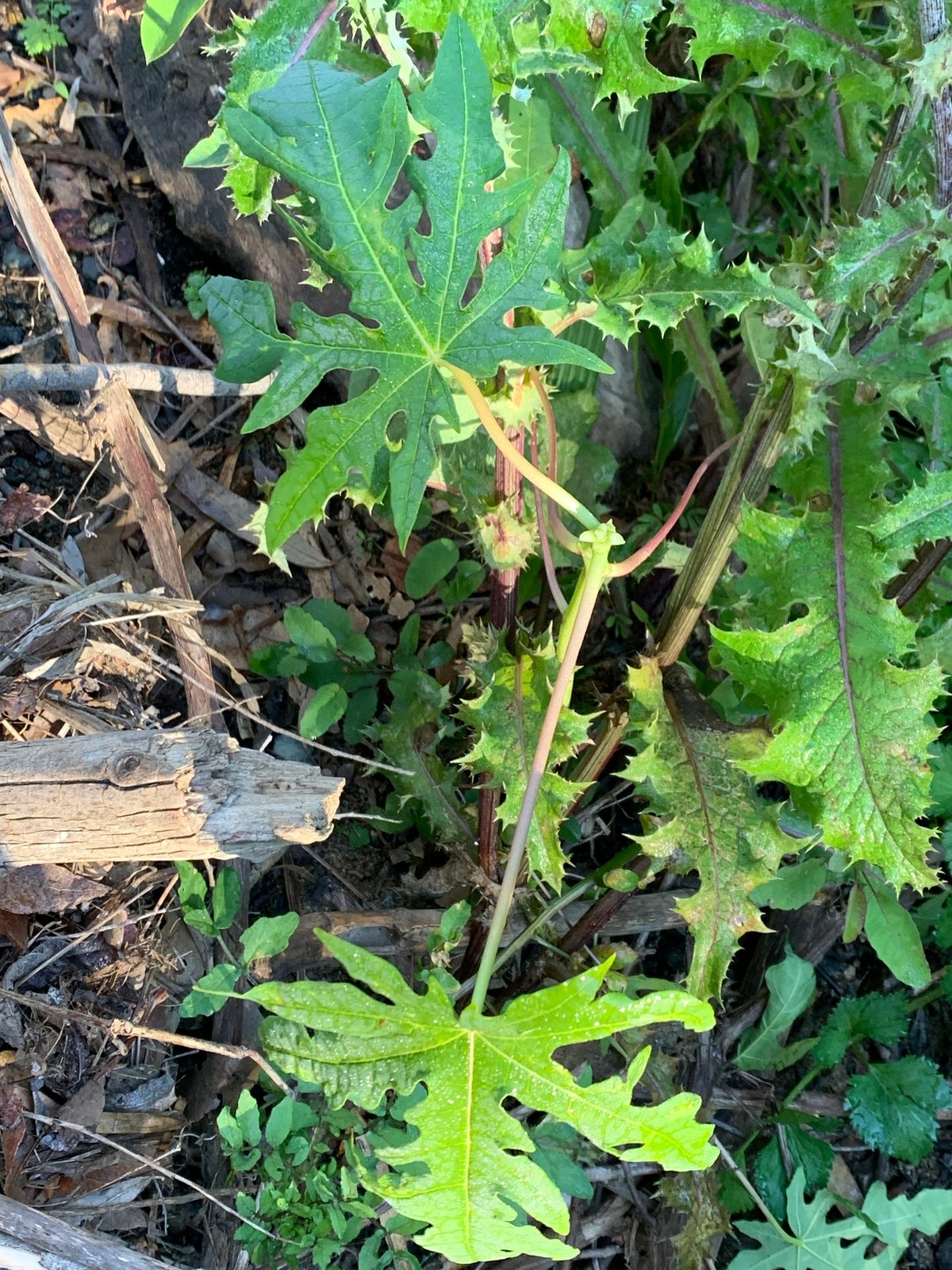
- Evergreen. Very large, deeply lobed green leaves on long stalks, clustered at the top of the trunk; older lower leaves shed naturally.
- Growth
- Fast in sustained warmth
- Care needed
- Medium
The year at a glance
- Pollinators
- Heat tolerant
- Wildlife
- Edible
| J | F | M | A | M | J | J | A | S | O | N | D | |
|---|---|---|---|---|---|---|---|---|---|---|---|---|
| Flowers | ||||||||||||
| Fruit | ||||||||||||
| Plant |
Northern hemisphere months. In Australia, shift them by six.
- Difficulty
- Hard
- Toughness
- Needs looking after
Will it suit your garden?
Pick your zone, country, light and whether you have pets.
Full sun is 6 or more hours of direct sun a day, part shade 3 to 6 hours, shade under 3.
How it grows
Planting day
7 ft (2 m)
After 1 year
7 ft (2.2 m)
After 2 years
8 ft (2.4 m)
After 3 years
8 ft (2.6 m)
After 5 years
10 ft (3 m)
About 13 years to full size.
From a typical nursery size, at an average rate for this kind of plant. A rule of thumb, not a forecast.
Good to know
- Cats and dogs
- Mildly toxic: may upset a stomach
- Growth rate
- Fast
Care
Jobs through the year
- WaterJun–Aug, every 3 days
- Use a large pot and heated shelter here; water when the surface dries slightly, never waterlogging roots.
- WaterMar–May, Sep–Oct, every 7 days
- Check compost and water according to warmth and growth; allow slight surface drying.
- WaterJan–Feb, Nov–Dec, every 14 days
- Check sheltered plants; water sparingly without drying the root ball completely.
- FeedMay–Sep, every 14 days
- Feed little and often with balanced fruit fertiliser, following its label.
- MulchJun
- Apply 5–8 cm of organic mulch, keeping it well away from the soft trunk.
- ProtectJan–May, Sep–Dec
- Provide bright heated shelter before nights fall below 10°C; sustained warmth is needed for cropping.
- ProtectJun–Aug
- Shelter from strong winds; use a self-fertile plant and hand-pollinate under glass if needed.
- HarvestSep–Nov
- If fruit develops under warm cover, cut when yellowing begins and ripen indoors; crops are unlikely outdoors here.
- Plant during warm weather, keeping the root ball intact and the trunk at its original soil level.
- Water deeply during active growth, but check drainage before watering again.
- Feed little and often during warm growth with a balanced fruit fertiliser, following the label rate.
- Apply 2-3 in (5-8 cm) of organic mulch, keeping it clear of the trunk.
- Choose a self-fertile, hermaphrodite plant for a small garden; female plants need pollen from a male or hermaphrodite plant.
- Move container plants into bright, heated shelter before nights regularly fall below 50°F (10°C).
Pruning. Routine pruning is unnecessary; remove dead leaves and damaged fruit in dry weather with clean tools. Avoid topping the soft trunk, which can rot and may not produce a useful replacement crown.
Harvest
In consistently warm conditions, expect the first useful crop about 9-18 months after planting a young plant; cool conditions delay cropping or prevent it altogether. Cut fruit with a short stalk when the skin begins turning yellow, then let it soften indoors; fully ripe fruit yields slightly to gentle pressure and has a sweet scent.
Through the year
- Spring
- Sow seed in warmth or repot young plants before vigorous growth starts.
- Late spring
- Plant outdoors only once soil and nights are reliably warm; choose a sunny, wind-sheltered site.
- Summer
- Water consistently, feed regularly and renew mulch without covering the trunk.
- Summer
- Check flowering plants for flower type and pollination; indoor plants may need hand-pollination.
- Autumn
- Harvest colouring fruit and bring container plants into heated shelter before cool nights.
- Winter
- Keep sheltered plants bright and warm, reduce watering and inspect for mites and scale.
In the garden
- Use as a vertical accent in a frost-free edible garden, with fruit displayed beneath the leaf crown.
- Place behind lower tropical planting so its umbrella-like foliage provides a contrasting upper layer.
- Grow a compact selection in a large movable container on a sunny, sheltered patio.
- Include in a tropical food garden with lower crops kept beyond the immediate trunk and root area.
Garden styles it suits: Modern tropical, Tropical, Edible landscape, Food forest, Caribbean and Hawaiian.
Plant it with: Pineapple, Lemongrass, Sweet basil and French marigold.
Wildlife: Flowers attract visiting insects, and ripe fruit attracts birds and fruit-eating mammals. Prompt harvesting limits losses and reduces fallen fruit that attracts pests.
Problems to watch for
- Root and collar rot: waterlogged soil can quickly kill plants. Improve drainage, plant on a mound where appropriate and keep mulch away from the trunk.
- Papaya ringspot virus: mottled, distorted leaves and ring-marked fruit indicate infection. Remove affected plants, start with healthy stock and choose locally recommended resistant varieties where available.
- Fruit flies in affected warm regions: larvae spoil ripening fruit. Bag developing fruit, collect fallen fruit promptly and follow local monitoring and control advice.
- Spider mites and scale, especially under glass: inspect leaf undersides and stems regularly; wash off early infestations and use a labelled insecticidal soap or horticultural oil if needed.
Safety
Ripe flesh is edible and is not known to be toxic to people, cats, dogs or horses in small food quantities; it is not a suitable staple feed for pets or livestock. Milky sap, especially from unripe fruit and damaged stems, can irritate skin, eyes and the digestive tract, and can cause allergic reactions in susceptible people. Remove skin and seeds before offering fruit to pets, and prevent animals from chewing the plant.
Easily confused with
North American pawpaw (Asimina triloba)
A cold-hardy deciduous tree with simple, unlobed leaves and purple-brown flowers; its fruit does not grow in a tight cluster immediately beneath a tropical leaf crown.
Mountain papaya (Vasconcellea pubescens)
Usually has hairy leaf undersides and smaller, strongly ribbed yellow fruit; common papaya has mostly smooth leaves and much larger fruit.
Castor bean (Ricinus communis)
Has star-shaped leaves on a branching shrub, often with reddish stems, and spiny seed capsules rather than large fleshy fruit. Its seeds are highly poisonous.
The name
The name papaya comes through Spanish from an Indigenous Caribbean name for the fruit.
Propagation. Usually grown from seed, which germinates best at about 77-86°F (25-30°C). Sow in individual pots and transplant young with minimal root disturbance. Seedlings vary in sex and fruit quality, so a named, reliably self-fertile selection is a better choice when space is limited.
Checked against open data
- Accepted botanical name
- Carica papaya
- In the US and Canada
- Introduced in Hawaii, the lower 48 states, Pacific Basin, Puerto Rico and US Virgin Islands.
- Native range
- Belize, Colombia, Costa Rica, El Salvador, Guatemala, Honduras, Mexico Gulf, Mexico Southeast, Mexico Southwest, Nicaragua, Panamá and Venezuela.
- Measured
- Soil pH 5 to 8. Average height 610 cm.
Sources: GBIF (CC BY 4.0), USDA PLANTS and Trefle (CC BY 4.0). The care and design notes are LandscapeGPT's own.
See it in your own yard.
Upload a photo of your yard and see it redesigned with plants that suit your climate, each checked against your zone.