Pattypan squash 'Sunburst'
Cucurbita pepo 'Sunburst'. Family Cucurbitaceae. Annual.
Also called Sunburst scallop squash, Yellow pattypan squash, Scallopini 'Sunburst'.
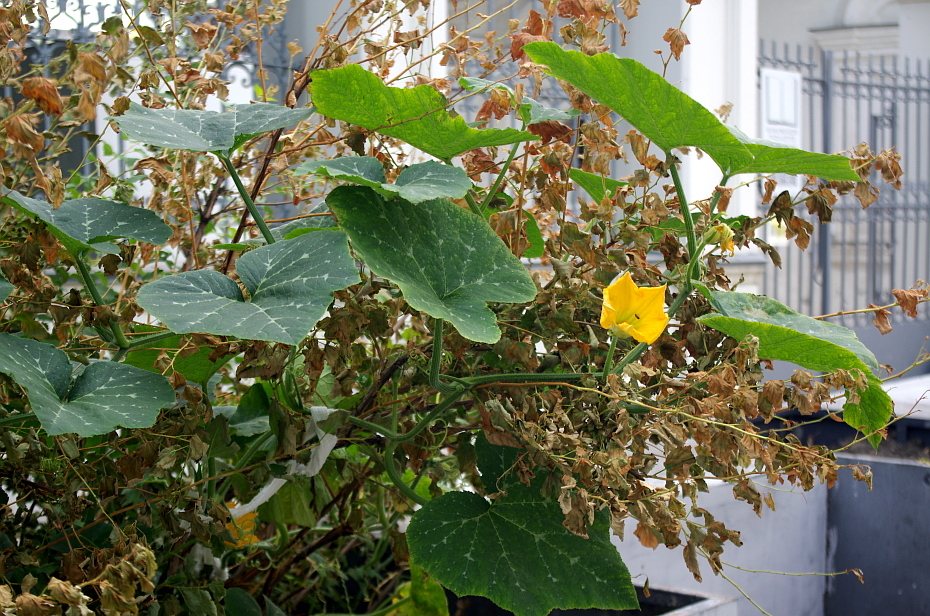
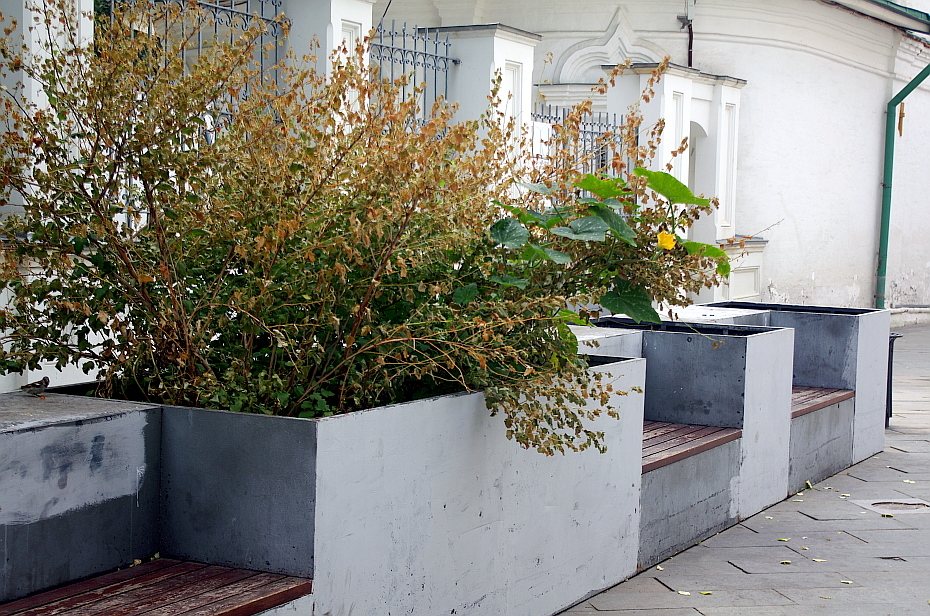
'Sunburst' is a bush-type summer squash grown as an annual for its bright yellow, scalloped fruits, which often have a small green patch at the blossom end. It crops quickly in warm weather and needs less space than trailing squash, although its broad leaves still need room.
At a glance
- Sun
- Full sun; at least 6-8 hours of direct sunlight daily.
- Water
- Keep the root zone evenly moist, especially during flowering and fruiting. Water deeply at soil level when the surface begins to dry; containers may need daily watering in hot weather.
- Soil
- Fertile, moisture-retentive but well-drained soil enriched with compost; ideally pH 6.0-7.0.
- Height
- 2-3 ft (0.6-0.9 m)
- Spread
- 3-4 ft (0.9-1.2 m)
- Flowers
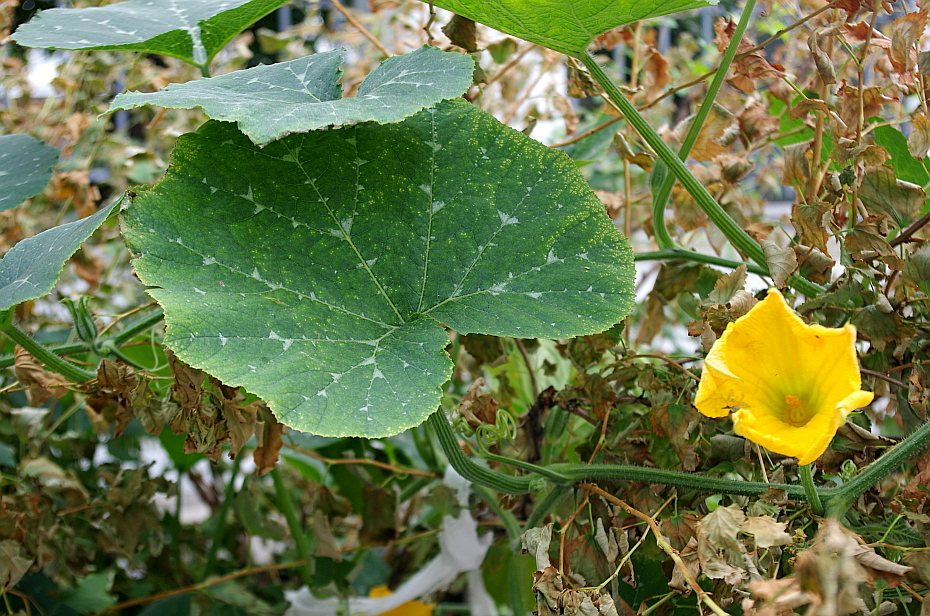
- Large yellow flowers from early summer until autumn, or through the local warm growing season; male and female flowers occur separately on the same plant.
- Foliage
- Large, rough, green, lobed leaves on prickly stalks, forming an open bush.
- Growth
- Fast; usually starts cropping about 50-60 days after sowing in warm conditions.
- Care needed
- Medium
The year at a glance
- Pollinators
- Heat tolerant
- Low allergen
- Edible
| J | F | M | A | M | J | J | A | S | O | N | D | |
|---|---|---|---|---|---|---|---|---|---|---|---|---|
| Flowers | ||||||||||||
| Fruit | ||||||||||||
| Plant |
Northern hemisphere months. In Australia, shift them by six.
- Difficulty
- Moderate
- Toughness
- Needs looking after
Will it suit your garden?
Pick your zone, country, light and whether you have pets.
Full sun is 6 or more hours of direct sun a day, part shade 3 to 6 hours, shade under 3.
How it grows
Planting day
0.5 ft (0.15 m)
After 1 year
2.5 ft (0.75 m)
full size
Full size in one season.
From a typical nursery size, at an average rate for this kind of plant. A rule of thumb, not a forecast.
Good to know
- Cats and dogs
- Safe
- Native to
- the US
- Growth rate
- Fast
Care
Jobs through the year
- WaterMay–Jun, every 4 days
- Water in-ground plants deeply if rain is insufficient; check young transplants more often.
- WaterJul–Aug, every 3 days
- Keep soil evenly moist during cropping; water at soil level and adjust for rainfall.
- WaterSep–Oct, every 7 days
- Water if soil is drying while plants remain productive and frost-free.
- FeedApr–May
- Mix well-rotted compost into the bed before planting.
- FeedJul
- If growth is weak or soil is poor, apply balanced vegetable fertilizer according to its label.
- MulchJun
- Mulch once soil is warm, leaving the main stem clear.
- ProtectMay–Jun
- Plant only after frost risk passes and soil reaches 16°C; harden off transplants.
- ProtectJun–Sep, every 7 days
- Check for pests and mildew; keep flowers accessible to pollinating bees.
- HarvestJul–Oct
- Cut tender fruits at 5–8 cm across, leaving a short stalk; stop when frost ends cropping.
- Plant out only after frost risk has passed and the soil has warmed to at least 60°F (16°C); harden off indoor-raised plants first.
- Space plants about 3 ft (0.9 m) apart so leaves have room and air can circulate.
- Water at soil level, keeping moisture consistent rather than alternating between drought and soaking.
- Mulch once the soil is warm, keeping mulch clear of the main stem.
- Mix compost into the bed before planting; feed container plants regularly with a balanced vegetable fertilizer according to its label.
Pruning. No routine pruning or pinching is needed. During the growing season, cut off badly diseased or damaged leaves with clean secateurs without injuring the main stem.
Harvest
Pick fruits young, usually at 2-3 in (5-8 cm) across, while the skin is tender and easily marked with a fingernail. Check plants every day or two once cropping begins, and cut the stalk with a knife or secateurs rather than twisting the fruit off; frequent picking encourages further production.
Through the year
- Early spring
- Prepare a sunny bed with compost and plan enough space for the mature plants.
- Mid-spring
- In cooler climates, sow indoors in individual pots about 3-4 weeks before the expected last frost.
- Late spring
- Harden off and transplant after frost, or sow directly into warm soil. In frost-free areas, choose the locally suitable warm growing season.
- Early summer
- Mulch warm soil, maintain steady watering and check young plants for pests.
- Summer
- Harvest small fruits frequently and inspect leaves for mildew and insect damage.
- Autumn
- Remove plants when frost or declining growth ends the crop; dispose of pest-infested or badly diseased material.
In the garden
- Plant in a sunny kitchen-garden bed where the yellow fruits are easy to see and pick.
- Use as a bold, broad-leaved focal plant in a potager, with low herbs or flowers beyond its mature spread.
- Grow one plant in a large container of at least 10 US gallons (38 litres), with drainage holes and easy access for watering.
- Include in an edible border with calendula or nasturtiums, leaving clear access around the prickly foliage.
Garden styles it suits: Potager (kitchen garden), Edible landscape, Homestead, Cottage garden, Farmhouse and Family-friendly.
Plant it with: Calendula, Nasturtium, Dill, Radish and Lettuce.
Wildlife: The flowers supply pollen and nectar to bees, including specialist squash bees where these occur in the Americas. Bee visits are important for fruit production; avoid spraying insecticides on open flowers.
Problems to watch for
- Powdery mildew: white patches develop on leaves, often late in the season. Allow good airflow, avoid drought stress and remove badly affected leaves; use a locally approved treatment if needed.
- Squash bugs, particularly in North America: inspect leaf undersides for bronze egg clusters, remove them and hand-pick bugs. Clear old squash debris after harvest.
- Squash vine borers, in affected parts of North America: sudden wilting with sawdust-like material at the stem base suggests attack. Use insect mesh before flowering, removing it for pollination, and promptly remove plants that cannot be saved.
- Poor fruit set or rotting young fruits: early female flowers may not be pollinated, especially in cool or wet weather. Hand-pollinate a newly opened female flower with pollen from a male flower in the morning, and keep watering consistent.
Safety
Normal, non-bitter cultivated squash is not known to be toxic to people, cats, dogs or horses. Exceptionally bitter fruits can contain poisonous cucurbitacins and cause severe digestive illness; do not eat or feed any bitter fruit, and discard it because cooking does not remove the toxin. Prickly leaves and stems can irritate skin.
Easily confused with
White pattypan squash (Cucurbita pepo)
The fruits have a similar flattened, scalloped shape but are white or cream rather than the bright yellow of 'Sunburst'.
Yellow zucchini (Cucurbita pepo)
The fruits are elongated and roughly cylindrical rather than flattened with a scalloped rim.
Yellow crookneck squash (Cucurbita pepo)
The fruits have a swollen base and narrow curved neck, sometimes with warty skin, rather than a saucer shape.
The name
The name pattypan refers to the fruit's resemblance to a small baking pan used for patties or pies.
Propagation. Grow from seed, either sown directly into warm soil or started in individual pots indoors. 'Sunburst' is an F1 hybrid, so saved seed will not reliably reproduce the cultivar; use fresh purchased seed for consistent plants.
Checked against open data
- Accepted botanical name
- Cucurbita pepo
- In the US and Canada
- Native in the lower 48 states. Introduced in the lower 48 states, Pacific Basin and Puerto Rico.
- Native range
- Mexico Central, Mexico Gulf, Mexico Northeast, Mexico Northwest, Mexico Southeast and Mexico Southwest.
- Measured
- Average height 63 cm.
Sources: GBIF (CC BY 4.0), USDA PLANTS and Trefle (CC BY 4.0). The care and design notes are LandscapeGPT's own.
See it in your own yard.
Upload a photo of your yard and see it redesigned with plants that suit your climate, each checked against your zone.