Peregrina
Jatropha integerrima. Family Euphorbiaceae. Shrub.
Also called Spicy jatropha, Peregrina jatropha.
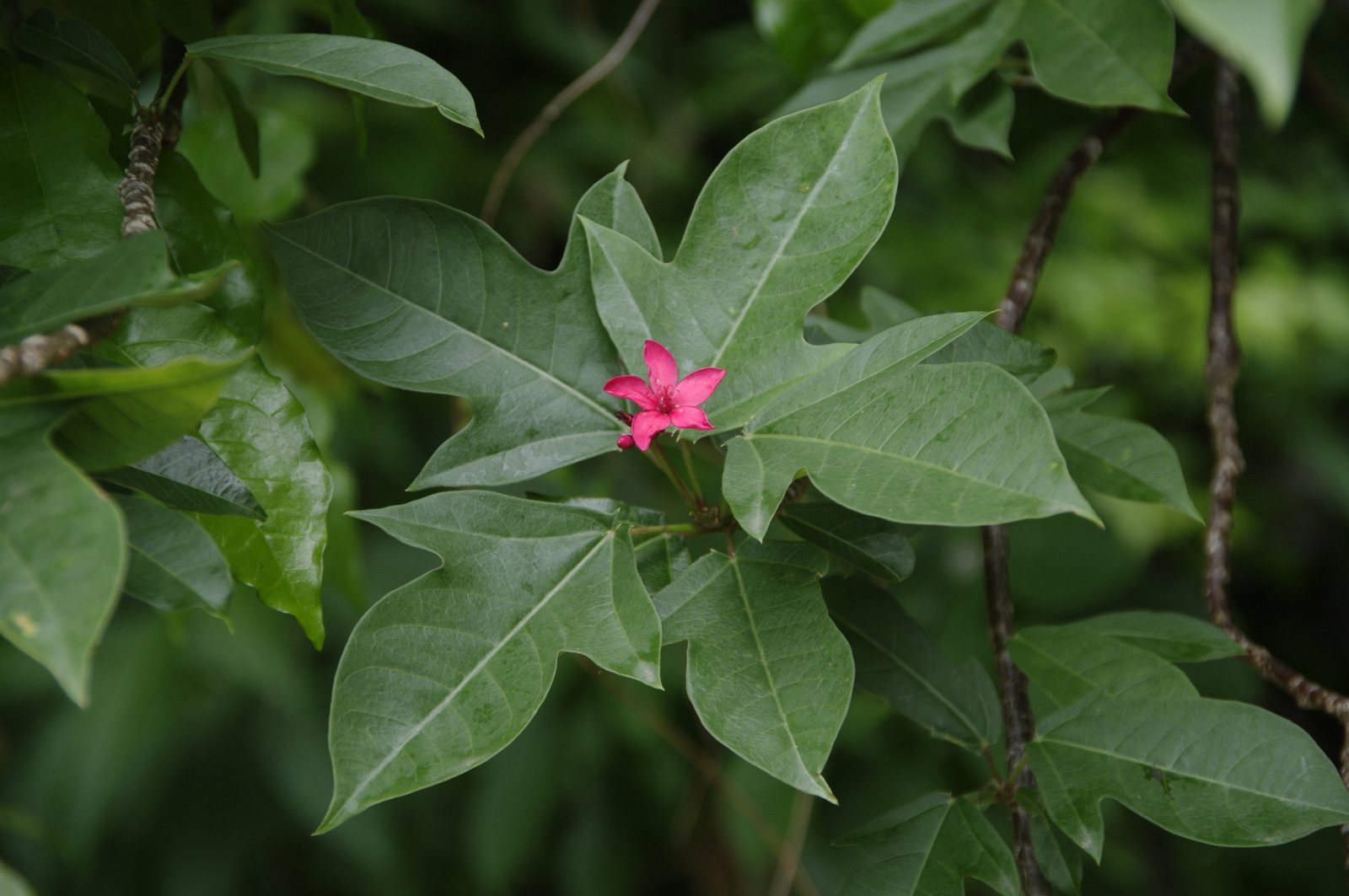
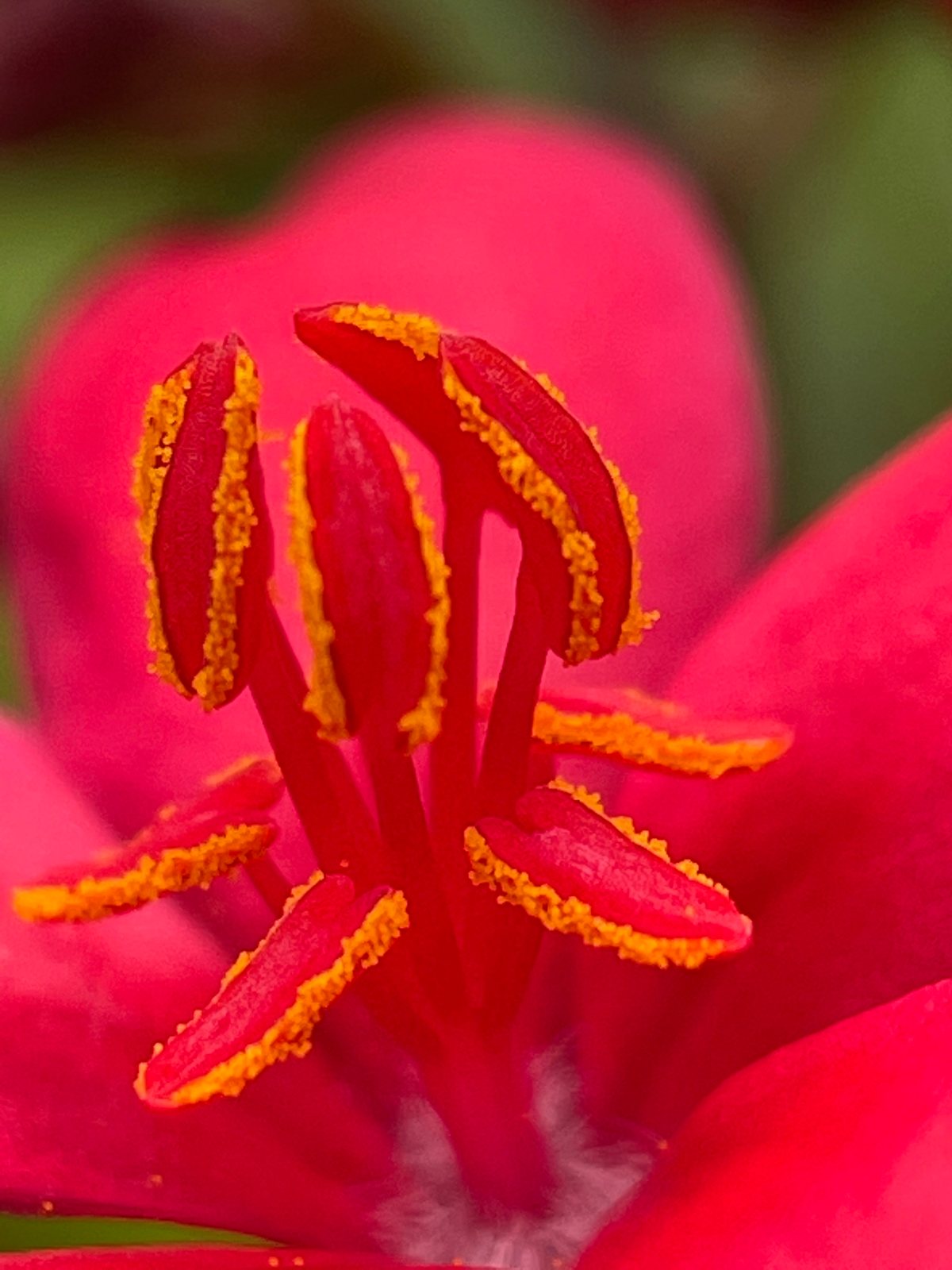
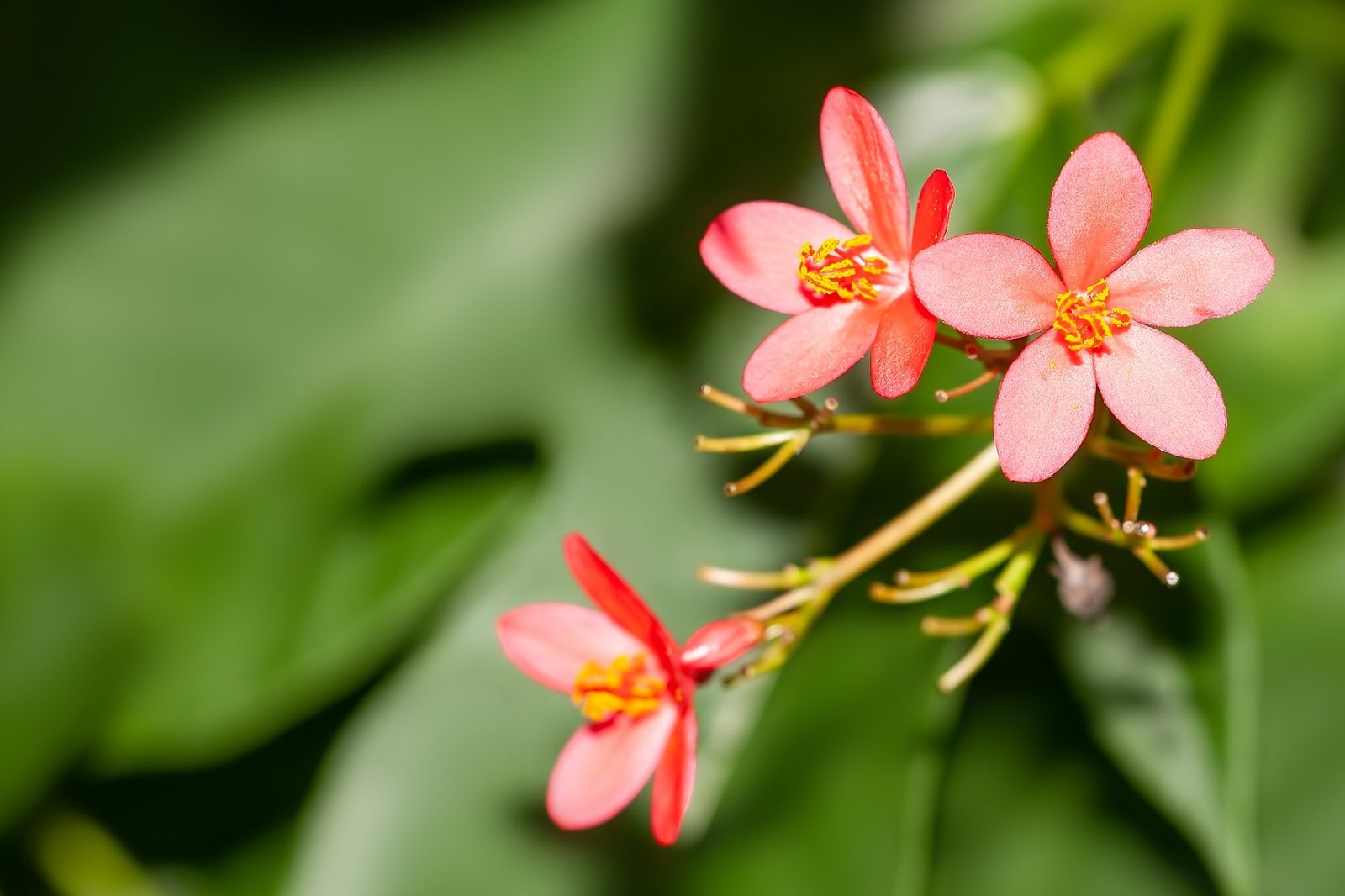
Peregrina is a tropical evergreen shrub or small tree grown for clusters of bright red, star-shaped flowers over a long season. It suits sunny, frost-free gardens and can be grown in a container elsewhere if you have a bright, warm place for winter. Its poisonous seeds and irritating sap need care around children and animals.
At a glance
- Sun
- Full sun gives the most flowers; tolerates light partial shade.
- Water
- Water regularly while establishing, then let the surface soil dry between waterings. Established plants tolerate short dry spells but flower better with moderate moisture.
- Soil
- Well-drained sandy or loamy soil; tolerates a range of soil pH but struggles in waterlogged ground.
- Height
- 6-15 ft (1.8-4.6 m)
- Spread
- 6-10 ft (1.8-3 m)
- Flowers
- Bright red to scarlet flower clusters, mainly spring through autumn; potentially year-round in consistently warm, frost-free conditions.
- Foliage
- Glossy green leaves vary from oval to shallowly three-lobed. Usually evergreen in tropical conditions, but may shed leaves during cool or dry weather.
- Growth
- Moderate to fast in warm weather.
- Care needed
- Medium
The year at a glance
- Pollinators
- Drought tolerant
- Heat tolerant
- Low allergen
| J | F | M | A | M | J | J | A | S | O | N | D | |
|---|---|---|---|---|---|---|---|---|---|---|---|---|
| Flowers | ||||||||||||
| Plant |
Northern hemisphere months. In Australia, shift them by six.
- Difficulty
- Moderate
- Toughness
- Fairly tough
Will it suit your garden?
Pick your zone, country, light and whether you have pets.
Full sun is 6 or more hours of direct sun a day, part shade 3 to 6 hours, shade under 3.
How it grows
Planting day
1.6 ft (0.5 m)
After 1 year
4 ft (1.2 m)
After 2 years
6 ft (1.9 m)
After 3 years
8 ft (2.5 m)
After 5 years
10 ft (3.2 m)
full size
About 4 years to full size.
From a typical nursery size, at an average rate for this kind of plant. A rule of thumb, not a forecast.
Good to know
- Cats and dogs
- Toxic
- Growth rate
- Fast
Care
Jobs through the year
- WaterApr–May, Sep, every 10 days
- For established plants, water when the surface soil dries; young plants and pots need closer checks.
- WaterJun–Aug, every 7 days
- Water established plants deeply if soil has dried; check containers more frequently.
- WaterJan–Mar, Oct–Dec, every 14 days
- Check sheltered pots and water sparingly without allowing the root ball to dry completely.
- FeedApr–May
- Give one light application of balanced fertiliser as growth resumes.
- MulchJun
- Mulch the root area, leaving a clear gap around stems.
- PruneApr–May
- As growth resumes under cover, remove dead wood and shorten straggly shoots; wear gloves against toxic sap.
- ProtectSep–Oct
- Move into bright, frost-free shelter before cold nights; outdoor overwintering is unsuitable in zones 6–7.
- ProtectJun
- Harden off before moving outside once nights are reliably warm; keep toxic seed capsules away from children and pets.
- Plant after cool weather has passed, with the root ball at its original soil level.
- Water deeply during establishment; avoid keeping the root zone constantly wet.
- Apply a light feeding of balanced fertiliser in spring; avoid heavy nitrogen feeding that encourages leaves rather than flowers.
- Mulch around the roots, leaving a clear gap around the stems.
- Use a container with drainage holes and move it into bright, frost-free shelter before cold nights arrive.
- Wear gloves when handling cut stems, and remove seed capsules where children or pets could reach them.
Pruning. Prune in early spring once frost risk has passed, removing dead wood and shortening overly long shoots to a leafy side branch. Lightly tip-prune during warm weather for a bushier shape; frequent hard clipping reduces flowering.
Through the year
- Spring
- Check for cold damage and prune back to healthy wood once new growth begins.
- Late spring
- Plant outdoors or move overwintered containers outside once nights are reliably warm.
- Early summer
- Check soil moisture regularly and water deeply during dry weather.
- Summer
- Inspect shoot tips and leaf undersides for sucking insects; lightly trim straggly growth if needed.
- Autumn
- Move container plants under bright, frost-free cover before cold nights; reduce watering as growth slows.
- Winter
- Keep sheltered plants in strong light and water sparingly without allowing the root ball to dry out completely.
In the garden
- Use as a flowering specimen beside a sunny patio, away from children's play areas.
- Plant in a loose tropical border with hibiscus, crotons and pentas for contrasting foliage and sustained colour.
- Train as a small multi-stemmed tree to lift the flower clusters above lower planting.
- Grow in a large container as a seasonal focal point where winters are too cold for permanent outdoor planting.
Garden styles it suits: Modern tropical, Tropical, Modern courtyard, Luxury resort, Caribbean and Florida subtropical.
Plant it with: Tropical hibiscus, Pentas, Croton, Dwarf ixora, Blue plumbago and Society garlic.
Wildlife: Flowers attract butterflies and other nectar-feeding insects; hummingbirds may visit where they occur.
Problems to watch for
- Scale insects and mealybugs: inspect stems and leaf undersides, wipe off small infestations, and use a labelled horticultural oil or insecticidal soap if needed.
- Spider mites in hot, dry conditions: look for fine stippling and webbing; rinse leaf undersides and treat persistent infestations with a labelled product.
- Root rot in wet soil: improve drainage, empty container saucers and let the surface soil dry before watering again.
- Cold damage and leaf drop: provide winter shelter; wait until spring growth reveals which stems are alive before pruning.
Safety
All parts should be treated as poisonous to people, cats, dogs and horses, especially the seeds. Swallowing plant material can cause vomiting, diarrhoea and potentially serious poisoning; seek medical or veterinary advice promptly. The milky sap can irritate skin and eyes.
Easily confused with
Coral plant (Jatropha multifida)
Has deeply divided, finger-like leaf lobes that give a much finer texture; peregrina has mostly simple or shallowly lobed leaves.
Physic nut (Jatropha curcas)
Has broader, usually three- to five-lobed leaves and small yellow-green flowers rather than showy scarlet flower clusters.
Ixora (Ixora coccinea)
Has opposite leaves and densely packed tubular flowers, usually with four petal lobes; peregrina has alternate leaves and open, five-petalled flowers.
The name
The species name integerrima means 'very entire', referring to the generally unbroken margins of its leaves.
Propagation. Propagate from semi-ripe stem cuttings during warm weather, using gloves to avoid the sap. Seed also works, but handle and store it securely because it is poisonous.
Checked against open data
- Accepted botanical name
- Jatropha integerrima
- In the US and Canada
- Introduced in the lower 48 states, Pacific Basin and Puerto Rico.
- Native range
- Cuba.
Sources: GBIF (CC BY 4.0), USDA PLANTS and Trefle (CC BY 4.0). The care and design notes are LandscapeGPT's own.
See it in your own yard.
Upload a photo of your yard and see it redesigned with plants that suit your climate, each checked against your zone.