Pink tickseed
Coreopsis rosea. Family Asteraceae. Perennial.
Also called Rose coreopsis, Pink coreopsis.
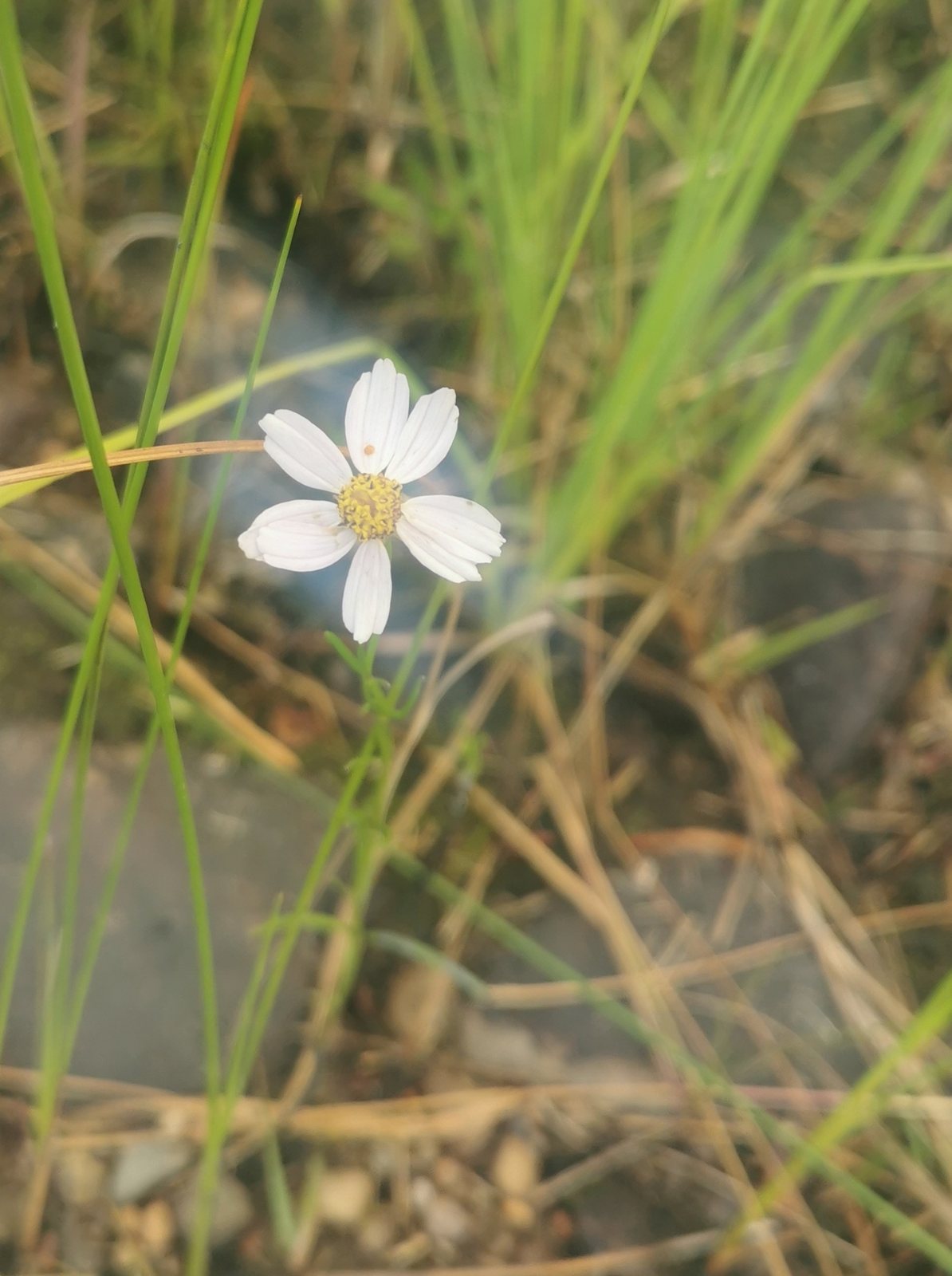
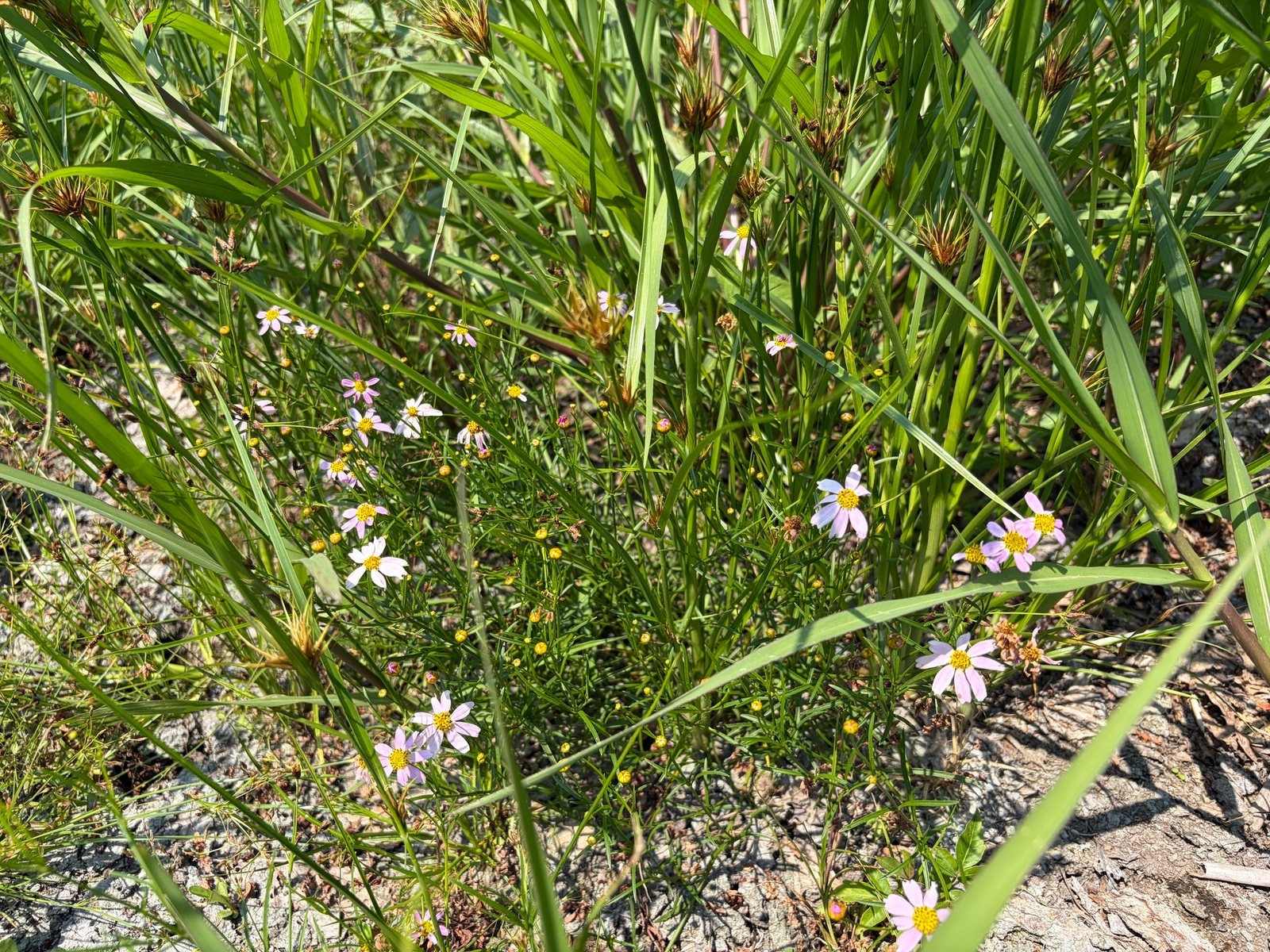
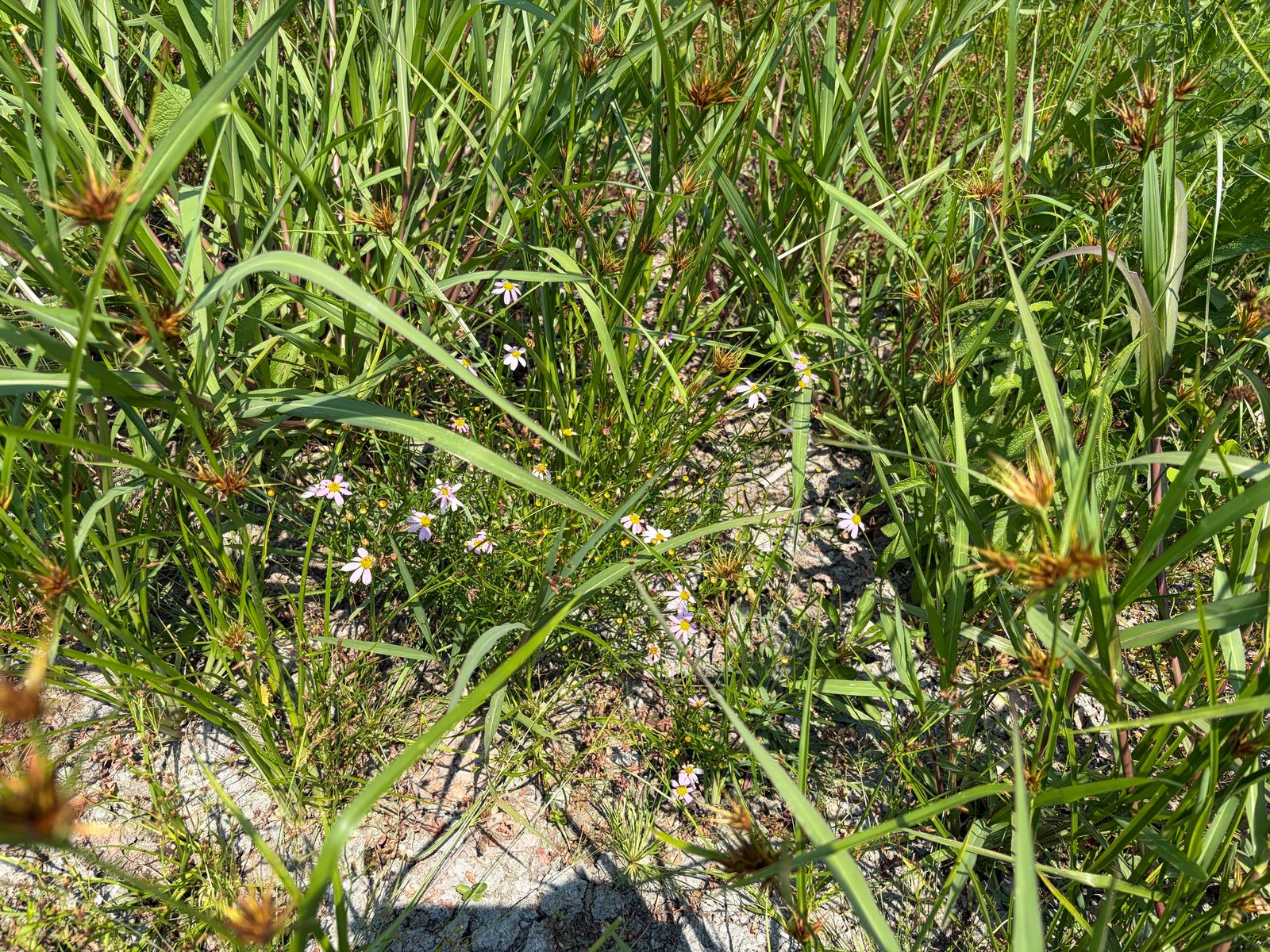
Pink tickseed is a spreading, herbaceous perennial native to eastern North America, grown for small pink daisies with yellow centres and fine, grassy-looking foliage. It flowers through summer and suits sunny borders with consistently moist soil; unlike many yellow-flowered tickseeds, it does not tolerate prolonged drought well.
At a glance
- Sun
- Full sun for the best flowering; tolerates light partial shade.
- Water
- Keep the soil consistently moist, especially during establishment and summer dry spells. Avoid sites that dry out completely.
- Soil
- Moist, humus-enriched sandy or loamy soil, preferably acidic to neutral. Avoid heavy, compacted soil and stagnant winter wet.
- Height
- 1-2 ft (0.3-0.6 m)
- Spread
- 1.5-2.5 ft (0.45-0.75 m), gradually wider through underground stems
- Flowers
- Summer into early autumn; small pink flowers with yellow centres.
- Foliage
- Narrow, opposite green leaves on slender, branching stems, giving a fine-textured appearance.
- Growth
- Moderate; forms spreading colonies where moisture is reliable.
- Care needed
- Medium
The year at a glance
- Pollinators
- Deer resistant
- Cold hardy
- Wildlife
| J | F | M | A | M | J | J | A | S | O | N | D | |
|---|---|---|---|---|---|---|---|---|---|---|---|---|
| Flowers | ||||||||||||
| Fruit | ||||||||||||
| Plant |
Northern hemisphere months. In Australia, shift them by six.
- Difficulty
- Moderate
- Toughness
- Fairly tough
Will it suit your garden?
Pick your zone, country, light and whether you have pets.
Full sun is 6 or more hours of direct sun a day, part shade 3 to 6 hours, shade under 3.
How it grows
Planting day
1 ft (0.3 m)
After 1 year
1.1 ft (0.35 m)
After 2 years
1.3 ft (0.4 m)
After 3 years
1.5 ft (0.45 m)
full size
About 3 years to full size.
From a typical nursery size, at an average rate for this kind of plant. A rule of thumb, not a forecast.
Good to know
- Cats and dogs
- Safe
- Native to
- the US and Canada
- In the garden
- Spreads vigorously: plan to contain it.
- Growth rate
- Moderate
Care
Jobs through the year
- WaterApr–May, Sep–Oct, every 7 days
- Water established clumps if rain is insufficient to keep soil moist; new plants need closer checking.
- WaterJun–Aug, every 3 days
- Water established clumps during dry weather to maintain moist soil without waterlogging.
- MulchApr
- Apply a thin compost mulch for moisture and nutrients, keeping crowns clear.
- PruneMar
- Cut dead stems near ground level before new shoots develop.
- DivideApr–May
- Divide crowded clumps every two to three years and replant promptly.
- DeadheadJun–Aug, every 7 days
- Remove faded flowers to prolong bloom; leave later heads for birds and winter interest.
- ProtectMar–May
- Protect emerging shoots from slugs and snails by hand-picking or labelled iron-phosphate bait.
- Water deeply during dry spells so the root zone stays moist.
- Apply a thin layer of compost in spring; avoid heavy nitrogen feeding.
- Mulch lightly to conserve moisture, keeping mulch away from the crowns.
- Divide crowded clumps every two to three years in spring.
- Remove unwanted spreading shoots if the clump moves beyond its allotted space.
Pruning. Remove faded flowers regularly, or lightly shear the plant after its main flush to encourage further flowering. Cut dead stems back near ground level in late winter or early spring.
Through the year
- Early spring
- Cut back dead stems before new shoots develop.
- Spring
- Plant or divide clumps, water thoroughly, and apply a light compost mulch.
- Early summer
- Check soil moisture regularly and water during dry weather.
- Summer
- Deadhead or lightly shear after the main flowering flush.
- Early autumn
- Leave some flower heads for seed, and remove shoots spreading into neighbouring plants.
- Late autumn
- Leave healthy stems standing for winter habitat; remove diseased material.
In the garden
- Plant in drifts near the front of a sunny, moisture-retentive border for a soft pink summer layer.
- Use along the upper edge of a pond or rain garden, above permanently standing water.
- Combine with sedges and other moisture-loving perennials in an informal meadow planting.
- Pair with blue-flowered perennials for a loose, pastel-coloured cottage garden.
Garden styles it suits: Cottage garden, Native meadow, Pollinator garden, Wildflower, Pastel border and New England.
Plant it with: Blue flag iris, Great blue lobelia, Swamp milkweed, Marsh blazing star and Tussock sedge.
Wildlife: The flowers provide pollen and nectar for bees and other visiting insects. Some seed heads can be left for small seed-eating birds.
Problems to watch for
- Drought stress: wilting, browning and poor flowering can follow dry soil; water deeply and mulch to reduce moisture loss.
- Crown or root rot: avoid compacted, stagnant soil, improve drainage, and remove badly affected plants.
- Powdery mildew: allow air movement between plants, water at soil level, and remove badly affected foliage.
- Slugs and snails: protect emerging spring shoots by hand-picking pests or using an appropriate iron-phosphate bait according to its label.
Safety
Not known to be toxic to people, cats, dogs or horses. No part is generally recognised as poisonous, but it is an ornamental plant rather than a food plant.
Easily confused with
Threadleaf tickseed (Coreopsis verticillata)
Both have fine-textured foliage, but threadleaf tickseed has deeply divided, threadlike leaves and normally yellow flowers; pink tickseed has simple, narrow leaves and pink flowers.
Garden cosmos (Cosmos bipinnatus)
Garden cosmos is an annual with finely divided, feathery leaves and much larger flowers, usually on taller plants. Pink tickseed is a low, spreading perennial with small flowers and undivided leaves.
The name
Coreopsis comes from Greek words meaning bug-like, referring to the seed-like fruits, while rosea means pink or rosy.
Propagation. Divide established clumps in spring, keeping roots and several shoots on each division. The species can also be grown from seed; seedlings from named cultivars or nearby hybrids may differ from the parent.
Checked against open data
- Accepted botanical name
- Coreopsis rosea
- In the US and Canada
- Native in Canada and the lower 48 states.
- Native range
- Delaware, Maryland, Masachusettes, New Jersey, New York, Nova Scotia, Pennsylvania, Rhode I. and South Carolina.
Sources: GBIF (CC BY 4.0), USDA PLANTS and Trefle (CC BY 4.0). The care and design notes are LandscapeGPT's own.
See it in your own yard.
Upload a photo of your yard and see it redesigned with plants that suit your climate, each checked against your zone.