Pitch apple
Clusia rosea. Family Clusiaceae. Tree.
Also called Autograph tree, Scotch attorney, Balsam apple.
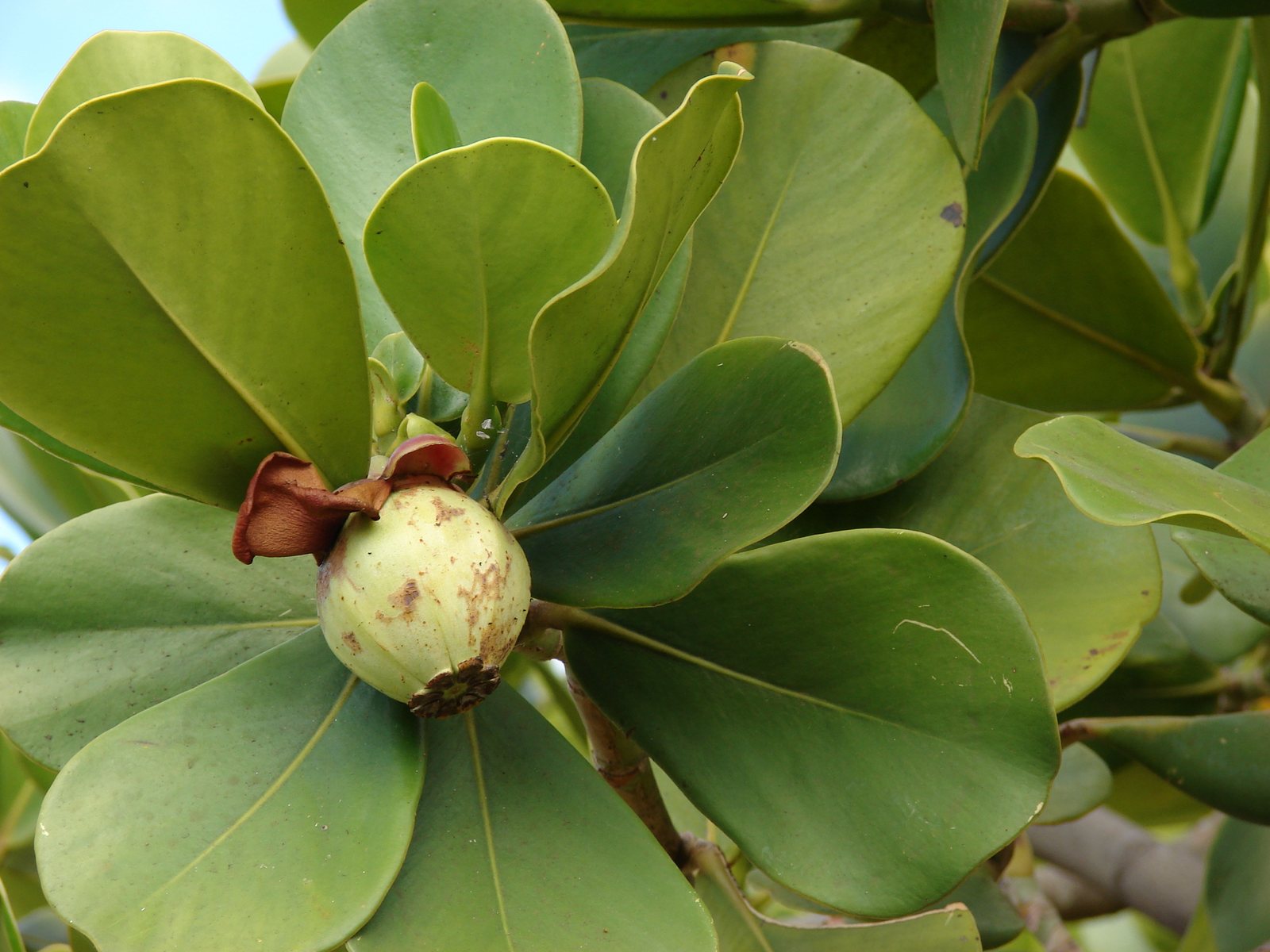
Pitch apple is a tropical evergreen tree grown for its thick, rounded leaves, dense canopy and white to pink flowers. It makes a substantial screen or specimen in frost-free gardens; in the United Kingdom, Canada and cooler parts of the United States and Australia, grow it in a container under warm, bright cover for winter.
At a glance
- Sun
- Full sun to partial shade outdoors; bright light under glass. Acclimatise indoor plants gradually before exposing them to direct outdoor sun.
- Water
- Water regularly while establishing, then allow the surface soil to dry between waterings. Established trees tolerate short dry spells; container plants need less water in winter.
- Soil
- Well-drained soil, including sandy or limestone soils. Use a free-draining potting mix in containers and avoid persistently waterlogged ground.
- Height
- 25-40 ft (7.6-12.2 m) outdoors; usually much smaller in containers
- Spread
- 20-30 ft (6.1-9.1 m) outdoors
- Flowers
- Mainly spring and summer, sometimes intermittently in tropical climates; white flowers that may be flushed pink.
- Foliage
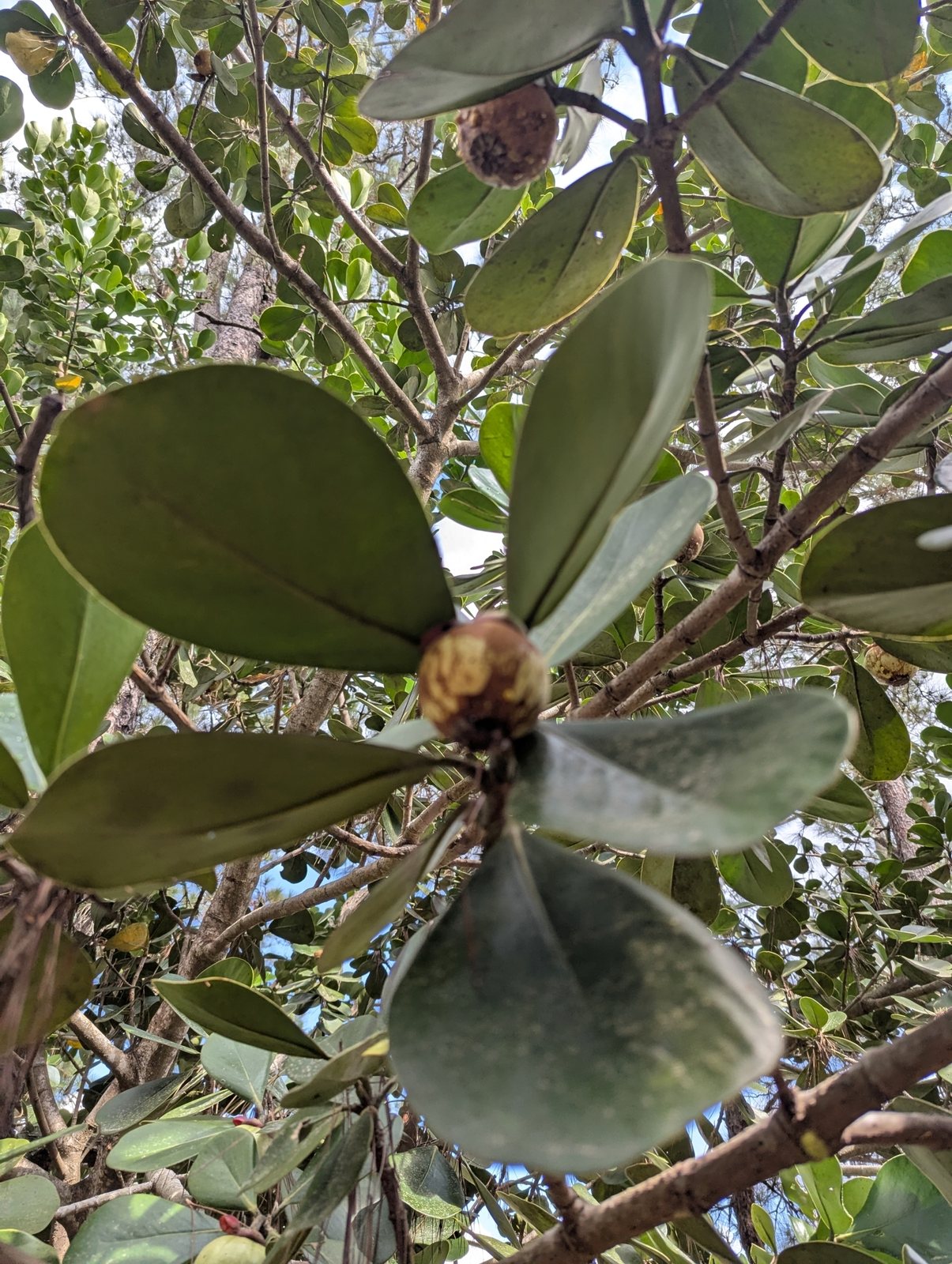
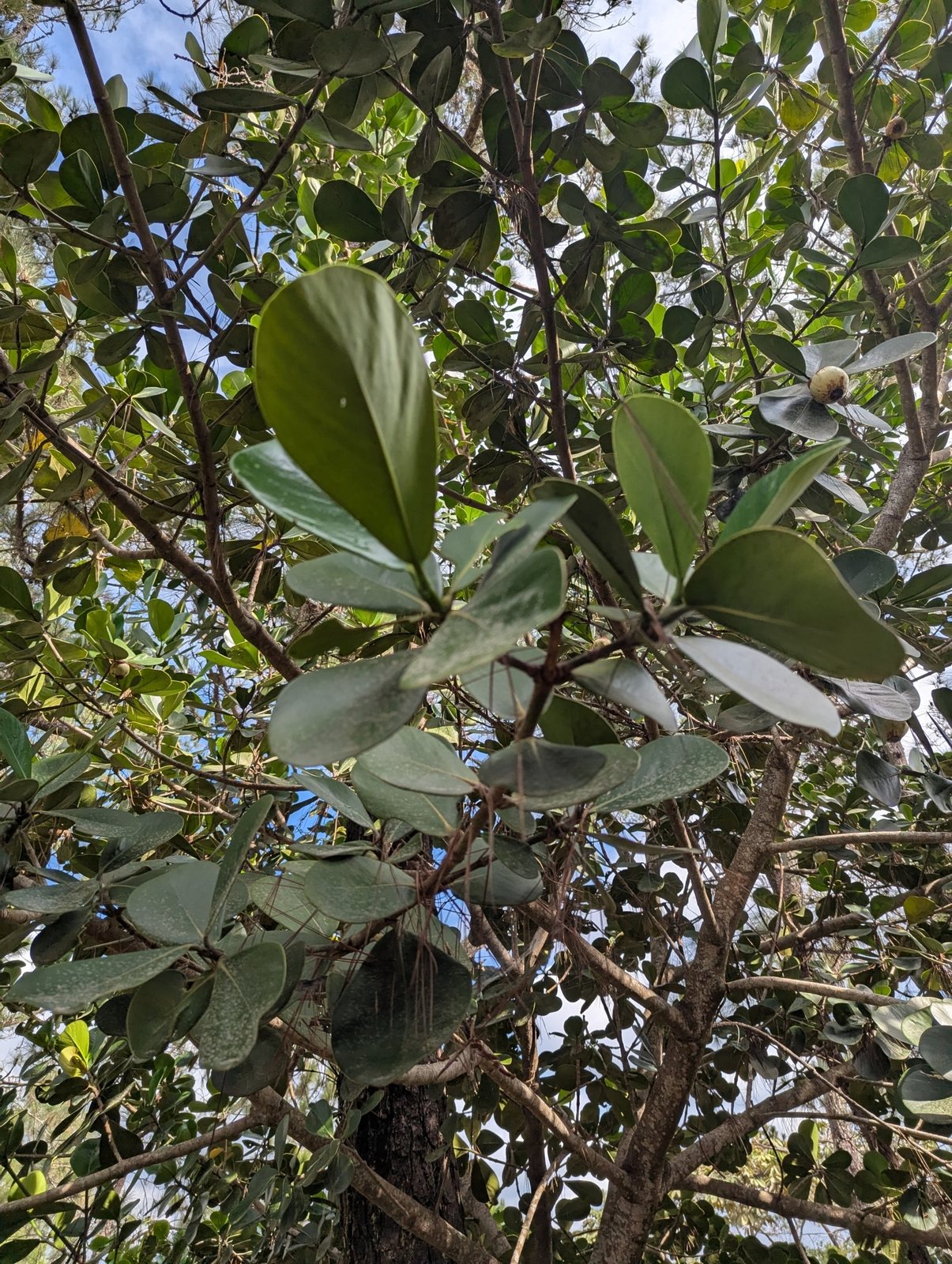
- Evergreen. Large, leathery, glossy green leaves in opposite pairs, with rounded tips. Scratches remain visible on the leaf surface, giving rise to the name autograph tree.
- Growth
- Moderate in warm conditions; slower indoors or in restricted containers.
- Care needed
- Medium
The year at a glance
- Drought tolerant
- Heat tolerant
- Wildlife
- Low allergen
| J | F | M | A | M | J | J | A | S | O | N | D | |
|---|---|---|---|---|---|---|---|---|---|---|---|---|
| Flowers | ||||||||||||
| Fruit | ||||||||||||
| Plant |
Northern hemisphere months. In Australia, shift them by six.
- Difficulty
- Moderate
- Toughness
- Fairly tough
Will it suit your garden?
Pick your zone, country, light and whether you have pets.
Full sun is 6 or more hours of direct sun a day, part shade 3 to 6 hours, shade under 3.
How it grows
Planting day
7 ft (2 m)
After 1 year
8 ft (2.3 m)
After 2 years
9 ft (2.6 m)
After 3 years
10 ft (2.9 m)
After 5 years
12 ft (3.5 m)
About 26 years to full size.
From a typical nursery size, at an average rate for this kind of plant. A rule of thumb, not a forecast.
Good to know
- Cats and dogs
- Toxic
- Native to
- the US
- Growth rate
- Slow
Care
Jobs through the year
- WaterApr–May, Sep, every 10 days
- Grow in a container here; water when the upper mix dries and empty any saucer.
- WaterJun–Aug, every 7 days
- Water when the upper mix dries; check small or newly planted pots more often in heat.
- WaterJan–Mar, Oct–Dec, every 14 days
- Under warm, bright cover, let the surface dry but never dry out the whole root ball.
- FeedApr
- Apply a light, label-rate dressing of balanced slow-release fertilizer to container plants.
- PruneMay–Jun
- Remove damaged growth and lightly shorten unwanted branches; frequent clipping prevents flowering.
- ProtectJan–May, Sep–Dec
- Keep in bright, warm shelter whenever nights fall below 10°C; outdoor planting is not hardy here.
- ProtectJun
- Acclimatise gradually to outdoor sun; flowers and fruits are uncommon on indoor specimens.
- Plant only where frost is exceptional, with room for the mature canopy and spreading roots.
- Water deeply during establishment, letting the upper soil dry slightly before watering again.
- Apply a light dressing of balanced, slow-release fertiliser in spring if growth is weak or the plant is container-grown.
- Spread organic mulch over the root zone, keeping it clear of the trunk.
- Bring container plants under bright, warm cover before nights fall below 50°F (10°C).
- Keep pots out of standing water and check drainage holes regularly.
Pruning. Prune in spring or early summer, after cold weather has passed, to remove damaged growth and shorten unwanted branches. Start shaping young plants early; repeated hard clipping sacrifices flowers and creates a dense outer shell.
Through the year
- Spring
- Plant outdoors once conditions are consistently warm, or repot container plants that have filled their pots.
- Spring
- Apply a light feed and renew mulch without covering the trunk base.
- Early summer
- Shape young trees or lightly trim screens, leaving enough space for light to reach lower branches.
- Summer
- Check container moisture frequently and inspect leaf undersides for scale and mealybugs.
- Autumn
- Move outdoor containers into bright shelter before cool nights arrive.
- Winter
- Reduce watering under cover, but do not let the entire root ball become bone dry.
In the garden
- Use as a broad-canopied specimen in a large, frost-free courtyard, well away from paving, drains and buildings.
- Plant as a dense evergreen screen where there is room to maintain both its height and width.
- Combine with palms, philodendrons and bromeliads for contrasting leaf shapes in a tropical garden.
- Grow in a large container as a bold foliage accent on a warm patio, with winter shelter available in cooler climates.
Garden styles it suits: Modern tropical, Architectural minimal, Tropical, Coastal, Florida subtropical and Caribbean.
Plant it with: Lady palm, Bird of paradise, Philodendron, Bromeliads and Cast-iron plant.
Wildlife: The exposed seeds have colourful fleshy coverings that attract fruit-eating birds, which can disperse the plant beyond gardens.
Problems to watch for
- Scale insects and mealybugs: inspect stems and leaf undersides, remove small infestations by hand, and use a labelled horticultural oil or insecticidal soap if needed.
- Root rot from wet soil: improve drainage, empty saucers and let the upper potting mix dry before watering again.
- Cold damage: protect from frost and move containers into warm shelter before chilly weather; remove dead growth once new growth reveals the extent of damage.
- Leaf scorch after a sudden move outdoors: introduce direct sun gradually and provide temporary afternoon shade.
Safety
Treat the fruit, seeds and milky sap as toxic to people, cats and dogs. Chewing or swallowing them can cause mouth irritation, vomiting or diarrhoea, and sap can irritate skin and eyes. Horse-specific toxicity is not well documented; keep livestock away. Seek medical or veterinary advice after ingestion.
Where it spreads. Invasive in Hawaii and Sri Lanka, where bird-dispersed seedlings can establish in native vegetation and on other trees. Check local restrictions before planting in tropical regions, and remove unwanted seedlings promptly.
Easily confused with
Small-leaf clusia (Clusia guttifera)
Usually has much smaller leaves and a compact, densely branched shrub habit; pitch apple develops larger, broader leaves and a substantial tree canopy.
Rubber plant (Ficus elastica)
Has alternate, usually pointed leaves and conspicuous sheaths around emerging leaves; pitch apple has opposite pairs of rounded leaves.
The name
Clusia honours the botanist Carolus Clusius, rosea means rose-coloured, and pitch apple refers to the dark, sticky resin associated with the fruit.
Propagation. Take stem cuttings during warm weather and root them in a moist, free-draining medium with high humidity. Air layering is another option; fresh seed can also be used where growing the species is permitted.
Checked against open data
- Accepted botanical name
- Clusia rosea
- In the US and Canada
- Native in the lower 48 states, Puerto Rico and US Virgin Islands. Introduced in Hawaii.
Sources: GBIF (CC BY 4.0), USDA PLANTS and Trefle (CC BY 4.0). The care and design notes are LandscapeGPT's own.
See it in your own yard.
Upload a photo of your yard and see it redesigned with plants that suit your climate, each checked against your zone.