Possumhaw
Ilex decidua. Family Aquifoliaceae. Shrub.
Also called Deciduous holly, Possumhaw holly, Swamp holly.
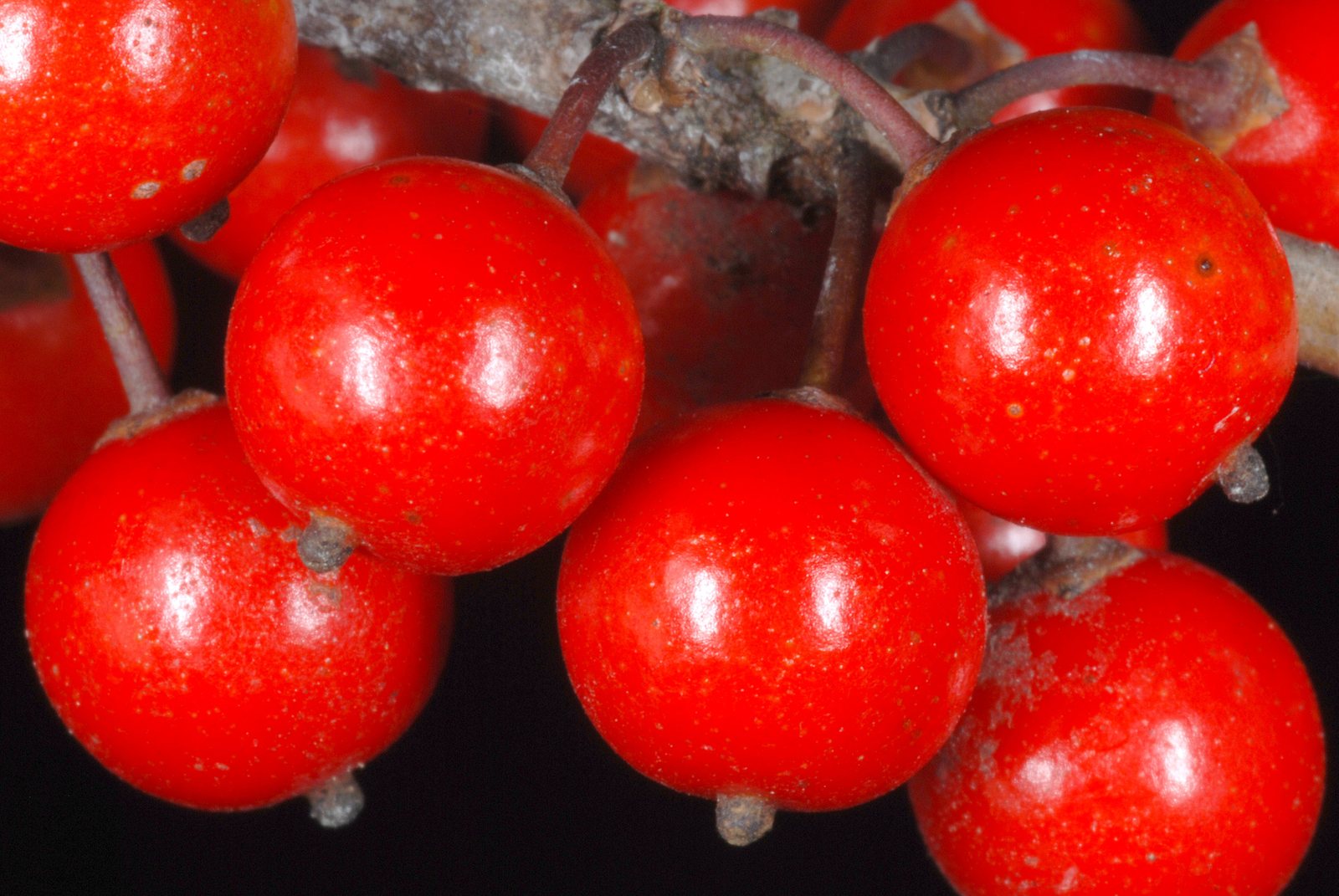
Possumhaw is a large deciduous shrub or small tree native to the central and southeastern United States and northeastern Mexico. Gardeners grow female plants for their red to orange-red berries, which stand out on bare branches in autumn and winter until birds eat them. Male and female flowers grow on separate plants, so reliable fruiting requires a compatible male nearby.
At a glance
- Sun
- Full sun to partial shade; flowering and berry production are usually best in full sun.
- Water
- Moderate; keep evenly moist while establishing. Established plants tolerate seasonal flooding and some drought.
- Soil
- Adaptable to clay, loam and sandy soils, including periodically wet ground; prefers moist, slightly acidic soil but tolerates some alkalinity.
- Height
- 15-30 ft (4.6-9.1 m)
- Spread
- 10-20 ft (3-6.1 m)
- Flowers
- Small, inconspicuous greenish-white flowers in spring, as or after the leaves emerge.
- Foliage
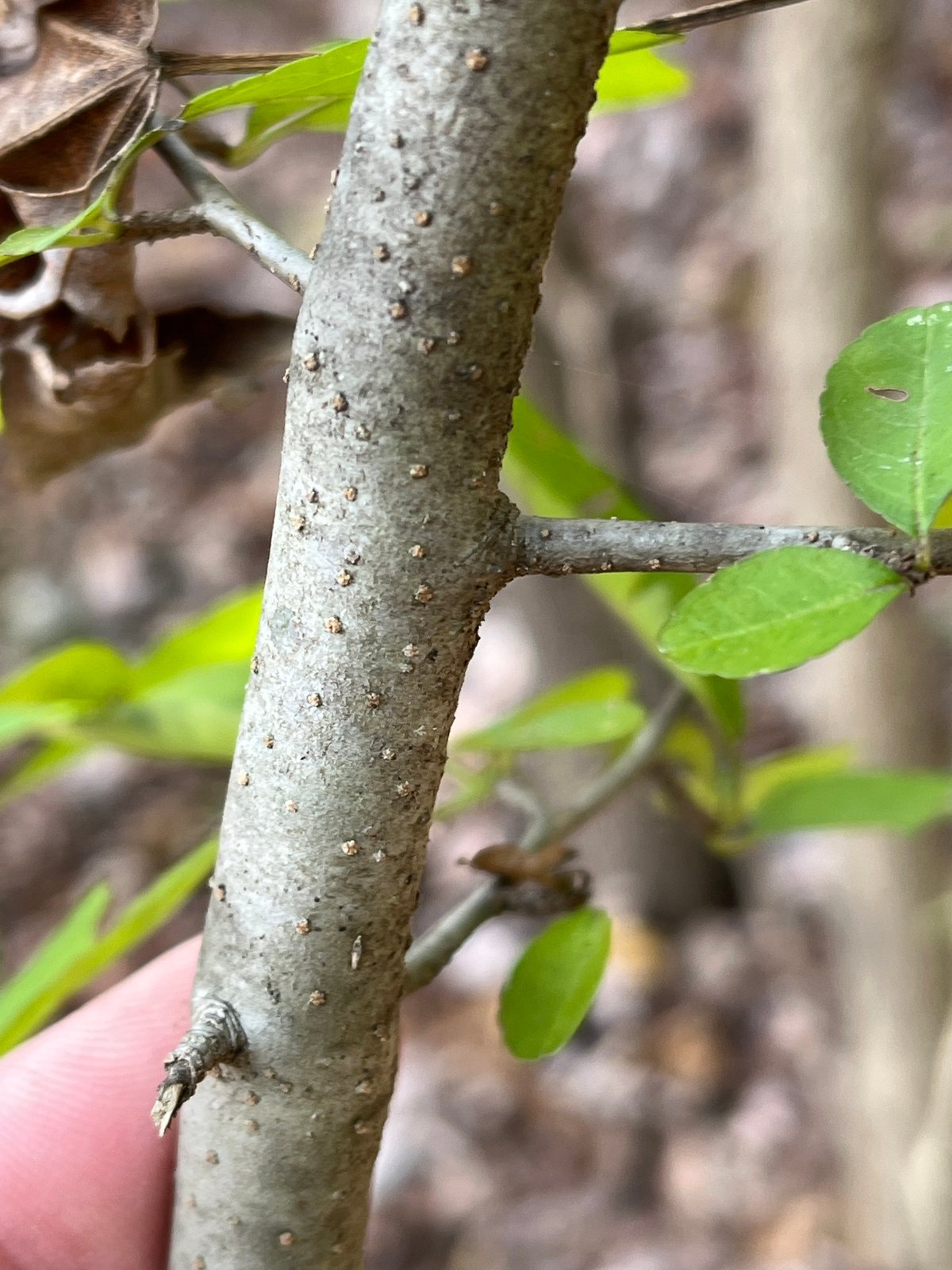
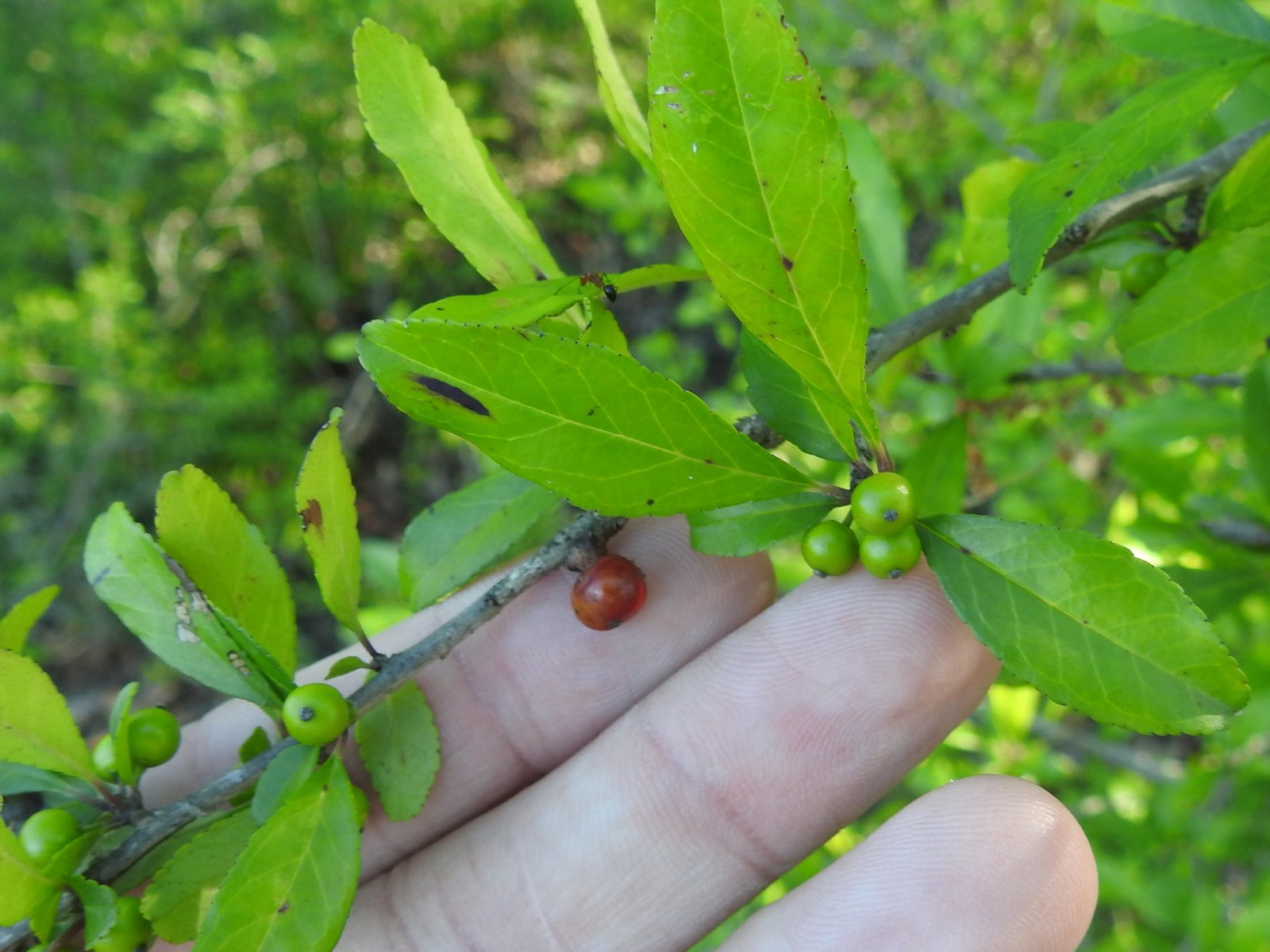
- Small, glossy green leaves with finely toothed edges, often widest above the middle; autumn colour is usually yellow-green to yellow.
- Growth
- Moderate.
- Care needed
- Low
The year at a glance
- Pollinators
- Drought tolerant
- Heat tolerant
- Wildlife
- Low allergen
| J | F | M | A | M | J | J | A | S | O | N | D | |
|---|---|---|---|---|---|---|---|---|---|---|---|---|
| Flowers | ||||||||||||
| Fruit | ||||||||||||
| Plant |
Northern hemisphere months. In Australia, shift them by six.
- Difficulty
- Easy
- Toughness
- Very tough
Will it suit your garden?
Pick your zone, country, light and whether you have pets.
Full sun is 6 or more hours of direct sun a day, part shade 3 to 6 hours, shade under 3.
How it grows
Planting day
2.7 ft (0.82 m)
After 1 year
7 ft (2 m)
After 2 years
11 ft (3.2 m)
After 3 years
15 ft (4.4 m)
After 5 years
22 ft (6.9 m)
full size
About 5 years to full size.
From a typical nursery size, at an average rate for this kind of plant. A rule of thumb, not a forecast.
Good to know
- Cats and dogs
- Toxic
- Native to
- the US
- Growth rate
- Moderate
Care
Jobs through the year
- WaterApr–May, Sep–Oct, every 21 days
- Water established plants during dry spells; keep young plants evenly moist for the first two seasons.
- WaterJun–Aug, every 14 days
- Deep-water during prolonged dry weather; skip watering when the root zone remains moist.
- MulchApr–May
- Apply 5–8 cm of organic mulch, keeping it clear of the stems.
- PruneFeb–Mar
- Remove dead, crossing or crowded branches and unwanted suckers; avoid shearing.
- ProtectApr–May
- For berries, retain a female and a male Ilex decidua flowering together within about 15 m.
- Water deeply during dry spells for the first two growing seasons.
- Spread 2-3 in (5-8 cm) of organic mulch over the root area, keeping it clear of the stems.
- For berries, choose a known female plant and provide a male Ilex decidua with overlapping flowering within about 50 ft (15 m).
- Feed lightly in spring only if growth is weak or a soil test shows a nutrient shortage.
- Remove unwanted root suckers while small if you want a single specimen rather than a thicket.
Pruning. Prune in late winter before growth begins, removing dead, crossing or crowded branches and unwanted suckers. Train gradually as a small tree if desired, and avoid shearing, which spoils the branching and reduces flowering and fruiting.
Through the year
- Autumn
- Plant while the soil is workable, water thoroughly and mulch the root area.
- Winter
- Leave berry-bearing branches intact for winter colour and feeding birds.
- Late winter
- Remove damaged or crowded branches and any unwanted suckers.
- Spring
- Check that male and female plants flower at the same time if berry production has been poor.
- Late spring
- Refresh mulch and inspect stems and leaves for scale insects or leaf spots.
- Summer
- Water young plants deeply during prolonged dry weather.
In the garden
- Use a fruiting female as a winter focal point against dark evergreen shrubs.
- Plant in a mixed native hedge where its branching provides cover and its berries feed birds.
- Place beside a pond or in a rain garden with room for its mature spread.
- Train as a small multi-stemmed tree beside a lawn or broad path.
Garden styles it suits: Woodland, Wildlife garden, Winter interest, Southern, Native hedgerow and Low-maintenance.
Plant it with: Sweetspire, Buttonbush, Red chokeberry, Switchgrass, River birch and Bald cypress.
Wildlife: Flowers attract bees and other small pollinators. Birds eat the berries, often later in winter, and the dense branching provides shelter and nesting cover.
Problems to watch for
- Few or no berries: confirm that the plant is female and that a nearby male Ilex decidua flowers at the same time; increase sunlight if the site is heavily shaded.
- Scale insects: inspect twigs for fixed bumps and sticky honeydew; prune heavily infested shoots and use a labelled horticultural oil when appropriate.
- Leaf spots: collect fallen diseased leaves and thin crowded growth for airflow; minor spotting usually needs no chemical treatment.
- Yellow leaves with green veins: alkaline soil can limit iron availability; test the soil before treating and avoid repeated feeding without a diagnosis.
Safety
Not edible. The berries and leaves contain compounds that can cause vomiting, diarrhoea and abdominal discomfort in people, cats and dogs; berries are the main ingestion risk. Treat the plant as toxic to horses as well and keep prunings out of grazing areas. Most small accidental ingestions cause gastrointestinal illness, but seek medical or veterinary advice if any are eaten.
Easily confused with
Winterberry (Ilex verticillata)
Also deciduous with red winter berries, but its leaves are usually broader, less glossy and more sharply toothed along most of the edge; possumhaw leaves are often widest near the tip.
Yaupon holly (Ilex vomitoria)
Has small, evergreen leaves with rounded teeth, so its winter berries normally remain among green foliage rather than on bare branches.
The name
The species name decidua refers to its deciduous habit of shedding its leaves each year.
Propagation. Take semi-ripe cuttings in summer to preserve a named selection and its sex. Seed germination is slow and irregular, often requiring warm and cold periods over more than one season; seedlings will not reliably match the parent.
Checked against open data
- Accepted botanical name
- Ilex decidua
- In the US and Canada
- Native in the lower 48 states.
- Native range
- Alabama, Arkansas, District of Columbia, Florida, Georgia, Illinois, Indiana, Kansas, Kentucky, Louisiana, Maryland and Mexico Northeast.
- Measured
- Soil pH 3.5 to 6.5. Average height 495 cm.
Sources: GBIF (CC BY 4.0), USDA PLANTS and Trefle (CC BY 4.0). The care and design notes are LandscapeGPT's own.
See it in your own yard.
Upload a photo of your yard and see it redesigned with plants that suit your climate, each checked against your zone.