Powder puff
Calliandra haematocephala. Family Fabaceae. Shrub.
Also called Red powder puff, Red powderpuff, Powderpuff bush.
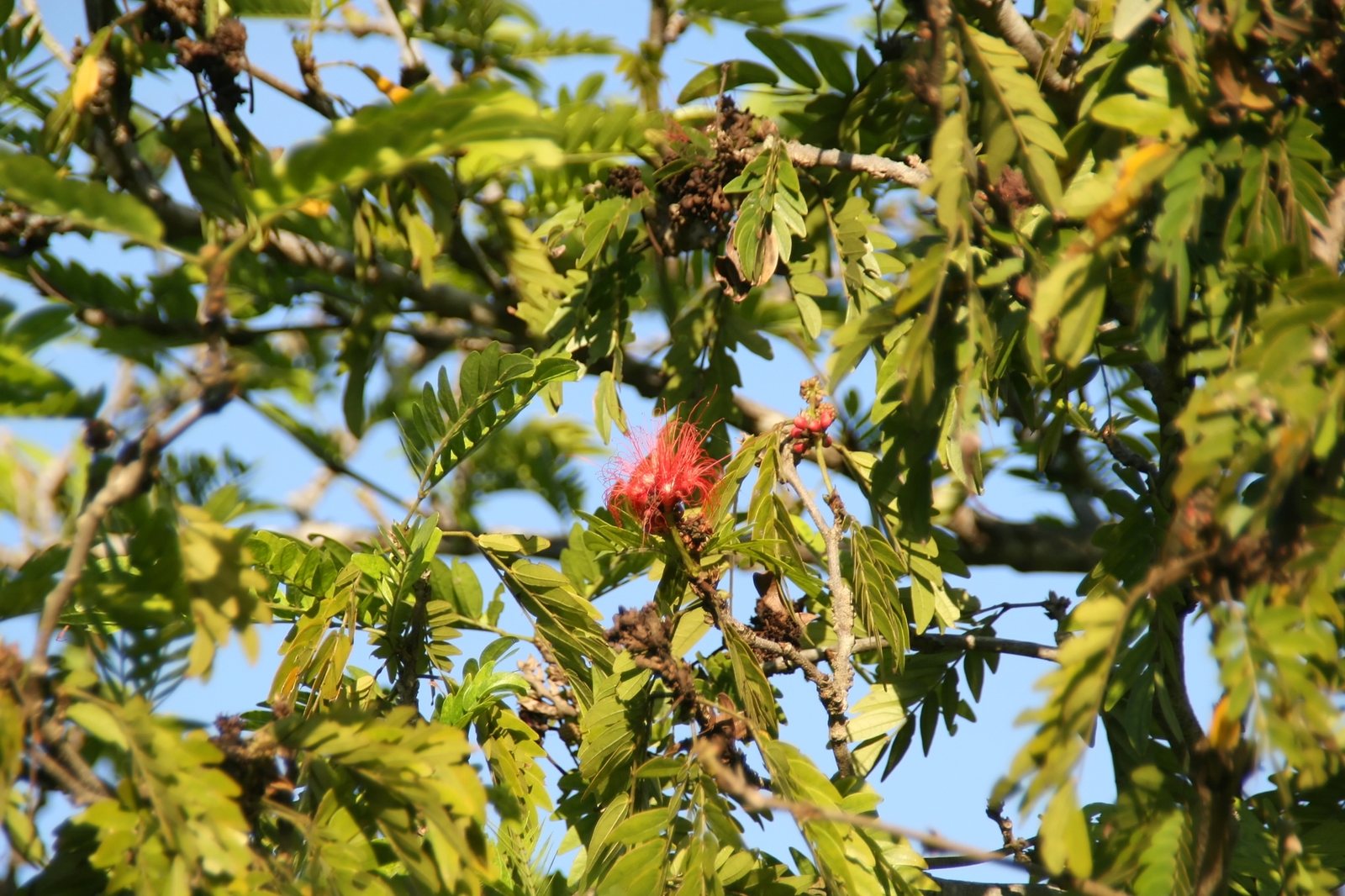
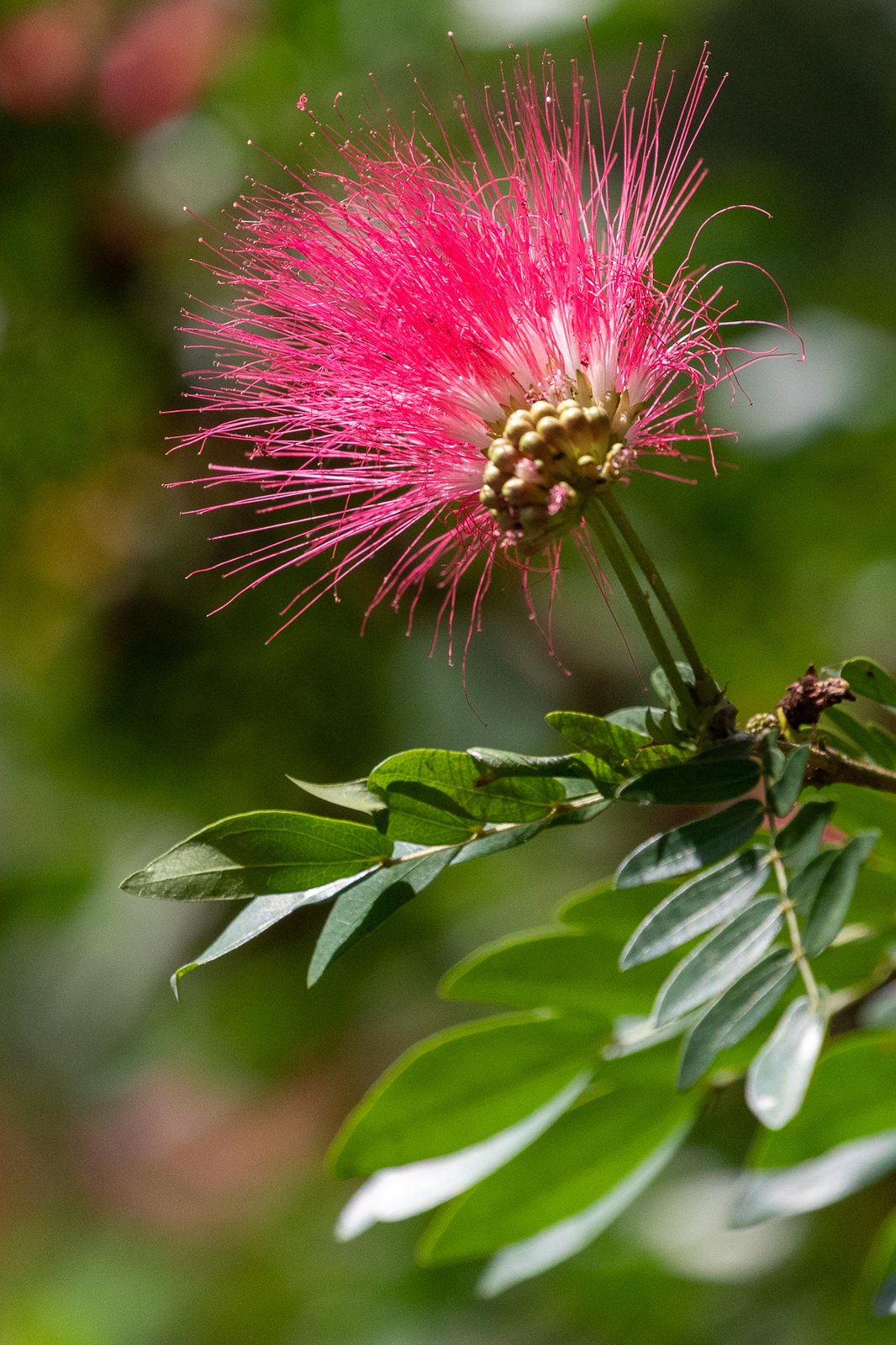
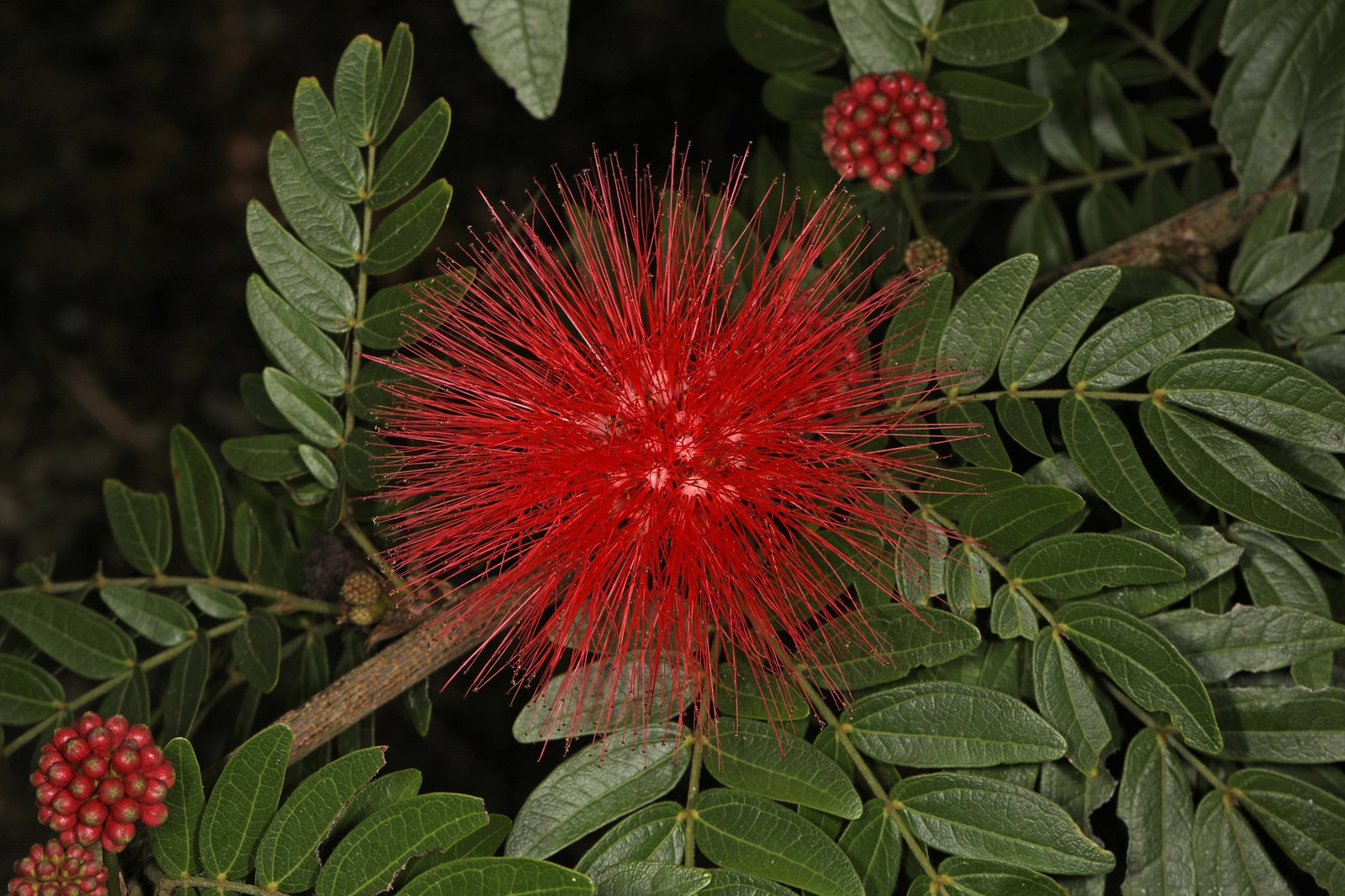
Powder puff is a large evergreen shrub grown for its rounded red flower heads, made up of long, fine stamens, and its fern-like leaves. It suits warm, sheltered gardens and can be trained as a small tree; in colder climates, grow it in a container and overwinter it under glass.
At a glance
- Sun
- Full sun to partial shade; flowering is best with plenty of direct sun.
- Water
- Water regularly while establishing, then deeply when the upper soil dries. Container plants need more frequent watering, but should never stand in water.
- Soil
- Fertile, well-drained soil; slightly acidic to neutral conditions are ideal. Use a free-draining potting mix in containers.
- Height
- 10-15 ft (3-4.6 m), occasionally taller in tropical gardens
- Spread
- 10-15 ft (3-4.6 m)
- Flowers
- Bright red powder-puff flower heads, mainly from autumn through spring in warm climates, with intermittent flowers at other times.
- Foliage
- Evergreen. Fine-textured, twice-divided green leaves with numerous small leaflets that fold together at night.
- Growth
- Fast in warm conditions with adequate moisture.
- Care needed
- Medium
The year at a glance
- Pollinators
- Heat tolerant
- Low allergen
| J | F | M | A | M | J | J | A | S | O | N | D | |
|---|---|---|---|---|---|---|---|---|---|---|---|---|
| Flowers | ||||||||||||
| Plant |
Northern hemisphere months. In Australia, shift them by six.
- Difficulty
- Moderate
- Toughness
- Fairly tough
Will it suit your garden?
Pick your zone, country, light and whether you have pets.
Full sun is 6 or more hours of direct sun a day, part shade 3 to 6 hours, shade under 3.
How it grows
Planting day
1.6 ft (0.5 m)
After 1 year
5 ft (1.5 m)
After 2 years
8 ft (2.5 m)
After 3 years
12 ft (3.5 m)
After 5 years
12 ft (3.8 m)
full size
About 3 years to full size.
From a typical nursery size, at an average rate for this kind of plant. A rule of thumb, not a forecast.
Good to know
- Cats and dogs
- Safe
- Growth rate
- Fast
Care
Jobs through the year
- WaterMar–May, Sep–Oct, every 7 days
- Grow in a container here; water deeply when the upper mix dries and drain freely.
- WaterJun–Aug, every 4 days
- Check summer pots frequently and water when the surface dries.
- WaterJan–Feb, Nov–Dec, every 14 days
- In winter shelter, water sparingly as the upper mix dries without drying the whole root ball.
- FeedApr
- Apply balanced slow-release fertilizer at the container label rate.
- MulchMay
- Refresh a light surface mulch without covering the stem bases.
- PruneMay–Jun
- After the main flowering flush, shorten long shoots and remove dead or crossing branches.
- ProtectJan–May, Sep–Dec
- Keep in bright frost-free shelter; winter flowering requires sufficient warmth and light.
- ProtectJun
- Acclimatize outdoors after frost risk passes and nights become reliably warm.
- Plant in a sheltered position away from cold winds; frost can damage leaves and shoots.
- Water deeply during establishment and dry spells, allowing the surface soil to dry between waterings.
- Apply a balanced slow-release fertiliser in spring at the label rate; avoid heavy feeding with nitrogen.
- Mulch over the root area, keeping mulch clear of the stems.
- Move container plants into a bright, frost-free space before cold weather and reduce watering during winter.
Pruning. Prune after the main flowering flush, once frost risk has passed, shortening long shoots and removing dead or crossing branches. Pinch young shoots to encourage bushiness, or gradually remove lower branches to develop a small tree.
Through the year
- Spring
- Once frost risk has passed, plant out in warm regions or repot container plants that have filled their pots.
- Spring
- Feed established plants and renew mulch without covering the base of the stems.
- Late spring
- After the main flowering flush, prune lightly to control size and encourage branching.
- Summer
- Check soil moisture regularly, especially in pots, and inspect soft growth for sap-sucking pests.
- Early autumn
- Move potted plants under cover before nights become cold; avoid hard pruning as flower buds develop.
- Winter
- Keep overwintering plants in bright, frost-free conditions and water sparingly without letting the root ball dry out completely.
In the garden
- Use as a flowering specimen in a sheltered lawn or broad mixed border, allowing room for its spreading canopy.
- Train as a small tree beside a patio, where the fine foliage gives light shade.
- Grow in a large courtyard container where winter shelter is available.
- Combine with hibiscus, cannas and gingers for contrasting leaf shapes and a long warm-season display.
Garden styles it suits: Tropical, Modern tropical, Luxury resort, Modern courtyard, Pollinator garden and Florida subtropical.
Plant it with: Tropical hibiscus, Canna, Shell ginger, Bird of paradise, Agapanthus and Lilyturf.
Wildlife: The flowers provide nectar for hummingbirds where they occur, as well as butterflies and other visiting insects.
Problems to watch for
- Spider mites can cause pale, stippled leaves, especially under glass; increase air circulation, rinse foliage and use a labelled treatment if needed.
- Scale insects and mealybugs cause sticky honeydew and sooty mould; remove small infestations by hand and treat persistent colonies with a suitable horticultural oil or insecticidal soap.
- Yellowing, wilting and root rot can follow waterlogging; improve drainage and let the upper soil dry before watering again.
- Cold can cause leaf drop and shoot dieback; provide frost protection and wait until spring growth starts before cutting back damaged wood.
Safety
Not known to be toxic to people, cats, dogs or horses, but species-specific safety information is limited. Do not treat the leaves, flowers or seed pods as edible, and discourage pets and children from chewing them.
Easily confused with
Pink powder puff (Calliandra surinamensis)
Its flower heads are usually white at the base with pink tips, and its leaves have fewer, larger leaflets.
Fairy duster (Calliandra eriophylla)
A much smaller, open shrub of dry regions, with smaller leaves and pale pink flower heads.
Persian silk tree (Albizia julibrissin)
A larger deciduous tree with a broad, spreading crown and pink flower clusters rather than the rounded red heads of powder puff.
The name
Calliandra comes from Greek words referring to beautiful stamens, while haematocephala means blood-red head, describing the flowers.
Propagation. Take semi-ripe cuttings in summer and root them in a humid, warm propagator. Seed can also be used; lightly nick the hard seed coat and soak before sowing in warmth.
Checked against open data
- Accepted botanical name
- Calliandra haematocephala
- In the US and Canada
- Introduced in Pacific Basin.
- Native range
- Bolivia.
- Measured
- Average height 273 cm.
Sources: GBIF (CC BY 4.0), USDA PLANTS and Trefle (CC BY 4.0). The care and design notes are LandscapeGPT's own.
See it in your own yard.
Upload a photo of your yard and see it redesigned with plants that suit your climate, each checked against your zone.