Purging buckthorn
Rhamnus cathartica. Family Rhamnaceae. Shrub.
Also called Common buckthorn, European buckthorn.
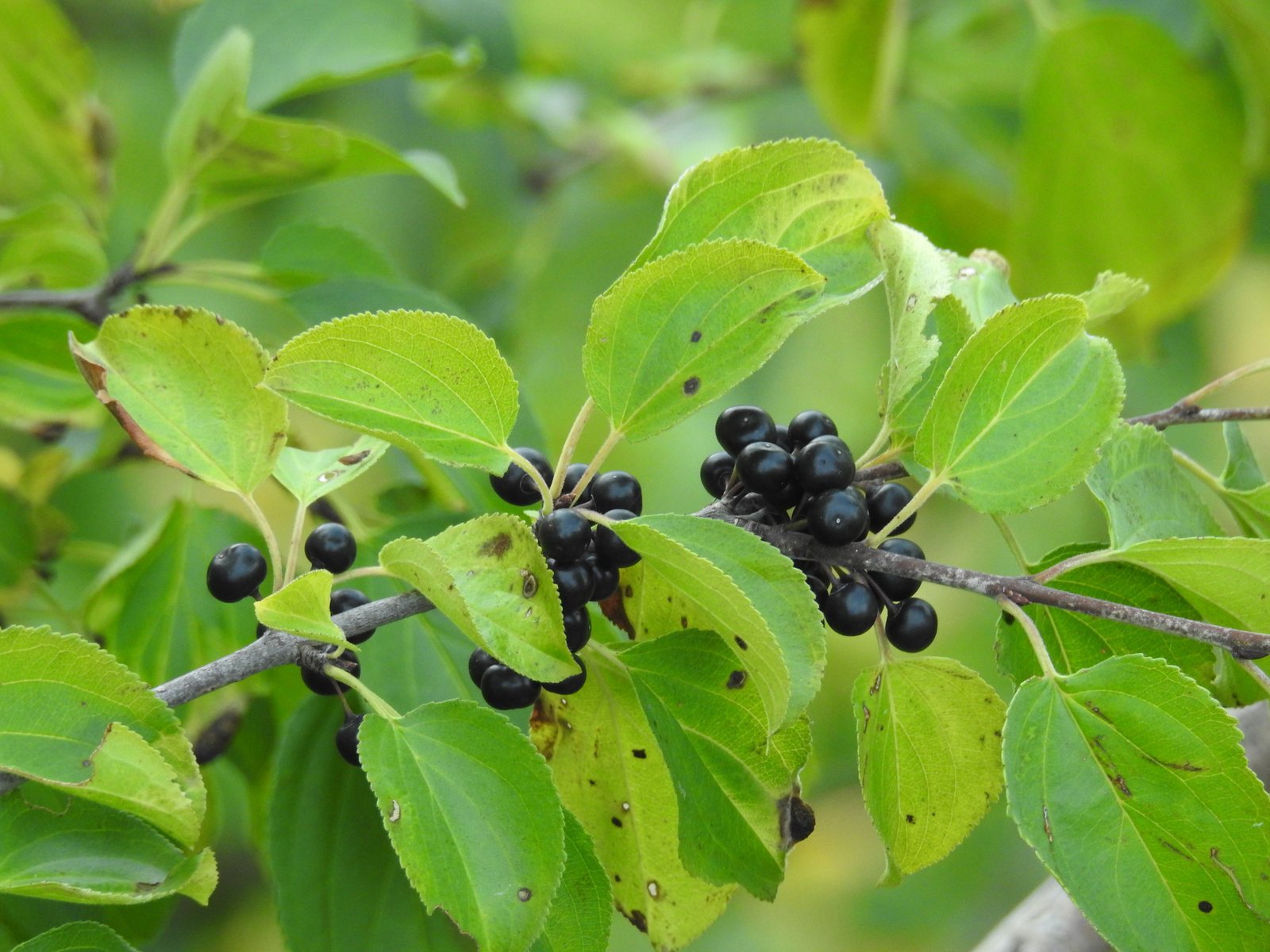
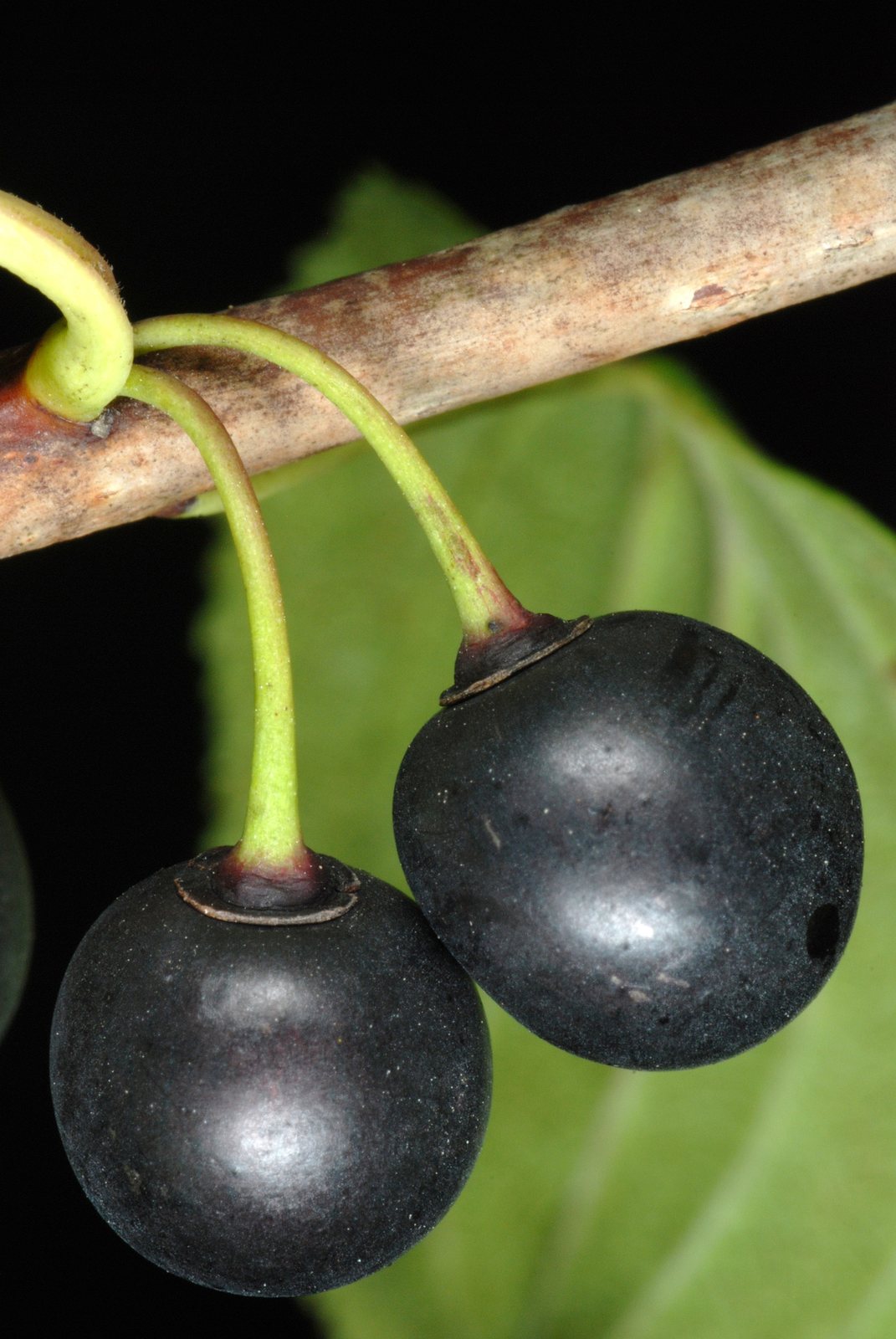
Purging buckthorn is a deciduous shrub or small tree native to Europe and western Asia, with thorn-tipped shoots and black berries on female plants. In its native range, gardeners use it in mixed hedges and wildlife planting, especially on chalky soils. It is highly invasive in parts of North America and should not be planted there.
At a glance
- Sun
- Full sun to partial shade; tolerates shade but becomes less dense.
- Water
- Moderate while establishing; generally drought-tolerant once established.
- Soil
- Well-drained soil, including chalk, limestone and clay that does not remain waterlogged; prefers neutral to alkaline conditions.
- Height
- 10-20 ft (3-6 m)
- Spread
- 10-15 ft (3-4.5 m)
- Flowers
- Small, yellow-green flowers in late spring to early summer; male and female flowers usually occur on separate plants.
- Foliage
- Oval green leaves with finely toothed edges and conspicuous veins curving towards the tip; often turns yellow in autumn and holds its leaves late.
- Growth
- Moderate to fast
- Care needed
- Medium
The year at a glance
- Pollinators
- Drought tolerant
- Cold hardy
- Low allergen
| J | F | M | A | M | J | J | A | S | O | N | D | |
|---|---|---|---|---|---|---|---|---|---|---|---|---|
| Flowers | ||||||||||||
| Fruit | ||||||||||||
| Plant |
Northern hemisphere months. In Australia, shift them by six.
- Difficulty
- Moderate
- Toughness
- Very tough
Will it suit your garden?
Pick your zone, country, light and whether you have pets.
Full sun is 6 or more hours of direct sun a day, part shade 3 to 6 hours, shade under 3.
How it grows
Planting day
1.8 ft (0.54 m)
After 1 year
5 ft (1.5 m)
After 2 years
8 ft (2.5 m)
After 3 years
12 ft (3.5 m)
After 5 years
15 ft (4.5 m)
full size
About 4 years to full size.
From a typical nursery size, at an average rate for this kind of plant. A rule of thumb, not a forecast.
Good to know
- Cats and dogs
- Toxic
- Native to
- the UK
- Invasive in
- the US and Canada
- In the garden
- Spreads vigorously: plan to contain it.
- Growth rate
- Fast
Care
Jobs through the year
- ProtectMar–Apr, Oct–Nov
- Check invasive-plant rules before planting; use a native alternative where invasive.
- WaterApr–May, Sep–Oct, every 21 days
- Water established plants only during prolonged drought; water young plants more often for two seasons.
- WaterJun–Aug, every 14 days
- Deep-water established plants only if the soil is dry during prolonged drought.
- MulchMar–Apr
- Maintain 5-8 cm of organic mulch, keeping it clear of stems.
- PruneFeb–Mar
- Prune legally retained plants before growth starts; avoid active bird nests.
- ProtectApr–Oct, every 30 days
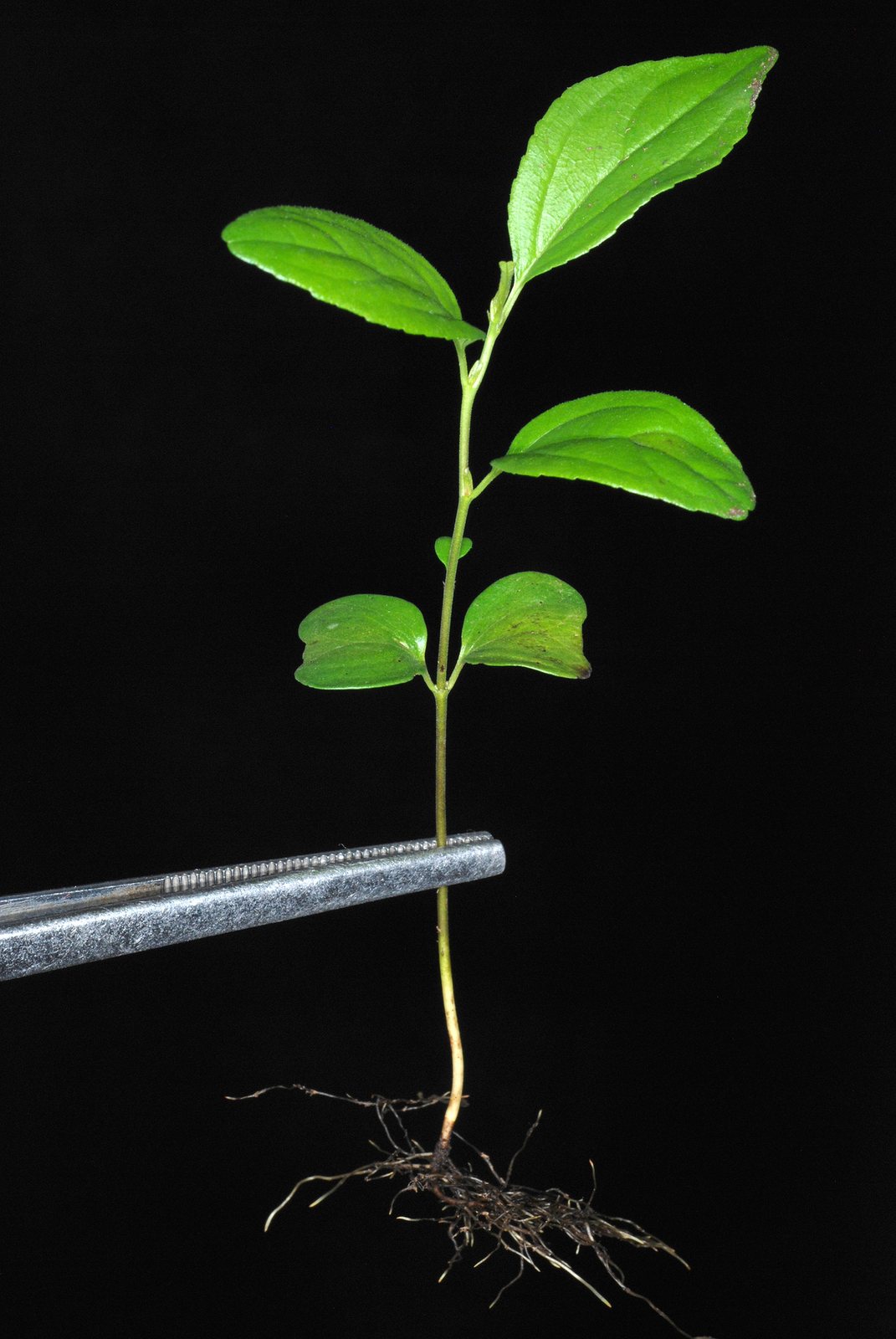
- Pull seedlings with their roots and check cut stumps for regrowth.
- ProtectJul–Aug
- Where invasive, arrange locally recommended removal before berries ripen; cutting alone causes regrowth.
- Check local invasive-plant rules before planting; choose a locally native alternative where this species is invasive.
- Where planting is appropriate, water deeply during dry spells for the first two growing seasons.
- Apply 2-3 in (5-8 cm) of organic mulch, keeping it clear of the stems.
- Do not routinely fertilize; established plants usually need no feeding.
- Pull unwanted seedlings while small, removing the roots before they become woody.
Pruning. Where retained legally, prune in late winter, removing dead or crossing branches and shortening hedge growth as needed; check for active bird nests before cutting. For invasive plants, cutting alone usually causes vigorous regrowth, so use a locally recommended removal and follow-up treatment.
Through the year
- Late winter
- Prune retained plants before growth begins, provided no birds are nesting.
- Spring
- Pull seedlings from moist soil and inspect previously cut plants for regrowth.
- Late spring
- Look for the small greenish flowers; flowering plants can help confirm identification.
- Summer
- Water recently planted specimens during prolonged dry weather and keep mulch away from stems.
- Late summer
- In areas managing its spread, arrange removal of fruiting plants before birds disperse the ripening berries.
- Autumn
- Use its late-held leaves to locate overlooked invasive plants, then plan removal and monitor nearby ground for seedlings.
In the garden
- In its native range, include in a mixed rural hedge with hawthorn and hazel for a dense boundary.
- Use at a sunny woodland edge with other locally native shrubs to create a graduated planting.
- Include in a native chalkland wildlife hedge where its value as a butterfly food plant is appropriate.
- Train an existing specimen as a small, informal tree where its thorny shoots will be clear of paths.
Garden styles it suits: Native hedgerow, Woodland, Wildlife garden and Traditional.
Plant it with: Common hawthorn, Common hazel, Dog rose, Guelder rose and Field maple.
Wildlife: In Britain and parts of Europe, its leaves feed brimstone butterfly caterpillars, flowers attract insects, and birds eat the berries. Birds also spread its seeds. In invaded North American habitats, dense stands suppress native vegetation and reduce habitat quality; bird use does not make it a suitable wildlife planting there.
Problems to watch for
- Heavy self-seeding: remove seedlings promptly; in invaded regions, remove seed-bearing plants and monitor for several years.
- Stump regrowth after cutting: dig out small root systems or follow local guidance for targeted stump treatment; repeat checks are essential.
- Crown rust: orange fungal spots may develop on leaves; buckthorn is an alternate host of oat crown rust, so avoid retaining it near susceptible cereal crops.
- Waterlogged roots: yellowing and dieback can occur in persistently wet ground; improve drainage or use a plant suited to wet soil.
Safety
Treat the berries, bark and leaves as toxic to people, cats, dogs and horses. Ingestion can cause abdominal pain, vomiting where the species can vomit, and marked diarrhoea; substantial intake can cause dehydration and serious illness. Do not use it as a home laxative, and seek medical or veterinary advice after ingestion.
Where it spreads. Highly invasive across much of the northeastern and midwestern United States and parts of southern Canada, including Ontario, Quebec, Manitoba and Saskatchewan. It forms dense thickets in woods, grasslands and hedges and is regulated in numerous jurisdictions. Check state, provincial and local restrictions before planting or moving it.
Easily confused with
Alder buckthorn (Frangula alnus)
Has alternate, untoothed leaves and lacks thorn-tipped shoots; purging buckthorn has finely toothed leaves, often opposite or nearly opposite.
Common privet (Ligustrum vulgare)
Has narrower, untoothed leaves, conspicuous clusters of white flowers and terminal berry clusters; purging buckthorn has tiny greenish flowers and berries grouped in leaf axils.
Common hawthorn (Crataegus monogyna)
Has deeply lobed leaves, white spring flowers and red fruits rather than the unlobed leaves and black berries of purging buckthorn.
The name
The epithet cathartica and the common name purging buckthorn refer to the plant's strong laxative effect.
Propagation. Where cultivation is appropriate and legal, propagate from seed sown outdoors in autumn; germination can be slow and uneven. Do not propagate or distribute it in regions where it is invasive.
Checked against open data
- Accepted botanical name
- Rhamnus cathartica
- In the US and Canada
- Introduced in Canada and the lower 48 states.
- Native range
- Albania, Algeria, Altay, Austria, Baltic States, Belarus, Belgium, Bulgaria, Central European Rus, Czechoslovakia, Denmark and East European Russia.
- Measured
- Soil pH 7.5 to 8. Average height 203 cm.
Sources: GBIF (CC BY 4.0), USDA PLANTS and Trefle (CC BY 4.0). The care and design notes are LandscapeGPT's own.
See it in your own yard.
Upload a photo of your yard and see it redesigned with plants that suit your climate, each checked against your zone.