Common hazel
Corylus avellana. Family Betulaceae. Shrub.
Also called European hazel, European hazelnut, Cobnut.
Common hazel is a large, deciduous, usually multi-stemmed shrub native to Europe and western Asia. Gardeners grow it for edible nuts, winter catkins, wildlife cover and stems that can be regularly coppiced for garden poles. Nut production is best with compatible pollination partners and enough summer moisture.
At a glance
- Sun
- Full sun to partial shade; choose a sunny position for the best nut crops.
- Water
- Moderate; keep young plants evenly moist and water established plants during prolonged drought, especially while nuts are developing.
- Soil
- Moist but well-drained soil, preferably fertile loam; tolerates clay and chalk but not persistent waterlogging.
- Height
- 12-20 ft (3.7-6 m), occasionally taller if left unpruned
- Spread
- 12-20 ft (3.7-6 m)
- Flowers
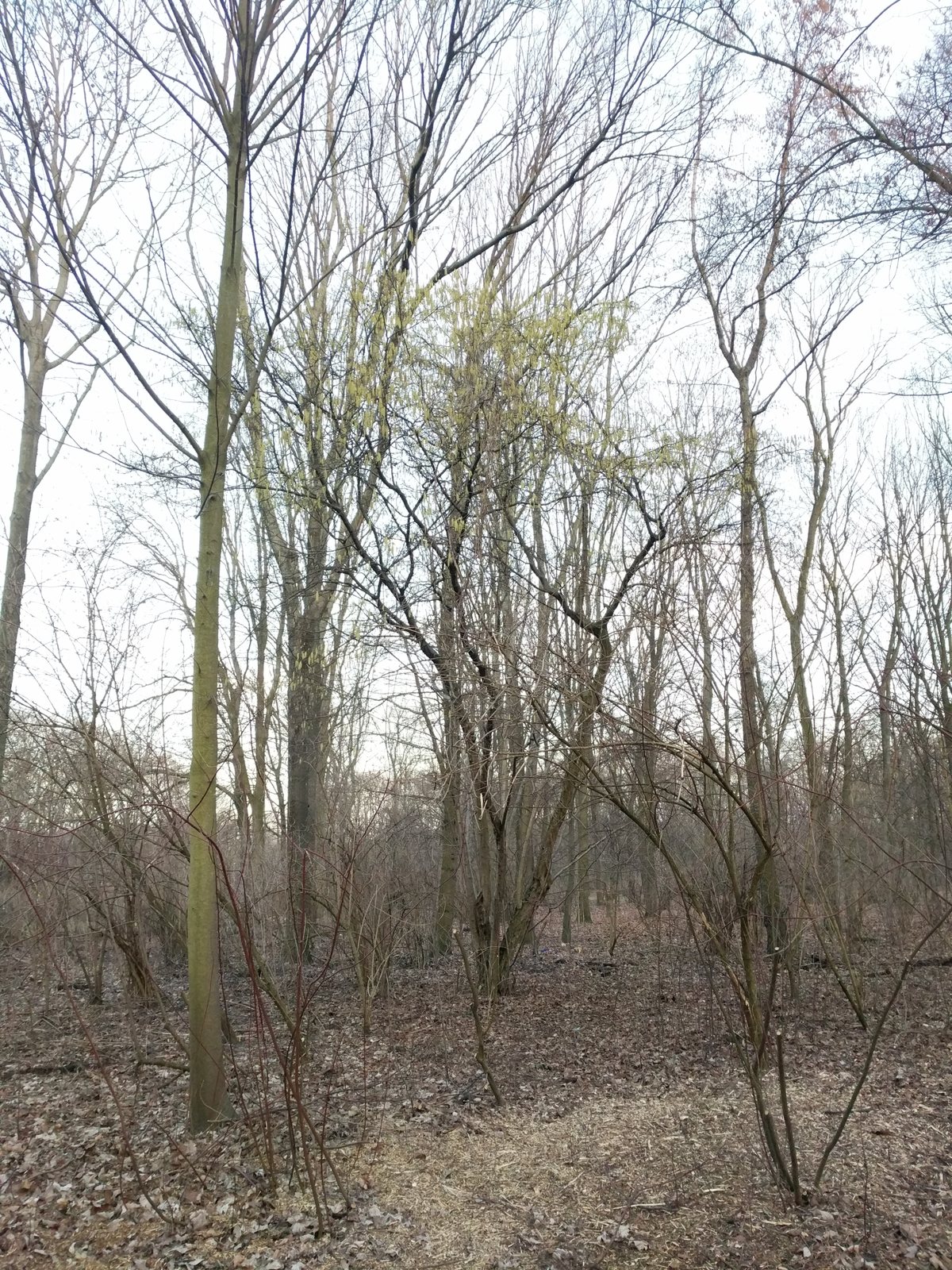
- Late winter to early spring: hanging yellow male catkins and tiny red female flowers appear before the leaves.
- Foliage
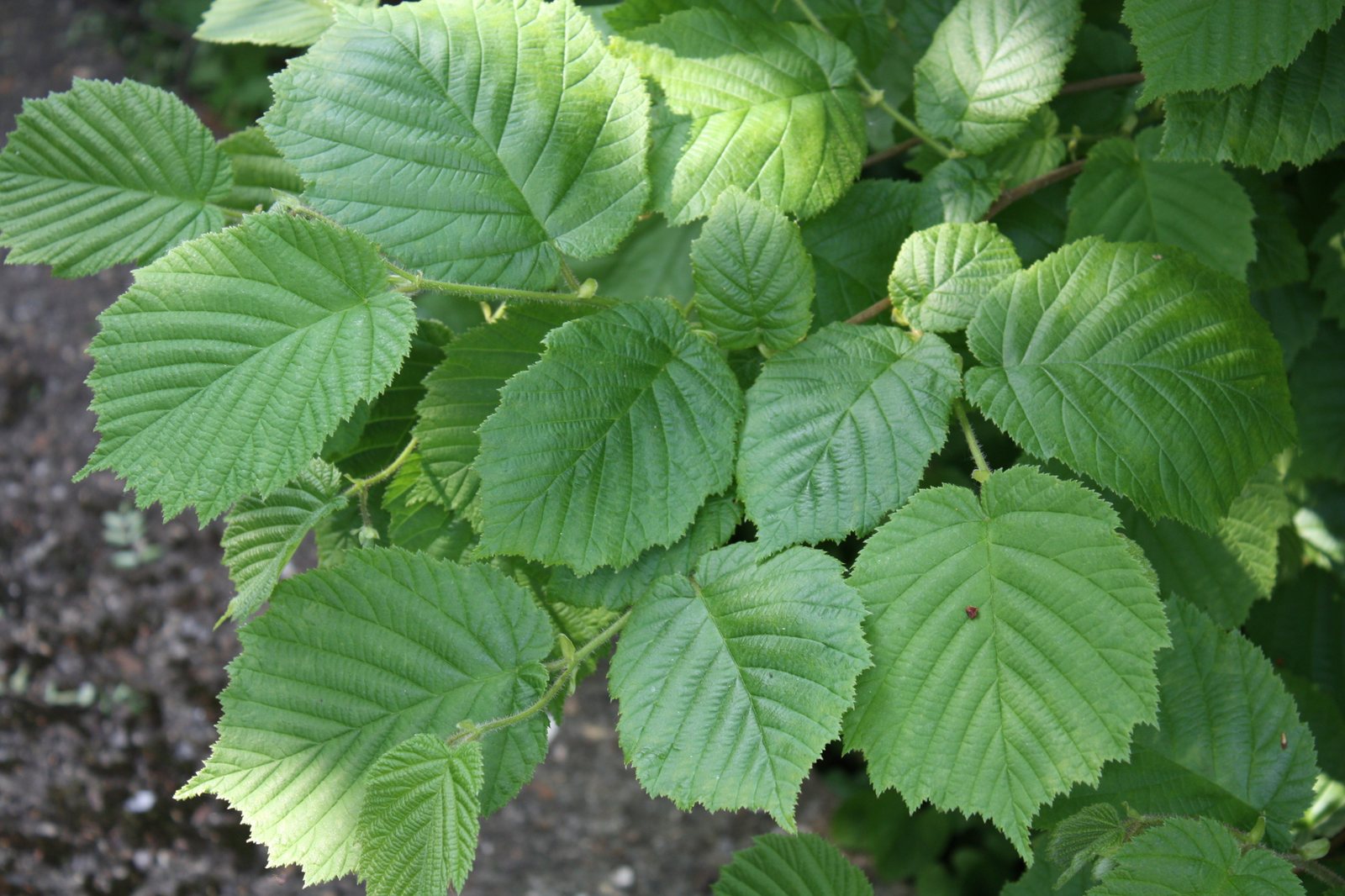
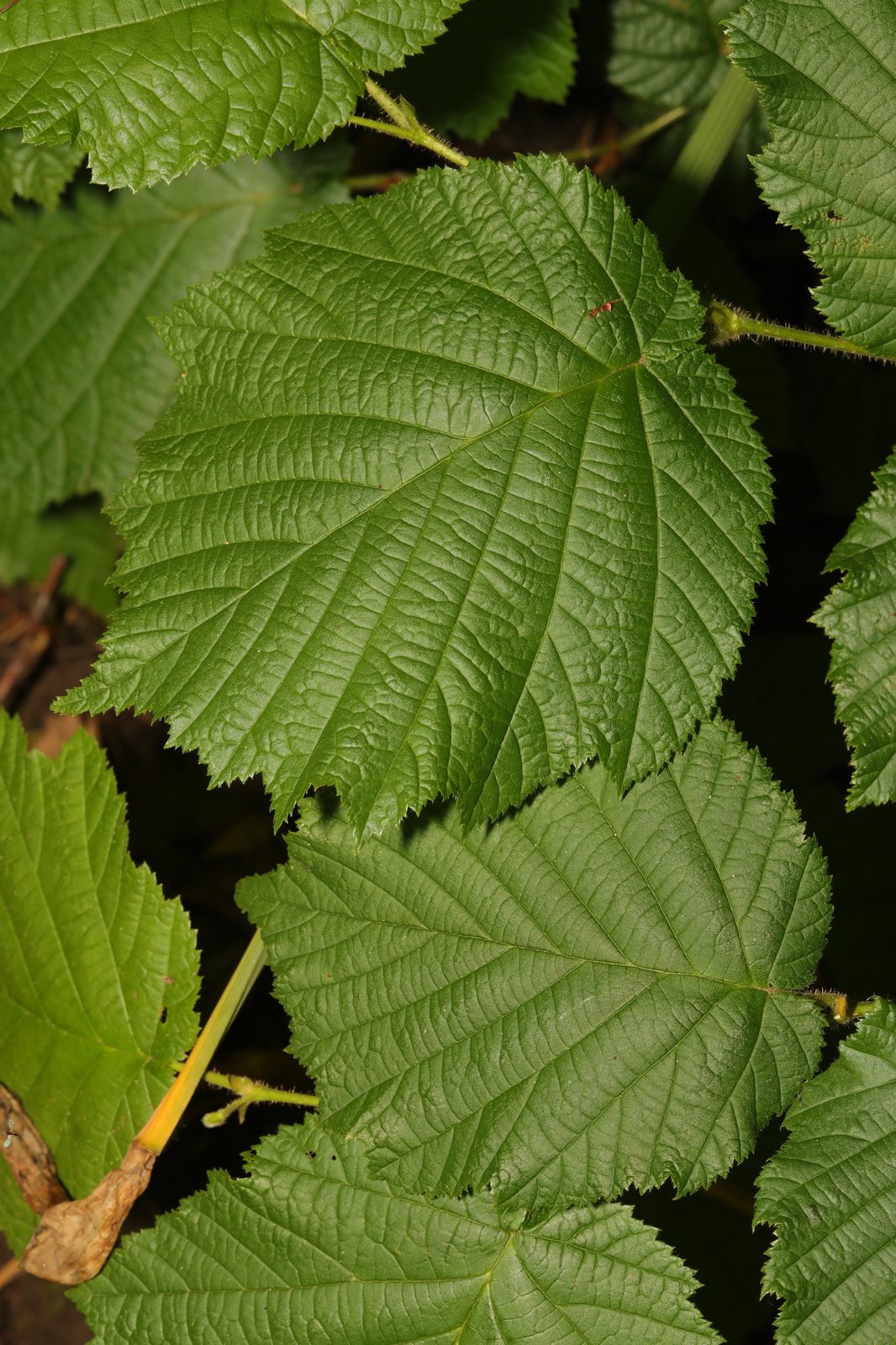
- Broad, rounded green leaves with pointed tips, toothed edges and a softly hairy surface; usually yellow in autumn.
- Growth
- Moderate to fast once established
- Care needed
- Medium
The year at a glance
- Pollinators
- Cold hardy
- Wildlife
- Edible
| J | F | M | A | M | J | J | A | S | O | N | D | |
|---|---|---|---|---|---|---|---|---|---|---|---|---|
| Flowers | ||||||||||||
| Fruit | ||||||||||||
| Plant |
Northern hemisphere months. In Australia, shift them by six.
- Difficulty
- Moderate
- Toughness
- Very tough
Will it suit your garden?
Pick your zone, country, light and whether you have pets.
Full sun is 6 or more hours of direct sun a day, part shade 3 to 6 hours, shade under 3.
How it grows
Planting day
1.9 ft (0.58 m)
After 1 year
5 ft (1.6 m)
After 2 years
9 ft (2.7 m)
After 3 years
12 ft (3.8 m)
After 5 years
16 ft (4.9 m)
full size
About 4 years to full size.
From a typical nursery size, at an average rate for this kind of plant. A rule of thumb, not a forecast.
Good to know
- Cats and dogs
- Safe
- Native to
- the UK
- Growth rate
- Fast
Care
Jobs through the year
- WaterApr–May, Sep, every 14 days
- Water established shrubs deeply only during dry spells; keep young plants evenly moist for their first two seasons.
- WaterJun–Aug, every 7 days
- Water established shrubs during prolonged drought, especially while nuts develop; skip when soil is moist.
- MulchMar–Apr
- Apply 5–8 cm of organic mulch over the roots, keeping it clear of stems.
- PruneFeb
- Thin dead, crossing and crowded stems while dormant, removing a few oldest stems at ground level without coppicing the whole shrub.
- PruneJun–Aug
- Remove unwanted suckers at their origin if a defined shrub rather than a thicket is wanted.
- ProtectAug–Oct
- Where practical, fit secure exclusion mesh to reduce squirrel losses without trapping wildlife.
- HarvestAug–Oct
- Gather nuts when husks brown and nuts loosen or fall; remove husks and air-dry sound nuts for several weeks.
- Water deeply through dry spells during the first two growing seasons.
- Apply a 2-3 in (5-8 cm) layer of organic mulch each spring, keeping it clear of the stems.
- Avoid heavy nitrogen feeding, which encourages leafy growth rather than nuts; add compost if growth is weak.
- For reliable crops, plant at least two genetically different hazels with compatible, overlapping flowering times.
- Remove unwanted suckers at their origin if you want a defined shrub rather than a thicket.
Pruning. Prune in late winter while dormant, removing dead, crossing and crowded stems and taking out a few of the oldest stems at ground level. For poles rather than nuts, coppice established plants on a roughly 7-10-year rotation; cutting all stems removes the nut crop until new growth matures.
Harvest
Harvest hazelnuts, usually August–October in the US, UK and Canada, or February–April in Australia, depending on climate and variety. They are ready when the husks yellow or brown and the brown-shelled nuts loosen easily or fall; gather fallen nuts frequently, remove the husks and dry them in a well-ventilated place for several weeks before storing.
Through the year
- Late winter
- Thin crowded stems and inspect branches for cankers before leaves emerge.
- Spring
- Mulch over the root area and remove weeds around young plants.
- Summer
- Water during prolonged dry weather and remove unwanted suckers.
- Late summer to early autumn
- Collect nuts as the husks yellow and nuts loosen; dry sound nuts in a well-ventilated place.
- Autumn
- Plant container-grown hazels while the soil is workable and moist.
- Late autumn to winter
- Plant bare-root plants while dormant, avoiding frozen or waterlogged ground.
In the garden
- Include in a mixed hedgerow with hawthorn and field maple for seasonal cover and an informal boundary.
- Use at a woodland edge above spring bulbs and primroses, which flower before the canopy closes.
- Plant compatible nut selections in an edible garden, leaving room for harvesting and sucker removal.
- Manage as a small coppice for bean poles, pea sticks and a repeating pattern of upright stems.
Garden styles it suits: Woodland, Native hedgerow, Wildlife garden, Edible landscape, Cottage garden and Homestead.
Plant it with: Snowdrop, Primrose, Wood anemone, Hawthorn, Field maple and Dog rose.
Wildlife: Catkins provide early pollen for bees, although hazel is wind-pollinated. Nuts feed squirrels, rodents and some birds; dense stems shelter birds, and leaves support moth caterpillars.
Problems to watch for
- Eastern filbert blight: particularly serious in North America; choose locally recommended resistant selections, inspect for elongated cankers with rows of black fruiting bodies, and remove affected wood well below visible infection.
- Hazelnut weevils and other nut-feeding insects: larvae spoil kernels; collect and dispose of damaged and fallen nuts promptly and follow local advice for the pest present.
- Squirrels and other rodents: nuts may disappear before harvest; collect frequently as nuts ripen and use securely fitted exclusion mesh where practical.
- Poor nut set: isolated plants, incompatible pollen partners, frost or unsuitable winter conditions can prevent cropping; add compatible selections and choose varieties proven in your local climate.
Safety
Not known to be toxic to cats, dogs, horses or people. Ripe kernels are edible, but hazelnuts can cause severe allergic reactions in susceptible people. Whole nuts and shells can cause choking or intestinal blockage in pets; do not offer mouldy nuts.
Easily confused with
American hazelnut (Corylus americana)
Usually a smaller shrub; its nut husks extend beyond the nut and have conspicuous ragged lobes, whereas common hazel has a shorter, open, leafy husk.
Beaked hazelnut (Corylus cornuta)
The husk encloses each nut and narrows into a long tubular beak; common hazel lacks this beak.
Turkish hazel (Corylus colurna)
Normally forms a single-trunked tree with corky bark and nuts held in deeply divided, bristly husks, rather than a suckering shrub with simple leafy husks.
The name
Corylus comes from the ancient Greek name for hazel, while avellana refers to Abella, now Avella in Italy, a place associated with hazelnuts.
Propagation. Sow fresh ripe nuts outdoors in autumn, protected from rodents; germination can be slow and seedlings will not reproduce a named selection exactly. Layer low shoots or detach well-rooted suckers while dormant to preserve a selection.
Checked against open data
- Accepted botanical name
- Corylus avellana
- In the US and Canada
- Introduced in Canada and the lower 48 states.
- Native range
- Albania, Austria, Baltic States, Belarus, Belgium, Bulgaria, Central European Rus, Corse, Czechoslovakia, Denmark, East Aegean Is. and East European Russia.
- Measured
- Soil pH 5.5 to 6.5. Average height 710 cm.
Sources: GBIF (CC BY 4.0), USDA PLANTS and Trefle (CC BY 4.0). The care and design notes are LandscapeGPT's own.
See it in your own yard.
Upload a photo of your yard and see it redesigned with plants that suit your climate, each checked against your zone.