Purple lovegrass
Eragrostis spectabilis. Family Poaceae. Ornamental grass.
Also called Purple love grass, Tumblegrass.
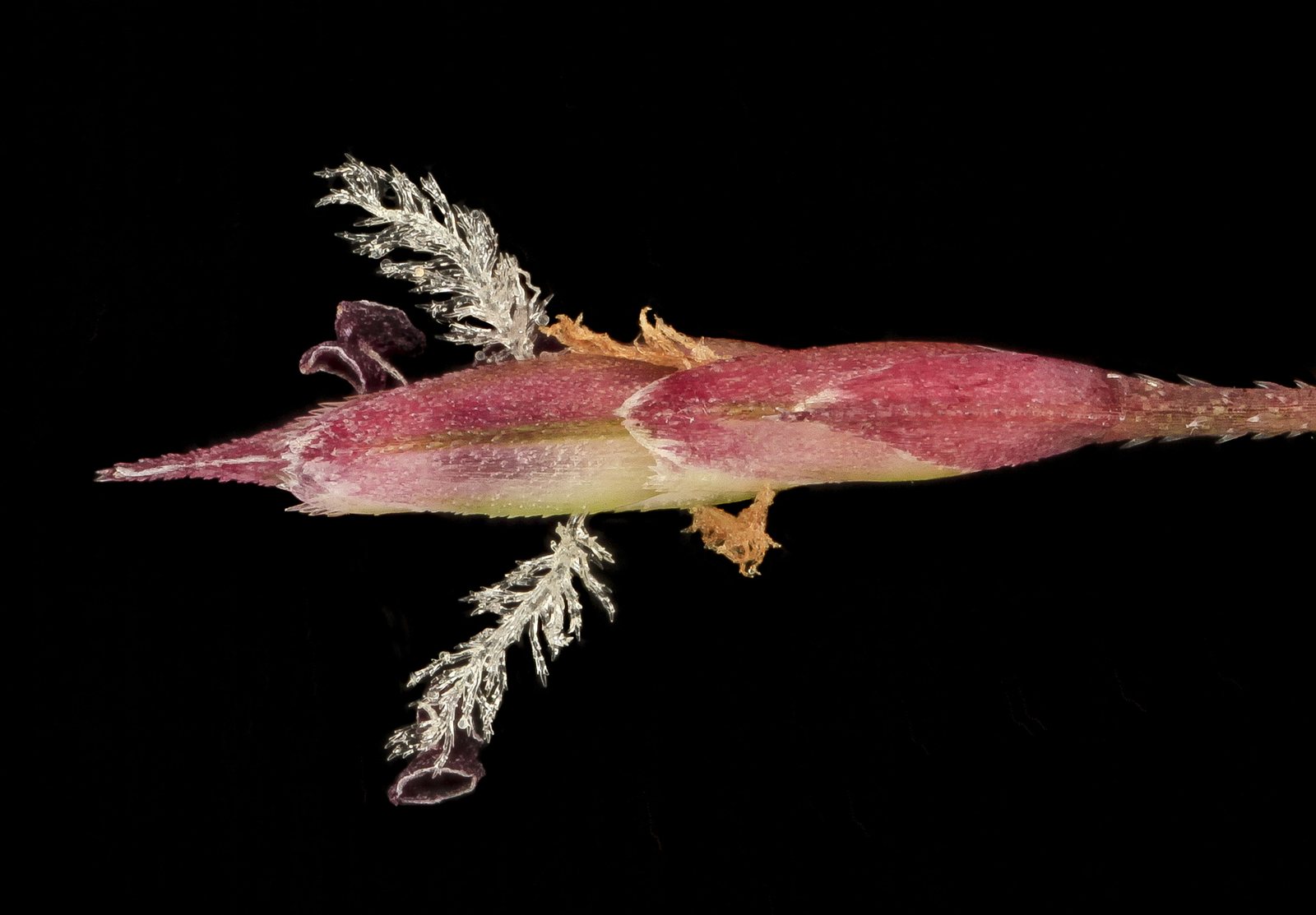
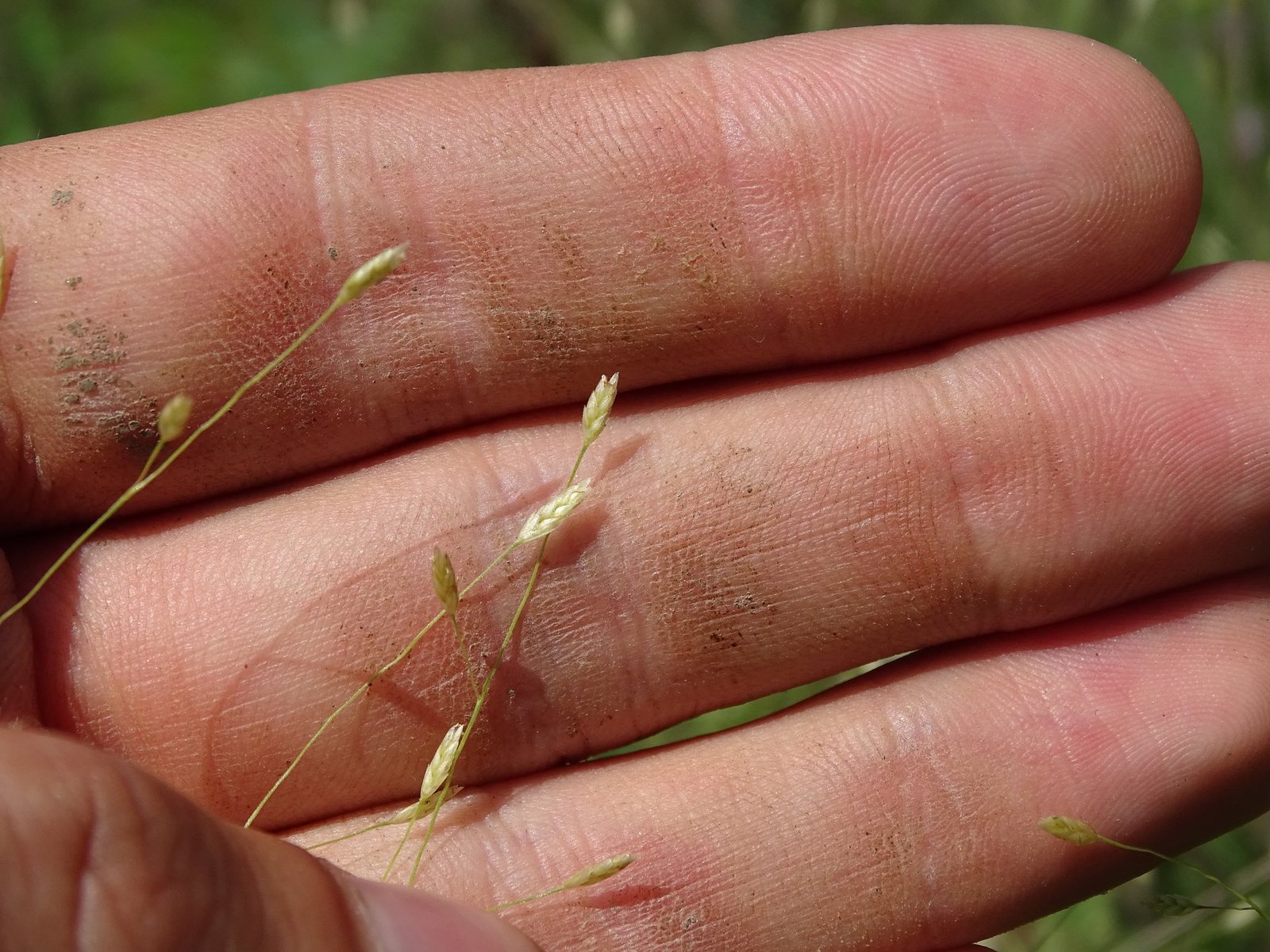
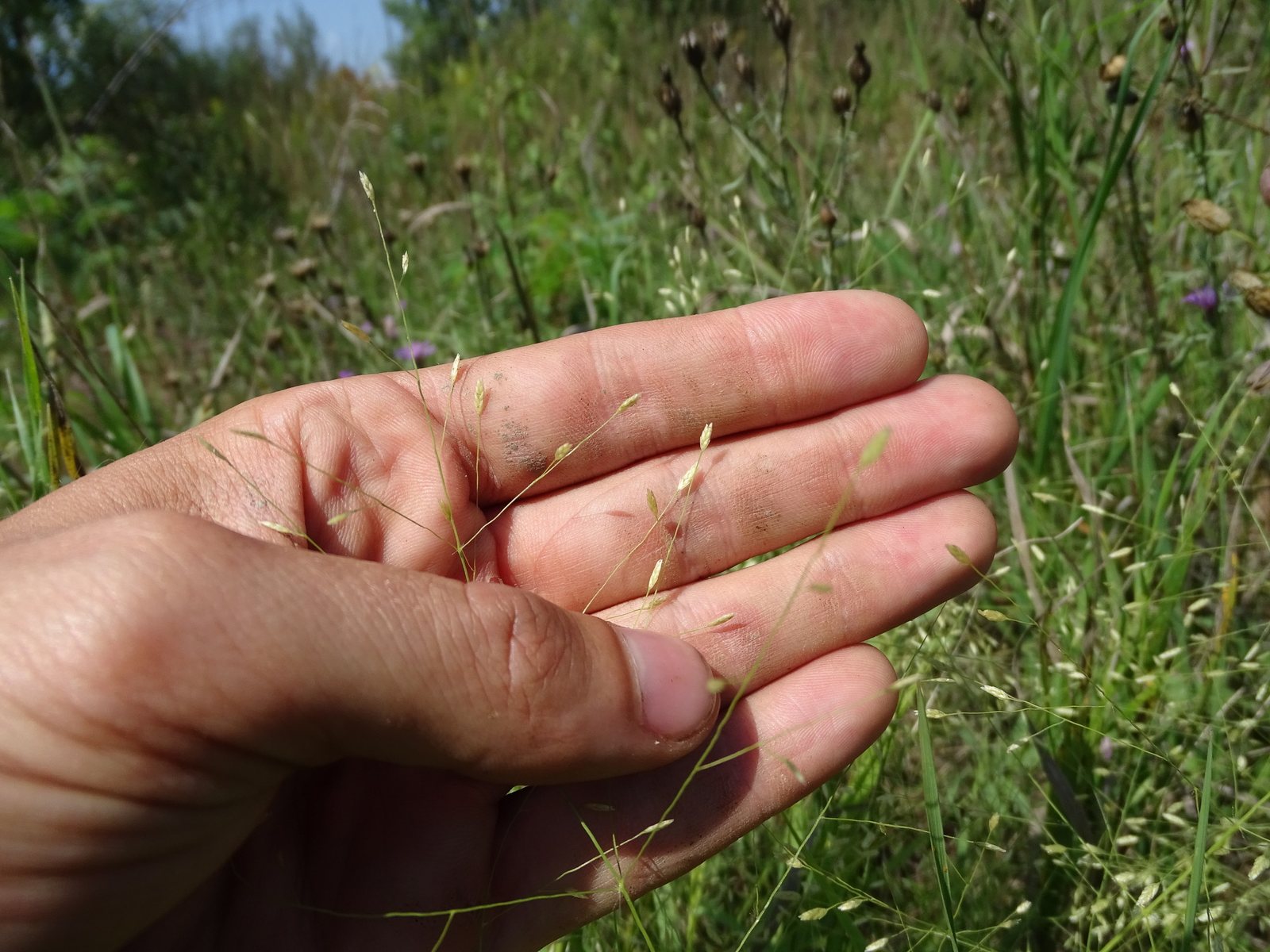
Purple lovegrass is a small, warm-season perennial grass native to eastern North America. Gardeners grow it for the airy, reddish-purple flower heads that form a low haze above the leaves in late summer, especially in sunny, dry borders and meadow plantings.
At a glance
- Sun
- Full sun; flowering is weaker and growth looser in partial shade.
- Water
- Low once established. Water young plants regularly through their first growing season, then mainly during prolonged drought.
- Soil
- Well-drained sandy, gravelly or loamy soil. Tolerates poor, dry ground but dislikes persistent winter wet.
- Height
- 1-2 ft (0.3-0.6 m), including flower heads
- Spread
- 1-2 ft (0.3-0.6 m), gradually wider through short rhizomes and seedlings
- Flowers
- Late summer to early autumn; loose clouds of reddish-purple flowers fade to pale tan as the seed ripens.
- Foliage
- Narrow, flat green leaves form low clumps, often taking on bronze or reddish tones in autumn before turning straw-coloured.
- Growth
- Moderate; slow to start in spring, with most growth in warm weather.
- Care needed
- Low
The year at a glance
- Deer resistant
- Drought tolerant
- Heat tolerant
- Wildlife
| J | F | M | A | M | J | J | A | S | O | N | D | |
|---|---|---|---|---|---|---|---|---|---|---|---|---|
| Flowers | ||||||||||||
| Fruit | ||||||||||||
| Plant |
Northern hemisphere months. In Australia, shift them by six.
- Difficulty
- Easy
- Toughness
- Very tough
Will it suit your garden?
Pick your zone, country, light and whether you have pets.
Full sun is 6 or more hours of direct sun a day, part shade 3 to 6 hours, shade under 3.
How it grows
Planting day
1.1 ft (0.35 m)
After 1 year
1.2 ft (0.38 m)
After 2 years
1.4 ft (0.41 m)
After 3 years
1.5 ft (0.44 m)
After 5 years
1.5 ft (0.45 m)
full size
About 3 years to full size.
From a typical nursery size, at an average rate for this kind of plant. A rule of thumb, not a forecast.
Good to know
- Cats and dogs
- Safe
- Native to
- the US and Canada
- In the garden
- Spreads vigorously: plan to contain it.
- Growth rate
- Slow
Care
Jobs through the year
- WaterApr–May, Sep, every 28 days
- Water established plants only if prolonged dry weather dries the root zone; young plants need more.
- WaterJun–Aug, every 21 days
- Water established clumps deeply only during prolonged drought; water first-year plants more frequently.
- PruneFeb–Mar
- Cut dry stems and foliage to 5-8 cm before new shoots emerge.
- DivideApr–May
- Divide crowded clumps as growth starts in warm soil.
- DeadheadSep–Oct
- Optionally remove seed heads before they loosen and disperse to limit seedlings.
- ProtectJan–Feb, Nov–Dec
- Keep crowns clear of wet leaves and thick mulch, and maintain free drainage.
- Plant in spring once the soil warms, spacing plants about 1-2 ft (0.3-0.6 m) apart.
- Water deeply during establishment, allowing the soil surface to dry between waterings.
- Avoid routine feeding; rich soil and excess fertiliser encourage floppy growth.
- Keep the crown clear of thick organic mulch, especially where winters are wet.
- Divide crowded clumps in spring as new growth starts.
- Remove unwanted seedlings while small, or cut off seed heads before they disperse.
Pruning. In late winter or early spring, cut the old leaves and stems back to about 2-3 in (5-8 cm), before fresh growth appears. Leave the dry flower heads standing through winter if you want their texture and seed for birds.
Through the year
- Late winter
- Cut back dry stems and foliage before new shoots emerge.
- Spring
- Plant or divide once the soil warms and active growth begins.
- Early summer
- Weed around young clumps and water new plantings during dry spells.
- Late summer
- Enjoy the purple flower haze; avoid extra fertiliser or unnecessary watering.
- Autumn
- Remove seed heads before they loosen if self-seeding is unwanted; otherwise leave them for birds and winter texture.
In the garden
- Plant in broad drifts near the front of a sunny border to create a low, transparent purple haze.
- Mix with butterfly weed, coneflowers and little bluestem in a dry meadow-style planting.
- Use beside gravel paths, where the fine flower heads soften hard edges without hiding the route.
- Place where low morning or evening light shines through the flower heads.
Garden styles it suits: Native meadow, New perennial (prairie), Dry gravel garden, Low-maintenance, Wildlife garden and Midwest prairie.
Plant it with: Butterfly weed, Purple coneflower, Little bluestem, Lanceleaf coreopsis, Aromatic aster and Blazing star.
Wildlife: Small seed-eating birds use the ripe seed, and clumps provide shelter for insects. Its wind-pollinated flowers are not a nectar source for bees or butterflies.
Problems to watch for
- Crown or root rot in waterlogged ground: improve drainage or move the plant to a raised, freely draining site.
- Floppy growth or poor flowering: provide full sun and stop feeding with nitrogen-rich fertilisers.
- Unwanted seedlings and gradual spreading: pull seedlings promptly, edge expanding clumps and remove seed heads before dispersal.
- Little growth in early spring: this warm-season grass starts late; wait for sustained warmth before deciding that a clump has died.
Safety
Not known to be toxic to people, cats, dogs or horses; no part is recognised as poisonous. As with other grasses, dry stems and seed heads can cause mechanical irritation if chewed or lodged in the mouth.
Easily confused with
Pink muhly grass (Muhlenbergia capillaris)
Usually forms a taller, larger mound with much finer, wiry leaves and a pink cloud held higher above the foliage. Purple lovegrass has flatter, broader leaves and lower, more spreading flower heads.
Weeping lovegrass (Eragrostis curvula)
Forms much larger tussocks with long, narrow, strongly arching leaves. Its flower heads are generally taller and less vividly purple than those of purple lovegrass.
The name
Eragrostis is traditionally interpreted as Greek for 'love grass', while spectabilis means 'showy', referring to the conspicuous flower heads.
Propagation. Divide clumps in spring as growth begins, keeping roots and growing shoots on each piece. Sow seed shallowly in spring in warm conditions; plants may also self-seed, and ripe flower heads can detach and blow across the ground.
Checked against open data
- Accepted botanical name
- Eragrostis spectabilis
- In the US and Canada
- Native in the lower 48 states. Introduced in Canada.
- Native range
- Alabama, Arizona, Arkansas, Colorado, Connecticut, District of Columbia, Florida, Georgia, Illinois, Indiana, Iowa and Kansas.
- Measured
- Soil pH 4 to 7.5. Average height 23 cm.
Sources: GBIF (CC BY 4.0), USDA PLANTS and Trefle (CC BY 4.0). The care and design notes are LandscapeGPT's own.
See it in your own yard.
Upload a photo of your yard and see it redesigned with plants that suit your climate, each checked against your zone.