Pussytoes
Antennaria dioica. Family Asteraceae. Groundcover.
Also called Mountain everlasting, Catsfoot, Stoloniferous pussytoes.
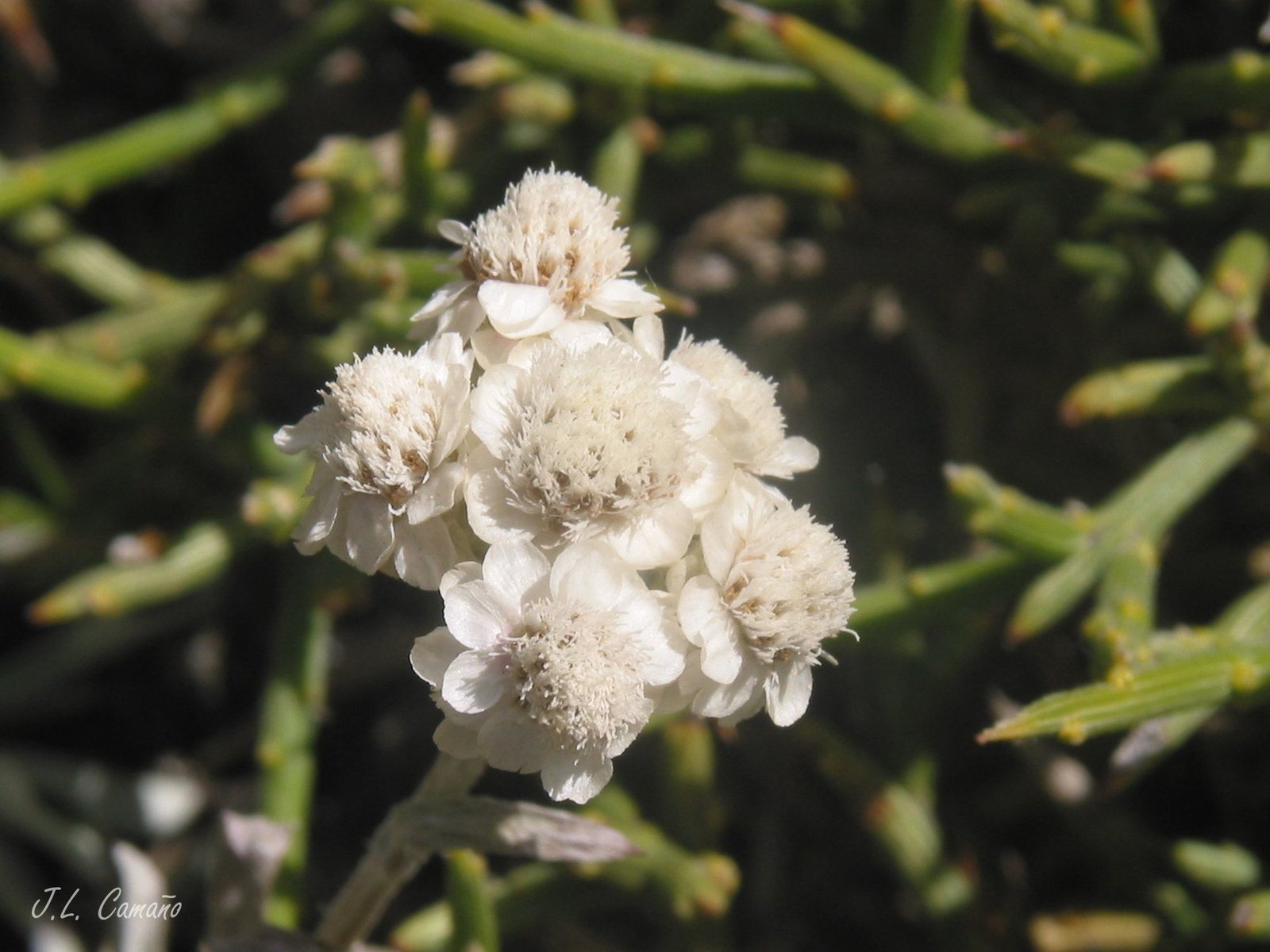
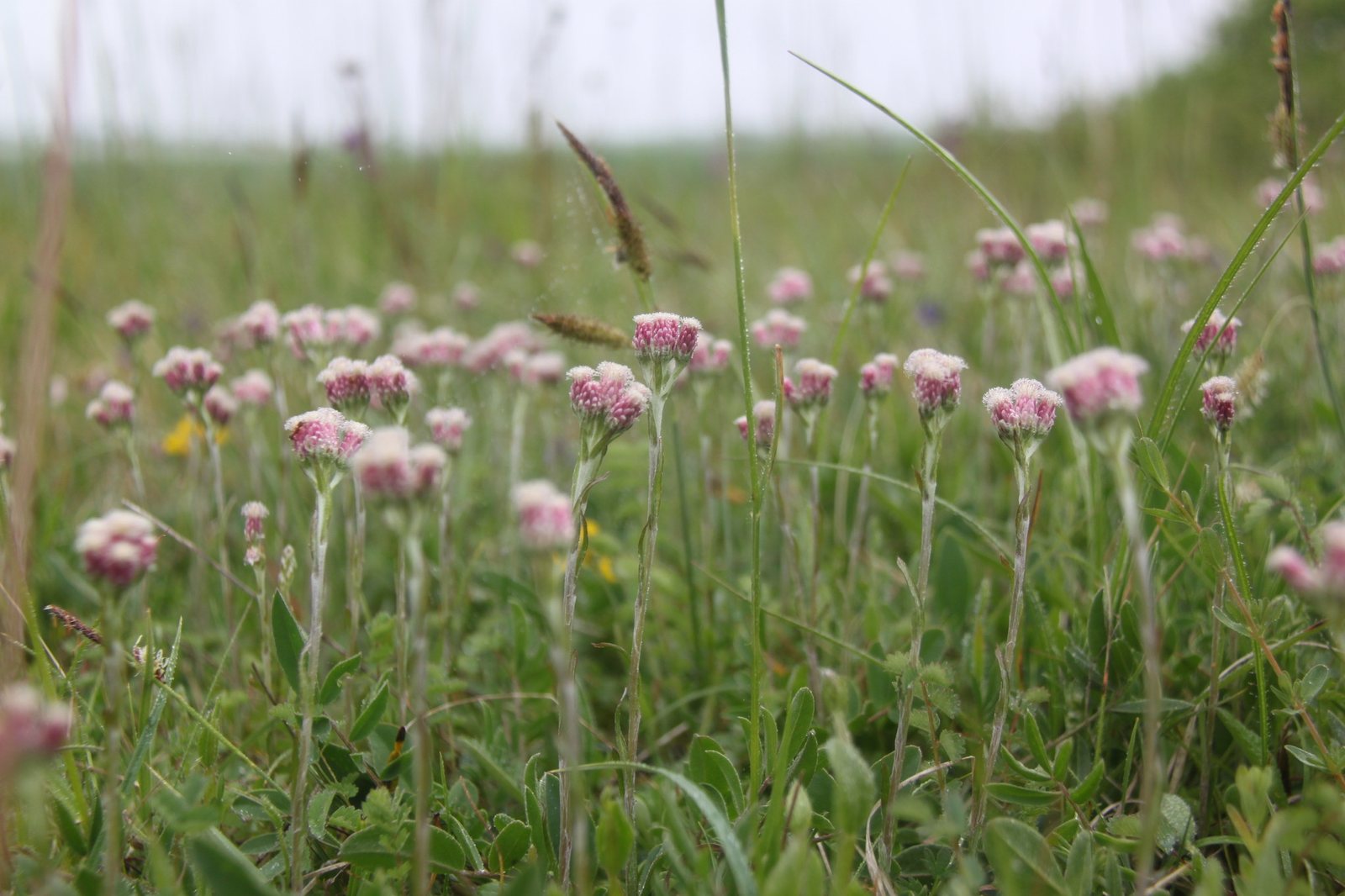
Pussytoes is a low, mat-forming perennial native to Europe and northern Asia, grown for its silvery foliage and small, woolly flower heads. It suits sunny rock gardens, gravel beds and dry edging, provided the soil drains freely. It tolerates cold better than prolonged heat and humidity.
At a glance
- Sun
- Full sun; tolerates light shade, but mats become looser and flowering is reduced.
- Water
- Low once established. Water young plants during dry spells; avoid persistently damp soil.
- Soil
- Lean, gritty or sandy, sharply drained soil. Tolerates acidic to alkaline conditions; unsuitable for wet clay unless drainage is substantially improved.
- Height
- 0.25-0.75 ft (0.08-0.23 m), including flower stems
- Spread
- 1-2 ft (0.3-0.6 m), gradually spreading farther by rooting runners
- Flowers
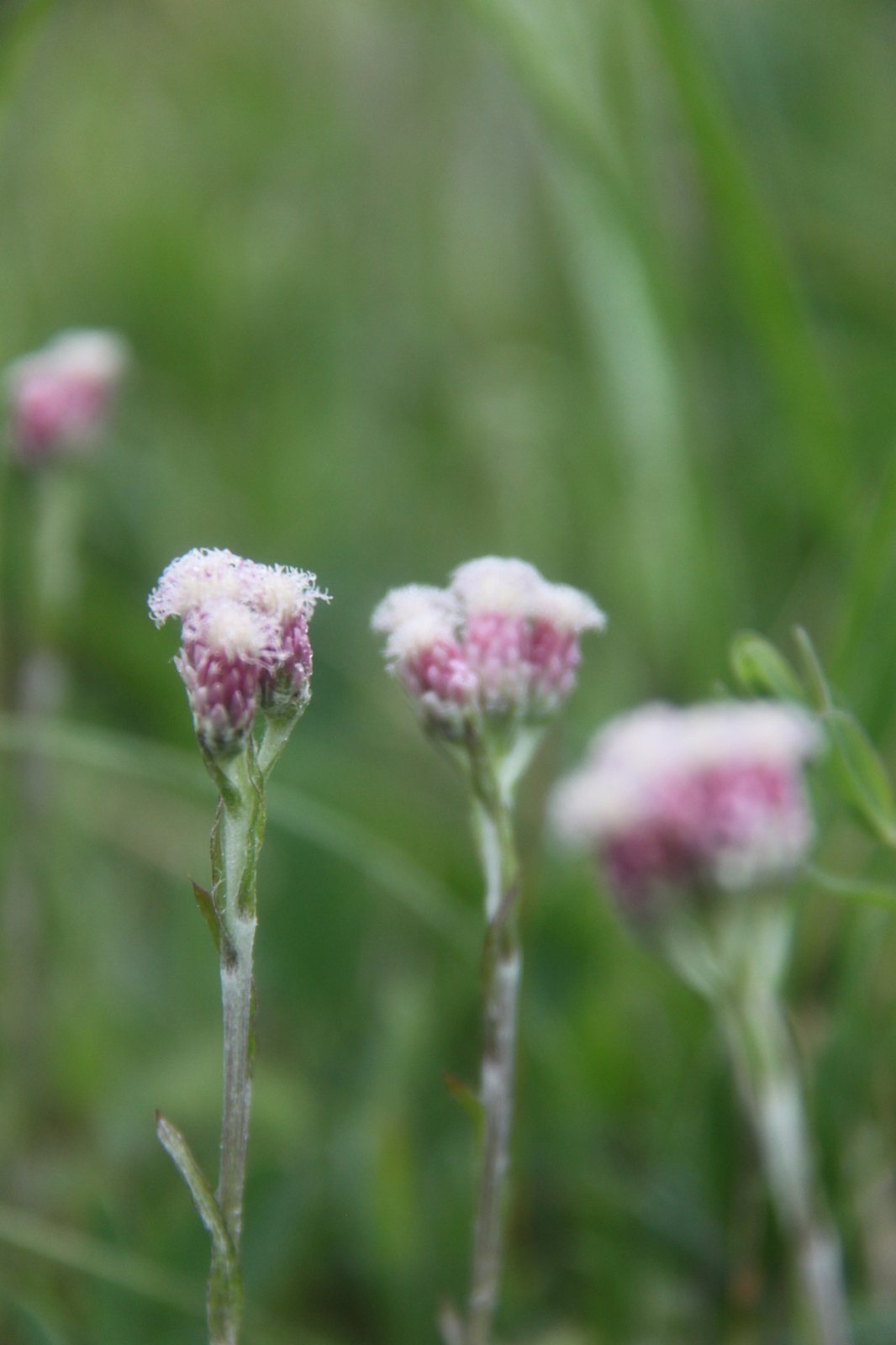
- Late spring to early summer; clusters of small white or pink flower heads on short upright stems. Male and female flowers occur on separate plants.
- Foliage
- Small, spoon-shaped leaves in ground-hugging rosettes, green-grey to silvery above and white-felted beneath. Usually evergreen, though foliage may thin in severe winters.
- Growth
- Slow to moderate
- Care needed
- Low
The year at a glance
- Pollinators
- Deer resistant
- Drought tolerant
- Cold hardy
- Low allergen
| J | F | M | A | M | J | J | A | S | O | N | D | |
|---|---|---|---|---|---|---|---|---|---|---|---|---|
| Flowers | ||||||||||||
| Fruit | ||||||||||||
| Plant |
Northern hemisphere months. In Australia, shift them by six.
- Difficulty
- Easy
- Toughness
- Very tough
Will it suit your garden?
Pick your zone, country, light and whether you have pets.
Full sun is 6 or more hours of direct sun a day, part shade 3 to 6 hours, shade under 3.
How it grows
Planting day
0.1 ft (0.04 m)
After 1 year
0.2 ft (0.07 m)
After 2 years
0.4 ft (0.11 m)
After 3 years
0.5 ft (0.15 m)
After 5 years
0.5 ft (0.16 m)
full size
About 3 years to full size.
From a typical nursery size, at an average rate for this kind of plant. A rule of thumb, not a forecast.
Good to know
- Cats and dogs
- Safe
- Native to
- the UK
- Growth rate
- Slow
Care
Jobs through the year
- WaterApr–May, Sep, every 28 days
- Water established mats only during prolonged drought; water young plants more often until rooted.
- WaterJun–Aug, every 21 days
- Water only when the root zone is dry, avoiding frequent light watering.
- MulchApr
- Apply a thin gravel mulch around rosettes; avoid rich compost or moisture-retaining mulch.
- PruneMar–Apr
- Remove dead leaves and trim wandering runners without cutting into bare old growth.
- DivideMar–May
- Divide crowded or patchy mats as needed, replanting healthy rooted sections.
- DeadheadJun–Jul
- Clip spent stems to the foliage if desired, leaving some heads for insects and seed display.
- ProtectOct–Nov
- Clear fallen leaves and ensure winter water drains away from crowns.
- Water after planting and during prolonged dry spells in the first growing season; let the surface dry between waterings.
- Keep crowns above standing water, especially in winter; use a raised bed or gritty mound where drainage is poor.
- Avoid routine feeding or rich compost, which encourages loose growth.
- Use a thin gravel mulch rather than moisture-retaining organic mulch around the rosettes.
- Remove weeds by hand before they become rooted through the mat.
- Divide crowded or patchy mats in spring and replant healthy rooted sections.
Pruning. After flowering, snip spent flower stems back to the foliage. Remove dead leaves and trim wandering runners in spring or after flowering; do not cut the whole mat hard into bare growth.
Through the year
- Spring
- Plant in a sunny, freely drained position and water in thoroughly.
- Spring
- Clear dead foliage and divide mats that have become patchy or overcrowded.
- Late spring
- Pull weeds from between rosettes before flowering stems make access difficult.
- Early summer
- Clip off faded flower stems if you want a tidy foliage mat.
- Summer
- Water newly planted patches during extended drought; avoid frequent light watering.
- Autumn
- Clear fallen leaves from the mat and check that water drains away from the crowns.
In the garden
- Plant between rocks or along a scree bed, where its low silver mats soften hard edges.
- Edge a sunny gravel path with small patches, keeping plants out of regularly walked areas.
- Combine with creeping thyme and low sedums for contrasting foliage textures in a dry bed.
- Use in a shallow alpine trough with generous drainage and other small, slow-growing plants.
Garden styles it suits: Alpine rock garden, Dry gravel garden, Mountain lodge, Low-maintenance, Desert / xeriscape and Small-space.
Plant it with: Creeping thyme, Moss phlox, Rock rose, Goldmoss stonecrop, Alpine pinks and Purple rock cress.
Wildlife: The flowers offer nectar and pollen to small insects. Keep some flower heads rather than removing them all immediately after bloom.
Problems to watch for
- Crown and root rot in wet soil: improve drainage or move healthy rooted sections to a raised, gritty site.
- Thin or open mats in shade or rich soil: move to full sun and stop feeding.
- Summer dieback in hot, humid conditions: avoid overhead watering and crowded planting; choose a cooler, airy position.
- Weeds invading the mat: hand-weed early and maintain a gravel margin around the patch.
Safety
Not known to be toxic to people, cats, dogs or horses. Species-specific safety information is limited, and no part should be treated as food.
Easily confused with
Plantain-leaved pussytoes (Antennaria plantaginifolia)
Has broader, plantain-like basal leaves with several conspicuous lengthwise veins; A. dioica has smaller, narrower leaves with one main vein.
Pearly everlasting (Anaphalis margaritacea)
Forms much taller, upright clumps with narrow leaves along leafy stems and larger clusters of papery white flower heads, rather than a low mat of rosettes.
The name
Pussytoes refers to the soft, paw-like flower clusters, while dioica means that male and female flowers are borne on separate plants.
Propagation. Divide rooted runners or small sections of the mat in spring or early autumn. Sow seed in a gritty seed compost, pressing it onto the surface; seedlings may vary. Seed production requires both male and female plants nearby.
Checked against open data
- Accepted botanical name
- Antennaria dioica
- In the US and Canada
- Native in Alaska.
- Native range
- Albania, Aleutian Is., Altay, Amur, Austria, Baltic States, Belarus, Belgium, Bulgaria, Buryatiya, Central European Rus and China North-Central.
- Measured
- Soil pH 4.5 to 5. Average height 3 cm.
Sources: GBIF (CC BY 4.0), USDA PLANTS and Trefle (CC BY 4.0). The care and design notes are LandscapeGPT's own.
See it in your own yard.
Upload a photo of your yard and see it redesigned with plants that suit your climate, each checked against your zone.