Red mulberry
Morus rubra. Family Moraceae. Tree.
Also called American mulberry, Native mulberry.
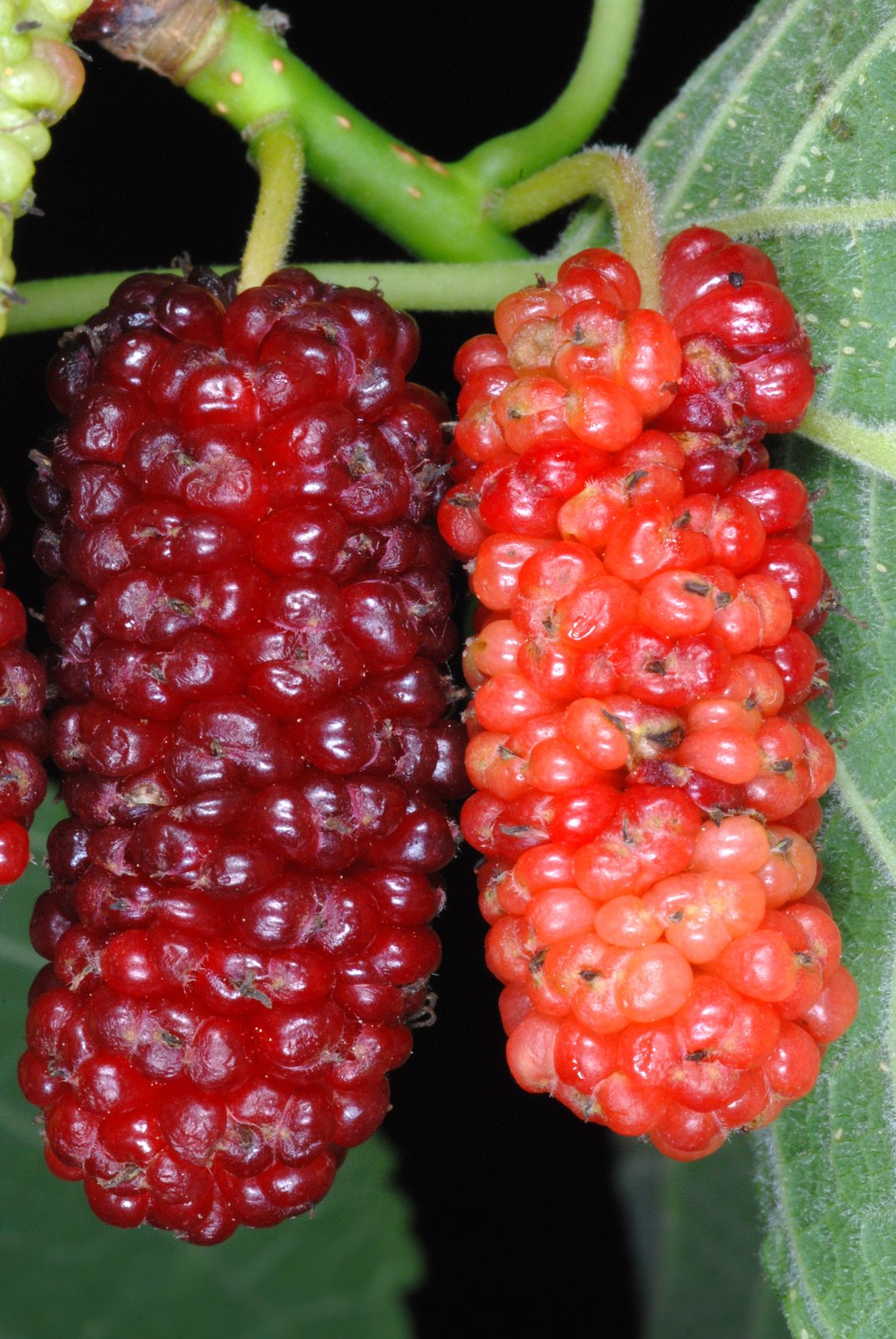
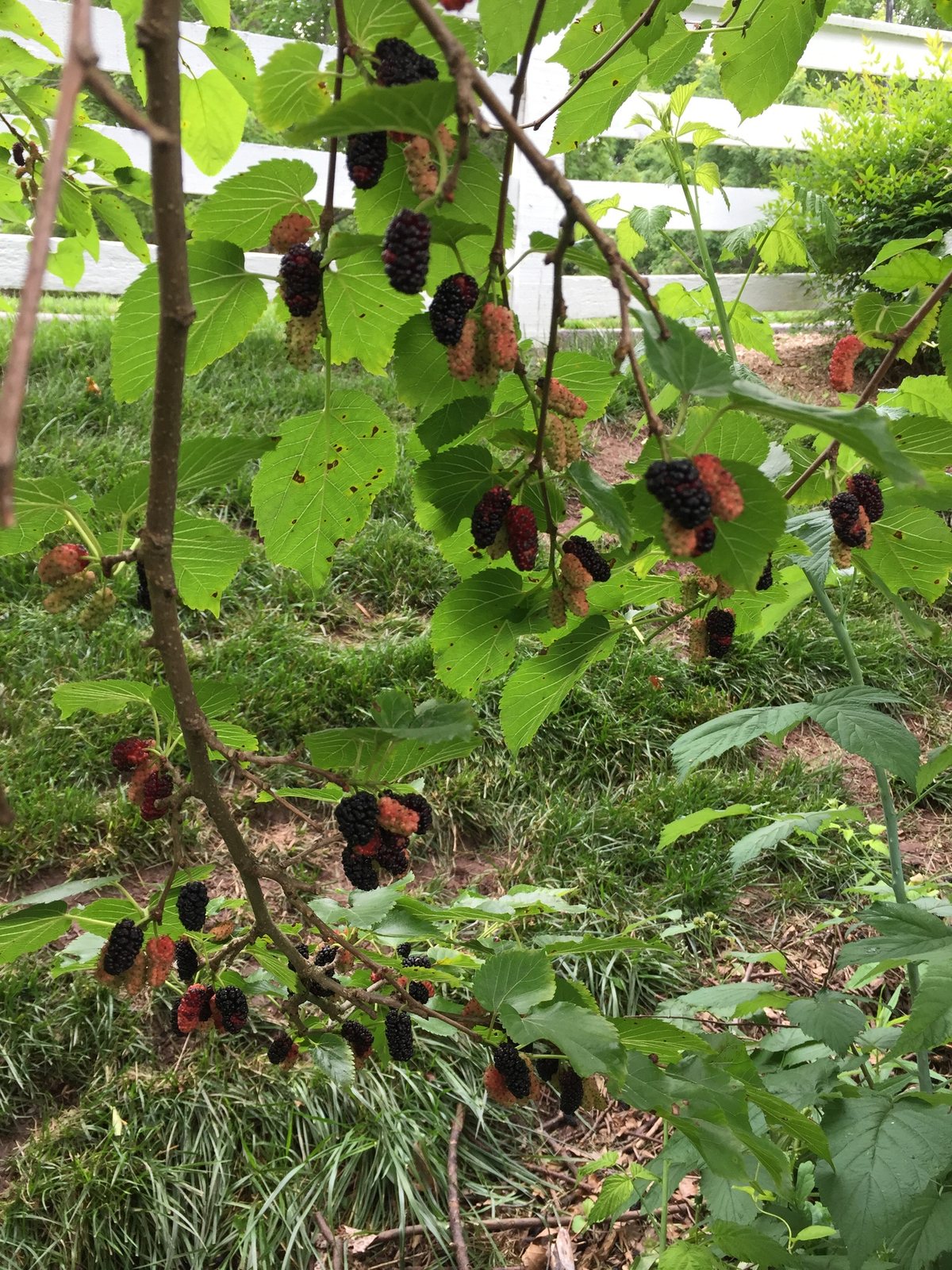
Red mulberry is a deciduous tree native to eastern and central North America, grown for its sweet, dark fruit, broad shade and value to wildlife. It suits larger gardens, especially woodland edges and edible landscapes, but falling fruit stains paving and makes a mess beneath the canopy. Buy from a reliable native-tree nursery, because white mulberry and hybrids are often mistaken for this species.
At a glance
- Sun
- Full sun to partial shade; fruit production is best in full sun.
- Water
- Moderate; keep young trees evenly moist, then water established trees during prolonged drought.
- Soil
- Deep, fertile, moisture-retentive soil with good drainage; tolerates clay and a range of soil pH levels, but not prolonged waterlogging.
- Height
- 35-50 ft (10.7-15.2 m)
- Spread
- 30-40 ft (9.1-12.2 m)
- Flowers
- Spring; small, inconspicuous greenish flowers in short catkins.
- Foliage
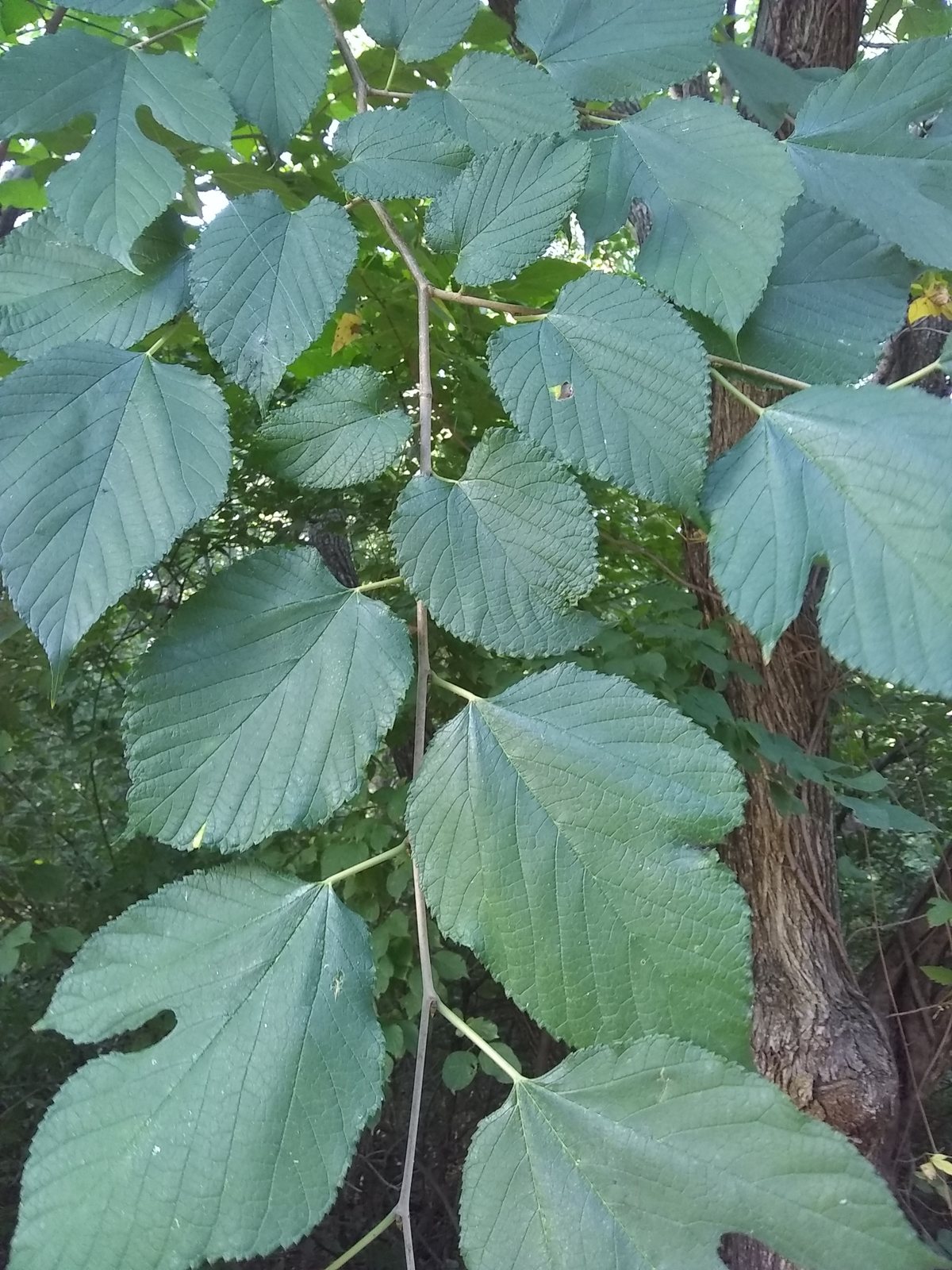
- Large, alternate, heart-shaped leaves, sometimes lobed, with toothed edges, a rough upper surface and softly hairy undersides; usually yellow in autumn.
- Growth
- Moderate to fast when young.
- Care needed
- Medium
The year at a glance
- Drought tolerant
- Cold hardy
- Heat tolerant
- Wildlife
- Edible
| J | F | M | A | M | J | J | A | S | O | N | D | |
|---|---|---|---|---|---|---|---|---|---|---|---|---|
| Flowers | ||||||||||||
| Fruit | ||||||||||||
| Plant |
Northern hemisphere months. In Australia, shift them by six.
- Difficulty
- Moderate
- Toughness
- Very tough
Will it suit your garden?
Pick your zone, country, light and whether you have pets.
Full sun is 6 or more hours of direct sun a day, part shade 3 to 6 hours, shade under 3.
How it grows
Planting day
7 ft (2 m)
After 1 year
9 ft (2.7 m)
After 2 years
11 ft (3.4 m)
After 3 years
13 ft (4.1 m)
After 5 years
18 ft (5.4 m)
About 16 years to full size.
From a typical nursery size, at an average rate for this kind of plant. A rule of thumb, not a forecast.
Good to know
- Cats and dogs
- Mildly toxic: may upset a stomach
- Native to
- the US and Canada
- Growth rate
- Fast
Care
Jobs through the year
- WaterApr–May, Sep, every 14 days
- Water established trees only during dry spells; keep young trees evenly moist for their first two seasons.
- WaterJun–Aug, every 14 days
- Water established trees deeply during prolonged drought; young trees need more frequent watering.
- MulchMar–Apr
- Maintain 5–8 cm of organic mulch over roots, leaving the trunk clear.
- FeedApr
- Feed only if poor growth or a soil test indicates a nutrient deficiency.
- HarvestJun–Aug
- Pick soft dark berries or gently shake onto a clean sheet; refrigerate promptly and clear fallen fruit.
- PruneJul–Aug
- After fruiting, prune lightly in dry weather; avoid large cuts, topping and spring pruning.
- ProtectJan–Feb, Nov–Dec
- Check young trunks for browsing damage and adjust guards before they become tight.
- Plant well away from paving, parked cars and outdoor seating because ripe fruit stains surfaces.
- Water deeply during dry spells for the first two growing seasons; avoid keeping the root zone saturated.
- Spread 2-3 in (5-8 cm) of organic mulch over the root area, keeping it clear of the trunk.
- Do not fertilize routinely; feed only if poor growth or a soil test indicates a deficiency.
- For fruit, buy a tree known to bear and ask whether it needs a separate pollen-producing tree; seed-grown plants may be male.
Pruning. Prune lightly in midsummer after fruiting, in dry weather, removing crossing branches and maintaining a sound framework while the tree is young. Avoid topping, large cuts and heavy pruning in late winter or spring, when sap bleeding can be substantial.
Harvest
Pick soft, fully dark purple to nearly black fruit in late spring or summer; ripe berries release easily, so collect them by hand or gently shake branches over a clean sheet. Refrigerate promptly and use quickly, or freeze. Allow roughly 3-5 years from planting for a useful crop from a grafted fruiting tree, and often 5-10 years or longer for seedlings.
Through the year
- Autumn
- Plant while soil is workable, water thoroughly and mulch the root area.
- Winter
- Check young trunks for rabbit or deer damage and adjust guards before they become tight.
- Spring
- Renew mulch and begin deep watering if rainfall is insufficient.
- Late spring to summer
- Harvest fully ripe fruit frequently and clear fallen berries from paths.
- Midsummer
- After harvest, carry out any light framework pruning needed.
- Late summer
- Remove unwanted seedlings while small and check foliage for persistent disease.
In the garden
- Use as a shade tree over lawn or a planted woodland floor, away from hard surfaces.
- Plant at a sunny woodland edge with serviceberry and eastern redbud for layered flowering and fruit.
- Include in a spacious food forest or orchard where fallen fruit can be tolerated.
- Use in a native wildlife garden to provide fruit, cover and caterpillar food.
Garden styles it suits: Woodland, Wildlife garden, Food forest, Backyard orchard, Edible landscape and Homestead.
Plant it with: Eastern redbud, Serviceberry, Pawpaw, Wild ginger, Christmas fern and Woodland phlox.
Wildlife: Ripe fruit feeds many birds and mammals. In its native range, the foliage supports moth caterpillars, and the canopy provides shelter and nesting sites. Flowers are mainly wind-pollinated.
Problems to watch for
- Fruit litter and bird droppings stain paving: site the tree over lawn or planting, and collect ripe and fallen fruit frequently.
- Leaf spots can cause marked foliage and early leaf fall: rake up affected leaves, avoid overhead watering and improve airflow; established trees seldom need treatment.
- Scale insects can weaken twigs: inspect stems, prune out badly affected small branches and use a labelled horticultural oil when appropriate.
- Hybridization with introduced white mulberry threatens true red mulberry, particularly in North America: use verified nursery stock and do not assume seedlings are pure red mulberry.
Safety
Ripe fruit is edible for people and is not known to be toxic to cats, dogs or horses, although eating large quantities may cause digestive upset. Unripe fruit and milky sap can cause stomach upset, and sap may irritate skin; avoid eating unripe berries and wear gloves when pruning.
Easily confused with
White mulberry (Morus alba)
Leaves are usually smoother and shinier above, with little hair beneath except around major veins; red mulberry leaves are usually rough above and softly hairy across the underside.
Black mulberry (Morus nigra)
Leaves tend to be thicker, with a strongly heart-shaped base, and the tree is often shorter and more spreading. Its rough leaves and dark fruit overlap with red mulberry, so reliable nursery identification is useful.
Paper mulberry (Broussonetia papyrifera)
Leaves may be opposite or nearly opposite as well as alternate, and fruit forms rounded orange-red balls rather than elongated mulberry clusters.
The name
Morus is the Latin name for mulberry, and rubra means red, referring to the reddish stage of the developing fruit.
Propagation. Grow from cleaned seed given a period of cold, moist stratification; seedlings vary in sex and fruit quality and may be hybrids where white mulberry grows nearby. Grafting is used to preserve a known fruiting selection, but can require specialist skill.
Checked against open data
- Accepted botanical name
- Morus rubra
- In the US and Canada
- Native in Canada and the lower 48 states.
- Native range
- Alabama, Arkansas, Connecticut, District of Columbia, Florida, Georgia, Illinois, Indiana, Iowa, Kansas, Kentucky and Louisiana.
- Measured
- Soil pH 5 to 7. Average height 800 cm.
Sources: GBIF (CC BY 4.0), USDA PLANTS and Trefle (CC BY 4.0). The care and design notes are LandscapeGPT's own.
See it in your own yard.
Upload a photo of your yard and see it redesigned with plants that suit your climate, each checked against your zone.