Red tussock grass
Chionochloa rubra. Family Poaceae. Ornamental grass.
Also called Red tussock, Copper tussock.
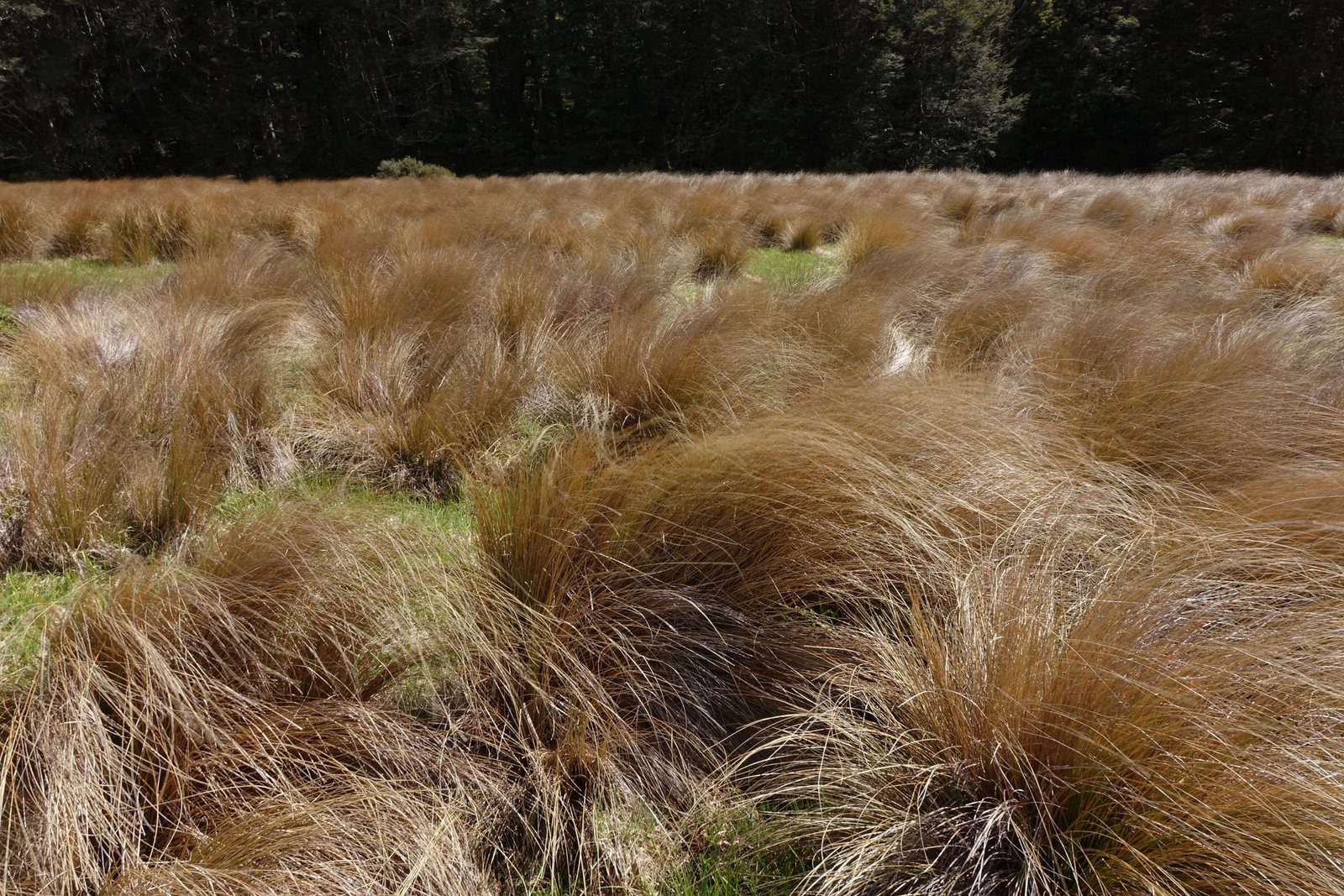
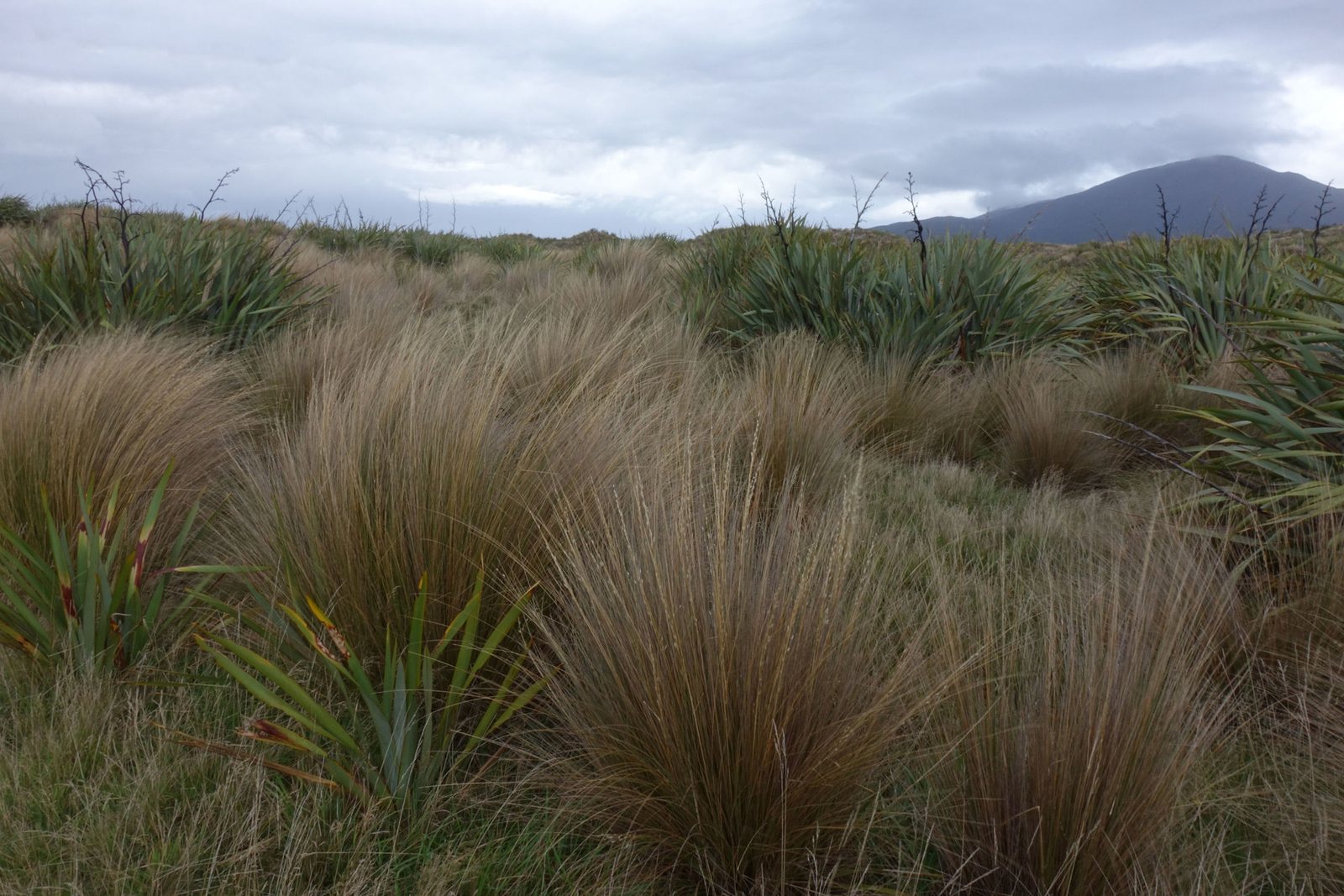
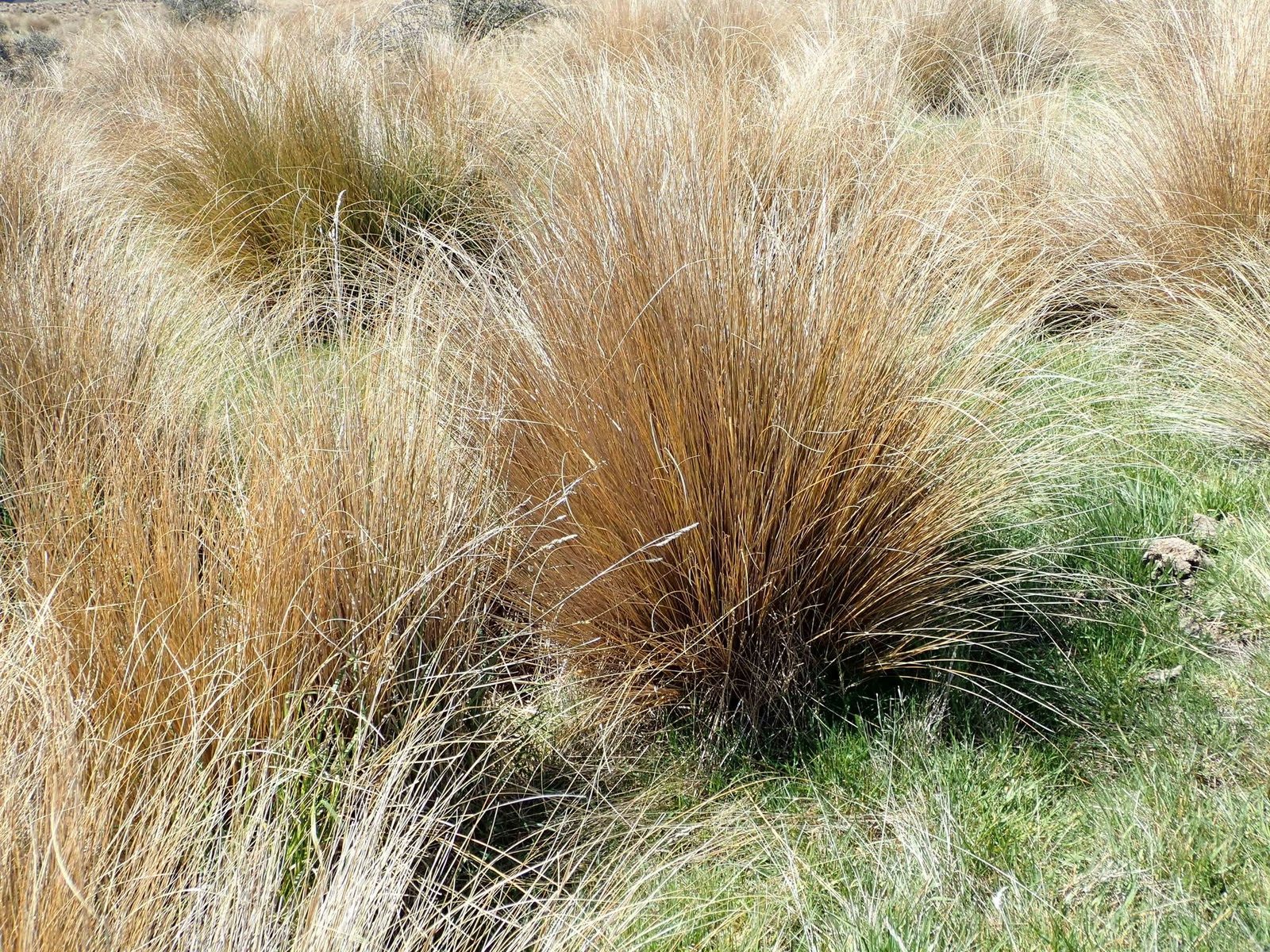
This evergreen New Zealand grass forms a large, arching tussock of fine, copper-red leaves. Gardeners grow it for its year-round colour, movement and strong outline, especially in open, sunny gardens with cool summers.
At a glance
- Sun
- Full sun gives the strongest colour; tolerates light shade.
- Water
- Water regularly while establishing. Once established, it tolerates short dry spells but grows best with reasonably consistent moisture.
- Soil
- Moist, well-drained soil, including clay improved to prevent stagnant winter wet. Tolerates acidic to neutral soils and relatively low fertility.
- Height
- 3-5 ft (0.9-1.5 m), including flower stems
- Spread
- 3-4 ft (0.9-1.2 m)
- Flowers
- Loose, airy panicles of small tan to brown flowers in summer; flowering can be sparse in cultivation.
- Foliage
- Evergreen. Very narrow, arching leaves in copper, reddish brown and bronze, often with greener tones near the base. Colour varies with growing conditions and individual plants.
- Growth
- Slow to moderate; takes several years to form a substantial tussock.
- Care needed
- Low
The year at a glance
- Deer resistant
- Wildlife
| J | F | M | A | M | J | J | A | S | O | N | D | |
|---|---|---|---|---|---|---|---|---|---|---|---|---|
| Flowers | ||||||||||||
| Fruit | ||||||||||||
| Plant |
Northern hemisphere months. In Australia, shift them by six.
- Difficulty
- Moderate
- Toughness
- Fairly tough
Will it suit your garden?
Pick your zone, country, light and whether you have pets.
Full sun is 6 or more hours of direct sun a day, part shade 3 to 6 hours, shade under 3.
How it grows
Planting day
1.1 ft (0.35 m)
After 1 year
2 ft (0.61 m)
After 2 years
2.9 ft (0.87 m)
After 3 years
4 ft (1.1 m)
After 5 years
4 ft (1.2 m)
full size
About 3 years to full size.
From a typical nursery size, at an average rate for this kind of plant. A rule of thumb, not a forecast.
Good to know
- Cats and dogs
- Safe
- Growth rate
- Slow
Care
Jobs through the year
- WaterApr–May, Sep–Oct, every 14 days
- Water established tussocks if soil is drying; water young plants more regularly.
- WaterJun–Aug, every 7 days
- Water deeply in dry weather to maintain reasonable moisture without waterlogging.
- PruneMar–Apr
- Wear gloves to comb out dead leaves and old stems; retain healthy evergreen foliage.
- MulchApr
- Apply a thin compost mulch without covering the crown.
- DivideApr–May
- Divide only when necessary; use healthy sections and water carefully during recovery.
- ProtectJan–Mar, Nov–Dec
- Shelter young plants from severe freezes; in zone 6 use containers overwintered under cover.
- Water deeply through dry spells during the first growing season.
- Leave enough space for the mature leaves to arch without covering paths or neighbouring plants.
- Apply a thin compost mulch in spring, keeping it clear of the crown.
- Avoid heavy feeding, which can encourage soft growth and reduce the plant's compact outline.
- Divide only when necessary; large, established tussocks can be difficult to split and slow to recover.
Pruning. In spring, wear gloves and gently comb or cut out dead leaves and spent flower stems. Do not routinely cut the whole evergreen tussock to the ground; recovery can be slow.
Through the year
- Spring
- Remove dead foliage and old flower stems without cutting through healthy leaves.
- Spring
- Plant new specimens after severe frost has passed; water thoroughly and mulch lightly.
- Late spring
- If propagation is needed, divide a healthy clump as growth resumes and water the divisions carefully.
- Summer
- Water young plants during dry weather and check that surrounding plants are not crowding the crown.
- Autumn
- Leave healthy foliage standing for winter colour and structure.
- Winter
- Check drainage after prolonged rain, especially in heavy soil or containers.
In the garden
- Plant in repeated groups beside a broad path for a flowing, copper-coloured edge.
- Use as a specimen in gravel or among boulders, with moisture available beneath the surface.
- Combine with upright perennials such as asters and purple moor grass for contrasting shapes.
- Pair with New Zealand flax and hebes in mild coastal gardens for an evergreen planting with varied leaf textures.
Garden styles it suits: Modern, Architectural minimal, New perennial (prairie), Coastal, Winter interest and Low-maintenance.
Plant it with: New Zealand flax, Hebe, Purple moor grass, Siberian iris and Michaelmas daisy.
Wildlife: Dense tussocks provide shelter for insects and other small animals. Like other grasses, its flowers are wind-pollinated rather than a significant nectar source.
Problems to watch for
- Crown or root rot in stagnant soil: improve drainage or move the plant to a slightly raised position; keep mulch away from the crown.
- Browning and poor growth during prolonged drought or hot summers: water deeply and avoid sites that trap reflected heat.
- Winter damage in exposed, cold sites: choose a sheltered position and protect young plants during severe freezes.
- Slow recovery after hard cutting or division: retain healthy evergreen foliage and divide only when necessary.
Safety
Not known to be toxic to cats, dogs, horses or people; no part is recognised as poisonous. Specific toxicity information is limited, and the tough leaves are not intended for eating.
Easily confused with
Snow tussock (Chionochloa conspicua)
Usually has greener foliage and conspicuous pale, silky flower plumes, rather than the copper-red leaves and less showy brownish flowers of red tussock.
Orange New Zealand sedge (Carex testacea)
Usually forms a smaller mound with olive-green leaves turning orange, particularly at the tips. Its flowers are small sedge spikes rather than the branching grass panicles of red tussock.
Pheasant's tail grass (Anemanthele lessoniana)
Has broader, flatter leaves with mixed green, orange and red colouring, and fine, often pinkish flower sprays. Red tussock has narrower, more wiry leaves and a more substantial, upright-based tussock.
The name
Chionochloa comes from Greek words for snow and grass, while rubra means red, referring to the reddish foliage.
Propagation. Sow ripe seed in containers in a cool, sheltered position; germination may be slow and uneven. Alternatively, divide in spring as growth resumes, keeping substantial rooted pieces and watering until established.
Checked against open data
- Accepted botanical name
- Chionochloa rubra
- Native range
- New Zealand North and New Zealand South.
- Measured
- Average height 120 cm.
Sources: GBIF (CC BY 4.0) and Trefle (CC BY 4.0). The care and design notes are LandscapeGPT's own.
See it in your own yard.
Upload a photo of your yard and see it redesigned with plants that suit your climate, each checked against your zone.