Regal geranium
Pelargonium × domesticum. Family Geraniaceae. Perennial.
Also called Martha Washington geranium, Regal pelargonium.
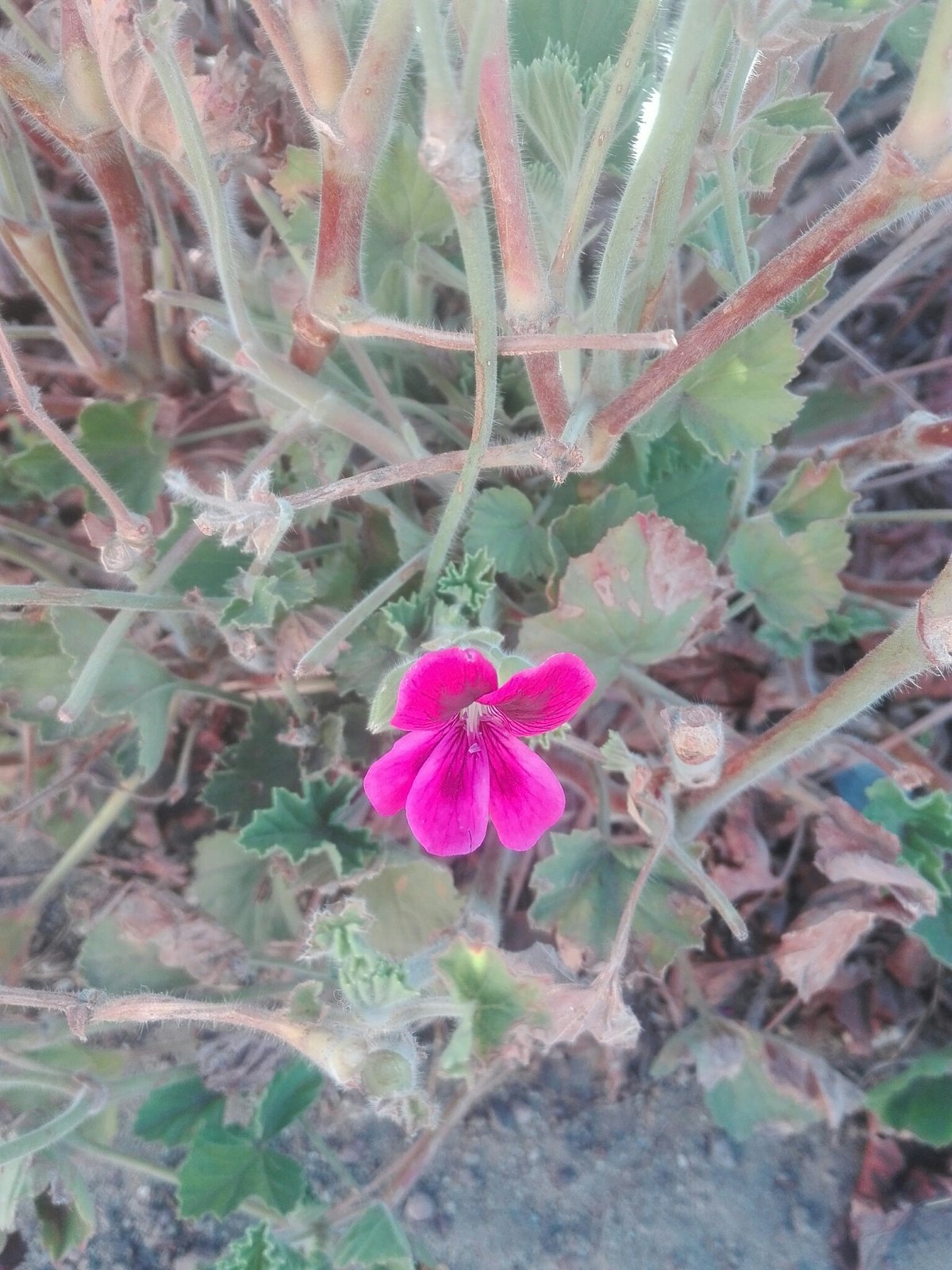
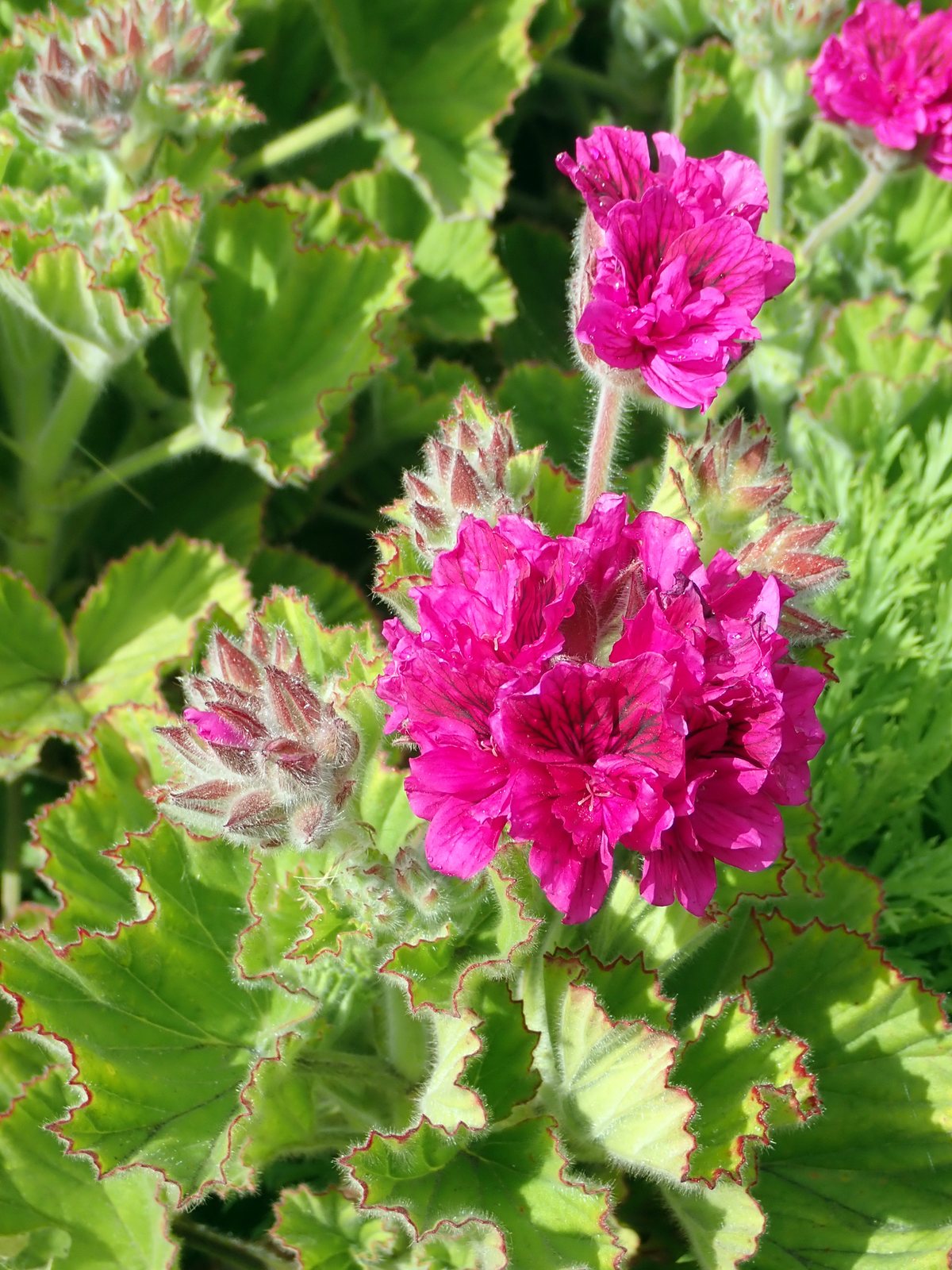
Regal geranium is a tender, evergreen perennial grown for large, ruffled flowers, often with dark blotches on the upper petals. It is grown as an annual where winters are cold, or kept in containers and overwintered under cover. It flowers best in bright light with cool nights; hot summer weather often interrupts flowering.
At a glance
- Sun
- Full sun in cool climates; morning sun and afternoon shade in hot climates.
- Water
- Water thoroughly when the surface of the compost feels dry, then let excess water drain. Keep barely moist during cool winter storage.
- Soil
- Well-drained, moderately fertile soil; use a free-draining potting mix in containers.
- Height
- 1-3 ft (0.3-0.9 m)
- Spread
- 1-2 ft (0.3-0.6 m)
- Flowers
- Mainly spring to early summer, sometimes repeating in cool autumn weather; white, pink, salmon, red, purple or burgundy, often bicoloured with dark markings.
- Foliage
- Evergreen. Rounded to broadly heart-shaped green leaves with toothed edges and a slightly rough texture.
- Growth
- Moderate
- Care needed
- Medium
The year at a glance
- Low allergen
| J | F | M | A | M | J | J | A | S | O | N | D | |
|---|---|---|---|---|---|---|---|---|---|---|---|---|
| Flowers | ||||||||||||
| Plant |
Northern hemisphere months. In Australia, shift them by six.
- Difficulty
- Moderate
- Toughness
- Fairly tough
Will it suit your garden?
Pick your zone, country, light and whether you have pets.
Full sun is 6 or more hours of direct sun a day, part shade 3 to 6 hours, shade under 3.
How it grows
Planting day
1 ft (0.3 m)
After 1 year
1.3 ft (0.4 m)
After 2 years
1.6 ft (0.5 m)
After 3 years
2 ft (0.6 m)
full size
About 3 years to full size.
From a typical nursery size, at an average rate for this kind of plant. A rule of thumb, not a forecast.
Good to know
- Cats and dogs
- Toxic
- Growth rate
- Moderate
Care
Jobs through the year
- WaterApr–May, Sep–Oct, every 10 days
- Water established ground plants when surface soil dries; young plants and pots need closer checks.
- WaterJun–Aug, every 7 days
- Water established ground plants in dry weather; check pots more often and keep foliage dry.
- WaterJan–Mar, Nov–Dec, every 21 days
- Keep overwintered pots barely moist, watering only as needed without drying roots completely.
- FeedApr–Sep, every 14 days
- Feed actively growing, flowering plants with balanced liquid fertiliser at the label rate.
- DeadheadApr–Oct, every 7 days
- Remove spent flower stems and yellowing leaves promptly.
- PruneMar–Apr
- Pinch young shoots to encourage branching.
- PruneJul–Aug
- After the main flowering flush, shorten leggy stems by one-third above healthy leaf joints.
- ProtectMay–Jun
- Harden off before placing outdoors after frost risk has passed.
- ProtectJan–Mar, Oct–Dec
- Overwinter before frost in bright, airy shelter at about 7–13°C; cool nights encourage buds.
- Use containers with drainage holes, and empty saucers after watering.
- Water the compost rather than the flowers and leaves.
- Feed actively growing, flowering plants every two weeks with a balanced liquid fertiliser at the label rate.
- Remove spent flower stems and yellowing leaves promptly.
- Bring plants under cover before frost; overwinter in bright, airy conditions, ideally around 7-13°C.
- Allow cool, frost-free nights before the flowering season; consistently warm conditions can reduce bud formation.
Pruning. Pinch young shoots to encourage branching. After the main flowering flush, shorten leggy stems by about one-third, cutting just above a healthy leaf joint.
Through the year
- Late winter
- Check overwintered plants for pests and remove dead leaves; increase watering gradually as growth resumes.
- Spring
- Repot crowded plants into fresh, free-draining compost and begin feeding once growth is active.
- Late spring
- Harden plants off gradually and place outdoors once frost risk has passed.
- Summer
- Deadhead regularly, check containers for dryness and provide afternoon shade during hot weather.
- Late summer
- Take non-flowering stem cuttings and lightly shorten plants that have finished their main flowering flush.
- Autumn
- Move plants under cover before frost, reduce watering and stop feeding as growth slows.
- Winter
- Keep plants bright, cool and frost-free; water sparingly without letting the root ball dry out completely.
In the garden
- Use a single plant in a terracotta pot beside a sunny doorway for a concentrated display of flowers.
- Group containers on a sheltered patio, combining flower colours with silver foliage plants.
- Place in window boxes with trailing bacopa or lobelia where watering and deadheading are easy.
- Use as temporary spring-to-summer colour at the front of a sheltered border in cool-summer gardens.
Garden styles it suits: Modern courtyard, Traditional, Victorian, Cottage garden, Mediterranean and Small-space.
Plant it with: Bacopa, Trailing lobelia, Sweet alyssum, Dusty miller and Diascia.
Wildlife: Flowers may attract some visiting insects, but this is not a dependable nectar plant; nearby single-flowered plants provide better support for pollinators.
Problems to watch for
- Whitefly and aphids: inspect leaf undersides, isolate affected pots and treat with insecticidal soap labelled for the pest, repeating as directed.
- Grey mould: remove affected flowers and leaves, improve airflow and avoid wetting foliage or leaving dead petals on the plant.
- Root rot: prevent waterlogging with drainage holes and free-draining compost; discard badly rotted plants.
- Few flowers during hot weather: provide afternoon shade and avoid excessive nitrogen feeding; flowering may resume when nights become cooler.
Safety
Pelargoniums are toxic to cats and dogs if chewed or eaten; leaves, stems and flowers can cause vomiting, reduced appetite and skin irritation. Horse toxicity is not well established, so do not allow grazing or feed clippings. Serious poisoning in people is not generally expected, but sap may irritate sensitive skin and the plant should not be treated as edible.
Easily confused with
Zonal geranium (Pelargonium × hortorum)
Usually has rounder leaves, often marked with a dark horseshoe-shaped zone, and rounded heads of smaller flowers rather than the regal's large, often blotched blooms.
Ivy-leaved geranium (Pelargonium peltatum)
Has trailing stems and smoother, fleshy, ivy-shaped leaves; regal geranium is generally upright with rougher, toothed foliage.
Hardy geranium (Geranium species and hybrids)
Usually has five similar-sized petals and deeply divided leaves, and many survive freezing winters; regal geranium has unequal petals and needs frost protection.
The name
Pelargonium comes from the Greek word for stork, referring to the beak-shaped fruit, while regal refers to the plant's large, richly coloured flowers.
Propagation. Take non-flowering stem cuttings in late summer, remove the lower leaves and insert into a clean, free-draining propagation mix. Keep in bright indirect light with gentle moisture, not saturated compost; named cultivars do not reliably come true from seed.
Checked against open data
- Accepted botanical name
- Pelargonium domesticum
Sources: GBIF (CC BY 4.0). The care and design notes are LandscapeGPT's own.
See it in your own yard.
Upload a photo of your yard and see it redesigned with plants that suit your climate, each checked against your zone.