Rocky Mountain columbine
Aquilegia caerulea. Family Ranunculaceae. Perennial.
Also called Colorado blue columbine, Blue columbine.
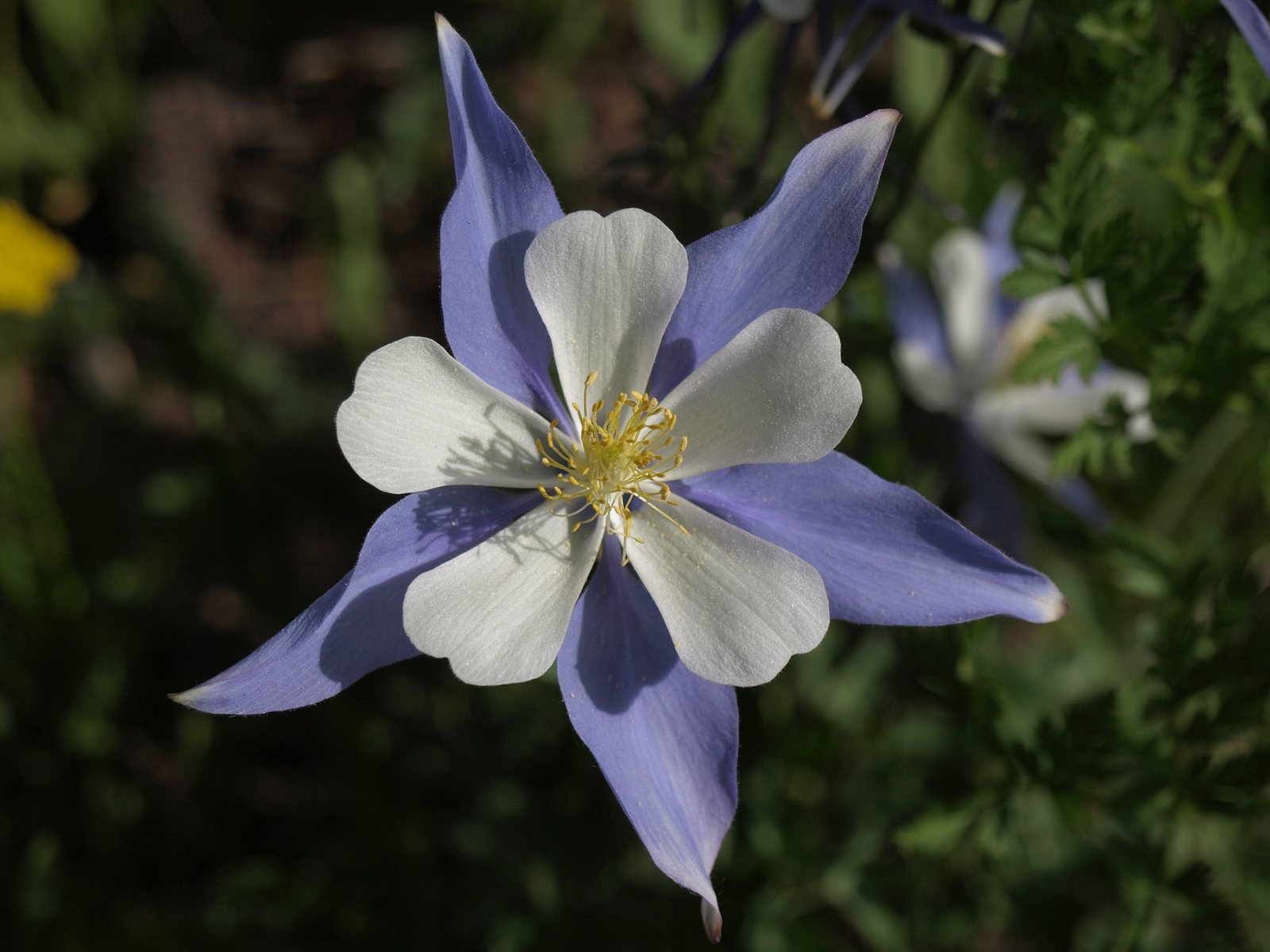
A short-lived perennial native to the Rocky Mountains, grown for its blue-and-white flowers with long, slender spurs and its finely divided foliage. It suits cool borders, open woodland edges and mountain-style gardens, but often struggles in hot, humid summers.
At a glance
- Sun
- Full sun in cool climates; partial shade, especially afternoon shade, where summers are warmer.
- Water
- Moderate; keep the root zone evenly moist while establishing and during flowering, without leaving it waterlogged.
- Soil
- Well-drained, humus-rich soil with moderate fertility; tolerates sandy or rocky soil if it does not dry out completely.
- Height
- 1-3 ft (0.3-0.9 m)
- Spread
- 1-2 ft (0.3-0.6 m)
- Flowers
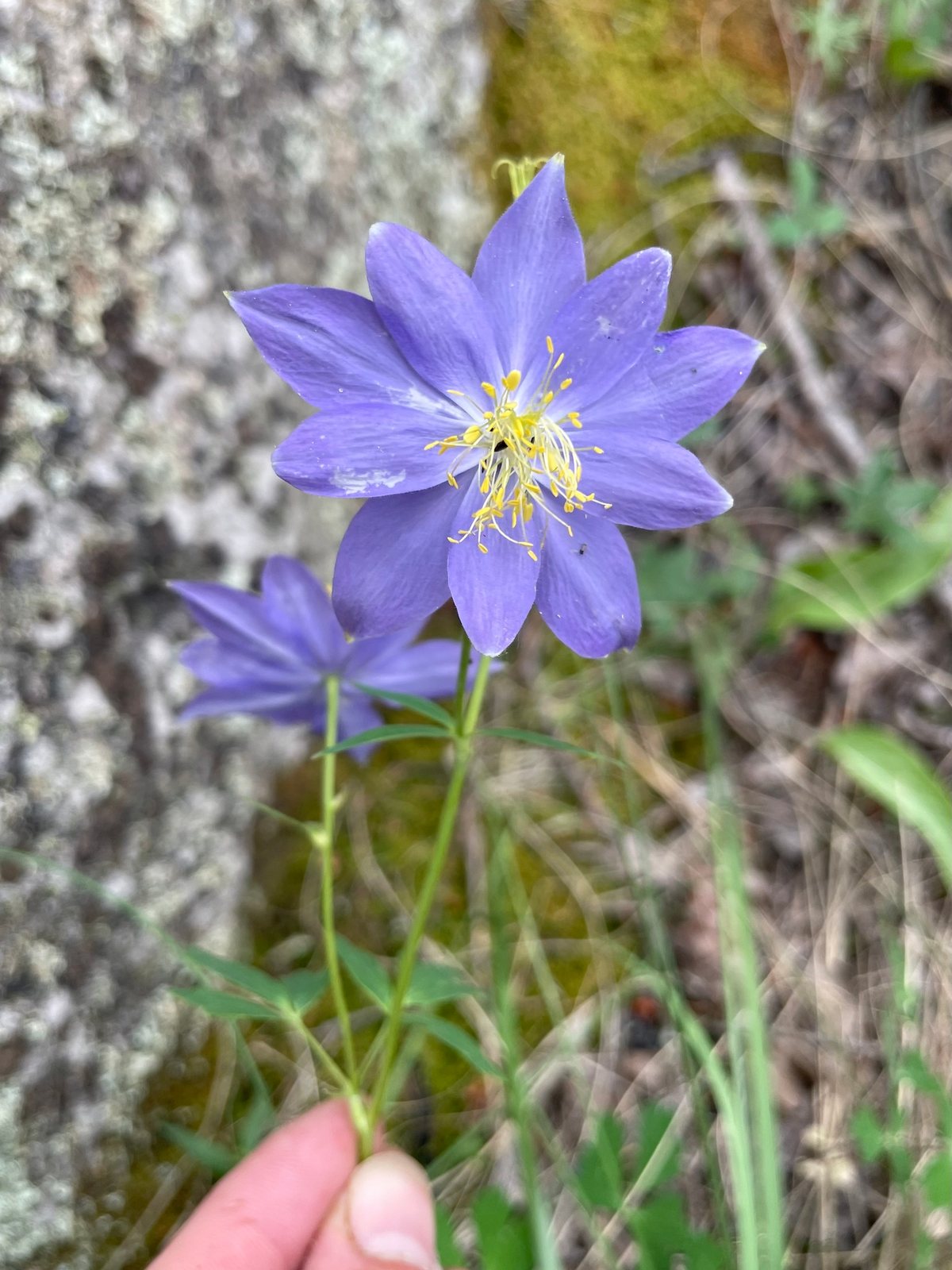
- Late spring to early summer; usually blue to violet-blue outer sepals and spurs surrounding white inner petals, with yellow stamens. Wild populations also include paler and white flowers.
- Foliage
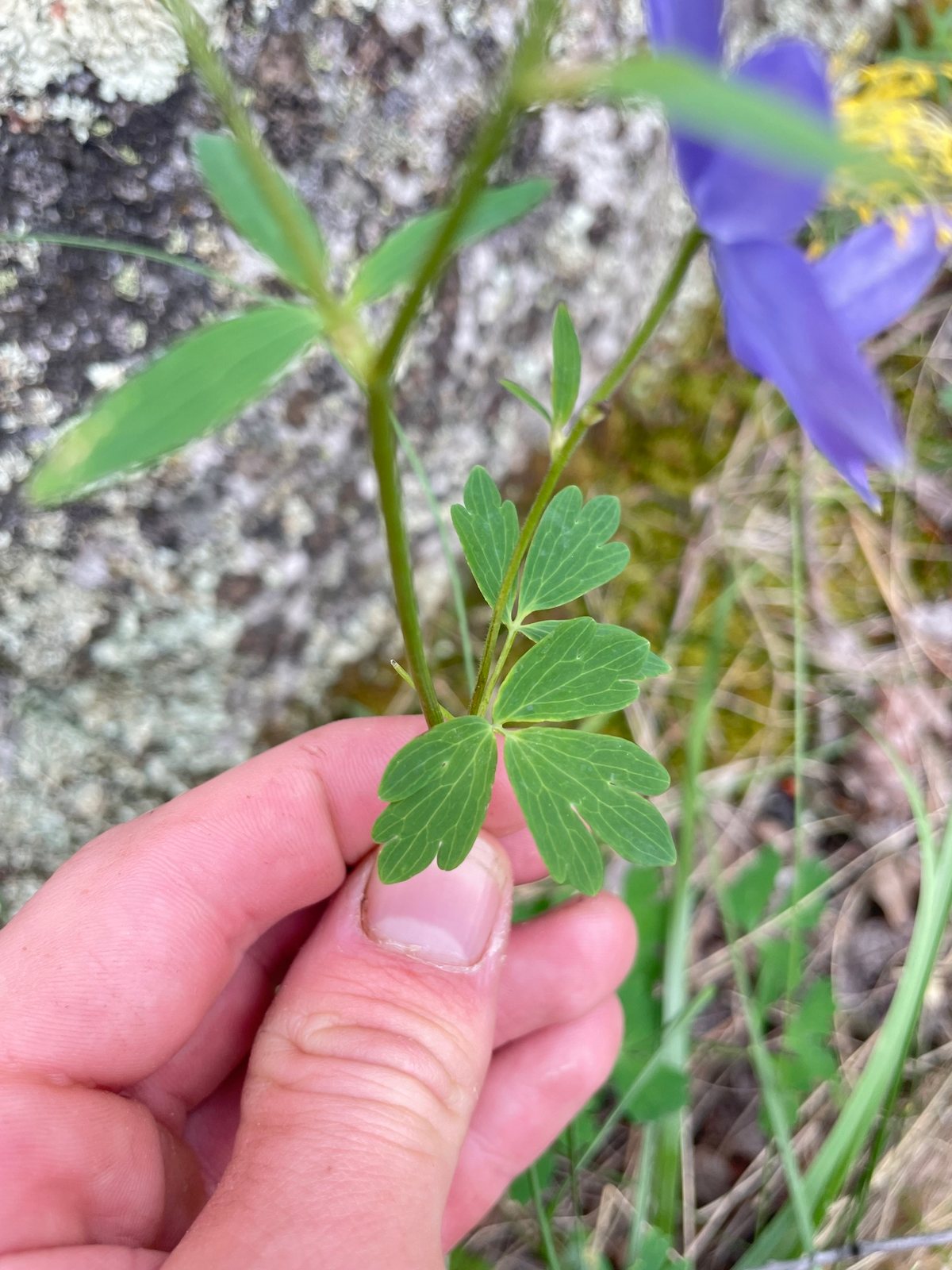
- Blue-green, divided leaves with rounded, lobed leaflets, forming a loose basal mound.
- Growth
- Moderate; seed-grown plants commonly flower in their second year.
- Care needed
- Medium
The year at a glance
- Pollinators
- Deer resistant
- Cold hardy
- Wildlife
- Low allergen
| J | F | M | A | M | J | J | A | S | O | N | D | |
|---|---|---|---|---|---|---|---|---|---|---|---|---|
| Flowers | ||||||||||||
| Fruit | ||||||||||||
| Plant |
Northern hemisphere months. In Australia, shift them by six.
- Difficulty
- Moderate
- Toughness
- Fairly tough
Will it suit your garden?
Pick your zone, country, light and whether you have pets.
Full sun is 6 or more hours of direct sun a day, part shade 3 to 6 hours, shade under 3.
How it grows
Planting day
1 ft (0.3 m)
After 1 year
1.3 ft (0.4 m)
After 2 years
1.6 ft (0.5 m)
After 3 years
2 ft (0.6 m)
full size
About 3 years to full size.
From a typical nursery size, at an average rate for this kind of plant. A rule of thumb, not a forecast.
Good to know
- Cats and dogs
- Mildly toxic: may upset a stomach
- Growth rate
- Moderate
Care
Jobs through the year
- WaterMar–Apr, Sep–Oct, every 14 days
- Water established plants if soil is drying; check new plants more frequently.
- WaterMay–Aug, every 7 days
- Water established plants deeply in dry weather, especially during flowering; avoid soggy crowns.
- FeedApr
- Apply a thin compost dressing without heavy nitrogen feeding.
- MulchApr
- Mulch lightly to keep roots cool, leaving the crown uncovered.
- DeadheadMay–Jul, every 7 days
- Remove spent flower stems to the base, retaining a few for replacement seedlings.
- ProtectMay–Jun, every 7 days
- Inspect leaf undersides and hand-pick sawfly larvae before they strip foliage.
- PruneJun–Aug
- Remove badly mined, mildewed or declining leaves while retaining healthy foliage.
- PruneOct–Nov
- Remove dead leaves and stems without damaging the crown.
- ProtectFeb–Mar
- Keep outdoor seed pots protected from disturbance while seeds receive moist winter chilling.
- Water deeply during dry spells, especially while plants establish and flower.
- Apply a thin layer of compost in spring; avoid heavy nitrogen feeding.
- Mulch lightly to keep roots cool, leaving the crown uncovered.
- Give plants afternoon shade in warm districts and avoid sites that trap summer heat.
- Allow a few seed heads to ripen if you want replacement plants; established clumps do not divide reliably.
Pruning. Remove spent flower stems to the base after flowering unless you want seed. Cut damaged or declining foliage back to healthy growth; remove remaining dead stems and leaves in late autumn or early spring.
Through the year
- Late winter
- Sow seed with a period of moist chilling, following the seed supplier's instructions.
- Spring
- Plant young plants in cool, well-drained ground and water them in thoroughly.
- Mid-spring
- Apply a thin compost dressing and light mulch, keeping both away from the crown.
- Late spring
- Check leaves for sawfly larvae and remove them promptly.
- Early summer
- Deadhead fading flowers, or retain a few seed heads for natural replacement.
- Summer
- Water during prolonged dry weather and cut away badly mined or mildewed foliage.
- Autumn
- Sow fresh seed outdoors in pots and clear away dead foliage.
In the garden
- Plant in loose groups near the front or middle of a cool border, where the flowers can rise above lower foliage.
- Combine with meadow rue and Jacob's ladder along a lightly shaded woodland edge.
- Use among rocks with harebells and suitable penstemons for a mountain-garden effect.
- Let a few seedlings move through an informal cottage border for a changing, natural arrangement.
Garden styles it suits: Cottage garden, Woodland, Mountain lodge, Alpine rock garden, Pollinator garden and Blues and silvers.
Plant it with: Harebell, Jacob's ladder, Meadow rue, Wild geranium, Tufted hair grass and Rocky Mountain penstemon.
Wildlife: Flowers provide nectar and pollen for bees, and the long-spurred flowers are also visited by hummingbirds in North America.
Problems to watch for
- Leaf miners make pale winding tunnels in leaves; remove badly affected leaves and dispose of them, while retaining enough healthy foliage for growth.
- Columbine sawfly larvae can strip leaves quickly; inspect leaf undersides and hand-pick larvae before damage spreads.
- Powdery mildew coats foliage in dry, crowded conditions; improve airflow, water the soil during drought and remove badly affected leaves.
- Crown rot or summer collapse can follow waterlogging and hot, humid weather; improve drainage, avoid wet crowns and choose a cooler, airier site.
Safety
Do not eat any part; columbines contain potentially harmful compounds, with particular concern around seeds and roots. Ingestion may cause digestive upset in people. Species-specific evidence for poisoning in cats, dogs and horses is limited, so keep pets and grazing animals from eating it and seek medical or veterinary advice after ingestion.
Easily confused with
European columbine (Aquilegia vulgaris)
Usually has shorter, strongly hooked spurs and more downward-facing flowers; Rocky Mountain columbine has long, relatively straight spurs and more outward- or upward-facing flowers.
Wild columbine (Aquilegia canadensis)
Has nodding red-and-yellow flowers rather than the typically blue-and-white, more open flowers of Rocky Mountain columbine.
Garden hybrid columbine (Aquilegia × hybrida)
Hybrids come in many colours and flower forms, including long-spurred blue-and-white forms that closely resemble this species; reliable separation may require known parentage.
The name
The epithet caerulea means sky-blue, while Rocky Mountain columbine refers to the plant's native mountain range.
Propagation. Grow from seed, preferably sown fresh outdoors or given moist chilling before germination. Seedlings vary and may cross with other columbines nearby, so they may not resemble the parent; division is difficult and can damage the roots.
Checked against open data
- Accepted botanical name
- Aquilegia coerulea coerulea Aquilegia caerulea is an older name for Aquilegia coerulea coerulea.
Sources: GBIF (CC BY 4.0). The care and design notes are LandscapeGPT's own.
See it in your own yard.
Upload a photo of your yard and see it redesigned with plants that suit your climate, each checked against your zone.