Rocky Mountain zinnia
Zinnia grandiflora. Family Asteraceae. Perennial.
Also called Prairie zinnia, Golden zinnia, Little golden zinnia.
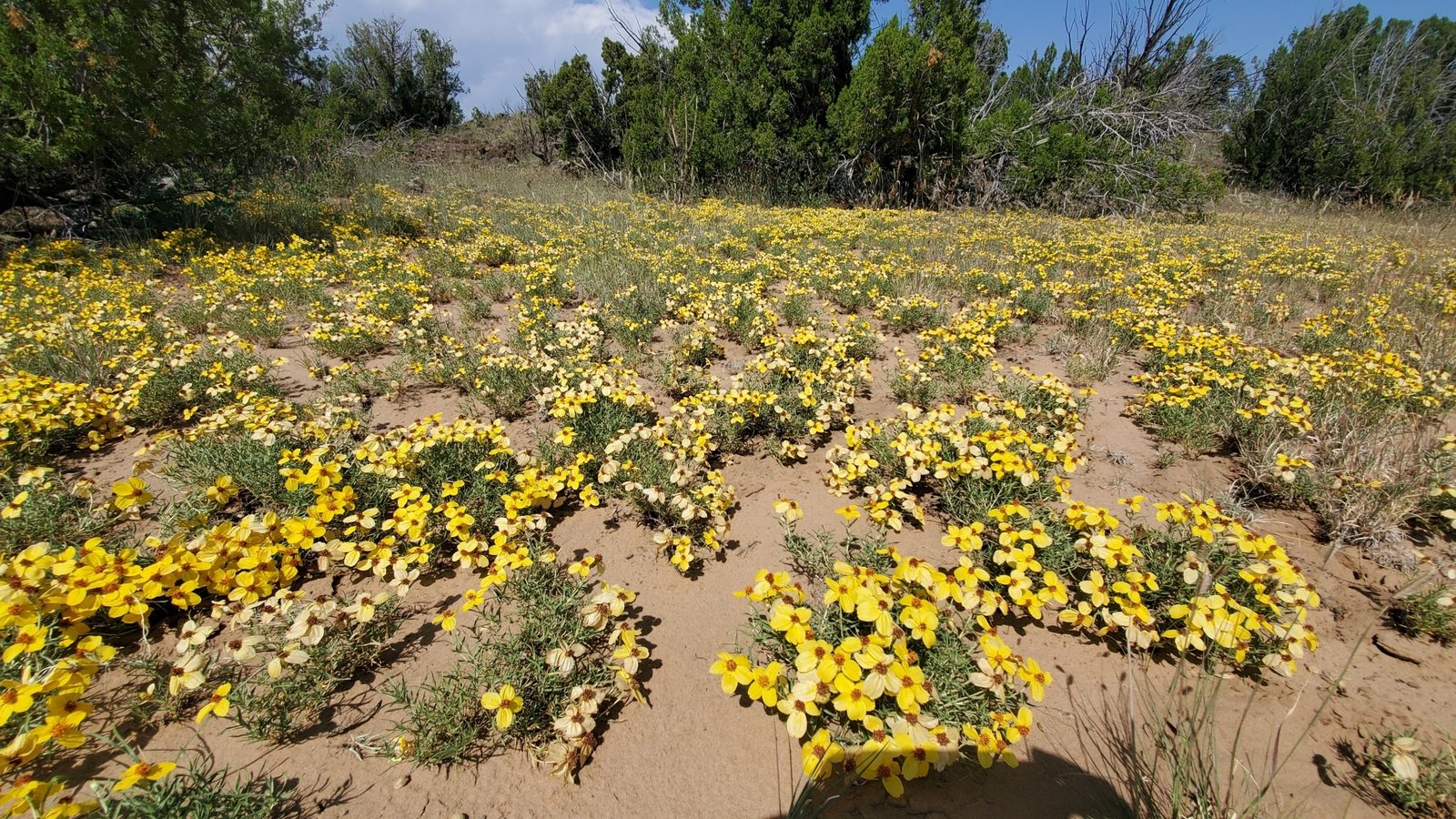
Rocky Mountain zinnia is a low, spreading perennial native to the southwestern and south-central United States and northern Mexico. Gardeners grow it for its golden-yellow summer flowers and ability to cover sunny, dry ground where richer-soil plants struggle. It needs excellent drainage and is less dependable in humid climates or places with wet winters.
At a glance
- Sun
- Full sun; flowering and growth become sparse in shade.
- Water
- Low once established. Water new plants regularly while they root, then let the soil dry between deep waterings.
- Soil
- Lean, sharply drained sandy, gravelly or rocky soil; tolerates alkaline conditions. Avoid wet clay and heavily enriched beds.
- Height
- 0.5-1 ft (0.15-0.3 m)
- Spread
- 1-2 ft (0.3-0.6 m), eventually wider through underground stems
- Flowers
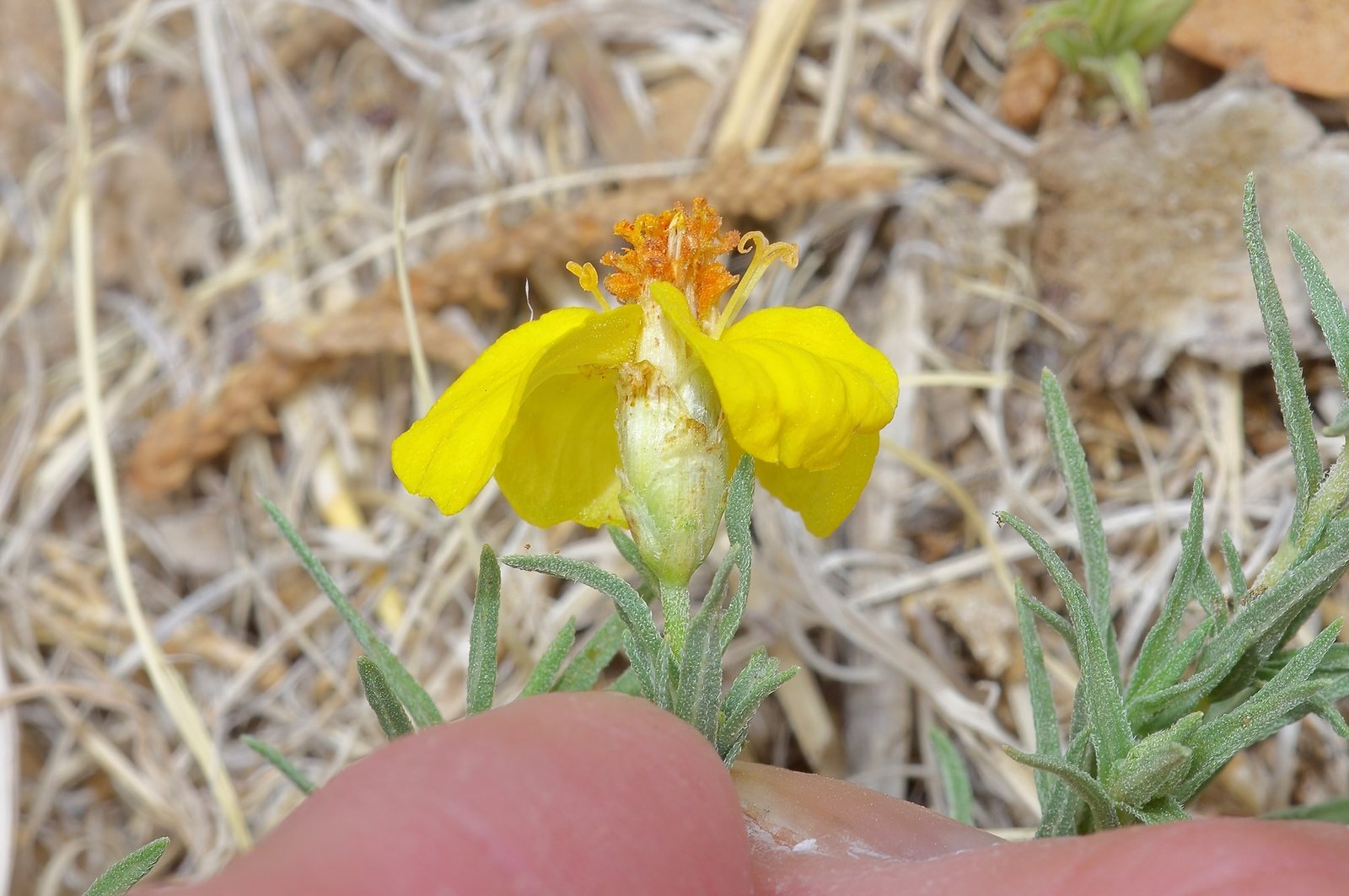
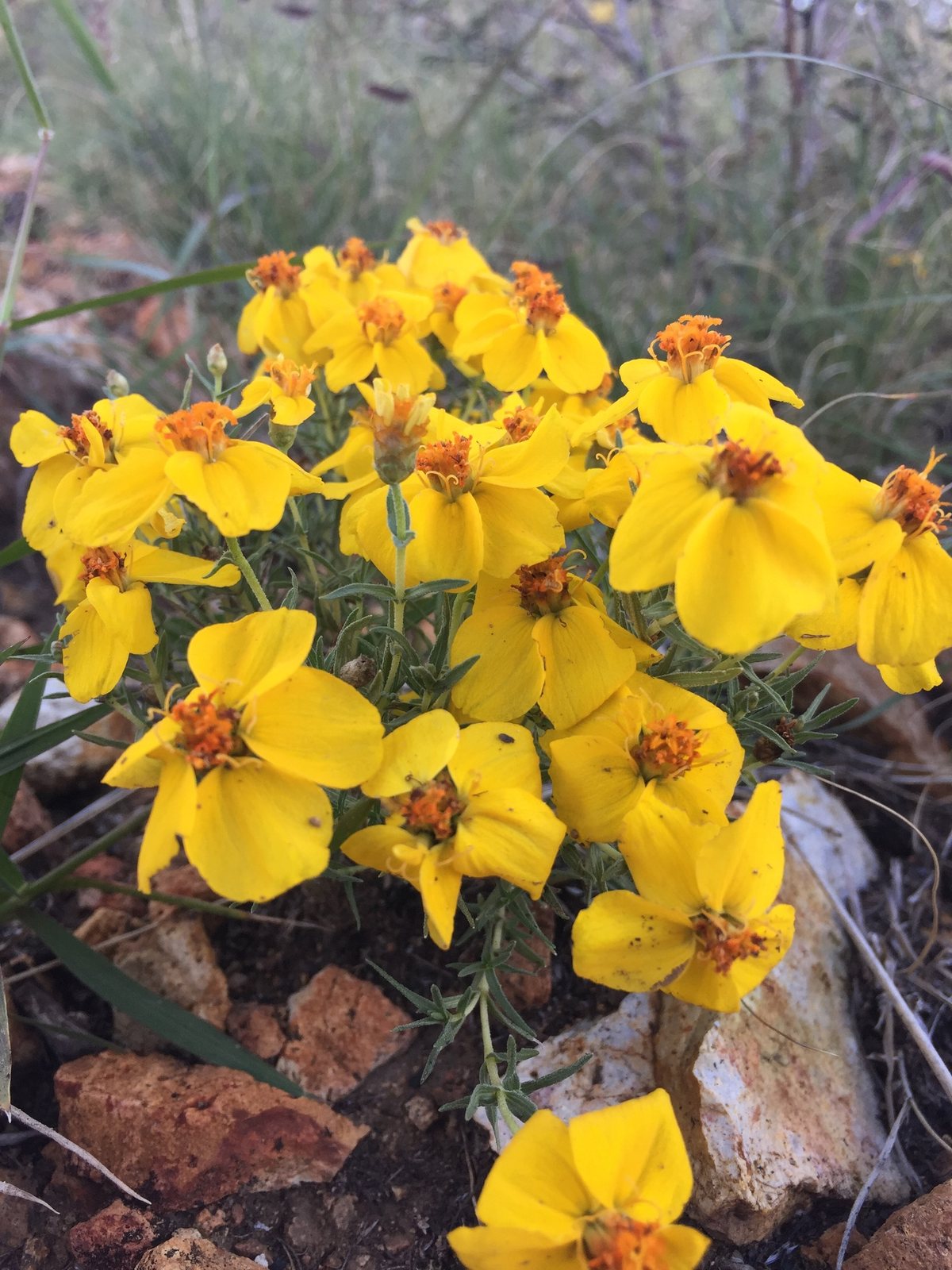
- Summer into autumn, with golden-yellow, daisy-like flowers; flowering often increases after summer rain.
- Foliage
- Small, opposite, narrow, rough-textured green to grey-green leaves on low, branching stems; top growth dies back in cold winters.
- Growth
- Slow to moderate at first; established plants gradually form spreading colonies.
- Care needed
- Low
The year at a glance
- Pollinators
- Deer resistant
- Drought tolerant
- Cold hardy
- Heat tolerant
- Wildlife
- Low allergen
| J | F | M | A | M | J | J | A | S | O | N | D | |
|---|---|---|---|---|---|---|---|---|---|---|---|---|
| Flowers | ||||||||||||
| Plant |
Northern hemisphere months. In Australia, shift them by six.
- Difficulty
- Easy
- Toughness
- Very tough
Will it suit your garden?
Pick your zone, country, light and whether you have pets.
Full sun is 6 or more hours of direct sun a day, part shade 3 to 6 hours, shade under 3.
How it grows
Planting day
0.7 ft (0.22 m)
full size
About 4 years to full size.
From a typical nursery size, at an average rate for this kind of plant. A rule of thumb, not a forecast.
Good to know
- Cats and dogs
- Safe
- Native to
- the US
- In the garden
- Spreads vigorously: plan to contain it.
- Growth rate
- Slow
Care
Jobs through the year
- WaterApr–May, Sep, every 21 days
- Water established patches only during prolonged drought; water new plants more frequently.
- WaterJun–Aug, every 14 days
- During prolonged drought, water deeply and let soil dry between waterings.
- PruneMar–Apr
- Trim dead stems to healthy growth or near ground level before new shoots emerge.
- DivideApr–May
- Divide or lift rooted sections only if the colony has outgrown its space.
- MulchApr–May
- Use a light gravel mulch, keeping the crown clear; avoid moisture-retentive organic mulch.
- DeadheadJun–Sep
- Optionally remove spent flowers for a tidier appearance.
- ProtectOct–Nov
- Clear fallen leaves from crowns and keep drainage channels open before winter rain.
- Plant in full sun on a slope, raised bed or other freely draining site.
- Water during establishment, then irrigate only during prolonged dry spells.
- Avoid routine feeding; rich soil encourages loose growth rather than a compact mat.
- Use a light gravel mulch, keeping it clear of the crown; avoid thick, moisture-retentive organic mulch.
- Divide or remove rooted sections in spring if the colony outgrows its space.
Pruning. In early spring, trim dead stems back to healthy growth or near ground level before new shoots develop. Deadheading is optional; remove spent flowers if you want a tidier appearance.
Through the year
- Early spring
- Cut away dead stems and check that winter moisture has not softened the crown.
- Spring
- Plant or divide once the soil is workable and no longer waterlogged.
- Late spring
- Sow seed in a warm, bright position, covering lightly and keeping the seed mix just moist.
- Summer
- Water new plants as needed; let established patches dry between occasional deep waterings.
- Late summer
- Remove unwanted spreading shoots or leave the colony to fill open gravel.
- Autumn
- Clear fallen leaves from the crown and keep drainage channels open before winter rain.
In the garden
- Use as a low flowering carpet between widely spaced plants in a dry gravel garden.
- Plant along sunny path edges where its spreading stems can soften the boundary.
- Combine with blue grama and compact penstemons for a low, open prairie planting.
- Grow on sunny rock-garden slopes or raised beds where winter water drains away quickly.
Garden styles it suits: Desert / xeriscape, Southwestern, Dry gravel garden, Mountain lodge, Pollinator garden and Low-maintenance.
Plant it with: Blue grama, Prairie dropseed, Husker's beardtongue, Purple prairie clover, Sulphur buckwheat and Plains prickly pear.
Wildlife: Flowers provide nectar and pollen for bees and other flower-visiting insects. Its low colonies also offer shelter for small ground-dwelling invertebrates.
Problems to watch for
- Crown or root rot in wet soil: improve drainage, reduce watering and move surviving healthy sections to a raised, gritty bed.
- Weak growth and poor flowering in shade: move the plant to an open position with full sun.
- Failure to establish during drought: water newly planted specimens deeply while roots develop, even though mature plants tolerate dry soil.
- Sparse growth during cool, wet weather: avoid extra feeding or watering; provide a warm, sunny site with good air circulation.
Safety
Not known to be toxic to cats, dogs, horses or people. Species-specific toxicity information is limited, and no particular part is established as poisonous; it is an ornamental plant, not a food crop.
Easily confused with
Desert zinnia (Zinnia acerosa)
Usually has white to cream ray flowers, much narrower leaves and a more woody, twiggy habit; Rocky Mountain zinnia has golden-yellow rays and spreads into low colonies.
Creeping zinnia (Sanvitalia procumbens)
A frost-tender annual with trailing stems, broader leaves and yellow flowers usually showing a conspicuous dark central disc; it does not form the hardy underground spreading growth of Rocky Mountain zinnia.
The name
Zinnia honours the German botanist Johann Gottfried Zinn, and grandiflora means large-flowered.
Propagation. Sow seed in spring in a freely draining seed mix, covering lightly and keeping it just moist until germination. Divide established colonies in spring, taking sections with roots and shoots, and water them while they establish.
Checked against open data
- Accepted botanical name
- Zinnia grandiflora
- In the US and Canada
- Native in the lower 48 states.
- Native range
- Arizona, Colorado, Kansas, Mexico Northeast, Mexico Northwest, Mexico Southwest, New Mexico, Oklahoma and Texas.
Sources: GBIF (CC BY 4.0), USDA PLANTS and Trefle (CC BY 4.0). The care and design notes are LandscapeGPT's own.
See it in your own yard.
Upload a photo of your yard and see it redesigned with plants that suit your climate, each checked against your zone.