Rose spirea
Spiraea douglasii. Family Rosaceae. Shrub.
Also called Douglas spirea, Hardhack, Steeplebush.
Rose spirea is a deciduous, suckering shrub native to western North America, grown for its upright clusters of rosy-pink summer flowers. It suits damp, informal gardens and wildlife planting, but needs room because its underground stems can form dense thickets.
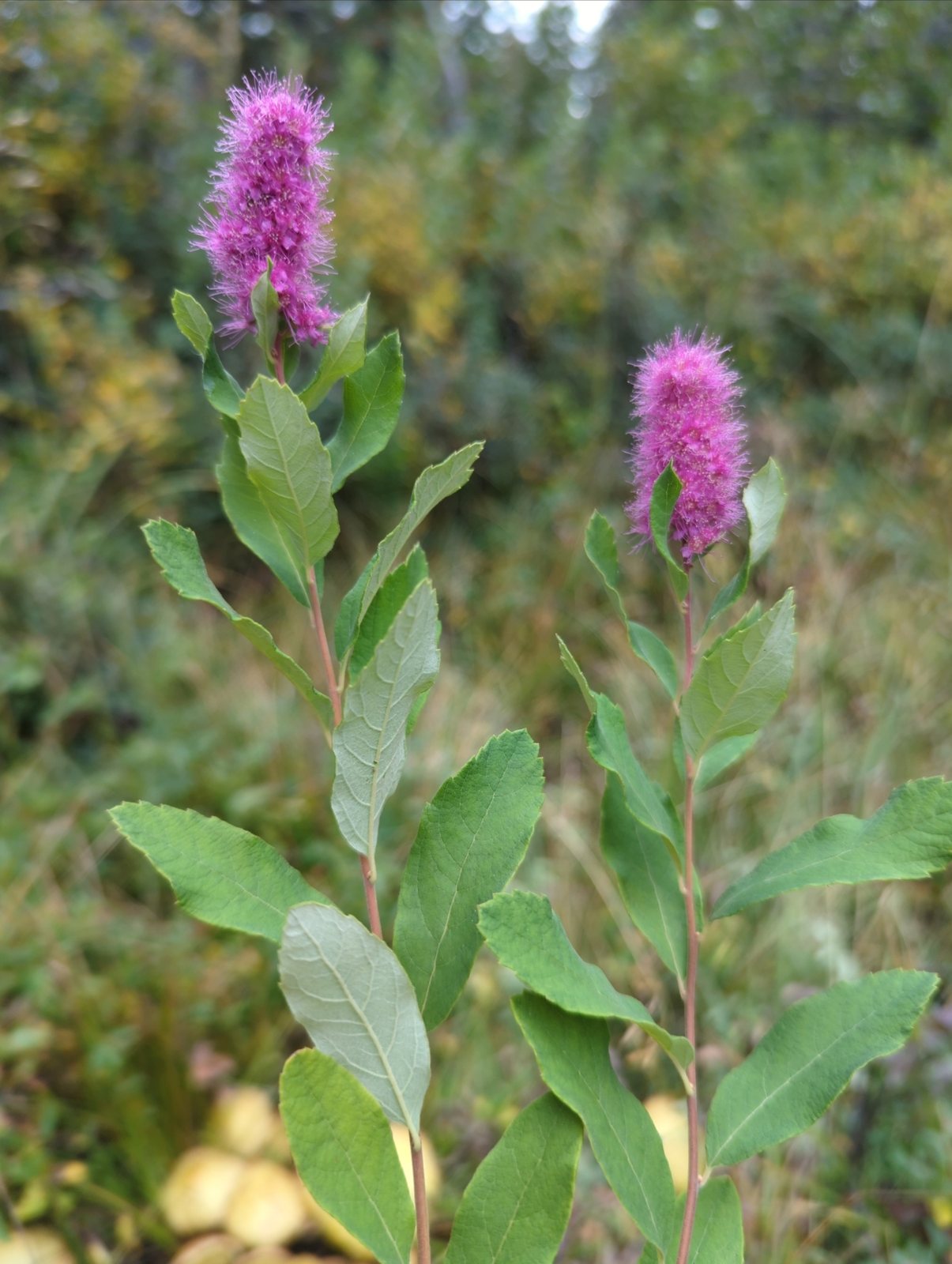
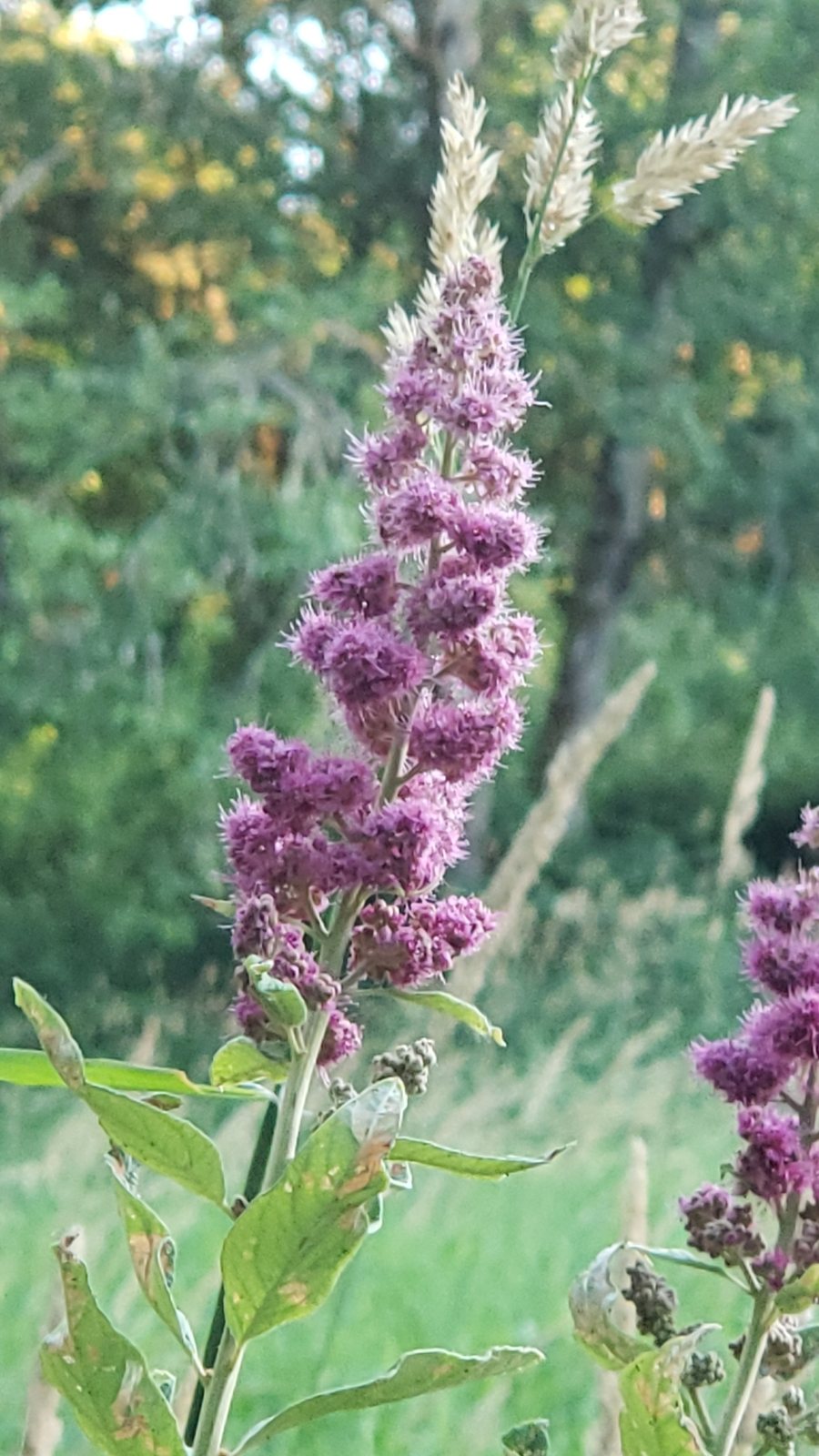
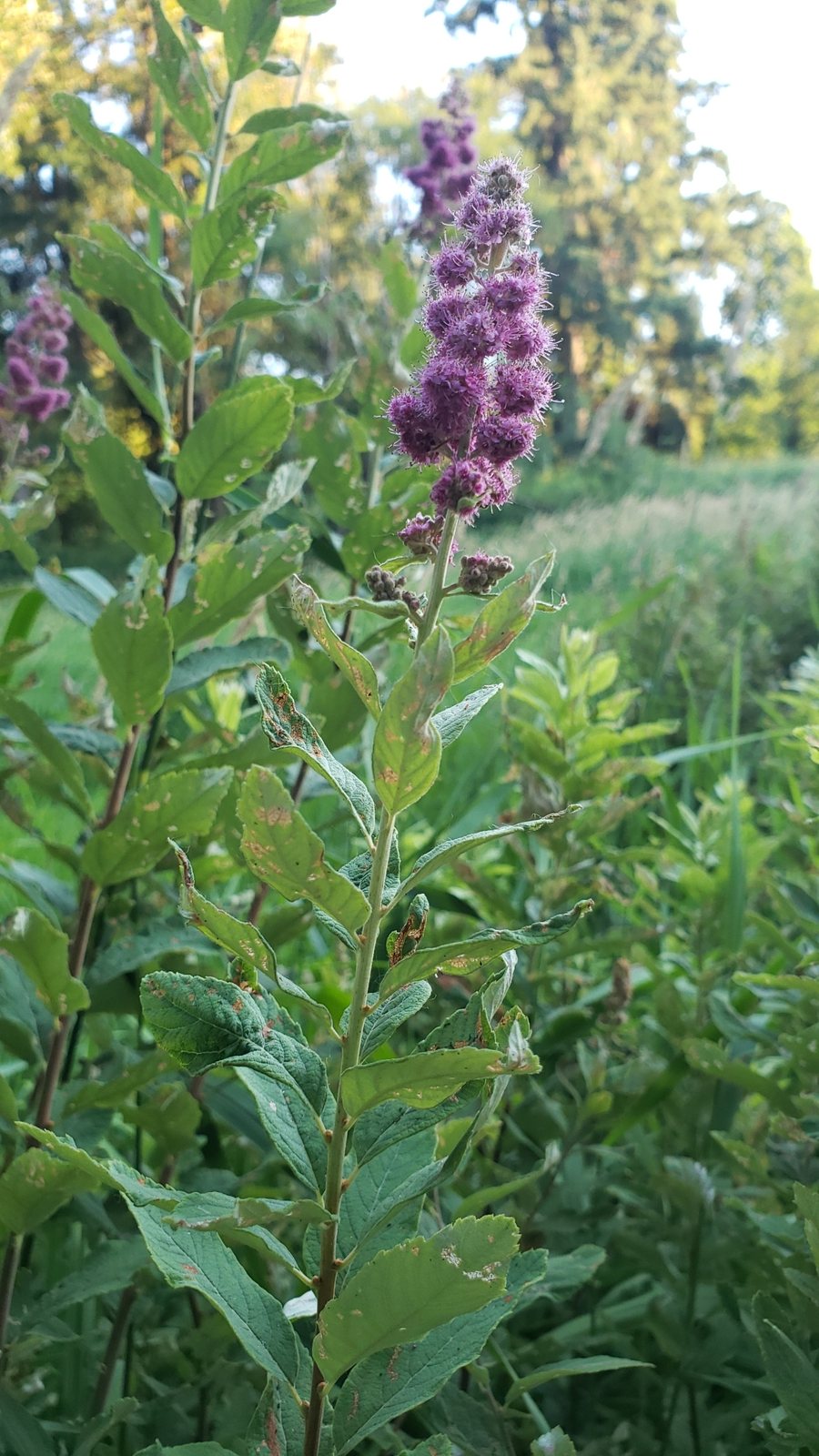
At a glance
- Sun
- Full sun to partial shade; flowering is best in sun where the soil stays moist.
- Water
- Prefers consistently moist to wet ground and tolerates seasonal waterlogging. Water during dry spells, especially while establishing.
- Soil
- Moisture-retentive loam, clay or peaty soil; prefers acidic to neutral conditions but tolerates a range of soils.
- Height
- 4-7 ft (1.2-2.1 m)
- Spread
- 4-7 ft (1.2-2.1 m) initially; suckering colonies can become much wider.
- Flowers
- Summer into early autumn; dense, upright, tapered clusters of rosy-pink flowers.
- Foliage
- Alternate, oval to oblong green leaves, toothed mainly toward the tips, with pale, felted undersides; sometimes yellow in autumn.
- Growth
- Fast in moist soil.
- Care needed
- Medium
The year at a glance
- Pollinators
- Wildlife
- Low allergen
| J | F | M | A | M | J | J | A | S | O | N | D | |
|---|---|---|---|---|---|---|---|---|---|---|---|---|
| Flowers | ||||||||||||
| Fruit | ||||||||||||
| Plant |
Northern hemisphere months. In Australia, shift them by six.
- Difficulty
- Moderate
- Toughness
- Very tough
Will it suit your garden?
Pick your zone, country, light and whether you have pets.
Full sun is 6 or more hours of direct sun a day, part shade 3 to 6 hours, shade under 3.
How it grows
Planting day
1.6 ft (0.5 m)
After 1 year
2.8 ft (0.85 m)
After 2 years
4 ft (1.2 m)
After 3 years
5 ft (1.6 m)
After 5 years
5 ft (1.7 m)
full size
About 3 years to full size.
From a typical nursery size, at an average rate for this kind of plant. A rule of thumb, not a forecast.
Good to know
- Cats and dogs
- Safe
- Native to
- the US and Canada
- Invasive in
- the UK
- In the garden
- Spreads vigorously: plan to contain it.
- Growth rate
- Fast
Care
Jobs through the year
- WaterApr–May, Sep–Oct, every 14 days
- Water established colonies if the root zone dries; keep new plants consistently moist.
- WaterJun–Aug, every 7 days
- Water deeply during dry spells; skip watering where soil remains naturally moist.
- MulchMar–Apr
- Apply 5–8 cm of organic mulch; use compost on poor soil and keep stem bases clear.
- PruneFeb–Mar
- Remove dead stems and cut one-third of the oldest stems to ground level.
- PruneMay, Oct
- Dig out unwanted suckers with their connecting roots to contain the colony.
- DeadheadAug–Sep, every 14 days
- Remove faded heads before seed ripens if unwanted seedlings are a concern.
- DivideMar, Nov
- Separate dormant rooted suckers only when propagation or colony reduction is needed.
- Water deeply during the first growing season and whenever prolonged dry weather dries the root zone.
- Apply 2-3 in (5-8 cm) of organic mulch in spring, keeping it clear of the stem bases.
- Avoid routine heavy feeding; on poor soil, add a thin layer of compost in spring.
- Dig out unwanted suckers with their connecting roots before they establish beyond the planting area.
- Allow space for a colony rather than planting close to small, slow-growing plants.
Pruning. In late winter or early spring, remove dead stems and cut about one-third of the oldest stems to ground level; flowers form on the current season's growth. An overgrown colony can be cut back hard at the same time.
Through the year
- Late winter
- Thin out old stems at ground level before new growth starts.
- Spring
- Plant into moist ground, water thoroughly and mulch around the root zone.
- Late spring
- Check the colony's edges and dig out unwanted suckers.
- Summer
- Water during prolonged dry spells; avoid letting newly planted shrubs dry out.
- Early autumn
- Remove spent flower heads before seed ripens where unwanted seedlings are a concern.
- Late autumn
- Plant or divide dormant suckers where the ground is workable and not waterlogged or frozen.
In the garden
- Plant in broad groups beside ponds or streams, allowing room for a spreading colony.
- Use in rain gardens and seasonally wet depressions, away from drains and small borders.
- Combine with sedges, rushes and moisture-loving perennials for an informal wetland planting.
- Use as a loose summer-flowering screen along a damp boundary.
- Include in western North American native planting where its vigorous spread is appropriate.
Garden styles it suits: Pacific Northwest woodland, Bog garden, Wildlife garden, Rewilded, Cottage garden and Native hedgerow.
Plant it with: Tufted hair grass, Soft rush, Slough sedge, Western sword fern, Red-osier dogwood and Western columbine.
Wildlife: Flowers provide pollen and nectar for bees and other insects. Dense colonies offer shelter for small birds and other wildlife, particularly within its native range.
Problems to watch for
- Unwanted thickets: remove suckers with their connecting roots regularly, or choose a less spreading shrub for confined gardens.
- Powdery mildew: improve airflow, avoid overcrowding and keep roots adequately watered during dry weather.
- Aphids on soft shoots: wash off small colonies with water and leave predatory insects undisturbed.
- Leaf scorch or wilting in dry soil: water deeply and renew mulch; relocate plants if the site repeatedly dries out.
Safety
Not known to be toxic to people, cats, dogs or horses. No part is recognised as a significant poisoning hazard, but it is not a food plant.
Where it spreads. Spreads aggressively by underground stems, including within its native western North American range. It has become invasive in parts of the United Kingdom and Ireland and in parts of northern and central continental Europe, including Belgium and Germany; check local guidance before planting outside its native range.
Easily confused with
Steeplebush (Spiraea tomentosa)
Also has upright pink flower clusters, but its young stems and leaf undersides have conspicuous rusty-brown woolly hairs rather than the whitish felt typical of rose spirea.
Willow-leaved spirea (Spiraea salicifolia)
Usually has paler pink, looser flower clusters and leaves that lack the dense whitish felt beneath. Hybrids can make identification difficult.
The name
The species name douglasii honours Scottish botanist David Douglas, who collected plants in western North America.
Propagation. Separate rooted suckers during dormancy, taking a section of connecting root with each shoot. Softwood cuttings can be taken in early summer; seed is also possible, but plants may hybridise with other spireas nearby.
Checked against open data
- Accepted botanical name
- Spiraea douglasii
- In the US and Canada
- Native in Alaska, Canada and the lower 48 states.
- Native range
- Alaska, British Columbia, California, Colorado, Idaho, Montana, Oregon and Washington.
- Measured
- Soil pH 5.5 to 7.5. Average height 200 cm.
Sources: GBIF (CC BY 4.0), USDA PLANTS and Trefle (CC BY 4.0). The care and design notes are LandscapeGPT's own.
See it in your own yard.
Upload a photo of your yard and see it redesigned with plants that suit your climate, each checked against your zone.