Rush-leaved bird of paradise
Strelitzia juncea. Family Strelitziaceae. Perennial.
Also called Rush-leaf bird of paradise, Narrow-leaved bird of paradise.
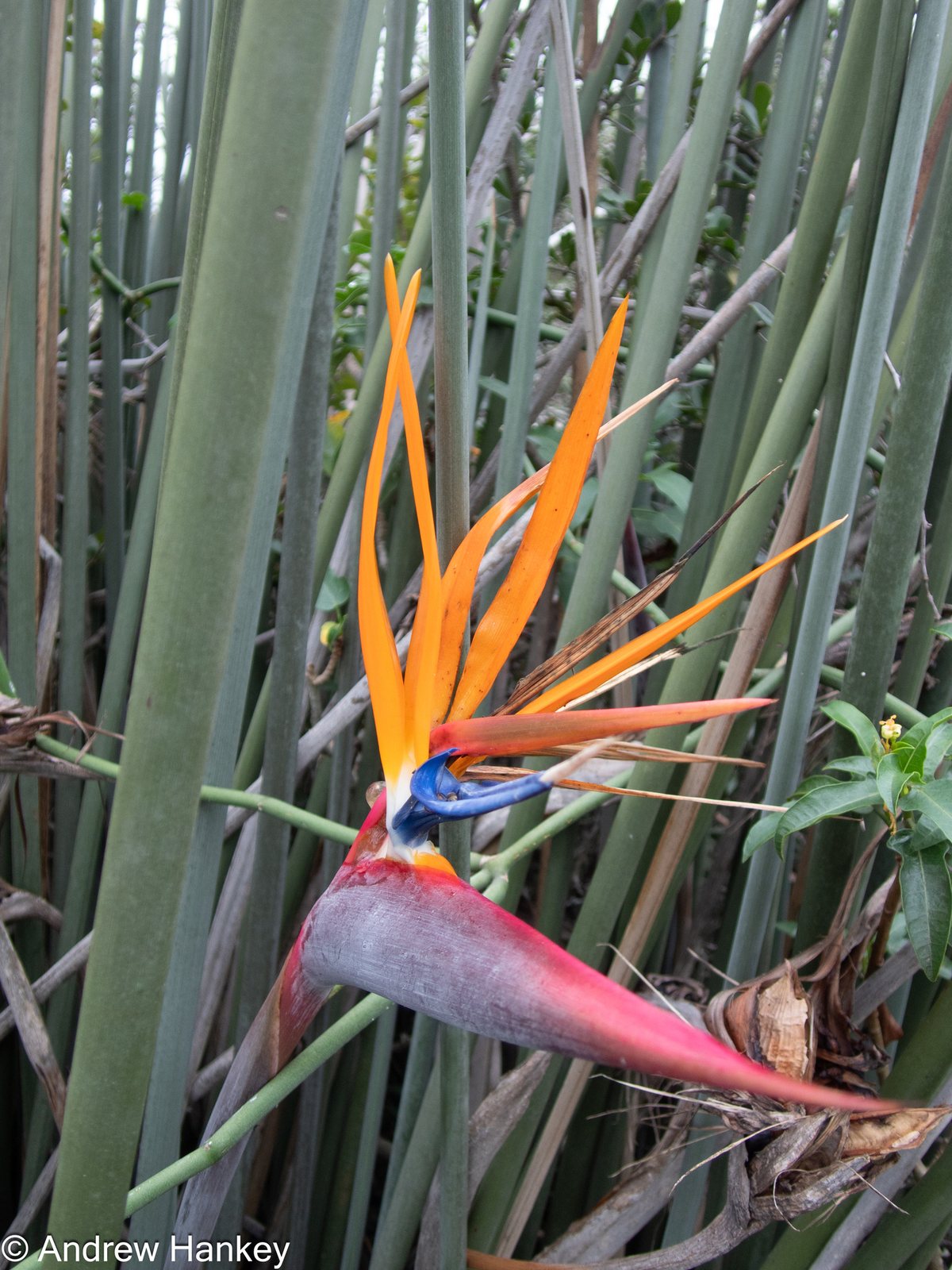
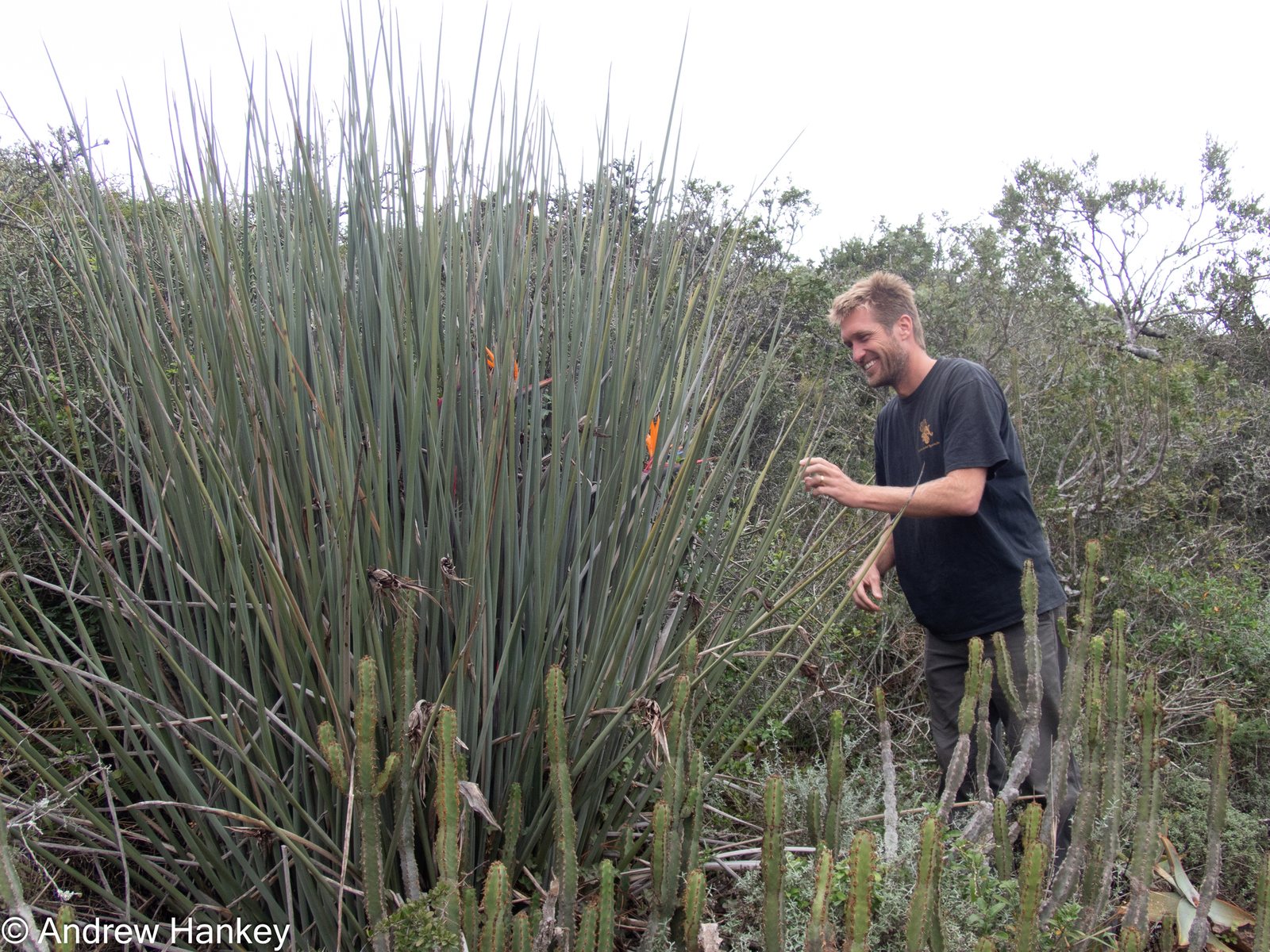
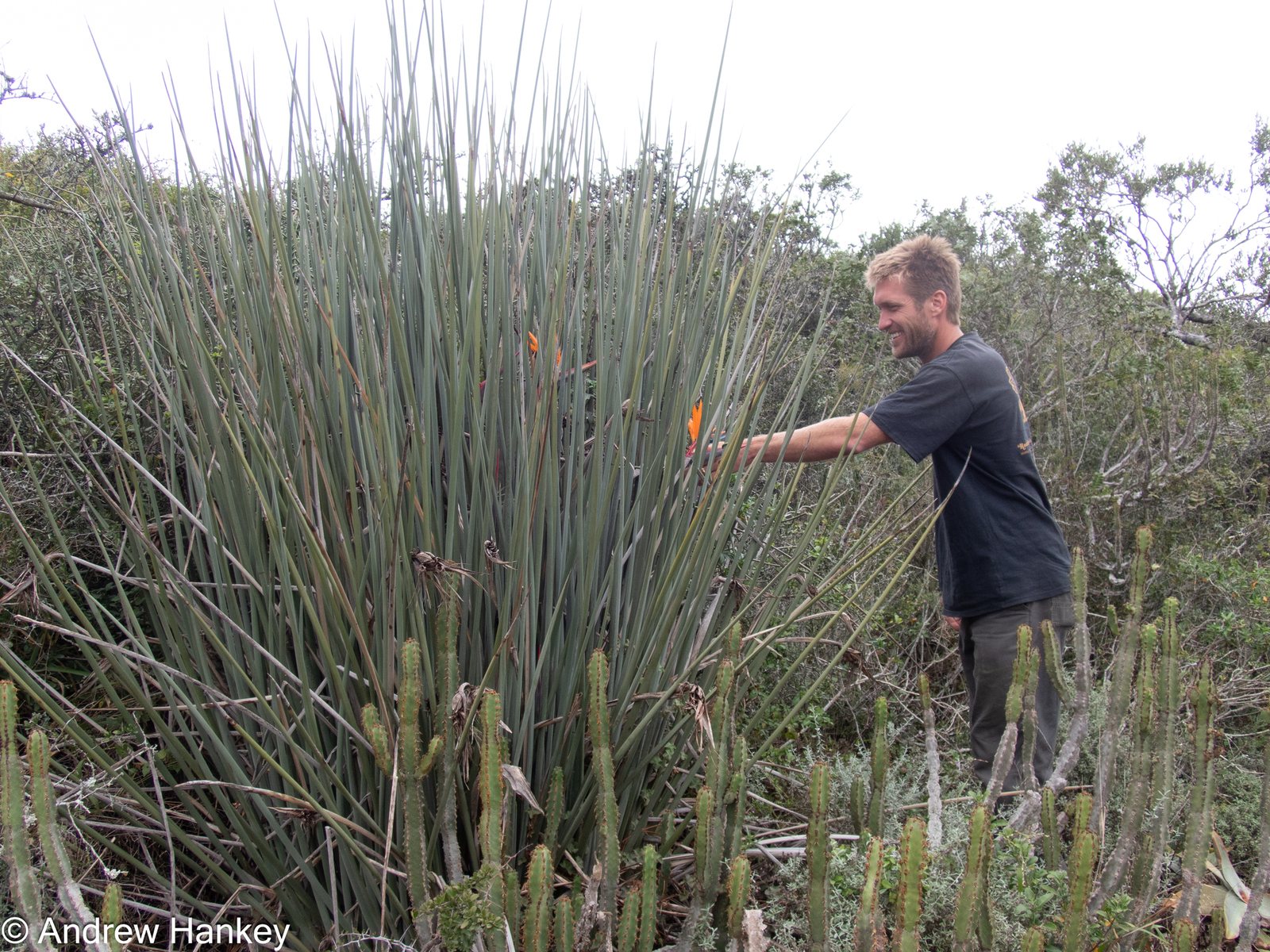
Strelitzia juncea is a slow-growing, evergreen South African perennial with upright, reed-like foliage and orange-and-blue bird-of-paradise flowers. Gardeners grow it for its spare, architectural shape and drought tolerance once established. In cold climates, grow it in a container and overwinter it in a bright, frost-free place.
At a glance
- Sun
- Full sun for the best flowering; tolerates light shade but flowers less freely.
- Water
- Water regularly during establishment. Once established, allow the soil to dry between thorough waterings; keep much drier in cool winter conditions.
- Soil
- Well-drained sandy or loamy soil; avoid waterlogged clay. In containers, use a free-draining potting mix with added grit or perlite.
- Height
- 3-6 ft (0.9-1.8 m)
- Spread
- 3-5 ft (0.9-1.5 m)
- Flowers
- Orange flowers with blue tongues emerge from horizontal, beak-like sheaths, usually from late winter into spring, sometimes continuing into summer in warm climates.
- Foliage
- Evergreen. Stiff, upright, grey-green, cylindrical leaf stalks form a dense clump. Mature plants have little or no flat leaf blade; seedlings initially produce broader leaves.
- Growth
- Slow
- Care needed
- Low
The year at a glance
- Drought tolerant
- Heat tolerant
- Low allergen
| J | F | M | A | M | J | J | A | S | O | N | D | |
|---|---|---|---|---|---|---|---|---|---|---|---|---|
| Flowers | ||||||||||||
| Plant |
Northern hemisphere months. In Australia, shift them by six.
- Difficulty
- Moderate
- Toughness
- Fairly tough
Will it suit your garden?
Pick your zone, country, light and whether you have pets.
Full sun is 6 or more hours of direct sun a day, part shade 3 to 6 hours, shade under 3.
How it grows
Planting day
1 ft (0.3 m)
After 1 year
1.7 ft (0.52 m)
After 2 years
2.4 ft (0.74 m)
After 3 years
3 ft (0.96 m)
After 5 years
4 ft (1.4 m)
full size
About 5 years to full size.
From a typical nursery size, at an average rate for this kind of plant. A rule of thumb, not a forecast.
Good to know
- Cats and dogs
- Toxic
- Growth rate
- Slow
Care
Jobs through the year
- WaterApr–May, Sep–Oct, every 14 days
- Water established plants only after soil dries; young plants and pots need more frequent checks.
- WaterJun–Aug, every 7 days
- Water established plants deeply if soil has dried; avoid saturated roots.
- WaterJan–Mar, Nov–Dec, every 28 days
- Under frost-free cover, water sparingly only when nearly dry.
- FeedApr
- Apply a light dose of balanced fertiliser as growth resumes.
- PruneMay
- Remove dead or frost-damaged growth at its base; retain healthy green stalks.
- DeadheadMar–Aug, every 14 days
- Cut finished flower stalks at the base.
- ProtectSep–Oct
- Move pots into bright, frost-free shelter before frost; outdoor overwintering is unsuitable in zones 6–7.
- Plant in a sunny, warm position with excellent drainage and room for the clump to widen.
- Water deeply during establishment, then let the soil dry between waterings.
- Feed lightly with a balanced fertiliser in spring; avoid heavy feeding.
- Keep mulch away from the crown and do not leave containers standing in water.
- Move container plants under bright, frost-free cover before frost; established outdoor plants tolerate only brief, light frost.
- Repot only when necessary, as frequent root disturbance can delay flowering.
Pruning. Remove spent flower stalks and dead or damaged foliage at the base with clean secateurs. Do not shear the clump or shorten healthy green stalks.
Through the year
- Spring
- Plant or repot as temperatures rise, keeping the crown at its previous soil level.
- Spring
- Apply a light dose of balanced fertiliser and resume more regular watering.
- Summer
- Water newly planted clumps deeply; let established plants dry between waterings.
- Late summer
- Remove spent flower stalks and check sheltered foliage for scale insects.
- Autumn
- Reduce watering as growth slows and move pots indoors before frost.
- Winter
- Keep overwintering plants bright, frost-free and relatively dry, watering just enough to prevent prolonged complete drying.
In the garden
- Use a single mature clump as an architectural focal point beside a sunny entrance.
- Repeat clumps through a gravel garden with aloes and ornamental grasses for contrasting upright forms.
- Grow in a large, stable container on a sunny terrace where the orange-and-blue flowers can be seen closely.
- Plant against a plain wall to show off the fine, vertical foliage and its shadows.
Garden styles it suits: Architectural minimal, Contemporary minimal, Modern Mediterranean, Dry gravel garden, Desert / xeriscape and South African fynbos.
Plant it with: Agapanthus, Society garlic, Red hot poker, Blue chalksticks, Coral aloe and Lomandra.
Wildlife: Flowers provide nectar for birds in its native South African habitat. Elsewhere, visiting wildlife varies, and reliable seed production may require hand pollination.
Problems to watch for
- Root or crown rot in wet soil: improve drainage, reduce watering and keep the crown above standing water.
- Scale insects and mealybugs, especially under cover: inspect regularly, wipe off small infestations and use a labelled insecticidal soap where appropriate.
- Few or no flowers: provide more direct sun and allow time for maturity; seedlings and recently divided plants may take several years to flower.
- Frost damage: move pots under cover before freezing weather; remove damaged growth only after the risk of further frost has passed.
Safety
Treat as potentially toxic if eaten, particularly the seeds. Bird-of-paradise plants are associated with gastrointestinal upset in cats, dogs and people, but information specific to Strelitzia juncea is limited. Toxicity to horses is not well established; keep it out of grazing areas and prevent pets and children from eating it.
Easily confused with
Bird of paradise (Strelitzia reginae)
Has broad, paddle-shaped leaf blades on long stalks; mature Strelitzia juncea has cylindrical foliage with little or no blade. Their flowers are very similar.
Giant bird of paradise (Strelitzia nicolai)
Develops tall, trunk-like stems, very large banana-like leaves and white-and-blue flowers rather than orange-and-blue flowers.
The name
Strelitzia honours Queen Charlotte of Mecklenburg-Strelitz, while juncea means rush-like, referring to the narrow, upright foliage.
Propagation. Propagate from fresh seed in warmth; germination can be slow and uneven, and flowering takes several years. Divide large, established clumps in spring, retaining substantial roots and several growing points on each division; divisions recover slowly.
Checked against open data
- Accepted botanical name
- Strelitzia juncea
- Native range
- Cape Provinces.
Sources: GBIF (CC BY 4.0) and Trefle (CC BY 4.0). The care and design notes are LandscapeGPT's own.
See it in your own yard.
Upload a photo of your yard and see it redesigned with plants that suit your climate, each checked against your zone.