Rustyback fern
Asplenium ceterach. Family Aspleniaceae. Fern.
Also called Rusty-back fern, Scale fern, Ceterach officinarum.
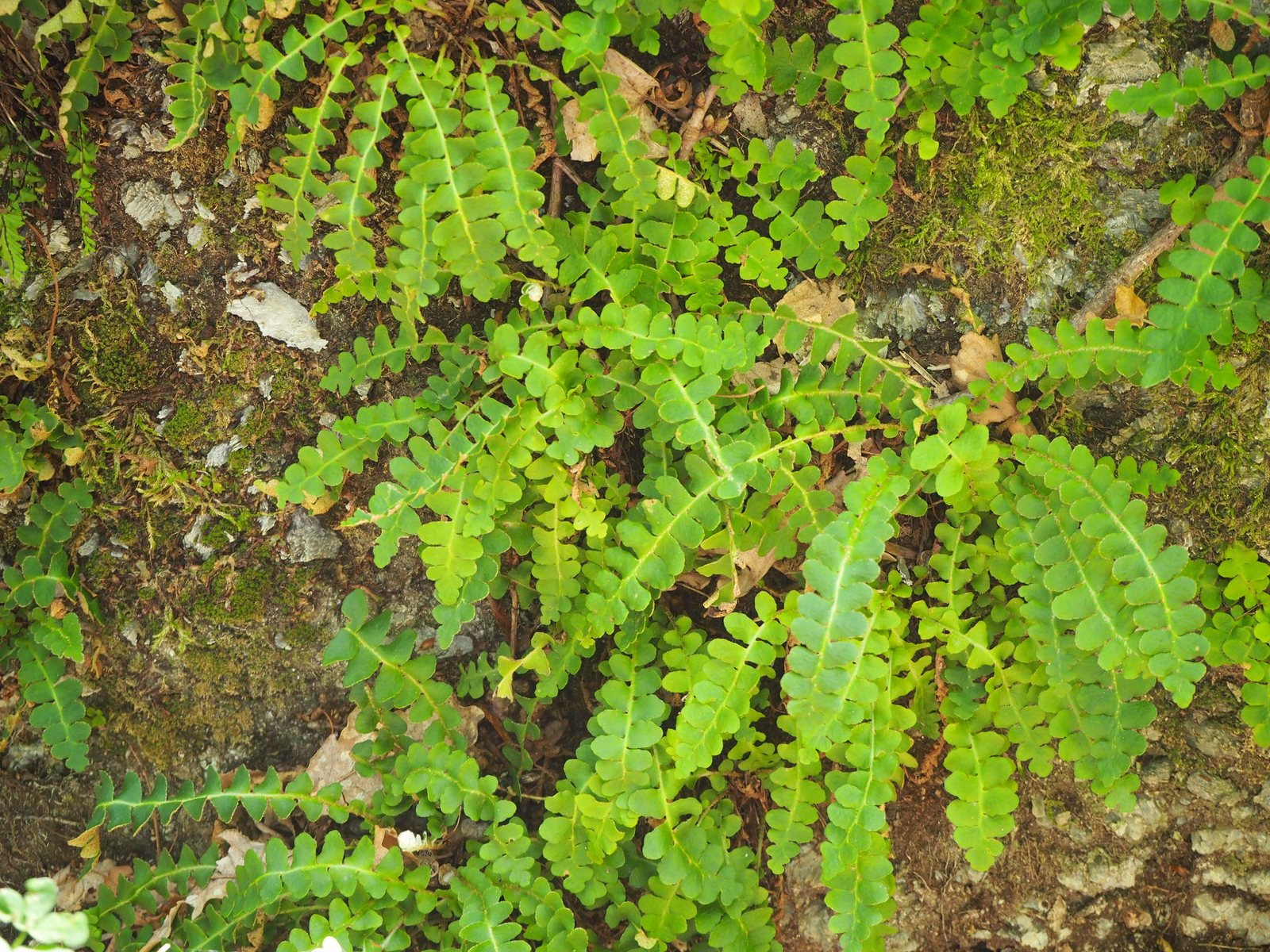
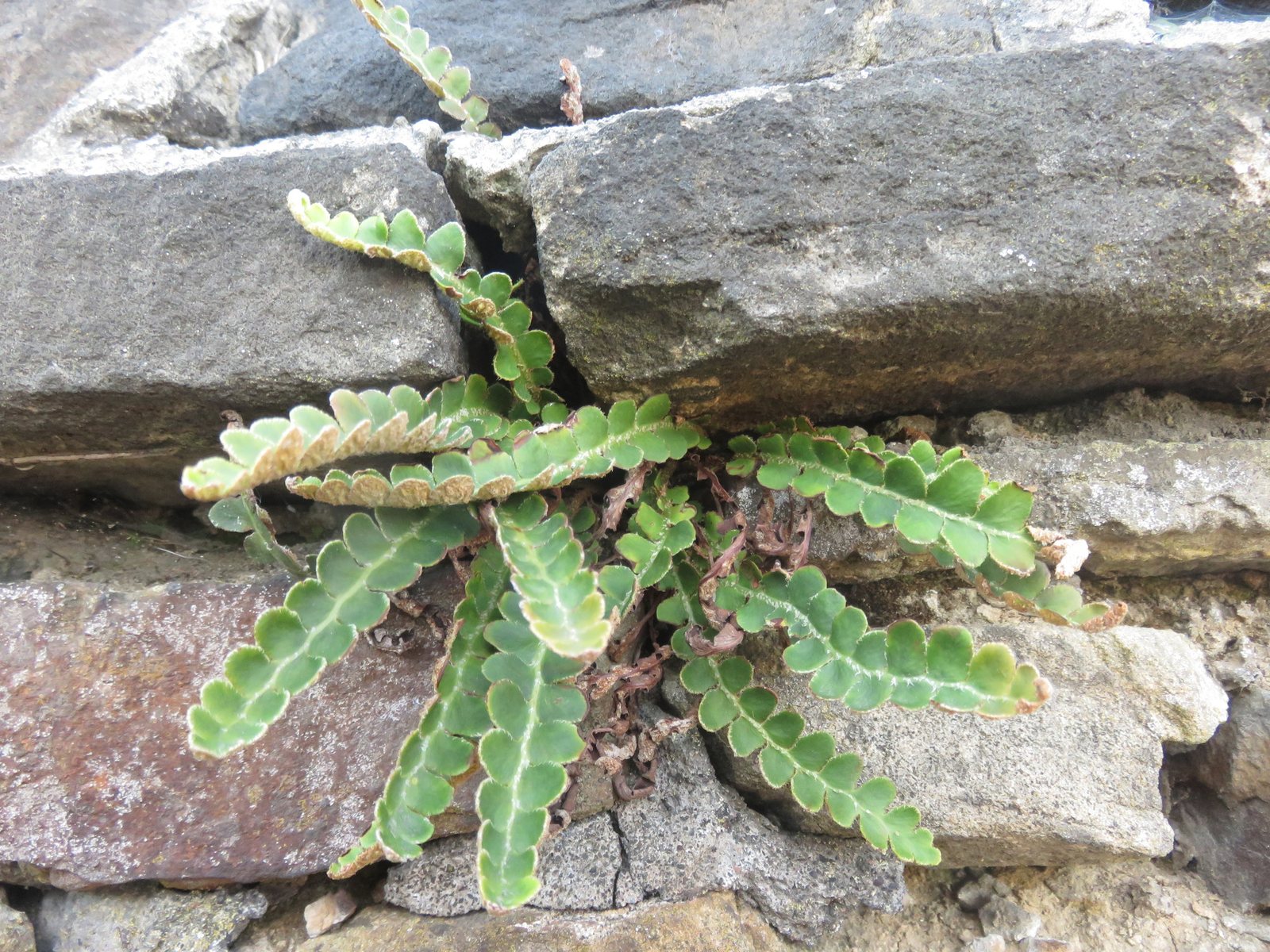
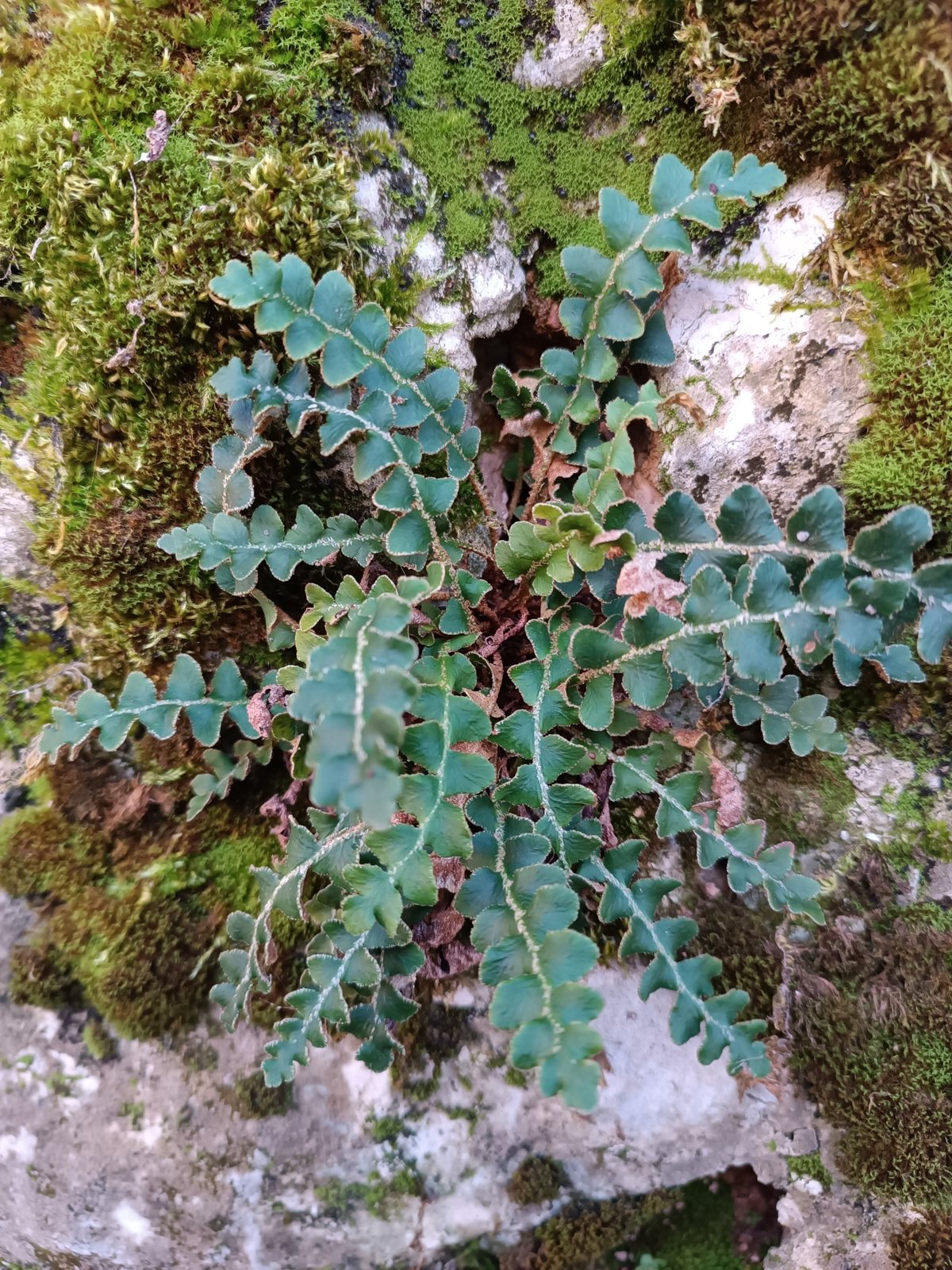
Rustyback fern is a small evergreen fern with leathery, lobed fronds and rusty-brown scales underneath. Gardeners grow it in limestone crevices, rock gardens and old walls, where its fronds curl during drought and open again after rain.
At a glance
- Sun
- Partial shade is safest. It tolerates sun in cooler climates when its roots are sheltered in a rock crevice; protect it from strong afternoon sun in hot climates.
- Water
- Water regularly while establishing, allowing excess water to drain freely. Established plants tolerate dry spells, but prolonged drought makes the fronds curl and growth stop.
- Soil
- Gritty, sharply drained, neutral to alkaline soil with some leaf mould. Particularly suited to limestone crevices; avoid wet, compacted soil.
- Height
- 0.3-0.7 ft (0.1-0.2 m)
- Spread
- 0.3-0.7 ft (0.1-0.2 m)
- Foliage
- Evergreen. Short, leathery, green fronds with rounded lobes and dense rusty-brown scales on the undersides. Fronds curl inward in dry weather, exposing the scaly backs.
- Growth
- Slow
- Care needed
- Low
The year at a glance
- Deer resistant
- Drought tolerant
- Heat tolerant
- Low allergen
| J | F | M | A | M | J | J | A | S | O | N | D | |
|---|---|---|---|---|---|---|---|---|---|---|---|---|
| Plant |
Northern hemisphere months. In Australia, shift them by six.
- Difficulty
- Easy
- Toughness
- Very tough
Will it suit your garden?
Pick your zone, country, light and whether you have pets.
Full sun is 6 or more hours of direct sun a day, part shade 3 to 6 hours, shade under 3.
How it grows
Planting day
0.5 ft (0.15 m)
full size
About 5 years to full size.
From a typical nursery size, at an average rate for this kind of plant. A rule of thumb, not a forecast.
Good to know
- Cats and dogs
- Safe
- Native to
- the UK
- Growth rate
- Slow
Care
Jobs through the year
- WaterApr–May, Sep, every 14 days
- Check established root pockets and water only if dry; water new plants more regularly until rooted.
- WaterJun–Aug, every 14 days
- Water established plants during prolonged drought to maintain growth; allow excess water to drain freely.
- PruneMar–Apr
- Snip off dead or badly damaged fronds without cutting fresh growth; leave curled living fronds.
- ProtectJan–Feb, Oct–Dec
- Clear fallen leaves from the crown and keep drainage outlets open to prevent winter rot.
- ProtectMar–May
- Inspect young fronds for slugs and snails during damp evenings and remove pests by hand.
- Plant in a roomy rock crevice or gritty soil pocket, keeping the crown at the surface.
- Water new plants during dry spells until their roots are established.
- Keep drainage outlets clear and avoid sites that stay wet through winter.
- Do not bury the crown under bark mulch or fallen leaves.
- Usually no feeding is needed; avoid rich compost and strong fertilisers.
Pruning. In spring, snip off dead or badly damaged fronds at their bases without cutting emerging growth. Leave curled but living fronds alone: they may reopen after watering.
Through the year
- Spring
- Plant into a prepared, sharply drained crevice and water thoroughly.
- Spring
- Remove dead fronds carefully as new growth appears.
- Summer
- Check new plants during dry weather and water their root pockets when dry.
- Autumn
- Remove fallen leaves that cover the crown or block drainage.
- Winter
- Check that pots and planting pockets drain freely; move containers out of persistent rain if necessary.
In the garden
- Tuck into limestone wall crevices for small patches of evergreen texture.
- Plant in an alpine trough with other lime-loving rock plants.
- Use in a partly shaded rock garden where its curled, rusty-backed fronds can be seen closely.
- Combine with other small wall ferns in separate crevices for contrasting frond shapes.
Garden styles it suits: Alpine rock garden, Dry gravel garden, Cottage garden, Cotswold cottage, Mediterranean and Small-space.
Plant it with: Wall-rue, Maidenhair spleenwort, Fairy foxglove and Encrusted saxifrages.
Wildlife: Rock crevices around the plant provide shelter for small invertebrates. As a fern, it produces no flowers, nectar or pollen.
Problems to watch for
- Crown or root rot in wet soil: improve drainage and replant in a gritty pocket with the crown exposed.
- Scorched fronds in intense sun: provide afternoon shade, especially in hot climates.
- Prolonged drought causing tightly curled fronds: water the root pocket thoroughly if you want active growth; curling alone does not mean the plant is dead.
- Slugs and snails damaging young fronds: inspect during damp evenings, remove them by hand and clear nearby hiding places.
Safety
Not known to be toxic to people, cats, dogs or horses. Species-specific information on ingestion is limited, so do not treat the fronds or rhizomes as food or allow pets to eat substantial amounts.
Easily confused with
Wall-rue (Asplenium ruta-muraria)
Wall-rue has divided fronds with separate wedge-shaped leaflets, rather than the rustyback's broad, rounded lobes and densely scaly undersides.
Maidenhair spleenwort (Asplenium trichomanes)
Maidenhair spleenwort has small, separate leaflets arranged along a dark, wiry stalk; rustyback has broader, closely joined lobes and rusty scales beneath.
The name
The common name refers to the rusty-brown scales covering the undersides of the fronds.
Propagation. Grow from spores sown on a moist, clean, lime-containing fern-growing medium under cover; development is slow. Established clumps with several crowns can sometimes be divided carefully in spring, but small plants are best left undisturbed.
Checked against open data
- Accepted botanical name
- Asplenium ceterach
- Native range
- Afghanistan, Albania, Algeria, Austria, Baleares, Belgium, Bulgaria, Corse, Cyprus, Czechoslovakia, France and Germany.
- Measured
- Soil pH 7.5 to 8. Average height 14 cm.
Sources: GBIF (CC BY 4.0) and Trefle (CC BY 4.0). The care and design notes are LandscapeGPT's own.
See it in your own yard.
Upload a photo of your yard and see it redesigned with plants that suit your climate, each checked against your zone.