Scarlet rose mallow
Hibiscus coccineus. Family Malvaceae. Perennial.
Also called Scarlet hibiscus, Texas star hibiscus, Swamp hibiscus.
Scarlet rose mallow is a tall, winter-dormant perennial native to wetlands in the southeastern United States. Gardeners grow it for its large, scarlet, star-shaped flowers and deeply divided leaves beside ponds and in sunny, moisture-retentive borders. It needs summer warmth to flower well and may bloom poorly in cool climates.
At a glance
- Sun
- Full sun for strong stems and plentiful flowers; tolerates light shade but flowers less.
- Water
- Keep the root zone consistently moist. Established plants tolerate wet ground and shallow standing water during growth, but do not suit dry borders.
- Soil
- Rich, moisture-retentive soil, including clay, with an acidic to neutral pH preferred.
- Height
- 6-8 ft (1.8-2.4 m)
- Spread
- 3-4 ft (0.9-1.2 m)
- Flowers
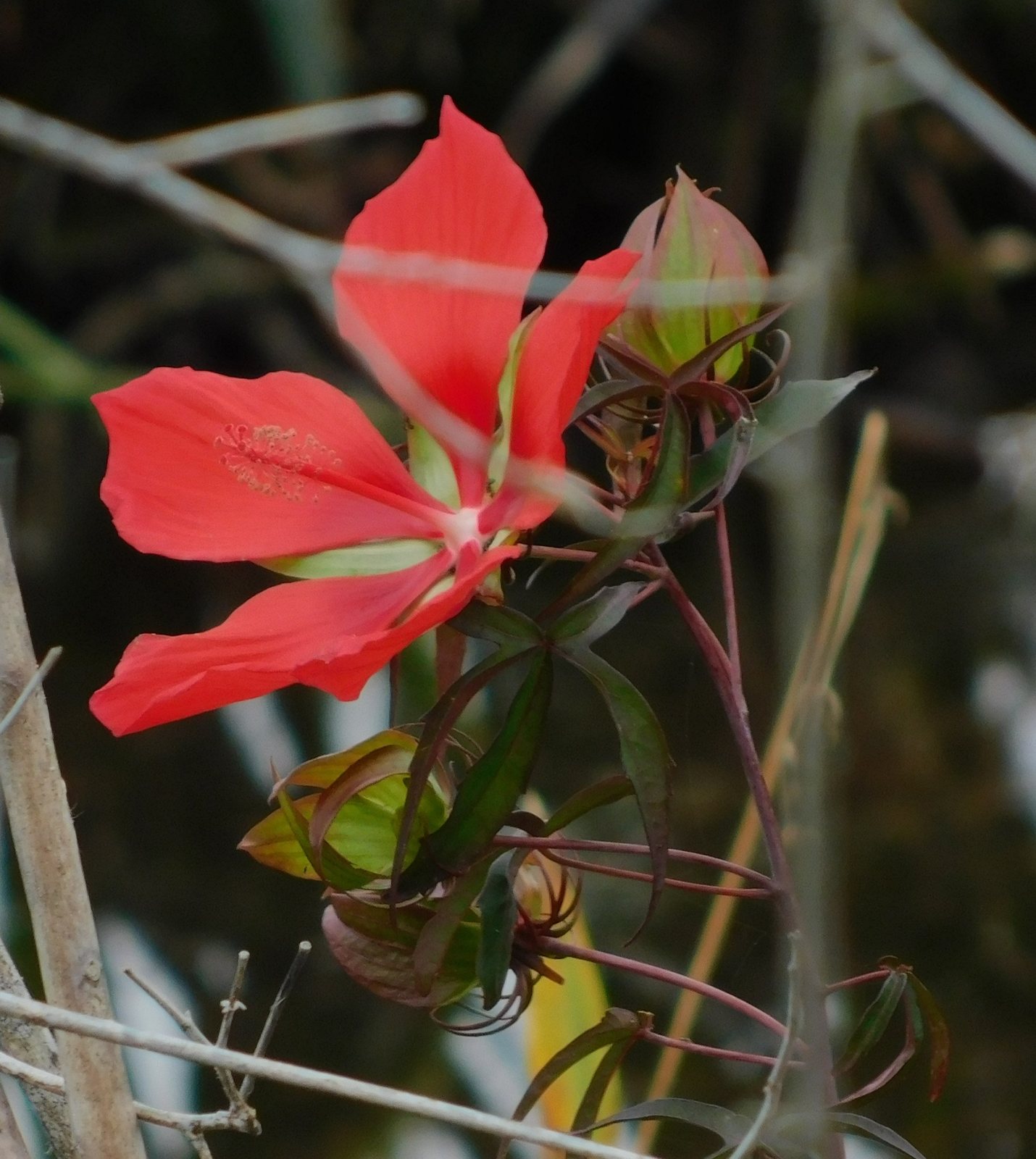
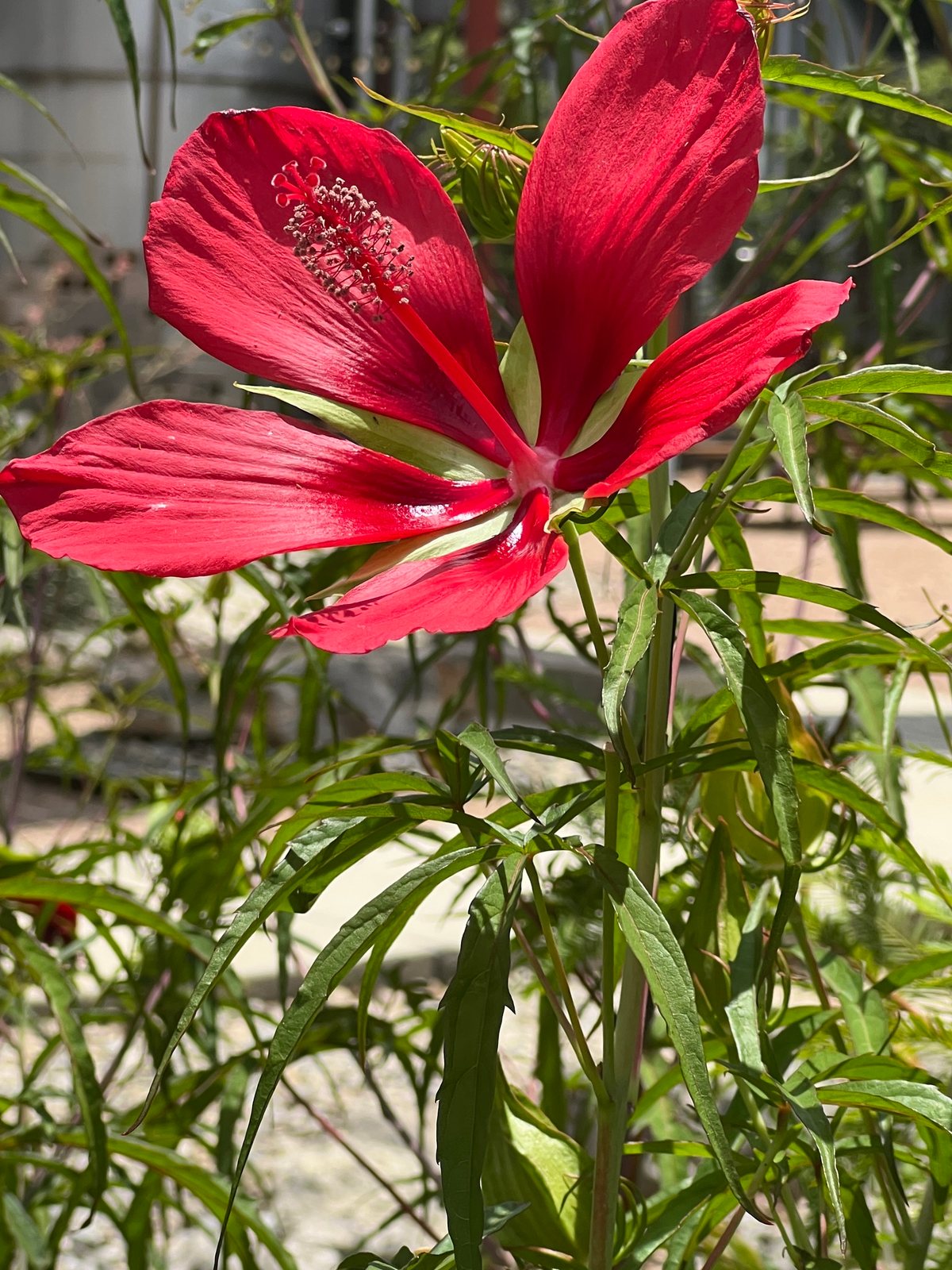
- Mid-summer to early autumn; large scarlet flowers with five narrow, separated petals and a prominent central staminal column. Individual flowers usually last one day.
- Foliage
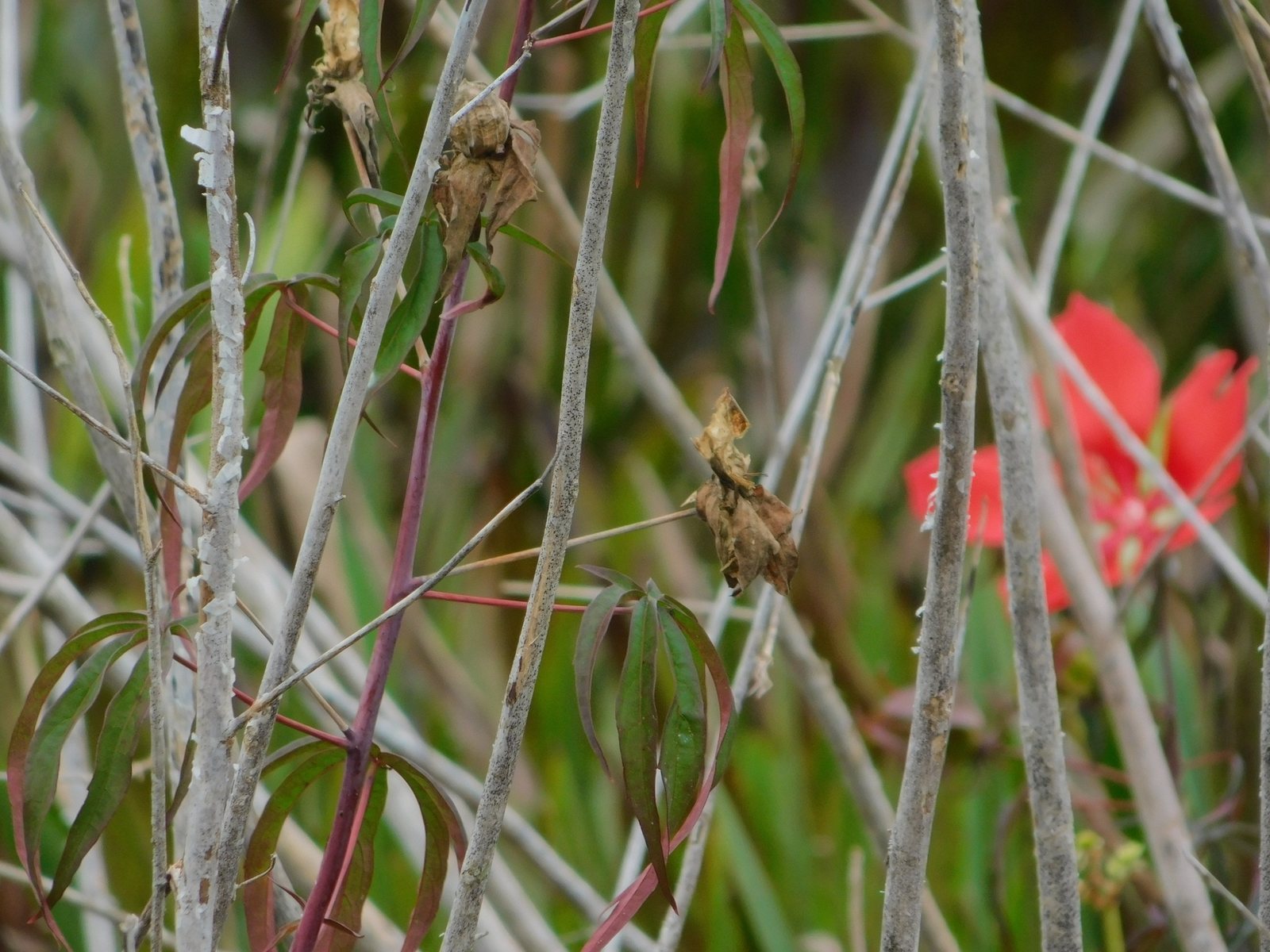
- Green, deeply divided, usually five- to seven-lobed leaves with narrow, toothed lobes; stems die back for winter.
- Growth
- Fast during warm weather, producing tall new stems each growing season.
- Care needed
- Medium
The year at a glance
- Pollinators
- Heat tolerant
- Wildlife
- Low allergen
| J | F | M | A | M | J | J | A | S | O | N | D | |
|---|---|---|---|---|---|---|---|---|---|---|---|---|
| Flowers | ||||||||||||
| Fruit | ||||||||||||
| Plant |
Northern hemisphere months. In Australia, shift them by six.
- Difficulty
- Moderate
- Toughness
- Fairly tough
Will it suit your garden?
Pick your zone, country, light and whether you have pets.
Full sun is 6 or more hours of direct sun a day, part shade 3 to 6 hours, shade under 3.
How it grows
Planting day
1 ft (0.3 m)
After 1 year
4 ft (1.2 m)
After 2 years
7 ft (2.1 m)
full size
About 2 years to full size.
From a typical nursery size, at an average rate for this kind of plant. A rule of thumb, not a forecast.
Good to know
- Cats and dogs
- Safe
- Native to
- the US
- Growth rate
- Fast
Care
Jobs through the year
- WaterApr–May, Sep–Oct, every 7 days
- Water established clumps if soil starts drying; new plants need closer moisture checks.
- WaterJun–Aug, every 3 days
- In ordinary garden soil, water deeply in dry weather; omit extra watering where ground stays wet.
- PruneFeb–Mar
- Cut dead stems to 10–15 cm above ground, leaving stubs to mark the late-emerging crown.
- MulchMay
- Top-dress with compost and add 5–8 cm of organic mulch to conserve moisture.
- ProtectMay–Jun
- Install supports early in exposed sites before stems become tall.
- DeadheadAug–Sep, every 14 days
- Remove developing seed capsules only if you want to limit self-seeding.
- ProtectNov
- After frost kills the foliage, insulate the crown with mulch in colder gardens.
- Water deeply during dry spells; do not let the soil dry out while stems are growing.
- Spread compost around the crown in spring; avoid heavy nitrogen feeding, which encourages leafy growth at the expense of flowers.
- Apply a 2-3 in (5-8 cm) organic mulch to conserve moisture and protect the crown in colder areas.
- Stake stems early in exposed sites, before they become tall and heavy.
- Mark the crown's position: shoots emerge late in spring, so avoid digging into apparently empty ground.
Pruning. In late winter or early spring, cut the previous year's dead stems to 4-6 in (10-15 cm) above ground before new shoots develop. Remove spent seed capsules if you want to limit self-seeding.
Through the year
- Late winter
- Cut back dead stems, leaving short stubs to mark the crown.
- Spring
- Plant after severe frosts have passed, once the soil is warming; allow room for the mature clump.
- Late spring
- Top-dress with compost, renew mulch and install supports where needed.
- Summer
- Maintain steady soil moisture and check young growth for aphids.
- Late summer
- Remove developing seed capsules to reduce seedlings, or leave a few to ripen for propagation.
- Late autumn
- After frost kills the foliage, protect the crown with mulch in colder gardens.
In the garden
- Plant beside a sunny pond, with the crown at the moist margin rather than in deep water.
- Use at the back of a damp border with Joe-Pye weed and switchgrass for height and late-season colour.
- Repeat small groups through a large rain garden where the soil remains moist between storms.
- Pair with blue flag iris and cardinal flower for a wetland planting with successive flowering seasons.
Garden styles it suits: Bog garden, Modern tropical, Southern, Wildlife garden, Pollinator garden and Hot border.
Plant it with: Joe-Pye weed, Switchgrass, Blue flag iris, Cardinal flower, Swamp milkweed and Royal fern.
Wildlife: Flowers attract bees and other pollinating insects; hummingbirds visit them in North America. Caterpillars of some moths and butterflies feed on hibiscus foliage.
Problems to watch for
- Aphids can cluster on tender shoots and buds; wash them off with water and encourage ladybirds and other predators.
- Japanese beetles, where present in North America, chew leaves and flowers; hand-pick them into soapy water.
- Leaf spots may develop in humid weather; remove affected fallen leaves, allow airflow and avoid overhead watering.
- Few flowers or weak, leaning stems usually indicate insufficient sun, a cool summer or excess nitrogen; choose a warmer, sunnier position and reduce feeding.
Safety
Not known to be toxic to people, cats, dogs or horses. No poisonous part is established for this species, but it is an ornamental rather than a food plant, and eating substantial amounts may cause digestive upset.
Easily confused with
Swamp rose mallow (Hibiscus moscheutos)
Usually has broad, oval to shallowly lobed leaves and broad, overlapping flower petals, rather than the narrow leaf lobes and separated scarlet petals of scarlet rose mallow.
Halberd-leaved rose mallow (Hibiscus laevis)
Has three-lobed, halberd-shaped leaves and pale pink or white flowers with a dark eye, rather than deeply divided leaves and scarlet flowers.
The name
The species name coccineus means scarlet, referring to the flower colour.
Propagation. Grow from seed sown warm in spring after lightly nicking the hard seed coat and soaking overnight. Divide established clumps in spring as growth begins, keeping substantial roots and buds on each division; flowering from seed may take more than one season.
Checked against open data
- Accepted botanical name
- Hibiscus coccineus
- In the US and Canada
- Native in the lower 48 states.
Sources: GBIF (CC BY 4.0) and USDA PLANTS. The care and design notes are LandscapeGPT's own.
See it in your own yard.
Upload a photo of your yard and see it redesigned with plants that suit your climate, each checked against your zone.