Sessile oak
Quercus petraea. Family Fagaceae. Tree.
Also called Durmast oak, Welsh oak.
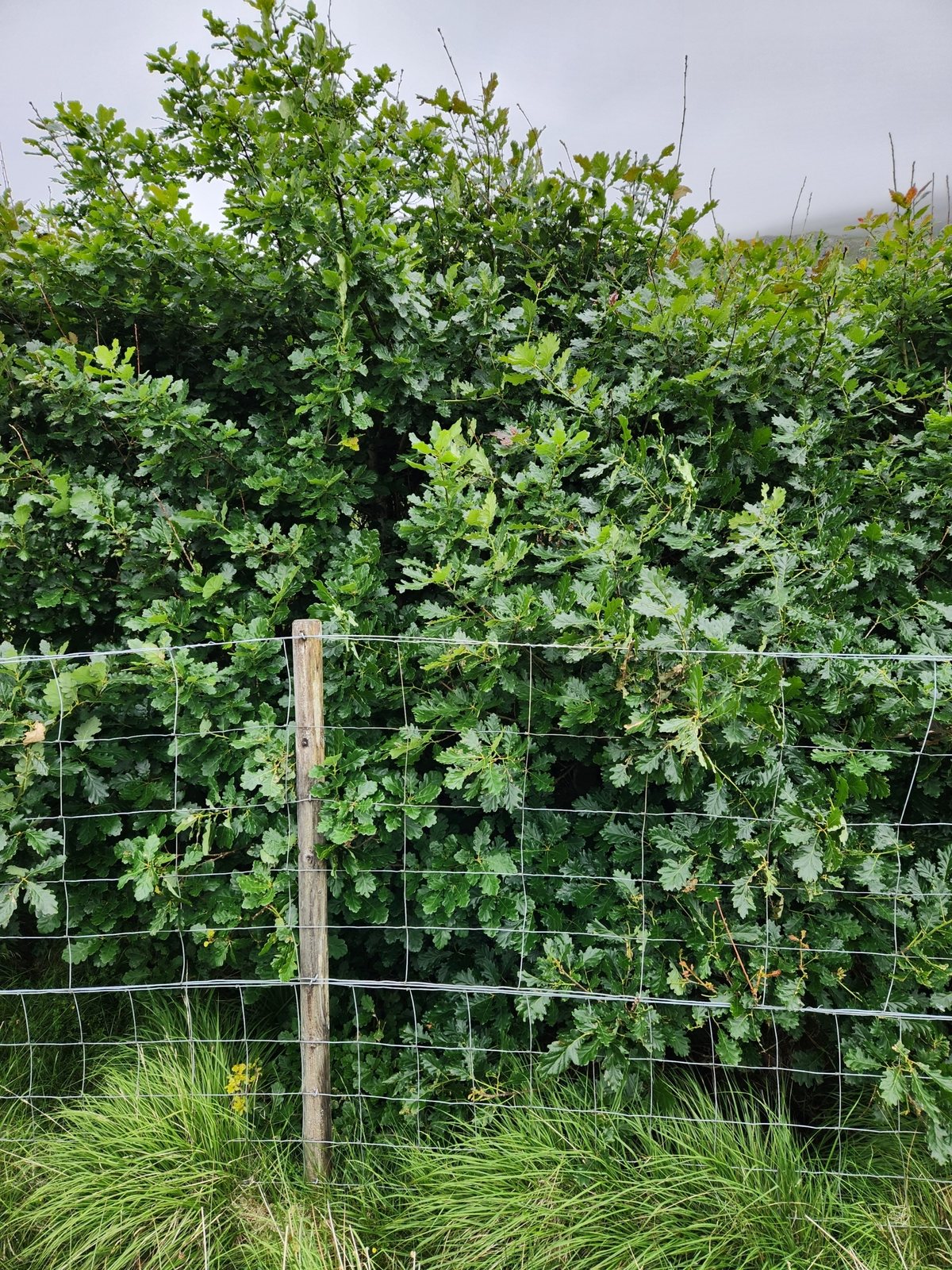
Sessile oak is a large, long-lived deciduous tree native to Europe and western Asia, with lobed leaves, rugged bark and acorns held on very short stalks. Grow it for a broad shade canopy, autumn colour and exceptional wildlife value, but allow room for a mature woodland tree rather than trying to contain it in a small garden.
At a glance
- Sun
- Full sun; tolerates light shade, especially when young.
- Water
- Water regularly while establishing. Established trees tolerate some drought, but prolonged dry weather can cause leaf scorch and dieback.
- Soil
- Deep, well-drained loam or clay loam, preferably acidic to neutral. Tolerates poorer, stony soils but dislikes prolonged waterlogging and shallow, compacted ground.
- Height
- 65-100 ft (20-30 m), occasionally taller
- Spread
- 50-80 ft (15-24 m)
- Flowers
- Spring: yellow-green male catkins and tiny, inconspicuous female flowers.
- Foliage
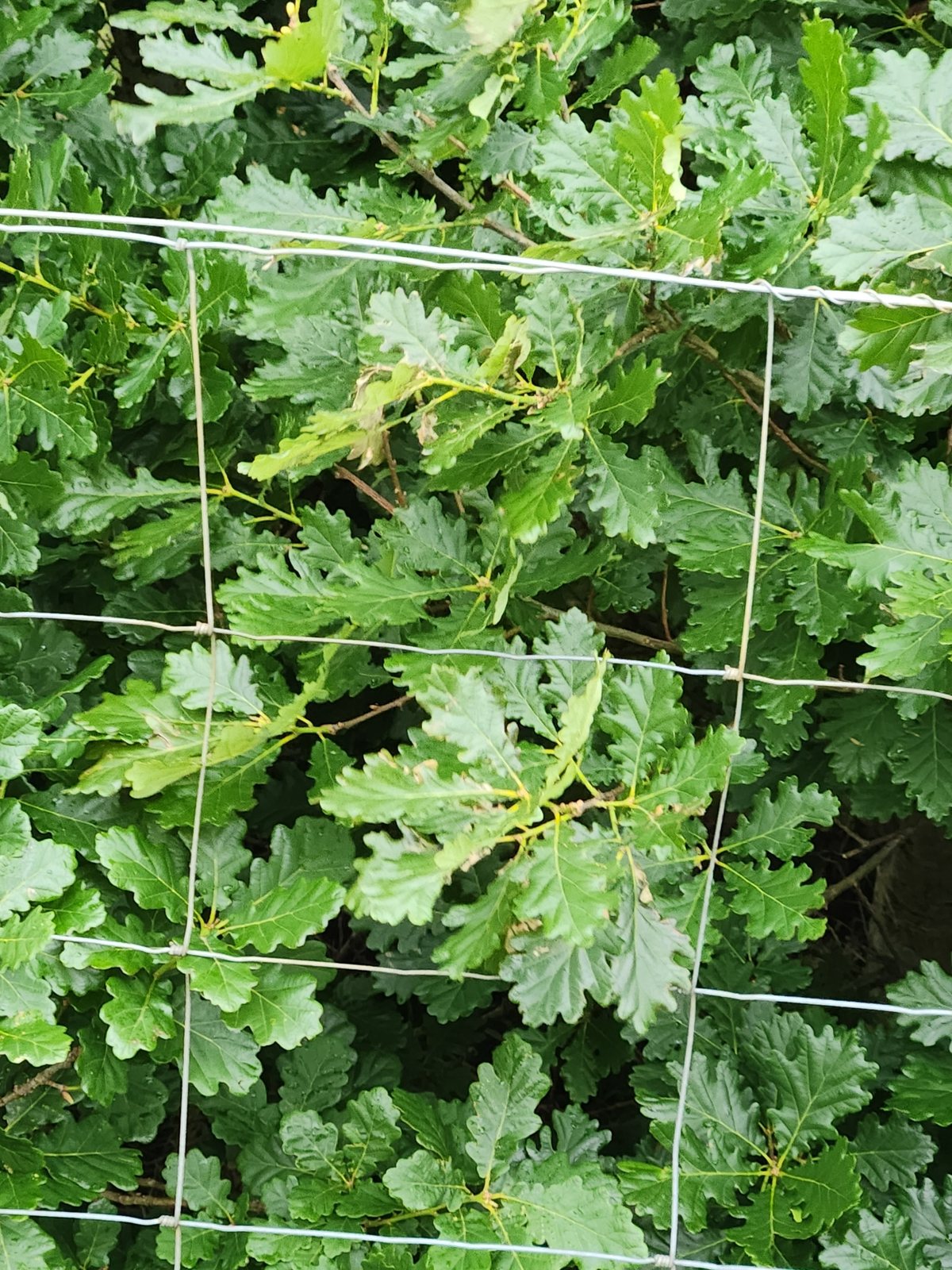
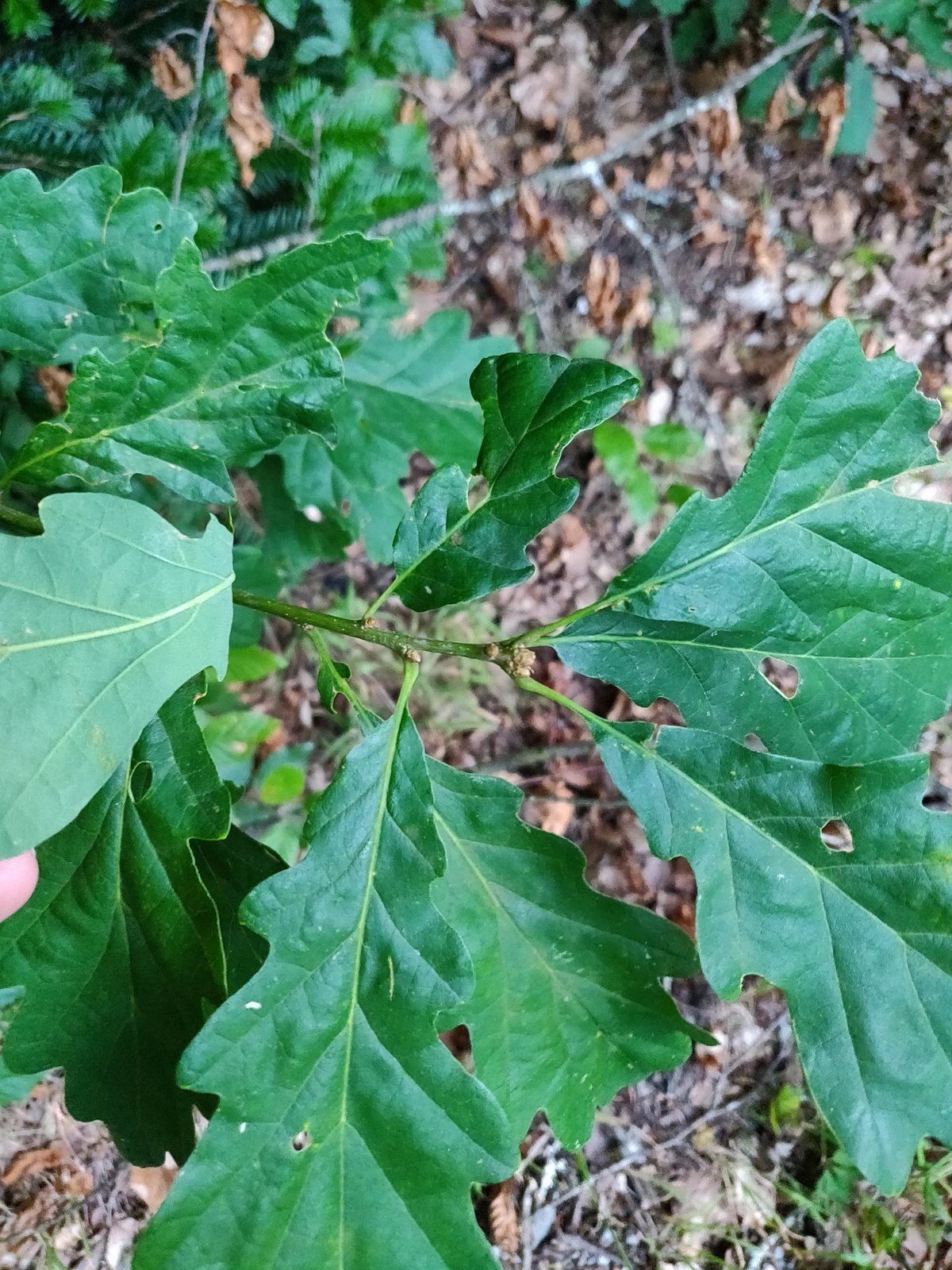
- Rounded, lobed green leaves with distinct leaf stalks; usually yellow to brown in autumn. Young trees may retain dead leaves through winter.
- Growth
- Moderate when young, slowing with age; mature size takes many decades.
- Care needed
- Low
The year at a glance
- Drought tolerant
- Wildlife
| J | F | M | A | M | J | J | A | S | O | N | D | |
|---|---|---|---|---|---|---|---|---|---|---|---|---|
| Flowers | ||||||||||||
| Fruit | ||||||||||||
| Plant |
Northern hemisphere months. In Australia, shift them by six.
- Difficulty
- Easy
- Toughness
- Very tough
Will it suit your garden?
Pick your zone, country, light and whether you have pets.
Full sun is 6 or more hours of direct sun a day, part shade 3 to 6 hours, shade under 3.
How it grows
Planting day
10 ft (3 m)
After 1 year
13 ft (3.8 m)
After 2 years
15 ft (4.7 m)
After 3 years
18 ft (5.5 m)
After 5 years
24 ft (7.2 m)
About 26 years to full size.
From a typical nursery size, at an average rate for this kind of plant. A rule of thumb, not a forecast.
Good to know
- Cats and dogs
- Toxic
- Native to
- the UK
- Growth rate
- Slow
Care
Jobs through the year
- WaterApr–May, Sep–Oct, every 14 days
- Water established trees only during prolonged drought; young trees need more regular deep watering.
- WaterJun–Aug, every 14 days
- Soak the root area during prolonged drought; water establishing trees more frequently.
- MulchMar–Apr
- Renew a broad organic mulch ring, leaving the trunk and root flare exposed.
- PruneJan–Feb
- Prune young trees lightly to retain one leader; follow local oak-wilt restrictions.
- ProtectMar, Oct
- Check young-tree guards and ties; keep digging, paving and compaction away from roots.
- Plant during the dormant season when soil is workable; choose a young tree rather than a large transplant.
- Water deeply during dry spells for the first two or three growing seasons.
- Maintain a broad mulch ring, keeping mulch away from the trunk and grass clear of the base.
- Stake only if the root ball moves in the wind; check ties regularly and remove support once roots hold firmly.
- Do not routinely fertilise; protect the root area from paving, digging and soil compaction.
Pruning. Prune young trees lightly during dormancy to retain a sound main leader and remove damaged or crossing branches; never top an oak. Use a qualified arborist for large limbs, and in North American oak-wilt areas follow local pruning-season restrictions.
Through the year
- Autumn
- Collect freshly fallen, sound acorns for immediate sowing; do not let them dry out.
- Late autumn to winter
- Plant young trees while dormant, avoiding frozen or waterlogged soil.
- Winter
- Check young trees for competing leaders and damaged branches; prune lightly where local oak-wilt guidance permits.
- Spring
- Renew the mulch ring and check that stakes and ties are not rubbing or constricting the trunk.
- Summer
- Water establishing trees deeply during dry periods and check foliage for caterpillar damage or mildew.
- Autumn
- Leave some fallen leaves beneath the canopy as habitat and soil cover, keeping the trunk base clear.
In the garden
- Plant as a single shade tree in a large lawn or parkland setting, well away from buildings and services.
- Use in a mixed woodland with birch, rowan and hazel for varied canopy layers.
- Place beside a meadow to provide a strong woodland edge and long-term wildlife habitat.
- Use widely spaced trees in an estate-scale landscape to frame distant views.
Garden styles it suits: English country, Grand estate, Woodland, Wildlife garden, Rewilded and English manor.
Plant it with: Silver birch, Rowan, Common hazel, Holly, Wood anemone and Foxglove.
Wildlife: In its native range, supports many insects, including moth and butterfly larvae, and provides nesting sites and cavities as it ages. Jays, squirrels and other animals eat and disperse the acorns; its wildlife relationships differ outside its native range.
Problems to watch for
- Powdery mildew: white patches are common on young leaves and usually need no treatment; reduce drought stress and avoid heavy nitrogen feeding.
- Leaf-eating caterpillars: established trees usually recover without spraying. In UK and European oak processionary moth areas, do not touch caterpillars or nests; keep people and pets away and report them to the relevant authority.
- Oak wilt in parts of North America: sudden wilting or browning needs prompt professional diagnosis; prevent pruning wounds during locally designated high-risk periods.
- Poor establishment or dieback: check for drought, waterlogging, deep planting or compacted soil; correct the cause and keep the root flare exposed.
Safety
Acorns, young leaves and buds contain tannins and can poison dogs, cats, horses and people if eaten in sufficient quantities. Serious digestive illness and kidney damage are possible, especially in grazing animals; keep horses away from fallen acorns and oak browse. Raw acorns are not suitable for people to eat without careful processing.
Easily confused with
English oak (Quercus robur)
English oak usually has very short leaf stalks, ear-like lobes at the leaf base and acorns on long stalks. Sessile oak has longer leaf stalks, a tapered leaf base and almost stalkless acorns;
Downy oak (Quercus pubescens)
Downy oak has persistently hairy young shoots and leaf undersides. Mature sessile oak leaves are mostly hairless, though small hair tufts may remain beneath at vein junctions.
Turkey oak (Quercus cerris)
Turkey oak has conspicuously shaggy acorn cups and often pointed, bristle-tipped leaf lobes; sessile oak has neatly scaled cups and rounded lobes.
The name
The common name refers to the almost stalkless, or sessile, acorns, while the Latin petraea means 'of rocky places', reflecting its occurrence on stony upland ground.
Propagation. Sow fresh acorns in autumn in deep pots or a protected nursery bed, covering them with about their own depth of soil. Protect from rodents and plant seedlings out while young, before their roots become crowded.
Checked against open data
- Accepted botanical name
- Quercus petraea
- Native range
- Albania, Austria, Baltic States, Belarus, Belgium, Bulgaria, Central European Rus, Corse, Czechoslovakia, Denmark, East European Russia and France.
- Measured
- Soil pH 5.5 to 6.5. Average height 2010 cm.
Sources: GBIF (CC BY 4.0) and Trefle (CC BY 4.0). The care and design notes are LandscapeGPT's own.
See it in your own yard.
Upload a photo of your yard and see it redesigned with plants that suit your climate, each checked against your zone.