Skunkbush sumac
Rhus trilobata. Family Anacardiaceae. Shrub.
Also called Three-leaf sumac, Skunkbush, Sourberry.
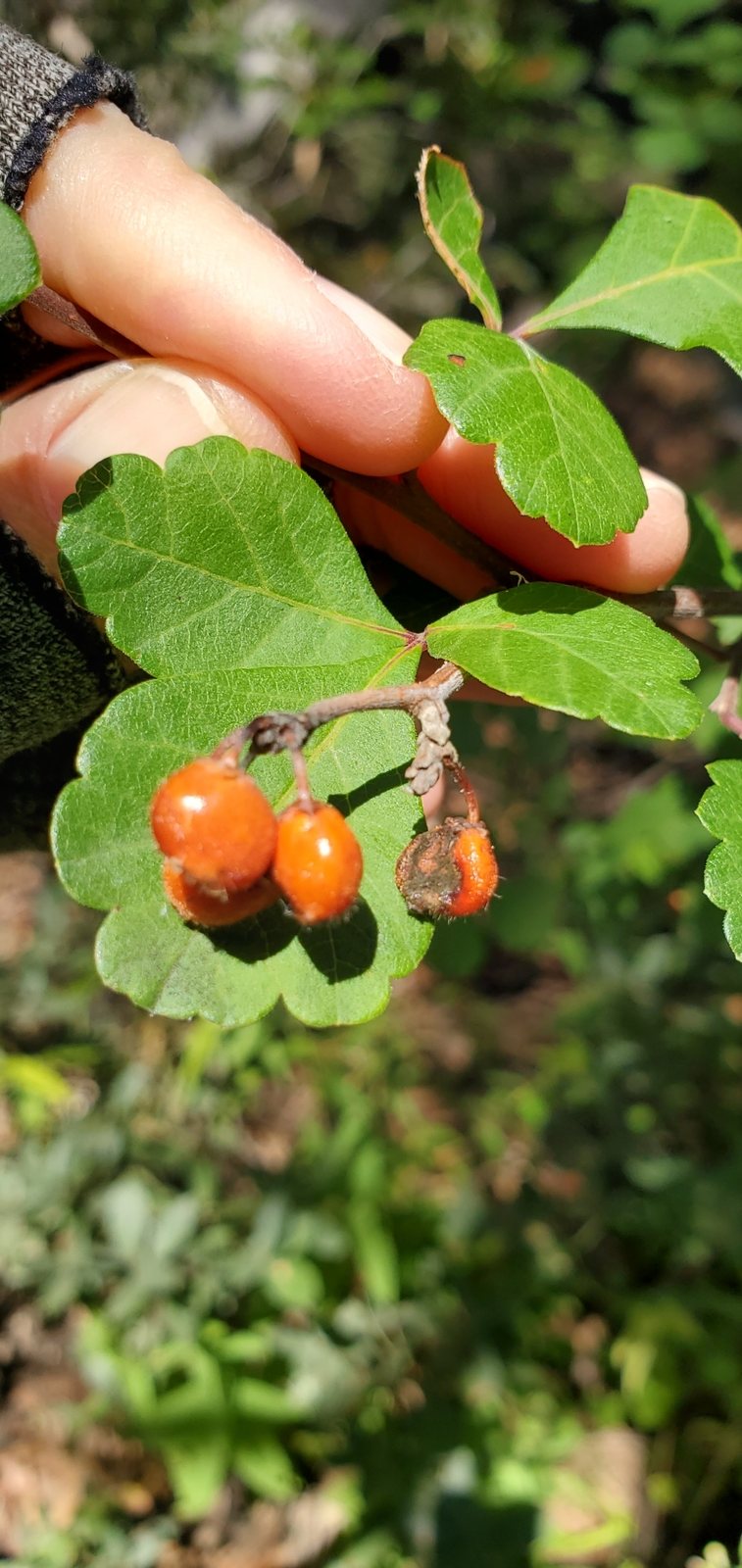
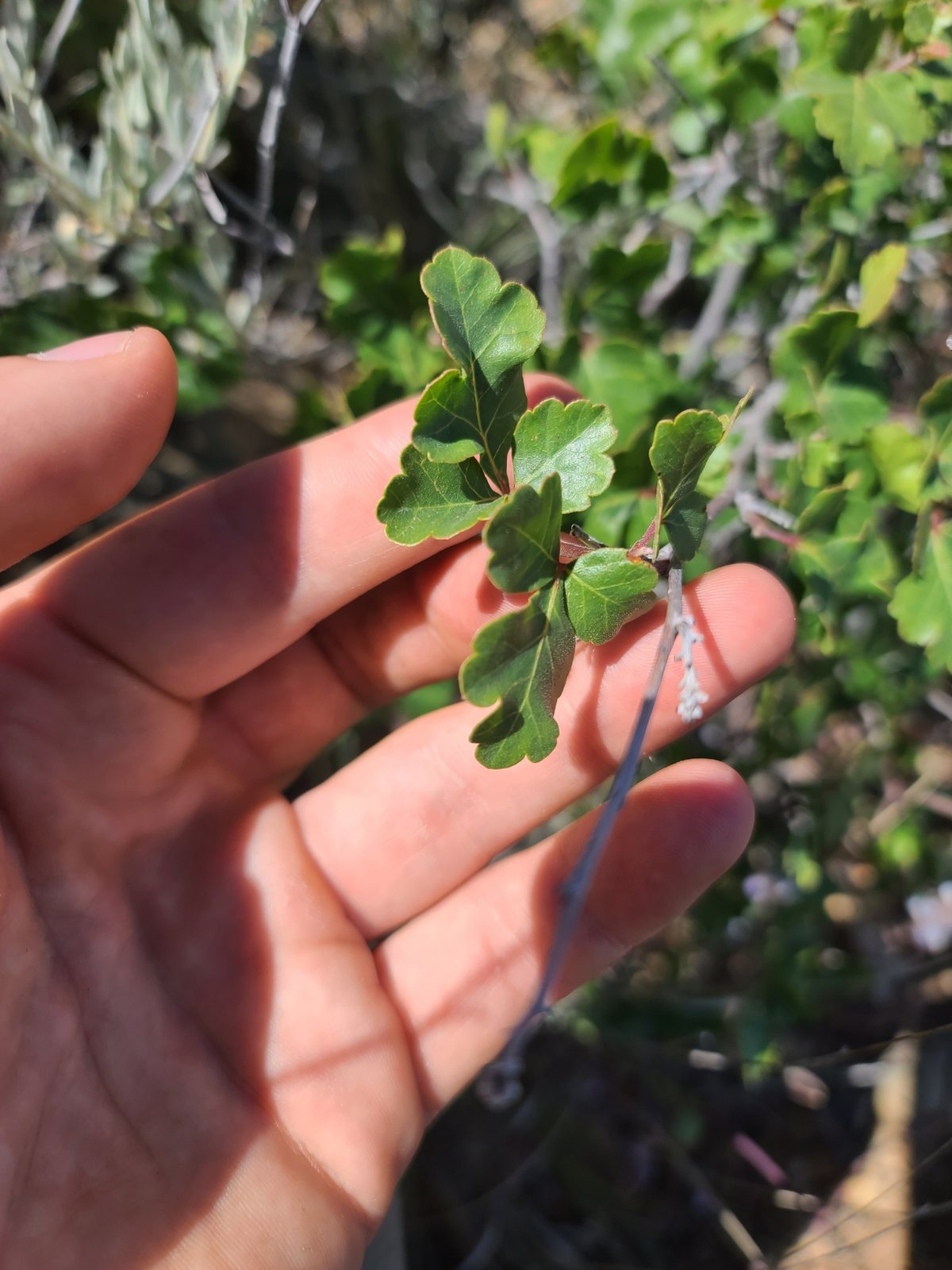
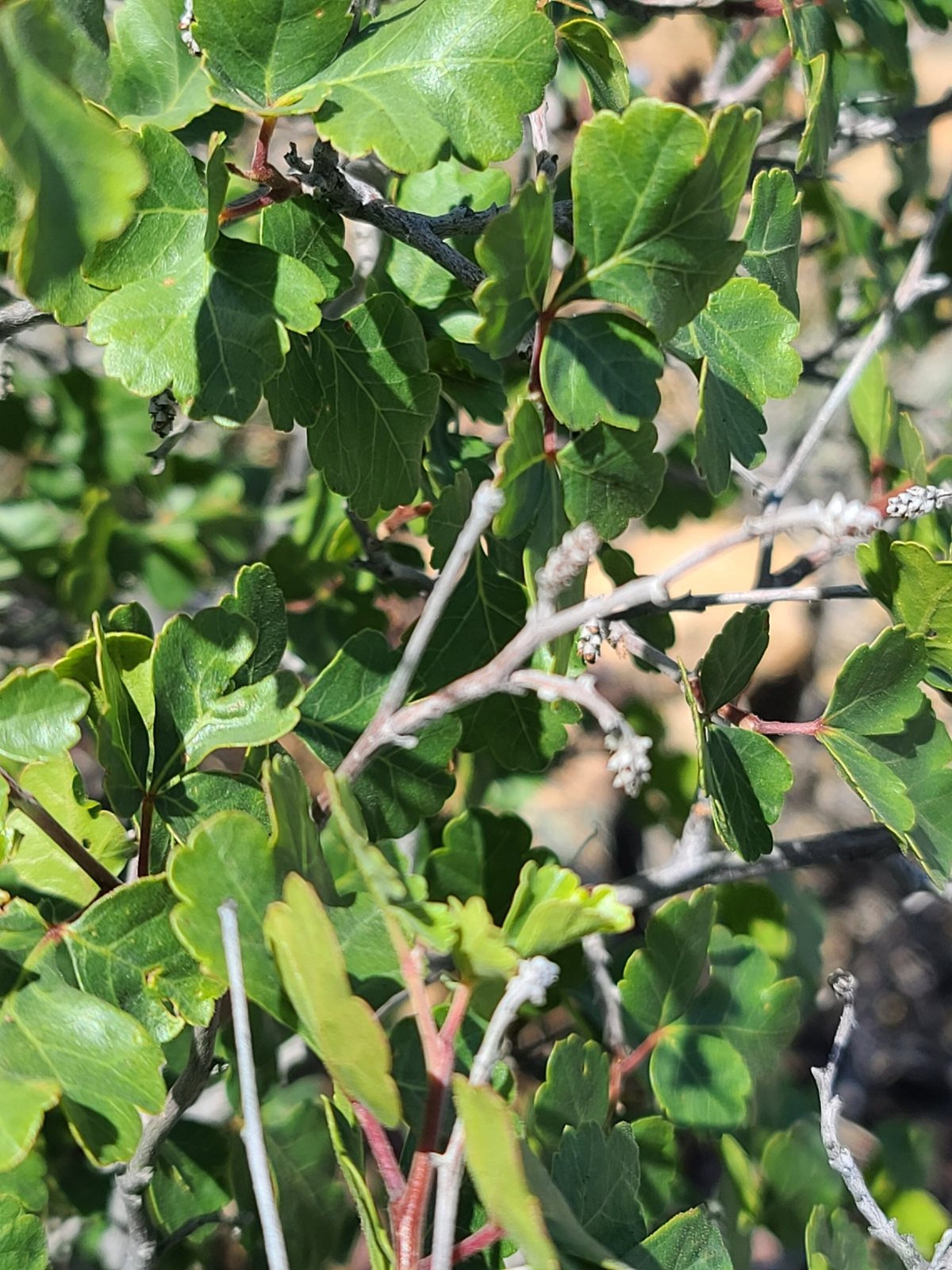
Skunkbush sumac is a deciduous shrub native to western and central North America, grown for its drought tolerance, wildlife value and yellow, orange or red autumn foliage. Its spreading, sometimes suckering growth suits dry slopes and informal borders better than small, tightly planted beds.
At a glance
- Sun
- Full sun to partial shade; autumn colour and growth density are usually best in full sun.
- Water
- Low once established; water regularly through the first growing season, allowing the soil to dry between soakings.
- Soil
- Well-drained sandy, gravelly, rocky or loamy soil; tolerates alkaline soil and lean ground, but not persistent waterlogging.
- Height
- 2-6 ft (0.6-1.8 m), occasionally taller
- Spread
- 4-8 ft (1.2-2.4 m), widening further where suckers are allowed to grow
- Flowers
- Small yellowish flowers in spring, usually before or as the leaves emerge.
- Foliage
- Green leaves divided into three lobed or toothed leaflets; aromatic, often unpleasant-smelling when crushed. Autumn colour ranges from yellow to orange and red.
- Growth
- Moderate; slower on very dry, poor sites.
- Care needed
- Low
The year at a glance
- Pollinators
- Drought tolerant
- Cold hardy
- Heat tolerant
- Wildlife
| J | F | M | A | M | J | J | A | S | O | N | D | |
|---|---|---|---|---|---|---|---|---|---|---|---|---|
| Flowers | ||||||||||||
| Fruit | ||||||||||||
| Plant |
Northern hemisphere months. In Australia, shift them by six.
- Difficulty
- Easy
- Toughness
- Very tough
Will it suit your garden?
Pick your zone, country, light and whether you have pets.
Full sun is 6 or more hours of direct sun a day, part shade 3 to 6 hours, shade under 3.
How it grows
Planting day
1.6 ft (0.5 m)
After 1 year
2 ft (0.61 m)
After 2 years
2.3 ft (0.72 m)
After 3 years
2.7 ft (0.82 m)
After 5 years
3 ft (1 m)
About 7 years to full size.
From a typical nursery size, at an average rate for this kind of plant. A rule of thumb, not a forecast.
Good to know
- Cats and dogs
- Safe
- Native to
- the US and Canada
- Growth rate
- Slow
Care
Jobs through the year
- WaterApr–May, Sep–Oct, every 21 days
- Water established shrubs only during prolonged drought; water first-year plants more often as soil dries.
- WaterJun–Aug, every 21 days
- Deeply soak established shrubs only during prolonged drought; skip watering if soil is still moist.
- PruneFeb–Mar
- Remove dead or crossing stems and selectively thin old stems without shearing.
- PruneMay–Sep, every 30 days
- Remove unwanted suckers at their origin while small, unless a thicket is wanted.
- MulchApr
- Apply a light mulch over the roots, keeping stems clear.
- ProtectNov–Dec
- Keep winter runoff from collecting around the roots.
- Plant where water drains freely; avoid hollows that stay wet in winter.
- Water deeply during the first growing season, then mainly during prolonged drought.
- Skip routine feeding; rich soil and heavy fertilising are unnecessary.
- Apply a light mulch, keeping it clear of the stems.
- Remove unwanted suckers while small, or leave room for a thicket to develop.
Pruning. In late winter or early spring, remove dead, damaged or crossing stems and cut selected old stems to ground level if the shrub becomes crowded. Avoid regular shearing, which spoils its natural shape and reduces flowering and fruiting.
Through the year
- Late winter
- Thin crowded older stems and remove dead wood before new growth starts.
- Spring
- Plant into well-drained soil and water thoroughly.
- Late spring
- Check establishment moisture and remove unwanted suckers.
- Summer
- Water young plants deeply during dry spells; let established plants dry between waterings.
- Autumn
- Leave fruit for birds and assess whether the shrub needs more room to spread.
- Winter
- Check that runoff is not collecting around the roots.
In the garden
- Mass on sunny, dry slopes to cover soil and help limit erosion.
- Use in an informal wildlife hedge with other drought-tolerant shrubs.
- Combine with native grasses and flowering perennials in a dry naturalistic border.
- Place against gravel or pale stone where its autumn foliage provides a strong seasonal contrast.
Garden styles it suits: Desert / xeriscape, Southwestern, Wildlife garden, Low-maintenance, Native hedgerow and Autumn colour.
Plant it with: Little bluestem, Blue grama, Prairie dropseed, Rubber rabbitbrush, Yarrow and Purple prairie clover.
Wildlife: Spring flowers provide food for small pollinating insects. Birds and small mammals eat the reddish fruits, while dense growth provides shelter. Male and female flowers are usually on separate plants, so fruiting generally requires both nearby.
Problems to watch for
- Root rot in wet soil: improve drainage or move the plant to a drier site rather than watering on a fixed schedule.
- Leaf spots or rust: remove heavily affected fallen leaves and improve airflow; established shrubs usually need no chemical treatment.
- Aphids on soft growth: wash them off with water and allow ladybirds and other predators to work.
- Unwanted suckering: cut or dig out young shoots at their point of origin before they form a wider colony.
Safety
Not known to be toxic to people, cats, dogs or horses. The fruits have a history of food use, but this does not make every part suitable to eat. Sap or crushed foliage may irritate sensitive skin; wear gloves if you react to plants in the cashew family.
Easily confused with
Fragrant sumac (Rhus aromatica)
A closely related eastern North American shrub with similar three-part leaves and red fruit. Its leaflets are often broader and less deeply lobed, but the two can be difficult to separate;
Western poison oak (Toxicodendron diversilobum)
Also has three leaflets, often with oak-like lobes, but bears pale whitish fruits rather than the reddish, hairy fruits of skunkbush.
Poison ivy (Toxicodendron radicans)
Often climbs using hairy aerial roots and has a noticeably long stalk beneath the middle leaflet. Its fruits are whitish, unlike skunkbush's red fruits; avoid handling uncertain plants.
The name
The name trilobata refers to the three-lobed leaves, while skunkbush describes the strong smell released when the foliage is crushed.
Propagation. Separate rooted suckers during dormancy, or take softwood cuttings in early summer. Seed has a hard coat and dormancy requirements, so germination can be slow and uneven without appropriate pretreatment.
Checked against open data
- Accepted botanical name
- Rhus trilobata
- In the US and Canada
- Native in Canada and the lower 48 states.
Sources: GBIF (CC BY 4.0) and USDA PLANTS. The care and design notes are LandscapeGPT's own.
See it in your own yard.
Upload a photo of your yard and see it redesigned with plants that suit your climate, each checked against your zone.