Slender palm lily
Cordyline stricta. Family Asparagaceae. Shrub.
Also called Narrow-leaved palm lily, Slender cordyline.
Slender palm lily is an evergreen shrub from eastern Australia, with slim, cane-like stems and arching clusters of narrow green leaves. Grow it for its upright shape and leafy texture in sheltered, shaded gardens or large containers; it is not a true palm. In colder parts of the United States, the United Kingdom and Canada, it needs frost-free winter quarters.
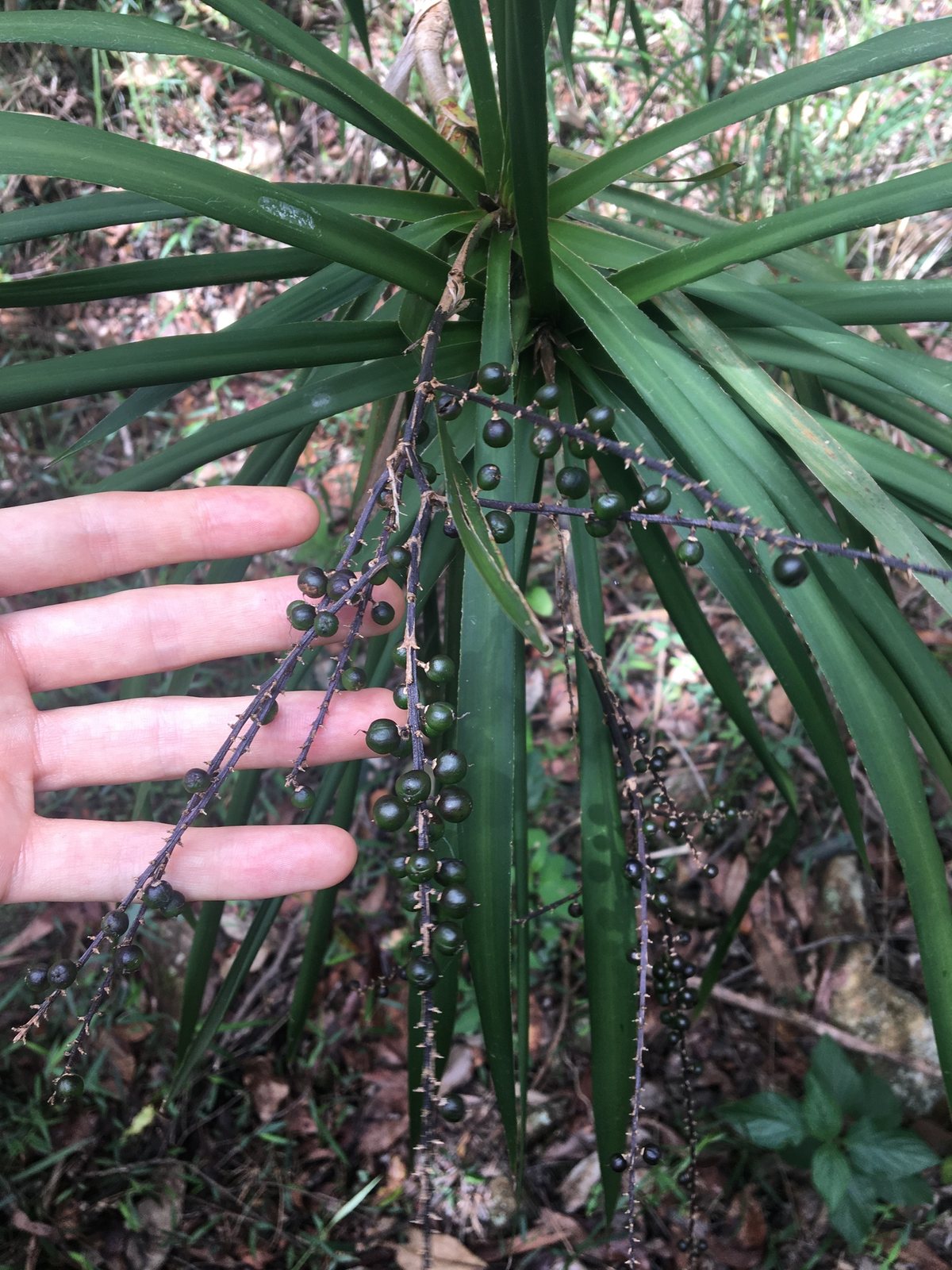
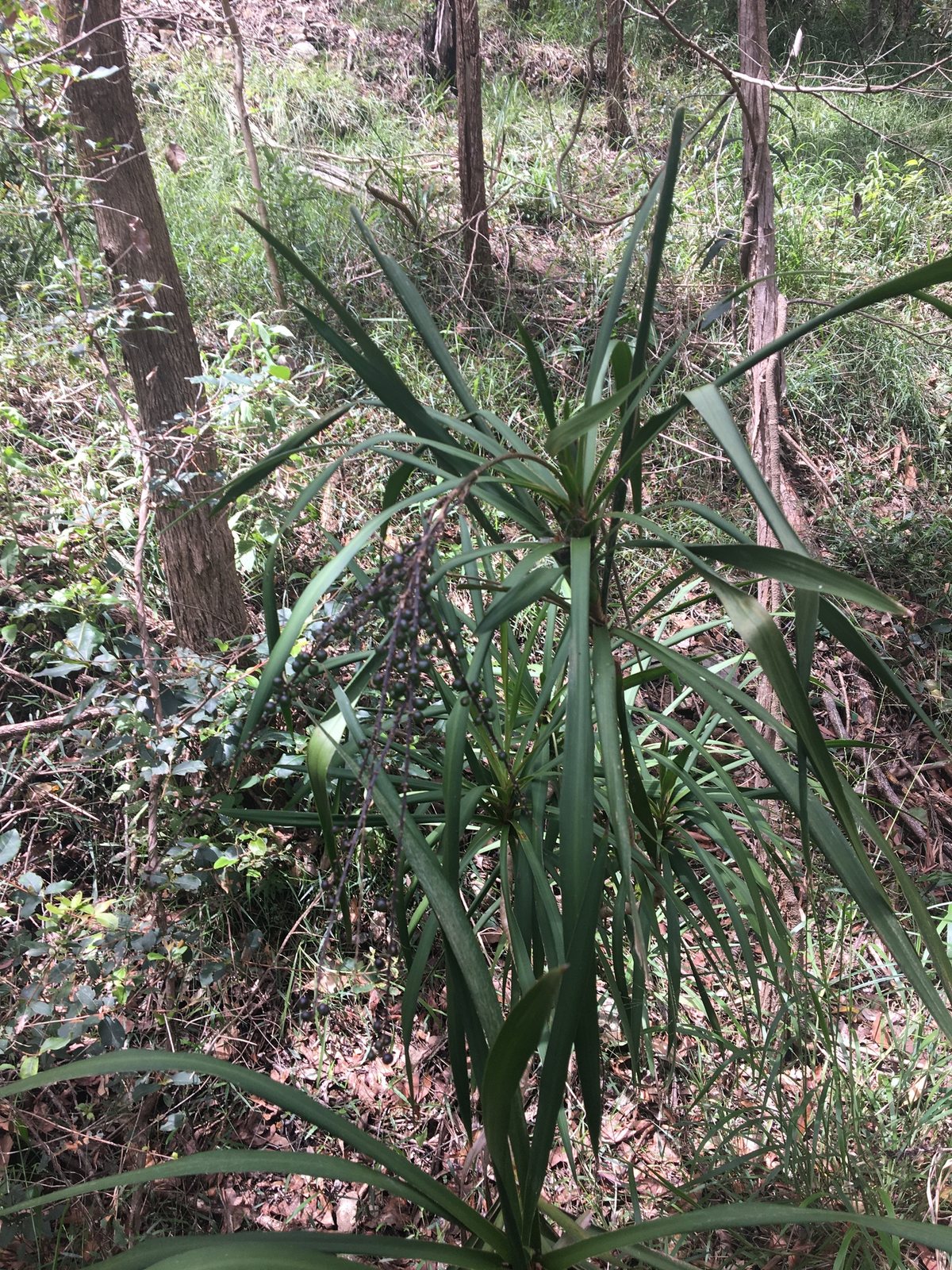
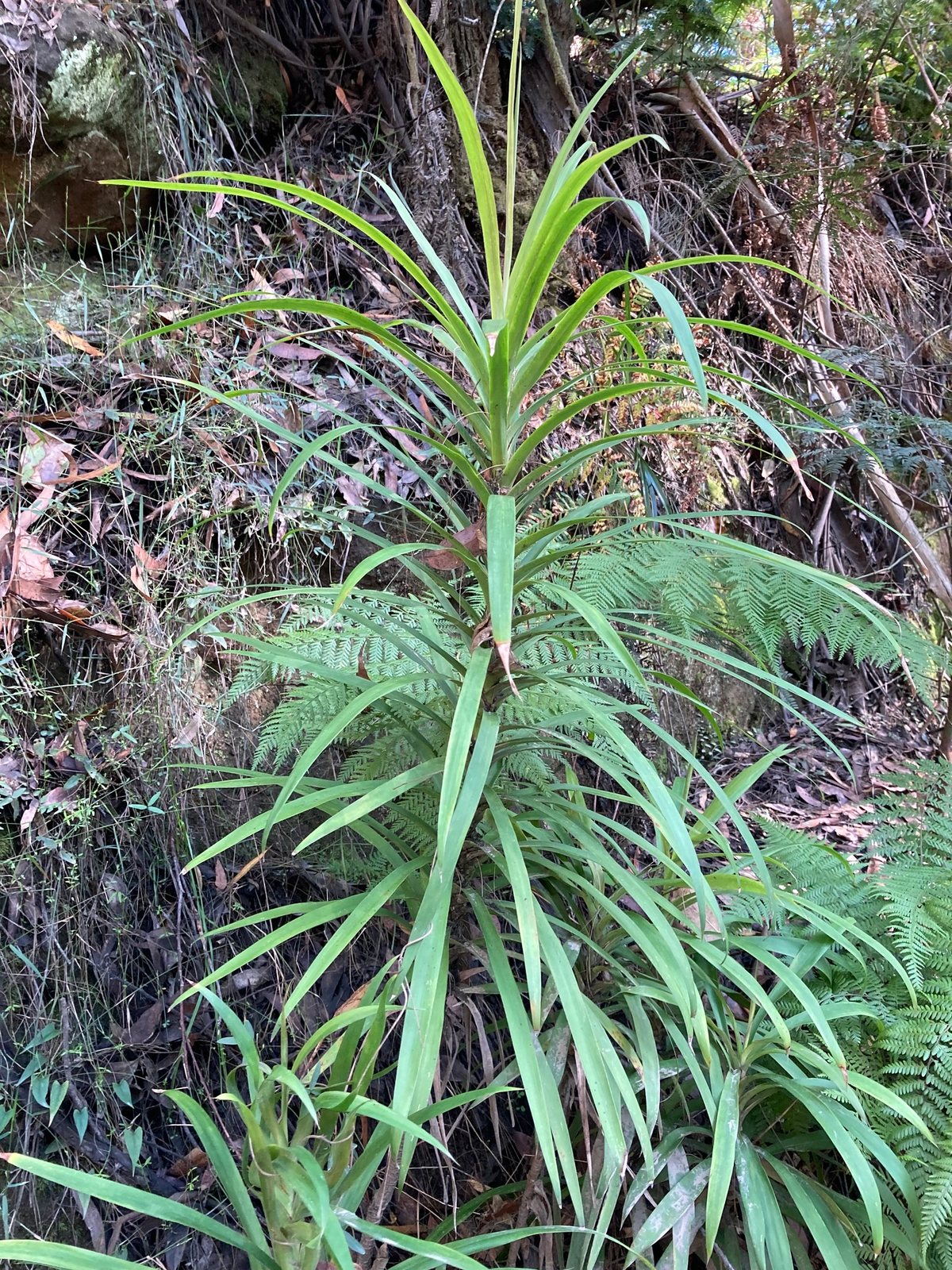
At a glance
- Sun
- Partial shade or bright filtered light; tolerates deeper shade. Avoid exposed positions with hot afternoon sun.
- Water
- Keep the root zone moderately moist during active growth, allowing the surface to dry slightly between waterings. Water less in winter, especially in containers.
- Soil
- Humus-rich, well-drained soil, preferably slightly acidic to neutral. Avoid waterlogged ground.
- Height
- 6-15 ft (1.8-4.5 m)
- Spread
- 3-6 ft (0.9-1.8 m)
- Flowers
- Branched sprays of small lilac to purple flowers in spring and summer, sometimes followed by purple-black berries.
- Foliage
- Evergreen. Long, narrow, glossy green leaves arch from slender upright stems, giving a lighter appearance than broad-leaved cordylines.
- Growth
- Moderate in warm, moist conditions; slower in cool climates or deep shade.
- Care needed
- Low
The year at a glance
- Pollinators
- Heat tolerant
- Wildlife
- Low allergen
| J | F | M | A | M | J | J | A | S | O | N | D | |
|---|---|---|---|---|---|---|---|---|---|---|---|---|
| Flowers | ||||||||||||
| Fruit | ||||||||||||
| Plant |
Northern hemisphere months. In Australia, shift them by six.
- Difficulty
- Moderate
- Toughness
- Fairly tough
Will it suit your garden?
Pick your zone, country, light and whether you have pets.
Full sun is 6 or more hours of direct sun a day, part shade 3 to 6 hours, shade under 3.
How it grows
Planting day
1.6 ft (0.5 m)
After 1 year
3 ft (0.91 m)
After 2 years
4 ft (1.3 m)
After 3 years
6 ft (1.7 m)
After 5 years
8 ft (2.5 m)
About 7 years to full size.
From a typical nursery size, at an average rate for this kind of plant. A rule of thumb, not a forecast.
Good to know
- Cats and dogs
- Toxic
- Native to
- Australia
- Growth rate
- Slow
Care
Jobs through the year
- WaterApr–May, Sep–Oct, every 14 days
- Water established ground plants if dry; young plants and pots need closer checks to maintain moderate moisture.
- WaterJun–Aug, every 7 days
- Soak established ground plants during dry spells; water pots before the root ball dries out completely.
- WaterJan–Mar, Nov–Dec, every 14 days
- Check sheltered pots and water sparingly as the surface dries, without letting roots dry completely.
- FeedApr–May
- Apply a light dressing of balanced slow-release fertiliser.
- MulchMay
- Refresh composted bark or leaf mould over the roots, keeping stems clear.
- PruneApr–May
- Remove dead leaves and shorten over-tall stems above a sound node; thin crowded old stems if needed.
- ProtectJan–May, Sep–Dec
- Use a container in this climate and overwinter bright and frost-free; fleece alone will not prevent prolonged freeze damage.
- Plant in a position sheltered from cold winds and strong afternoon sun.
- Water deeply during dry spells, particularly while establishing and when growing in a container.
- Apply a light dressing of balanced slow-release fertiliser in spring.
- Mulch the root zone with composted bark or leaf mould, keeping mulch clear of the stems.
- Move containers into a bright, frost-free place before winter frosts; do not rely on fleece during prolonged freezing weather.
Pruning. Remove dead leaves and spent flower stems as needed. In spring, shorten over-tall stems just above a sound node to encourage branching, or remove selected old stems near the base to thin a crowded plant.
Through the year
- Spring
- Plant out after frost risk has passed, or repot container plants if their roots have filled the pot.
- Spring
- Feed lightly, refresh mulch and prune damaged or over-tall stems once new growth begins.
- Summer
- Check soil moisture regularly and water containers before the root ball dries out completely.
- Summer
- Inspect leaf undersides and stems for scale insects, mealybugs and spider mites.
- Autumn
- Move container plants under frost-free cover before the first frost in cold climates.
- Winter
- Keep sheltered container plants in bright light and water sparingly without letting the root ball become completely dry.
In the garden
- Use as a slender vertical accent beneath a high tree canopy, with ferns and other shade-tolerant plants.
- Plant in sheltered courtyards where its narrow stems provide height without a heavy canopy.
- Grow in a large container beside a shaded entrance or seating area.
- Group several plants behind lower foliage plants for a layered, subtropical border.
Garden styles it suits: Australian native, Modern tropical, Woodland, Modern courtyard, Architectural minimal and Green on green.
Plant it with: Bird's nest fern, Cast-iron plant, Clivia, Soft tree fern, Lilyturf and Native violet.
Wildlife: Flowers provide food for visiting insects, and birds may eat the berries, particularly within its native Australian range.
Problems to watch for
- Scale insects or mealybugs: inspect stems and leaf bases, wipe off small infestations and use a labelled horticultural oil or insecticidal soap if needed.
- Spider mites in dry indoor conditions: look for fine webbing and stippled leaves; rinse foliage thoroughly and treat persistent infestations with a labelled product.
- Root rot in waterlogged soil: improve drainage, empty standing water from saucers and let the surface of container compost dry slightly between waterings.
- Brown or damaged leaves from frost, wind or strong sun: move containers or provide shelter; remove dead growth after frost risk has passed.
Safety
Keep leaves and other plant material away from cats and dogs: cordylines contain saponins that can cause drooling, vomiting and diarrhoea if eaten. Species-specific information for Cordyline stricta is limited, and its toxicity to horses and people is not well established; do not treat the berries or other parts as edible.
Easily confused with
Cabbage tree (Cordyline australis)
Usually develops a much stouter trunk and larger, denser heads of stiff, sword-shaped leaves; its flowers are white rather than lilac.
Ti plant (Cordyline fruticosa)
Has much broader leaves, often with red, pink or cream colouring, and needs warmer conditions.
Dragon tree (Dracaena marginata)
Typically has narrower leaves edged with red and more tightly tufted crowns; it is commonly grown as a houseplant.
The name
Cordyline comes from the Greek word for a club, referring to the thickened underground stems of some species, while stricta means upright.
Propagation. Take stem or cane cuttings in spring or summer and root them in a warm, free-draining propagation mix. Rooted basal shoots can be separated carefully; fresh seed is another option but is slower.
Checked against open data
- Accepted botanical name
- Cordyline stricta
- Native range
- New South Wales and Queensland.
Sources: GBIF (CC BY 4.0) and Trefle (CC BY 4.0). The care and design notes are LandscapeGPT's own.
See it in your own yard.
Upload a photo of your yard and see it redesigned with plants that suit your climate, each checked against your zone.