Snake plant
Dracaena trifasciata. Family Asparagaceae. Succulent.
Also called Mother-in-law's tongue, Sansevieria, Viper's bowstring hemp, Sansevieria trifasciata.
Snake plant is an evergreen, clump-forming succulent grown for its stiff, upright, patterned leaves. It makes an architectural houseplant or container specimen, tolerating dry indoor conditions and some shade. Plant it outdoors permanently only in frost-free climates, where its spreading rhizomes may need containment.
At a glance
- Sun
- Bright indirect light indoors; partial shade outdoors. It tolerates low light but grows slowly, and strong afternoon sun can scorch leaves unless gradually acclimatised.
- Water
- Let the potting mix dry throughout before watering thoroughly, then drain completely. Water much less in winter; never leave the pot standing in water.
- Soil
- A gritty, free-draining cactus or succulent potting mix in a pot with drainage holes. Outdoors, use sharply drained soil and avoid wet clay.
- Height
- 2-4 ft (0.6-1.2 m)
- Spread
- 1-2 ft (0.3-0.6 m) per clump; wider over time through spreading rhizomes
- Flowers
- Occasional slender spikes of fragrant, greenish-white flowers, usually in spring or summer; indoor flowering is irregular.
- Foliage
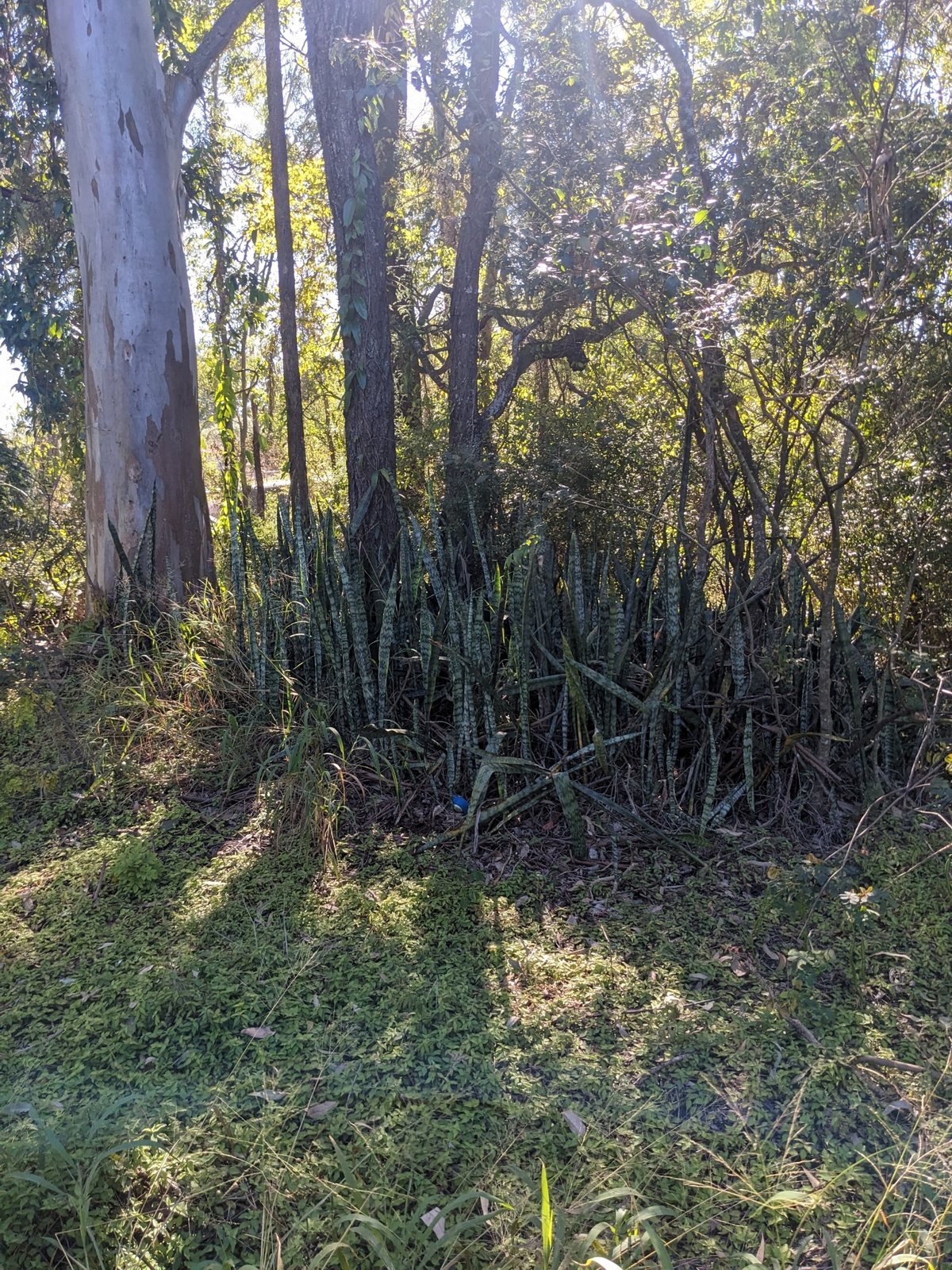
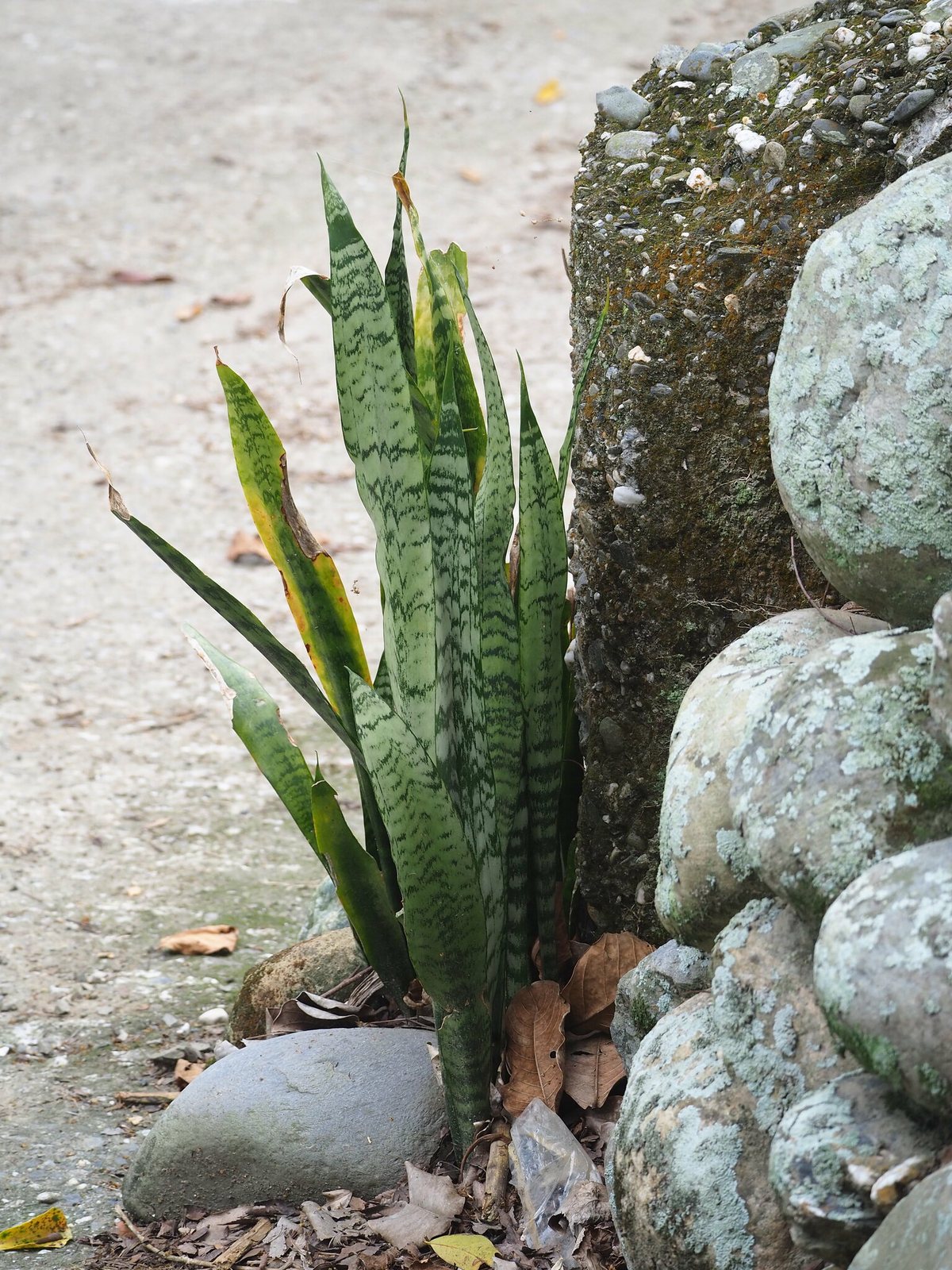
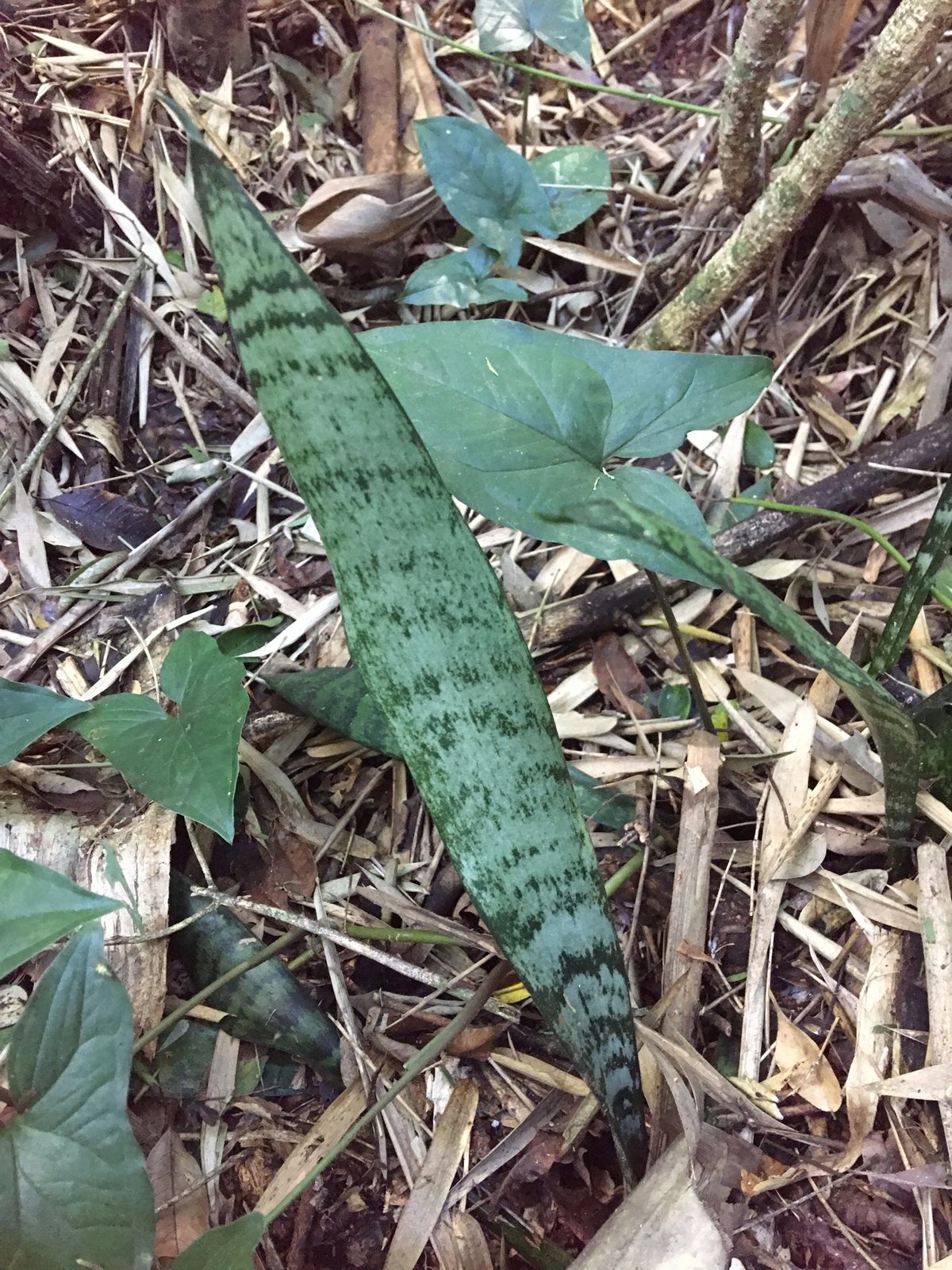
- Evergreen. Thick, upright, sword-shaped leaves with grey-green horizontal bands on dark green. Some cultivars have yellow margins or shorter, rosette-forming growth.
- Growth
- Slow to moderate in warmth and bright light; very slow in low light
- Care needed
- Low
The year at a glance
- Drought tolerant
- Heat tolerant
- Low allergen
| J | F | M | A | M | J | J | A | S | O | N | D | |
|---|---|---|---|---|---|---|---|---|---|---|---|---|
| Plant |
Northern hemisphere months. In Australia, shift them by six.
- Difficulty
- Easy
- Toughness
- Very tough
Will it suit your garden?
Pick your zone, country, light and whether you have pets.
Full sun is 6 or more hours of direct sun a day, part shade 3 to 6 hours, shade under 3.
How it grows
Planting day
0.8 ft (0.25 m)
After 1 year
1.1 ft (0.33 m)
After 2 years
1.4 ft (0.42 m)
After 3 years
1.6 ft (0.5 m)
After 5 years
2.2 ft (0.67 m)
About 8 years to full size.
From a typical nursery size, at an average rate for this kind of plant. A rule of thumb, not a forecast.
Good to know
- Cats and dogs
- Toxic
- Invasive in
- the US and Australia
- In the garden
- Spreads vigorously: plan to contain it.
- Growth rate
- Slow
Care
Jobs through the year
- WaterMar–May, Sep–Oct, every 21 days
- Grow in a pot here; water only when the mix is dry throughout, then drain completely.
- WaterJun–Aug, every 14 days
- Check the entire mix is dry before watering; never leave water in the saucer.
- WaterJan–Feb, Nov–Dec, every 42 days
- Indoors, water sparingly only after complete drying; low-light plants may need less.
- FeedApr–Aug, every 42 days
- Apply diluted houseplant fertilizer lightly during active growth, following the label.
- DivideApr–May
- Divide only overcrowded clumps if desired, using clean tools and free-draining mix.
- ProtectJun–Aug
- Outdoor placement is temporary: keep above 10°C, acclimatise in shade and shelter from persistent rain.
- ProtectSep–Oct
- Bring outdoor pots indoors before nights fall below 10°C.
- ProtectJan–Mar, Nov–Dec
- Keep above 10°C and prevent leaves touching cold window glass.
- Check that the mix has dried throughout before watering; empty the saucer afterwards.
- Feed lightly with a diluted houseplant fertiliser during spring and summer, following the label; do not feed in winter.
- Keep plants above 50°F (10°C), away from cold windows and frost.
- Repot in spring only when rhizomes crowd or distort the pot, using a container just slightly larger.
- Move outdoor pots into brighter light gradually, and shelter them from prolonged rain.
Pruning. Remove dead, rotting or badly damaged leaves at soil level with a clean, sharp blade whenever needed. Avoid trimming healthy leaf tips, as cut ends remain visibly scarred.
Through the year
- Spring
- Repot crowded plants or divide clumps as active growth begins.
- Spring
- Resume light feeding and increase watering only as the mix dries more quickly.
- Summer
- If moving a pot outdoors, wait until nights remain above 50°F (10°C) and acclimatise it in shade.
- Summer
- Inspect leaf bases and crevices for mealybugs, and keep outdoor pots out of persistent rain.
- Autumn
- Bring pots indoors before nights fall below 50°F (10°C); stop feeding as growth slows.
- Winter
- Water sparingly after the mix dries throughout, and keep leaves clear of cold glass.
In the garden
- Use a single clump in a simple container beside an entrance or in a bright interior corner for a strong vertical outline.
- Repeat matching pots along a sheltered, frost-free courtyard wall for a restrained architectural rhythm.
- Pair with rounded succulents in separate pots to contrast upright leaves with softer shapes.
- Use containers beneath a covered patio in warm climates, where shelter helps prevent waterlogged roots.
Garden styles it suits: Contemporary minimal, Mid-century modern, Urban city garden, Architectural minimal, Modern tropical and Small-space.
Plant it with: ZZ plant, Ponytail palm, Jade plant and Cast iron plant.
Wildlife: Flowers may attract moths and other insects in warm outdoor settings, but this is not a major wildlife-supporting plant in the regions covered.
Problems to watch for
- Root or rhizome rot causes soft bases and collapsing leaves: remove rotten tissue, repot sound sections in fresh, dry, free-draining mix, and reduce watering.
- Mealybugs appear as white cottony clusters: isolate the plant, wipe off visible insects, and use a labelled houseplant treatment if they persist.
- Cold damage causes water-soaked patches and leaf collapse: move the plant somewhere warmer and remove damaged leaves; badly rotted crowns may not recover.
- Sun scorch produces pale or brown dry patches: move to filtered light and introduce stronger sun gradually; damaged areas will not turn green again.
Safety
Toxic to cats and dogs if chewed or swallowed; leaves and other plant tissues contain saponins that can cause drooling, vomiting and diarrhoea. In people, ingestion can cause mouth irritation and stomach upset; serious poisoning is uncommon. Horse-specific toxicity is not well documented, so keep it away from grazing animals.
Where it spreads. Spreads by underground rhizomes and discarded plant pieces. It is invasive in parts of Florida and Hawaii and is an environmental weed in parts of Queensland, Australia. Keep it in containers in these regions and never dump divisions or garden waste in bushland.
Easily confused with
African spear plant (Dracaena angolensis)
Has cylindrical, spear-like leaves rather than the broad, flattened blades of snake plant.
Whale fin snake plant (Dracaena masoniana)
Produces much broader, paddle-shaped leaves, often with only one or a few prominent blades per pot.
Mauritius hemp (Furcraea foetida)
Forms a large, spreading rosette of arching leaves rather than a clump of narrow upright blades; mature plants are substantially larger.
The name
Snake plant refers to the snakeskin-like leaf markings, while the species name trifasciata means three-banded.
Propagation. Divide rhizomes with attached roots and leaves in spring or summer. Leaf cuttings also root in a warm, free-draining medium, but yellow-edged cultivars usually lose their edging when propagated this way; divide them to retain their markings.
Checked against open data
- Accepted botanical name
- Dracaena trifasciata
- Native range
- Cameroon, Central African Repu, Congo, Equatorial Guinea, Gabon, Nigeria, Tanzania and Zaïre.
Sources: GBIF (CC BY 4.0) and Trefle (CC BY 4.0). The care and design notes are LandscapeGPT's own.
See it in your own yard.
Upload a photo of your yard and see it redesigned with plants that suit your climate, each checked against your zone.