Snow-in-summer paperbark
Melaleuca linariifolia. Family Myrtaceae. Tree.
Also called Snow-in-summer, Flax-leaved paperbark, Narrow-leaved paperbark.
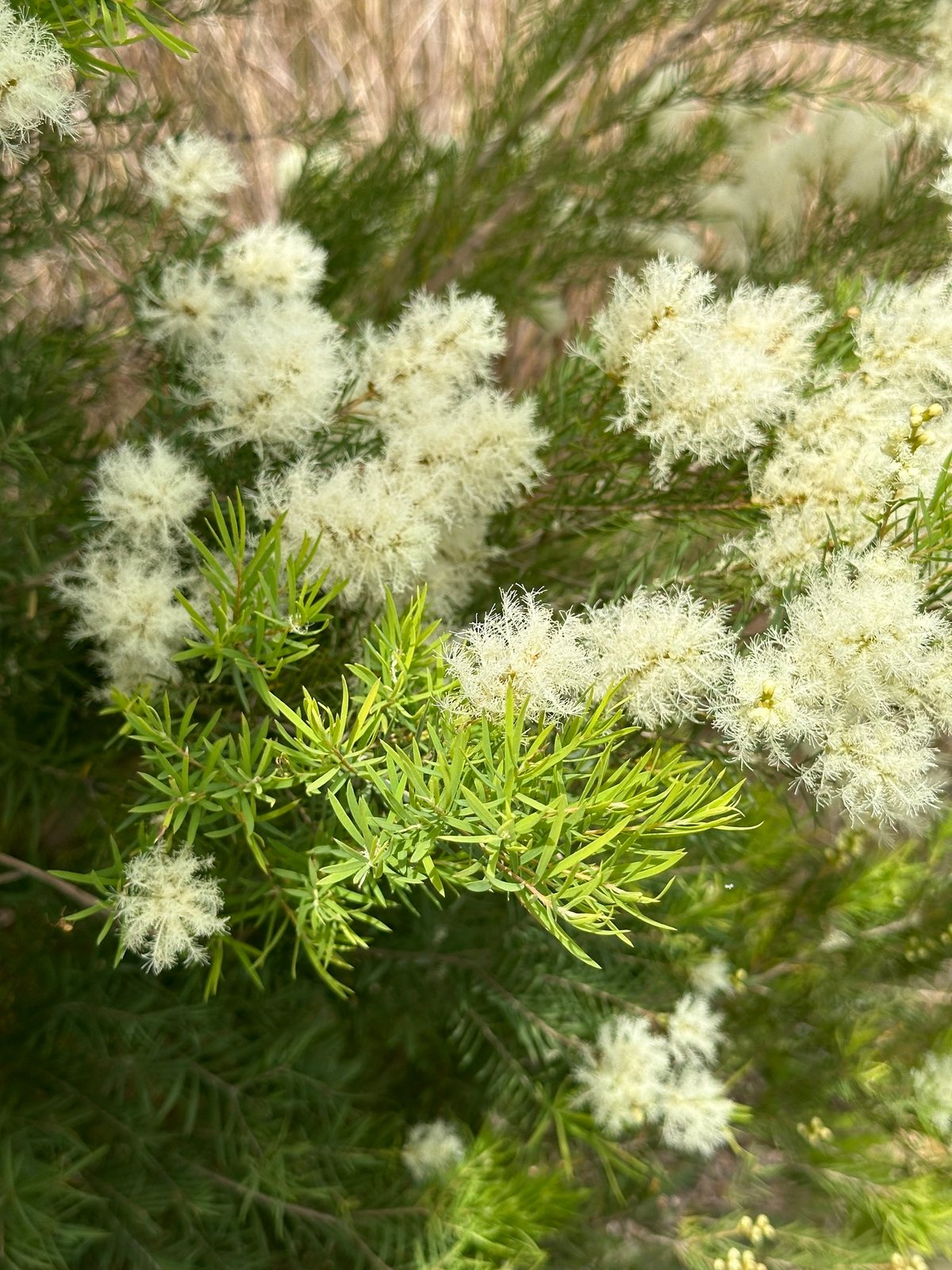
An evergreen Australian tree with soft, peeling, cream-coloured bark and masses of white summer flowers that can almost hide the foliage. Grow it for shade, bark texture and nectar-rich flowers in a warm garden with room for its spreading crown. It is not reliably hardy outdoors across most of the United Kingdom or Canada.
At a glance
- Sun
- Full sun; tolerates light shade but flowers less freely.
- Water
- Water regularly while establishing. Established trees tolerate dry spells, but grow best with moisture available deep in the soil; they also tolerate periodic waterlogging.
- Soil
- Adaptable to sandy, loamy or clay soils, including seasonally wet ground; prefers slightly acidic to neutral soil.
- Height
- 20-35 ft (6-10.5 m)
- Spread
- 15-25 ft (4.5-7.5 m)
- Flowers
- Dense, fluffy white flower clusters in late spring and summer; the main display is usually in summer.
- Foliage
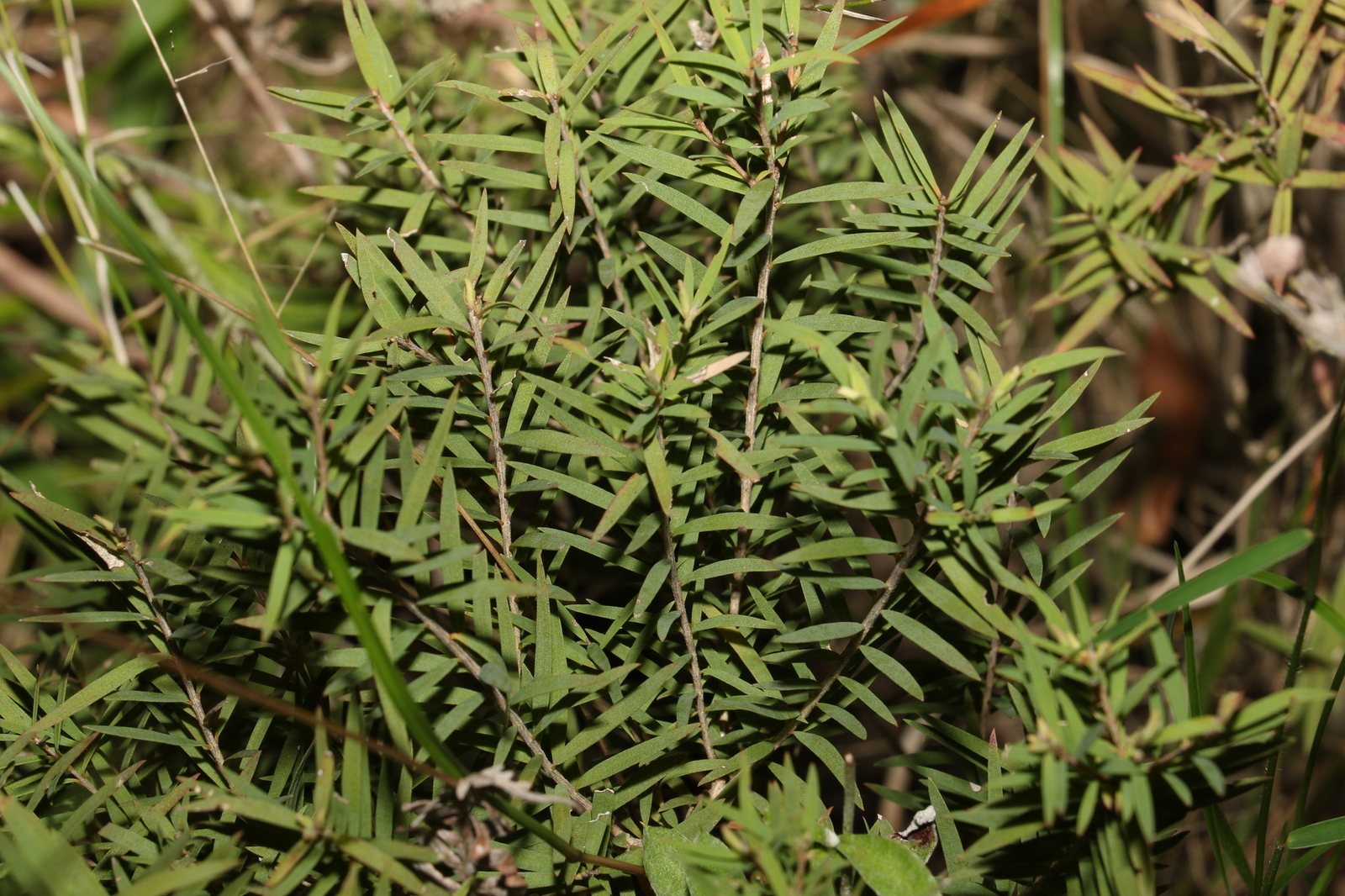
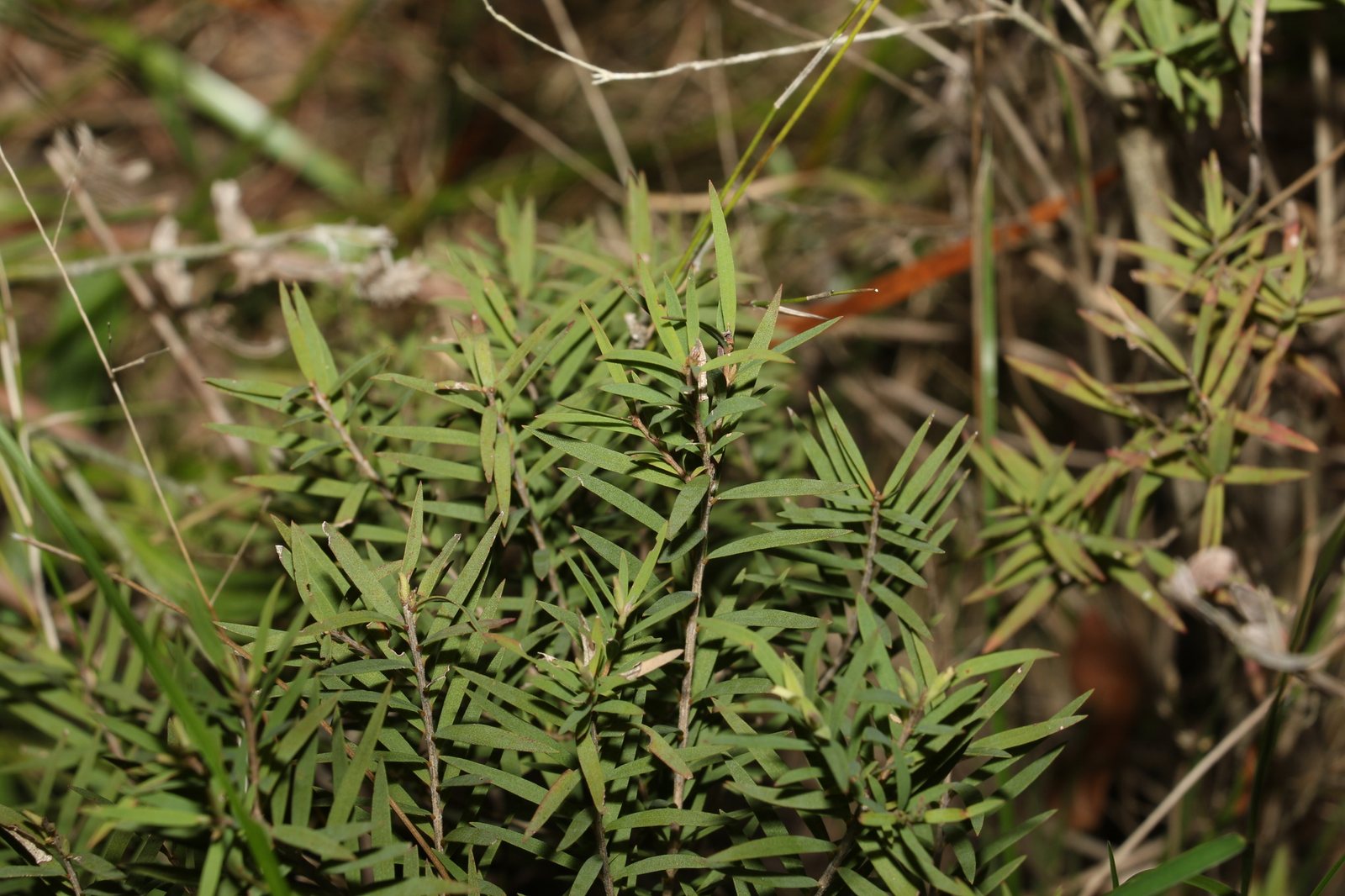
- Evergreen, narrow, pointed green leaves, usually arranged in opposite pairs; aromatic when crushed.
- Growth
- Moderate to fast with warmth and adequate moisture.
- Care needed
- Low
The year at a glance
- Pollinators
- Drought tolerant
- Heat tolerant
- Wildlife
- Low allergen
| J | F | M | A | M | J | J | A | S | O | N | D | |
|---|---|---|---|---|---|---|---|---|---|---|---|---|
| Flowers | ||||||||||||
| Plant |
Northern hemisphere months. In Australia, shift them by six.
- Difficulty
- Hard
- Toughness
- Fairly tough
Will it suit your garden?
Pick your zone, country, light and whether you have pets.
Full sun is 6 or more hours of direct sun a day, part shade 3 to 6 hours, shade under 3.
How it grows
Planting day
7 ft (2 m)
After 1 year
8 ft (2.4 m)
After 2 years
9 ft (2.8 m)
After 3 years
10 ft (3.2 m)
After 5 years
13 ft (4 m)
About 16 years to full size.
From a typical nursery size, at an average rate for this kind of plant. A rule of thumb, not a forecast.
Good to know
- Cats and dogs
- Safe
- Native to
- Australia
- Growth rate
- Fast
Care
Jobs through the year
- WaterApr–May, Sep–Oct, every 14 days
- Check established ground trees and water during dry spells; young trees need more frequent watering.
- WaterJun–Aug, every 7 days
- Deep-water established ground trees in dry weather; give extra attention during the first two summers.
- FeedApr–May
- Feed only for poor growth with a light application of native-plant fertiliser.
- MulchSep
- Renew mulch over the root area without piling it against the trunk.
- PruneApr–May
- Remove frost-killed wood once spring growth shows which branches survived.
- PruneAug–Sep
- After flowering, lightly remove crossing or damaged branches and develop a sound young framework.
- ProtectJan–Apr, Oct–Dec
- Needs a frost-free conservatory in zones 6–7; ordinary outdoor winter protection is insufficient.
- Water deeply through the first two growing seasons, allowing the surface soil to dry slightly between waterings.
- Mulch over the root area, keeping mulch clear of the trunk.
- Feed only if growth is poor; use a light application of fertiliser suitable for Australian native plants.
- Plant where the mature crown and roots have space, away from paving, drains and building foundations.
- Protect young trees from frost and cold, drying winds.
Pruning. Prune lightly after flowering to remove dead, damaged or crossing branches. Develop a sound branch framework while the tree is young rather than repeatedly cutting back a mature crown.
Through the year
- Spring
- Plant after frost risk has passed, and water thoroughly.
- Spring
- Check young trees for frost damage and remove dead wood once new growth shows what has survived.
- Early summer
- Check soil moisture during dry weather, especially around recently planted trees.
- After summer flowering
- Lightly prune for shape if needed, retaining the tree's natural spreading crown.
- Autumn
- Renew mulch without piling it against the trunk.
- Winter
- Protect young specimens during forecast frosts; check ties and stakes after strong winds.
In the garden
- Use as a specimen shade tree where its white flowers and pale bark can be seen from the house.
- Plant beside a broad lawn or open seating area, allowing room for fallen leaves, bark and flowers.
- Combine with lomandra, dianella and native sedges for a layered Australian planting.
- Use on the higher margins of a rain garden or seasonally damp garden, leaving space for its mature roots.
Garden styles it suits: Australian native, Wildlife garden, Pollinator garden, Low-maintenance, White garden and Woodland.
Plant it with: Spiny-headed mat-rush, Blue flax-lily, Knobby club-rush, Swamp banksia and Coastal rosemary.
Wildlife: Flowers provide nectar and pollen for bees and other insects, and attract nectar-feeding birds in Australia. The crown provides shelter for small birds.
Problems to watch for
- Frost can scorch foliage and kill young shoots: choose a sheltered, warm site and protect young trees during cold snaps.
- Myrtle rust can cause yellow-orange pustules and distorted new growth, especially in humid Australian regions: avoid moving infected material and follow local plant-health advice.
- Scale insects can produce sticky honeydew and sooty mould: encourage beneficial insects and treat accessible infestations with a labelled horticultural oil.
- Roots can lift nearby paving or enter damaged drains: allow generous planting clearance and repair leaking pipes.
Safety
The living plant is not generally known to be toxic to people, cats, dogs or horses, although species-specific safety information is limited. Do not eat the leaves or give them to animals; concentrated melaleuca oils can cause serious poisoning if swallowed and should not be applied to pets.
Where it spreads. Listed as invasive in South Africa. Check local restrictions before planting, and prevent seedlings from establishing near waterways or natural vegetation.
Easily confused with
Prickly-leaved paperbark (Melaleuca styphelioides)
Has shorter, broader, distinctly prickly leaves rather than the slender, flax-like leaves of snow-in-summer.
Broad-leaved paperbark (Melaleuca quinquenervia)
Has much broader leaves with five conspicuous lengthwise veins and more clearly cylindrical flower spikes.
Bracelet honey-myrtle (Melaleuca armillaris)
Has very fine leaves arranged alternately around the stems and flowers in more distinct cylindrical spikes; snow-in-summer usually has opposite leaf pairs.
The name
The name linariifolia means flax-leaved, while snow-in-summer describes the mass of white flowers and paperbark refers to the peeling bark.
Propagation. Raise from the fine seed released by mature woody capsules, surface-sowing onto moist seed compost in warmth and light. Named selections should be propagated from semi-ripe cuttings to retain their characteristics.
Checked against open data
- Accepted botanical name
- Melaleuca linariifolia
- In the US and Canada
- Introduced in the lower 48 states.
- Native range
- New South Wales and Queensland.
- Measured
- Average height 1000 cm.
Sources: GBIF (CC BY 4.0), USDA PLANTS and Trefle (CC BY 4.0). The care and design notes are LandscapeGPT's own.
See it in your own yard.
Upload a photo of your yard and see it redesigned with plants that suit your climate, each checked against your zone.