Southern wood fern
Dryopteris ludoviciana. Family Dryopteridaceae. Fern.
Also called Southern shield fern, Florida shield fern.
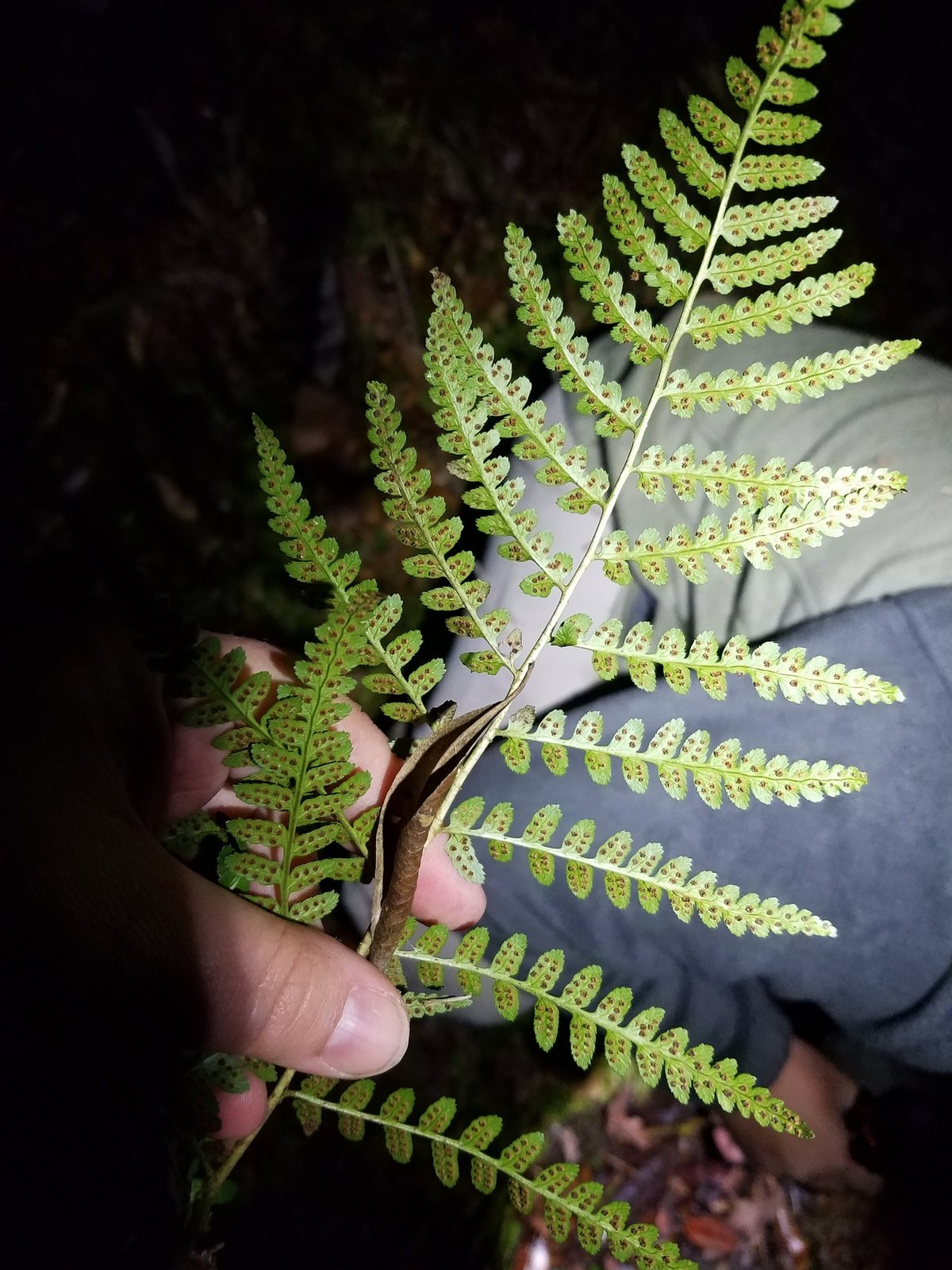
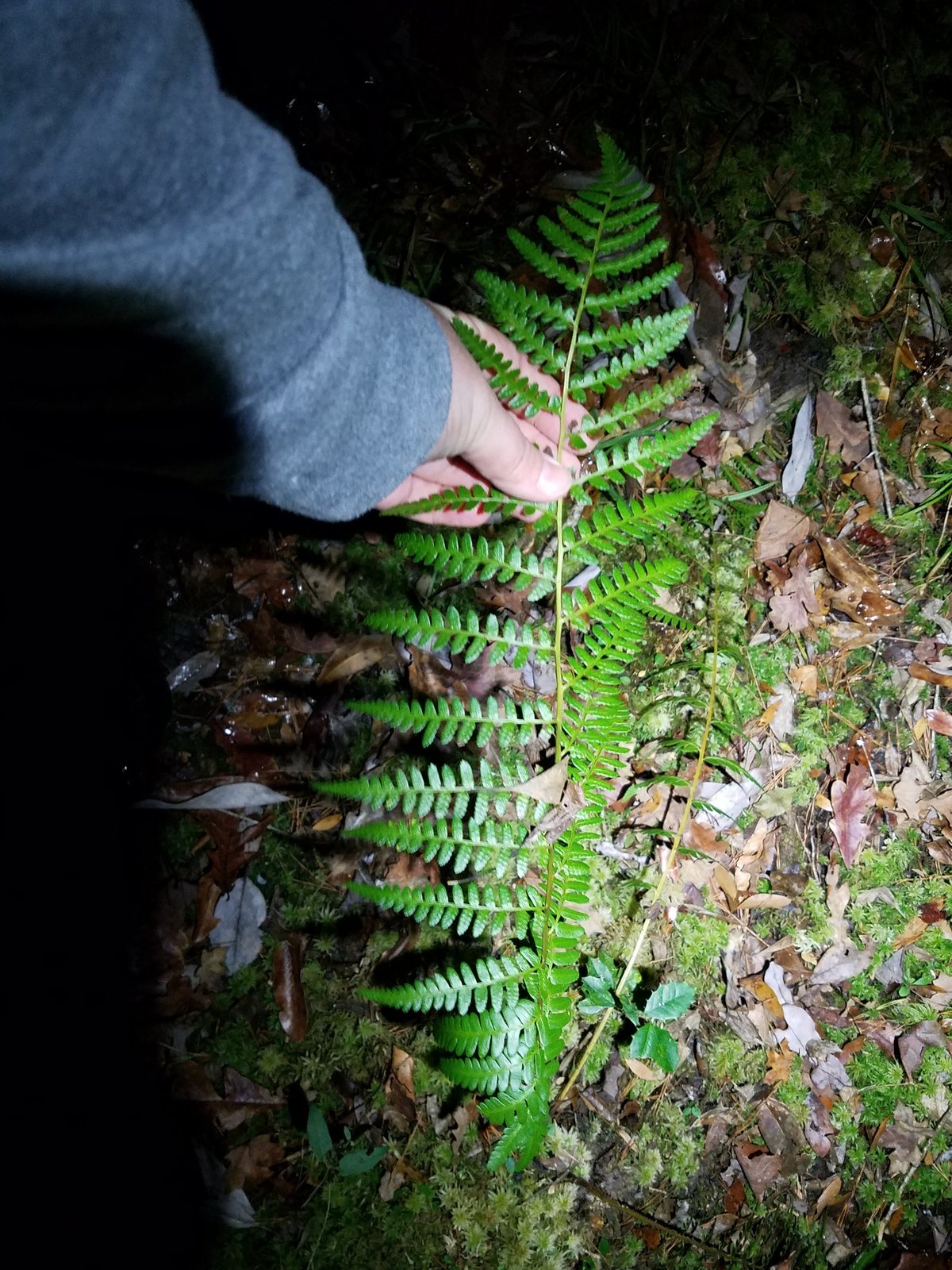
Southern wood fern is a clump-forming fern native to the southeastern United States, grown for its tall, glossy green fronds and upright shape. It brings structure to damp, shaded gardens and stays evergreen in mild climates, though cold winters can kill back its foliage.
At a glance
- Sun
- Partial to full shade; protect from strong afternoon sun, especially in hot or dry gardens.
- Water
- Keep consistently moist, particularly during establishment. Established plants tolerate brief wet periods but should not be allowed to dry out repeatedly.
- Soil
- Humus-rich, moist to wet soil, preferably acidic to neutral. Tolerates clay if it remains aerated rather than stagnant.
- Height
- 2-4 ft (0.6-1.2 m)
- Spread
- 2-3 ft (0.6-0.9 m)
- Foliage
- Upright to arching, glossy dark green fronds with finely divided lower sections. Evergreen in mild winters and semi-evergreen or deciduous near its cold limit.
- Growth
- Moderate
- Care needed
- Low
The year at a glance
- Deer resistant
- Heat tolerant
- Wildlife
| J | F | M | A | M | J | J | A | S | O | N | D | |
|---|---|---|---|---|---|---|---|---|---|---|---|---|
| Plant |
Northern hemisphere months. In Australia, shift them by six.
- Difficulty
- Easy
- Toughness
- Fairly tough
Will it suit your garden?
Pick your zone, country, light and whether you have pets.
Full sun is 6 or more hours of direct sun a day, part shade 3 to 6 hours, shade under 3.
How it grows
Planting day
1 ft (0.3 m)
After 1 year
1.6 ft (0.5 m)
After 2 years
2.3 ft (0.7 m)
After 3 years
3 ft (0.9 m)
full size
About 3 years to full size.
From a typical nursery size, at an average rate for this kind of plant. A rule of thumb, not a forecast.
Good to know
- Cats and dogs
- Safe
- Native to
- the US
- Growth rate
- Moderate
Care
Jobs through the year
- WaterMar–May, Sep–Oct, every 7 days
- Check established plants and water deeply when the surface starts drying; new crowns need closer attention.
- WaterJun–Aug, every 4 days
- Check soil moisture and water if needed to prevent repeated drying; skip watering when soil remains moist.
- PruneFeb–Mar
- Remove dead or weathered fronds before new fiddleheads emerge, retaining healthy green fronds.
- MulchApr–May
- Top-dress with compost and maintain 5–8 cm of leaf mulch without covering the crown.
- DivideMar–Apr
- Divide established clumps only for propagation or size control, then water well.
- ProtectJan–Feb, Nov–Dec
- In exposed gardens, insulate the root area with loose leaves without burying the crown.
- Water deeply whenever the surface soil starts to dry; do not let newly planted crowns dry out.
- Work leaf mould or well-rotted compost into poor soil before planting, keeping the crown at soil level.
- Apply 2-3 in (5-8 cm) of leaf mulch, leaving the crown uncovered.
- Top-dress with compost in spring; routine heavy feeding is unnecessary.
- Divide established clumps in spring only when you want more plants or need to reduce their size.
Pruning. Remove dead or badly weathered fronds in late winter or early spring before new growth unfurls. Leave healthy green fronds in place and avoid cutting emerging fiddleheads.
Through the year
- Late winter
- Remove collapsed or frost-damaged fronds without cutting into the crown.
- Spring
- Plant or divide clumps as growth begins, then water thoroughly.
- Late spring
- Refresh leaf mulch and add a light compost top-dressing.
- Summer
- Check soil moisture during dry spells and water before fronds wilt or brown.
- Autumn
- Keep healthy fronds and allow a loose layer of fallen leaves to protect the root area.
In the garden
- Plant in groups beneath deciduous trees where the soil stays moist, using the upright fronds to contrast with broad-leaved perennials.
- Use along shaded pond margins, above the permanently submerged zone.
- Repeat through woodland borders for a consistent dark green backdrop to spring flowers.
- Place beside shaded paths or patios where the glossy, divided foliage can be seen closely.
Garden styles it suits: Woodland, Southern, Bog garden, Green on green, Japanese and Low-maintenance.
Plant it with: Hosta, Astilbe, Foamflower, Virginia bluebells, Japanese forest grass and Cardinal flower.
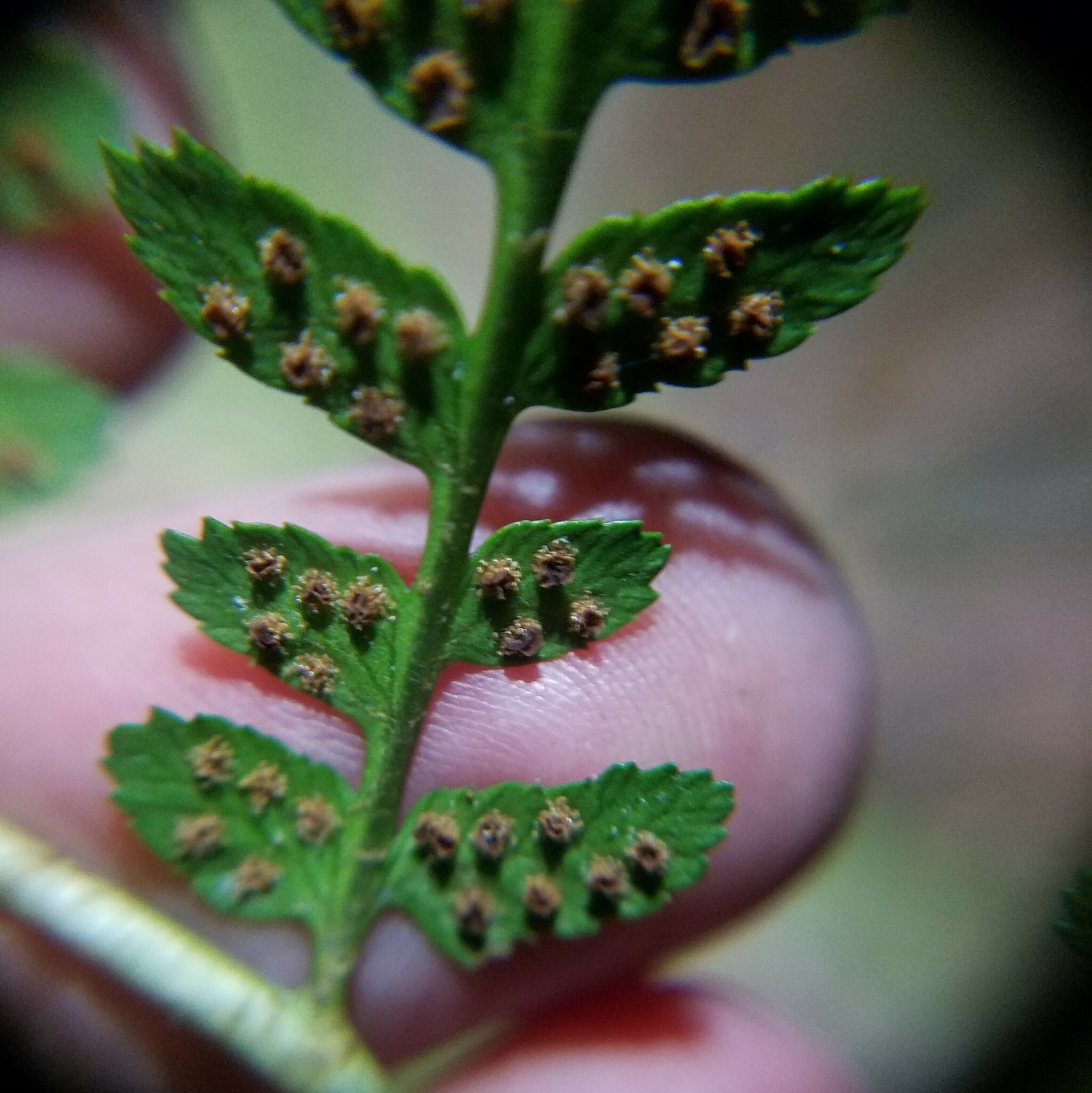
Wildlife: Dense clumps provide shelter for small ground-dwelling animals and invertebrates. Like other ferns, it produces spores rather than flowers, nectar or fruit.
Problems to watch for
- Brown, scorched fronds: reduce direct sun and keep the root zone consistently moist.
- Slugs and snails damaging emerging fronds: remove hiding places near the crown, hand-pick after dusk or use a labelled iron-phosphate bait.
- Crown rot in stagnant soil: keep the crown at soil level and improve drainage where water stands for long periods.
- Winter-browned foliage: leave the crown undisturbed and remove damaged fronds before spring growth; exposed sites may need additional leaf mulch.
Safety
Not known to be toxic to cats, dogs or horses. Human toxicity is not well documented; do not eat the fronds, fiddleheads or rhizomes.
Easily confused with
Christmas fern (Polystichum acrostichoides)
Christmas fern has leathery, once-divided fronds with a small thumb-like projection at the base of each leaflet. Southern wood fern has more finely divided lower leaflets and generally taller, more upright growth.
Autumn fern (Dryopteris erythrosora)
Autumn fern typically opens coppery or reddish new fronds and forms a shorter, broader clump. Southern wood fern opens green and develops taller, more upright fronds.
The name
The species name ludoviciana means 'of Louisiana', referring to the region associated with its original description.
Propagation. Divide mature clumps in spring, keeping several growing points and a good root system on each division. It can also be raised from spores, but this is slow and requires clean, consistently humid conditions.
Checked against open data
- Accepted botanical name
- Dryopteris ludoviciana
- In the US and Canada
- Native in the lower 48 states.
- Native range
- Alabama, Arkansas, Florida, Georgia, Kentucky, Louisiana, Mississippi, North Carolina, South Carolina and Texas.
Sources: GBIF (CC BY 4.0), USDA PLANTS and Trefle (CC BY 4.0). The care and design notes are LandscapeGPT's own.
See it in your own yard.
Upload a photo of your yard and see it redesigned with plants that suit your climate, each checked against your zone.