Spaghetti squash
Cucurbita pepo 'Vegetable Spaghetti'. Family Cucurbitaceae. Annual.
Also called Vegetable spaghetti, Spaghetti marrow.
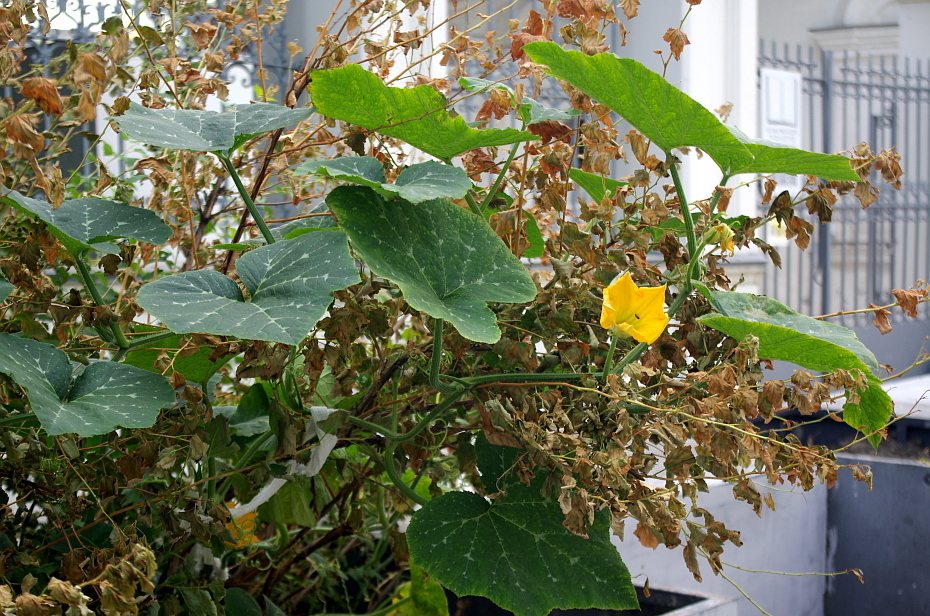
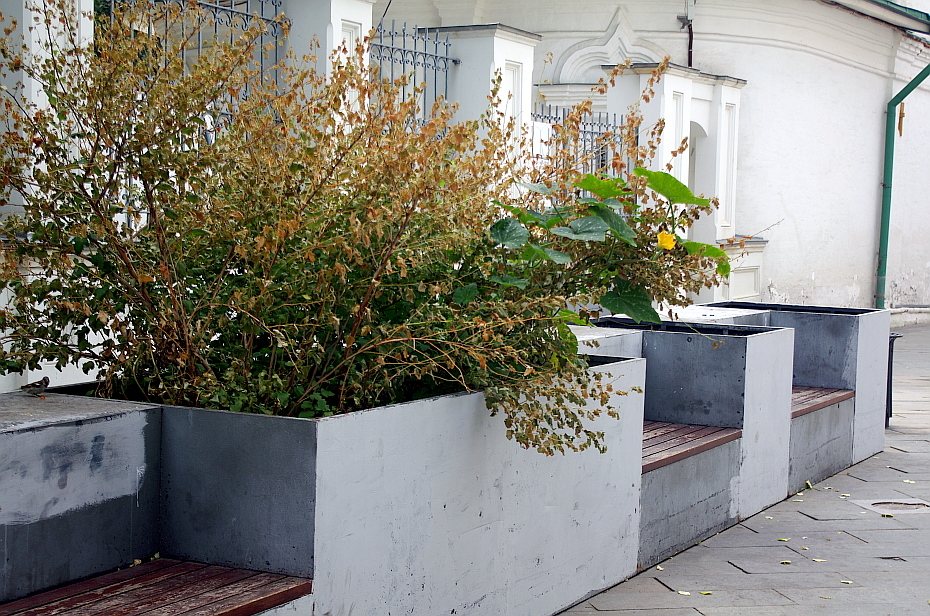
Spaghetti squash is a frost-tender vine grown as an annual for its oval, pale-yellow winter squash. The cooked flesh separates into spaghetti-like strands; allow plenty of ground space and a long, warm growing season for fruit to ripen.
At a glance
- Sun
- Full sun, ideally at least 6-8 hours of direct sunlight daily.
- Water
- Keep soil evenly moist, particularly during flowering and fruit development. Water deeply at soil level rather than wetting the leaves.
- Soil
- Fertile, moisture-retentive but well-drained soil enriched with compost; slightly acidic to neutral soil is ideal.
- Height
- 1-2 ft (0.3-0.6 m) unsupported
- Spread
- 8-15 ft (2.4-4.6 m)
- Flowers
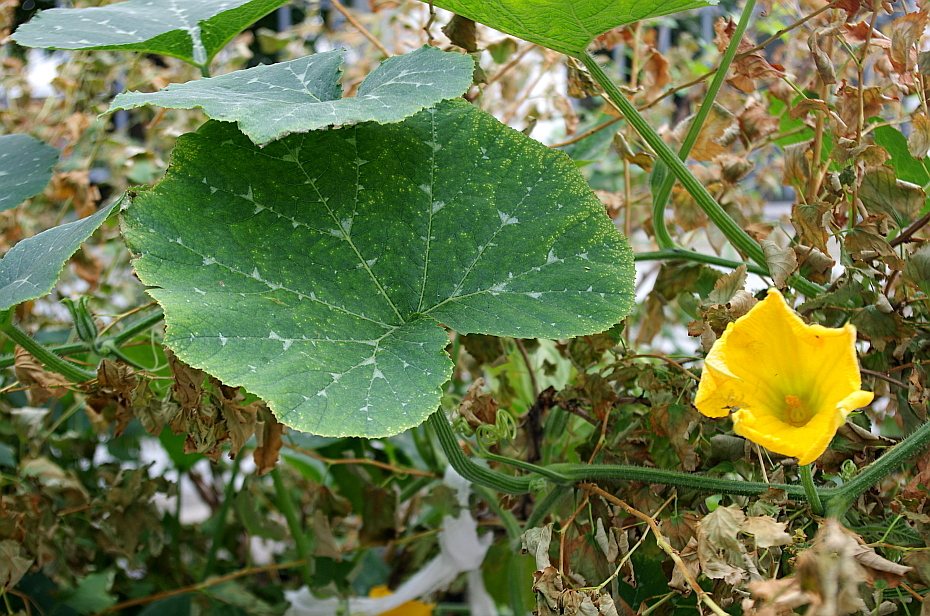
- Large yellow flowers from summer into early autumn; separate male and female flowers grow on the same plant.
- Foliage
- Large, rough, green leaves with shallow lobes, carried on prickly stems and trailing vines.
- Growth
- Fast in warm weather.
- Care needed
- Medium
The year at a glance
- Pollinators
- Heat tolerant
- Low allergen
- Edible
| J | F | M | A | M | J | J | A | S | O | N | D | |
|---|---|---|---|---|---|---|---|---|---|---|---|---|
| Flowers | ||||||||||||
| Fruit | ||||||||||||
| Plant |
Northern hemisphere months. In Australia, shift them by six.
- Difficulty
- Moderate
- Toughness
- Fairly tough
Will it suit your garden?
Pick your zone, country, light and whether you have pets.
Full sun is 6 or more hours of direct sun a day, part shade 3 to 6 hours, shade under 3.
How it grows
Planting day
0.5 ft (0.15 m)
After 1 year
1.5 ft (0.45 m)
full size
Full size in one season.
From a typical nursery size, at an average rate for this kind of plant. A rule of thumb, not a forecast.
Good to know
- Cats and dogs
- Safe
- Native to
- the US
- Growth rate
- Fast
Care
Jobs through the year
- WaterMay–Jun, every 4 days
- Water in-ground plants deeply as soil dries; check new transplants more often.
- WaterJul–Aug, every 3 days
- Keep soil evenly moist during fruit development, adjusting for rainfall.
- WaterSep, every 7 days
- Water during dry spells while fruit develops; avoid soaking ripening fruit.
- FeedApr–May
- Incorporate compost before planting.
- FeedJun–Jul
- Apply balanced vegetable fertilizer according to its label; avoid excessive nitrogen.
- MulchJun
- Mulch warmed soil, leaving the main stem clear.
- ProtectMay–Jun
- Harden off plants and transplant after frost when soil reaches at least 16°C.
- ProtectJul–Sep, every 7 days
- Inspect for pests and rest fruit on dry boards or straw; sling trellised fruit.
- PruneAug
- In short seasons, optionally pinch vine tips after several fruits set; retain healthy leaves.
- HarvestSep–Oct
- Cut hard-skinned, pale-yellow fruit before frost, leaving stalks; cure for 10–14 days.
- Plant out after the last frost, once soil has warmed to at least 60°F (16°C); harden off indoor-raised plants first.
- Allow about 3-4 ft (0.9-1.2 m) between plants and leave room for vines to spread beyond the planting area.
- Water deeply during dry spells, keeping moisture consistent while fruit develops.
- Mulch after the soil warms to retain moisture and suppress weeds; keep mulch away from the main stem.
- Add compost before planting and feed with a balanced vegetable fertilizer according to its label; avoid excessive nitrogen.
- Rest developing fruit on a dry board or straw; if training vines up a sturdy trellis, support each fruit with a sling.
Pruning. Routine pruning is unnecessary; remove dead or badly diseased leaves with clean secateurs. In short-season areas, pinch out growing tips in late summer after several fruits have set to limit further growth, while retaining healthy leaves around the fruit.
Harvest
Cut mature squash in late summer or autumn, usually about 90-110 days from sowing, allowing longer in cool conditions. Harvest when the skin is pale yellow, hard enough to resist a thumbnail, and the stalk is drying; leave a short stalk attached and bring fruit in before frost. Cure sound, mature fruit in a warm, dry, ventilated place for about 10-14 days before storing somewhere cool, dry and frost-free.
Through the year
- Early spring
- Prepare a sunny bed with compost and plan enough space for the vines.
- Mid-spring
- In short-season climates, sow indoors in individual pots 3-4 weeks before the expected last frost.
- Late spring
- Harden off and plant seedlings after frost danger has passed and soil is warm; direct-sow in warmer districts.
- Summer
- Mulch, water deeply and guide vines away from paths and neighbouring crops.
- Mid-summer
- Check flowers and young fruit; if pollination is poor, transfer pollen from a fresh male flower to a female flower in the morning.
- Late summer
- Keep fruit off wet soil and check leaves regularly for mildew and pests.
- Autumn
- Harvest mature fruit before frost, cure it for storage and remove spent vines.
In the garden
- Grow along the sunny edge of a vegetable plot, directing vines onto a designated open area.
- Train over a strong trellis at the back of a kitchen garden, with slings supporting the fruit.
- Use in a large potager bed with calendula or nasturtiums along the margins for flowers and visiting insects.
- Let vines cover a mulched area in an edible landscape, away from low-growing plants they could smother.
Garden styles it suits: Potager (kitchen garden), Cottage garden, Farmhouse, Edible landscape, Homestead and Family-friendly.
Plant it with: Nasturtium, Calendula, Borage, Dill and Bush beans.
Wildlife: Flowers provide pollen and nectar for bees, including squash bees where present in North America. Bee visits are important for fruit set.
Problems to watch for
- Powdery mildew: white powder develops on leaves, especially later in the season. Provide good spacing, maintain steady watering and remove badly affected leaves without stripping the plant.
- Squash bugs and squash vine borers, chiefly in North America: inspect leaf undersides for egg clusters and stems for damage. Remove eggs and bugs by hand; use insect mesh before flowering, then uncover for pollination.
- Poor fruit set: young fruit yellows and drops when pollination is inadequate or weather is unfavourable. Encourage pollinators and hand-pollinate fresh female flowers in the morning if needed.
- Fruit rot: squash resting on wet ground can decay. Improve drainage, place fruit on dry boards or straw and remove rotting fruit promptly.
Safety
Ordinary cultivated spaghetti squash is not known to be toxic to people, cats, dogs or horses. Rare, abnormally bitter fruit can contain poisonous cucurbitacins and cause severe vomiting and diarrhoea; discard any intensely bitter squash, as cooking does not make it safe. The hard rind and tough stalk can cause choking or digestive blockage if swallowed by pets.
Easily confused with
Vegetable marrow (Cucurbita pepo)
Marrows are often longer and green or striped, although colour varies. Their cooked flesh does not separate into the characteristic fine strands of spaghetti squash.
Butternut squash (Cucurbita moschata)
Typical butternuts have a long neck, swollen seed cavity and tan skin; spaghetti squash is oval and pale yellow when mature. Butternut flesh is orange and smooth rather than string-like when cooked.
The name
The name 'Vegetable Spaghetti' refers to the cooked flesh, which separates into long strands resembling spaghetti.
Propagation. Grow from seed, either sown directly into warm soil after frost or started indoors in individual pots. Avoid disturbing the roots when transplanting. Saved seed may cross with other Cucurbita pepo varieties and produce plants unlike the parent; buy seed for predictable fruit.
Checked against open data
- Accepted botanical name
- Cucurbita pepo
- In the US and Canada
- Native in the lower 48 states. Introduced in the lower 48 states, Pacific Basin and Puerto Rico.
- Native range
- Mexico Central, Mexico Gulf, Mexico Northeast, Mexico Northwest, Mexico Southeast and Mexico Southwest.
- Measured
- Average height 63 cm.
Sources: GBIF (CC BY 4.0), USDA PLANTS and Trefle (CC BY 4.0). The care and design notes are LandscapeGPT's own.
See it in your own yard.
Upload a photo of your yard and see it redesigned with plants that suit your climate, each checked against your zone.