Split-leaf philodendron
Thaumatophyllum bipinnatifidum. Family Araceae. Shrub.
Also called Tree philodendron, Lacy tree philodendron, Philodendron selloum, Philodendron bipinnatifidum.
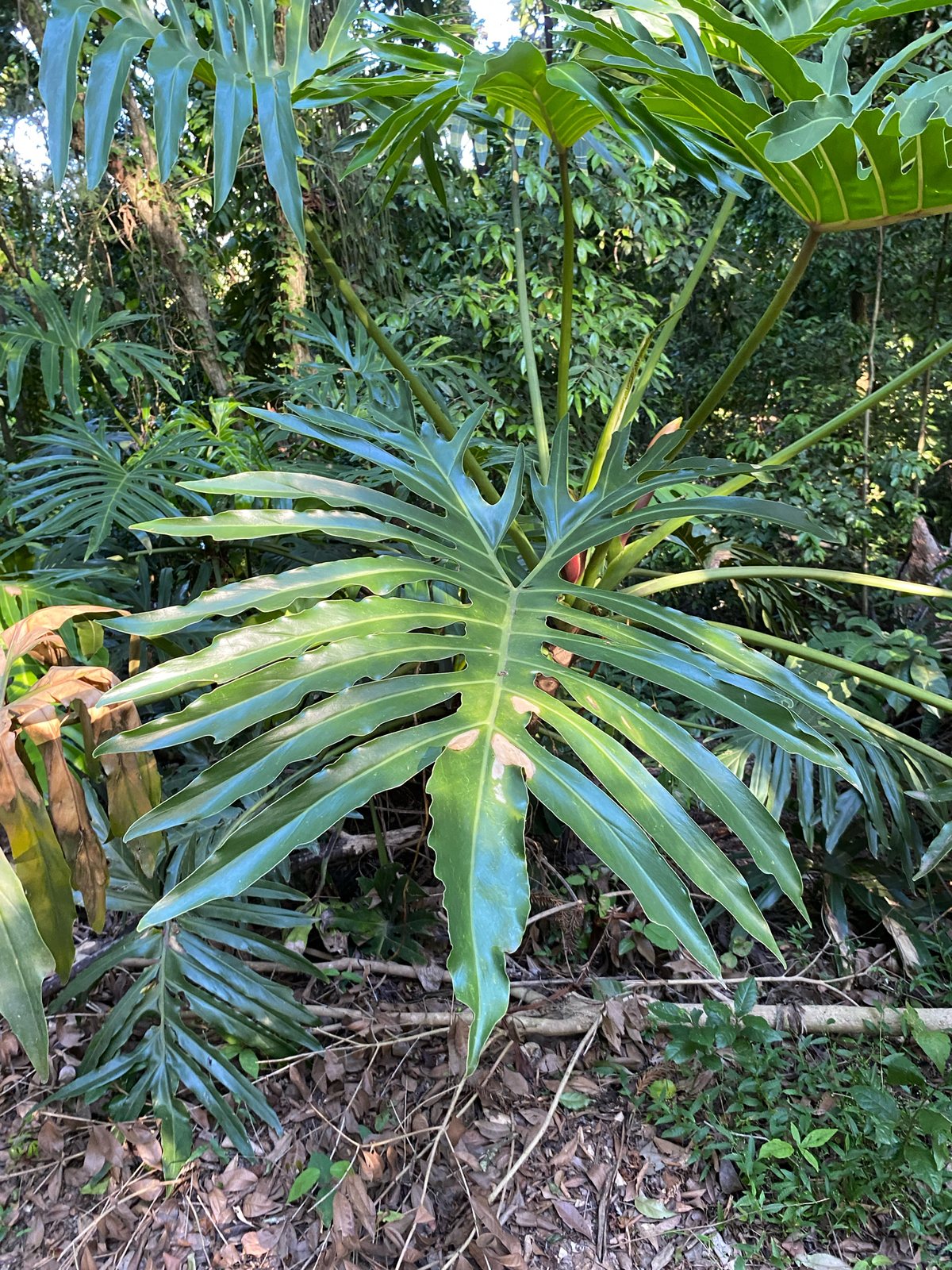
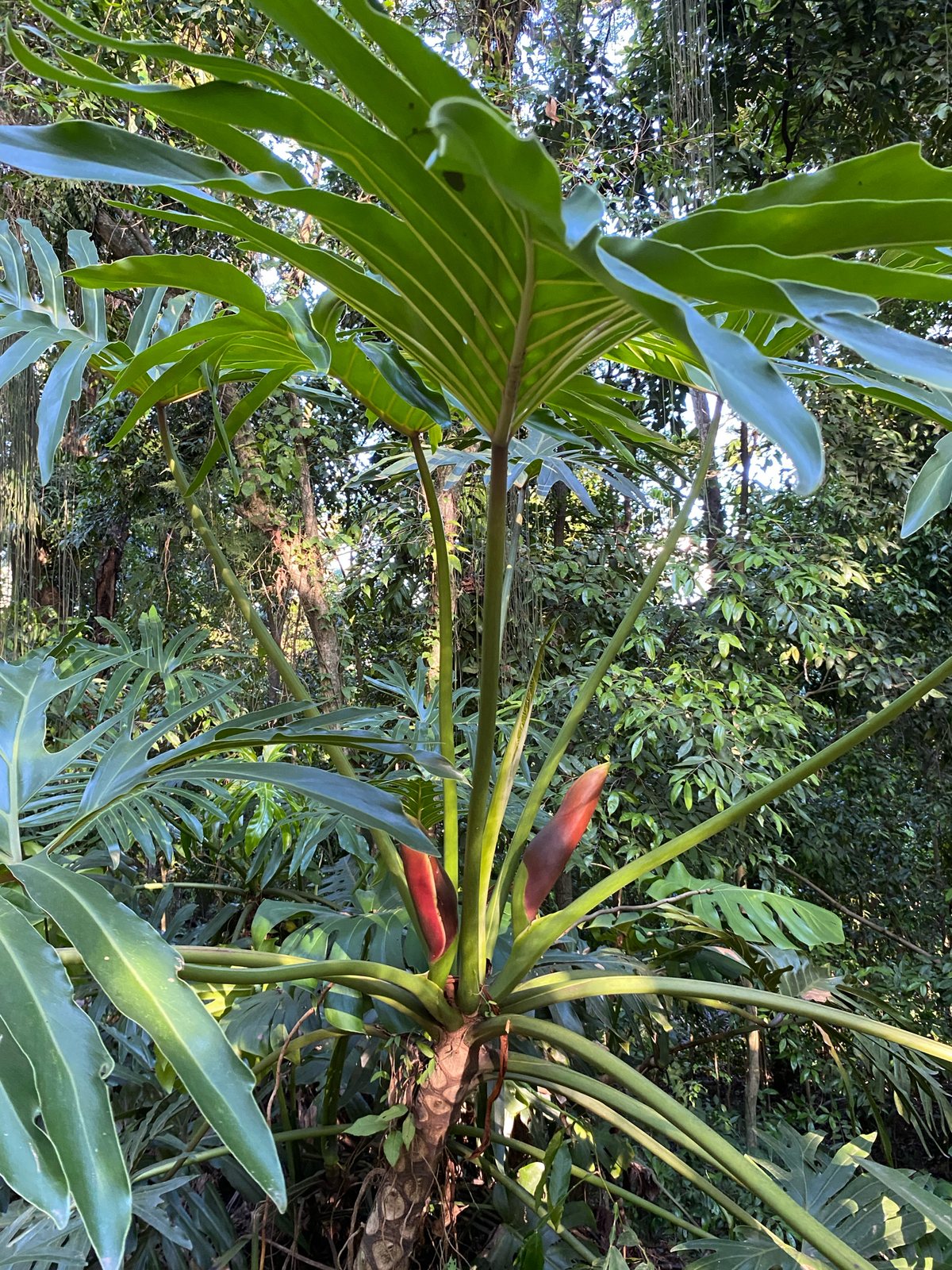
This large, evergreen tropical plant develops deeply divided leaves and a stout, trunk-like stem as it matures. Gardeners grow it for bold foliage in sheltered, frost-free gardens or in large containers brought under cover for winter; it is not reliably hardy outdoors in the UK or most of Canada.
At a glance
- Sun
- Partial shade or bright, filtered light; established plants can tolerate some direct sun, but hot afternoon sun may scorch the leaves.
- Water
- Water deeply when the surface soil begins to dry; keep evenly moist during active growth without leaving roots waterlogged. Water less in winter.
- Soil
- Fertile, moisture-retentive but freely draining soil; use an airy, bark-enriched potting mix in containers.
- Height
- 10-15 ft (3-4.6 m) outdoors in warm climates; usually smaller in containers
- Spread
- 8-15 ft (2.4-4.6 m)
- Foliage
- Evergreen. Large, glossy green leaves with deeply cut, wavy lobes, carried on long stalks; mature stems develop prominent leaf scars and aerial roots.
- Growth
- Moderate to fast in warm, moist conditions; slow in cool weather
- Care needed
- Medium
The year at a glance
- Heat tolerant
- Low allergen
| J | F | M | A | M | J | J | A | S | O | N | D | |
|---|---|---|---|---|---|---|---|---|---|---|---|---|
| Plant |
Northern hemisphere months. In Australia, shift them by six.
- Difficulty
- Moderate
- Toughness
- Fairly tough
Will it suit your garden?
Pick your zone, country, light and whether you have pets.
Full sun is 6 or more hours of direct sun a day, part shade 3 to 6 hours, shade under 3.
How it grows
Planting day
1.6 ft (0.5 m)
After 1 year
4 ft (1.2 m)
After 2 years
6 ft (1.8 m)
After 3 years
8 ft (2.5 m)
After 5 years
12 ft (3.8 m)
full size
About 5 years to full size.
From a typical nursery size, at an average rate for this kind of plant. A rule of thumb, not a forecast.
Good to know
- Cats and dogs
- Toxic
- Invasive in
- Australia
- Growth rate
- Moderate
Care
Jobs through the year
- WaterApr–May, Sep–Oct, every 10 days
- Grow in a movable container here; water when the compost surface dries and drain thoroughly.
- WaterJun–Aug, every 7 days
- Water thoroughly as the surface dries; check outdoor pots more often in hot weather.
- WaterJan–Mar, Nov–Dec, every 14 days
- Under cover, water only when the surface dries; never leave the pot standing in water.
- FeedApr–Aug, every 30 days
- Feed container plants with balanced fertilizer at the label rate.
- PruneApr–Jul
- Wearing gloves, remove yellow or damaged leaves without cutting into the main stem.
- ProtectJun
- Move outdoors only when nights stay above 10°C, gradually acclimatizing to filtered light.
- ProtectSep–Oct
- Bring into bright indoor shelter before nights regularly fall below 10°C.
- ProtectJan–May, Nov–Dec
- Keep indoors in bright filtered light, away from cold glass and draughts.
- Allow room for the mature leaf spread, away from narrow paths and doorways.
- Water the root zone thoroughly, then let the surface begin to dry before watering again.
- Feed container plants monthly during spring and summer with a balanced fertiliser at the label rate.
- Mulch outdoor plants to conserve moisture, keeping mulch clear of the stem.
- Move containers under cover before nights regularly fall below 50°F (10°C), and provide bright light.
- Repot in spring when roots fill the container, using a pot with drainage holes.
Pruning. In spring or summer, cut yellow, damaged or unwanted lower leaves close to their attachment with clean tools. Wear gloves, avoid cutting into the main stem, and do not remove large numbers of healthy leaves at once.
Through the year
- Spring
- Repot crowded container plants and refresh the surface compost of larger specimens.
- Spring
- Remove winter-damaged leaves once new growth starts and resume feeding.
- Early summer
- Move overwintered containers outdoors only when nights stay warm; introduce outdoor light gradually.
- Summer
- Check soil moisture frequently and inspect leaf undersides for pests.
- Autumn
- Bring containers into frost-free shelter before cold nights arrive.
- Winter
- Reduce watering, stop feeding if growth pauses, and keep plants away from cold glass and draughts.
In the garden
- Use as a bold foliage specimen in a sheltered courtyard with ample floor space.
- Plant beneath high-canopied trees with ferns and shade-tolerant foliage plants.
- Set a large container beside a covered terrace to create a tropical focal point.
- Contrast its divided leaves with upright palms or broad, undivided canna leaves.
Garden styles it suits: Modern tropical, Architectural minimal, Luxury resort, Tropical, Balinese and Brazilian tropical modernism.
Plant it with: Cast-iron plant, Bird's nest fern, Shell ginger, Bromeliads, Lady palm and Canna.
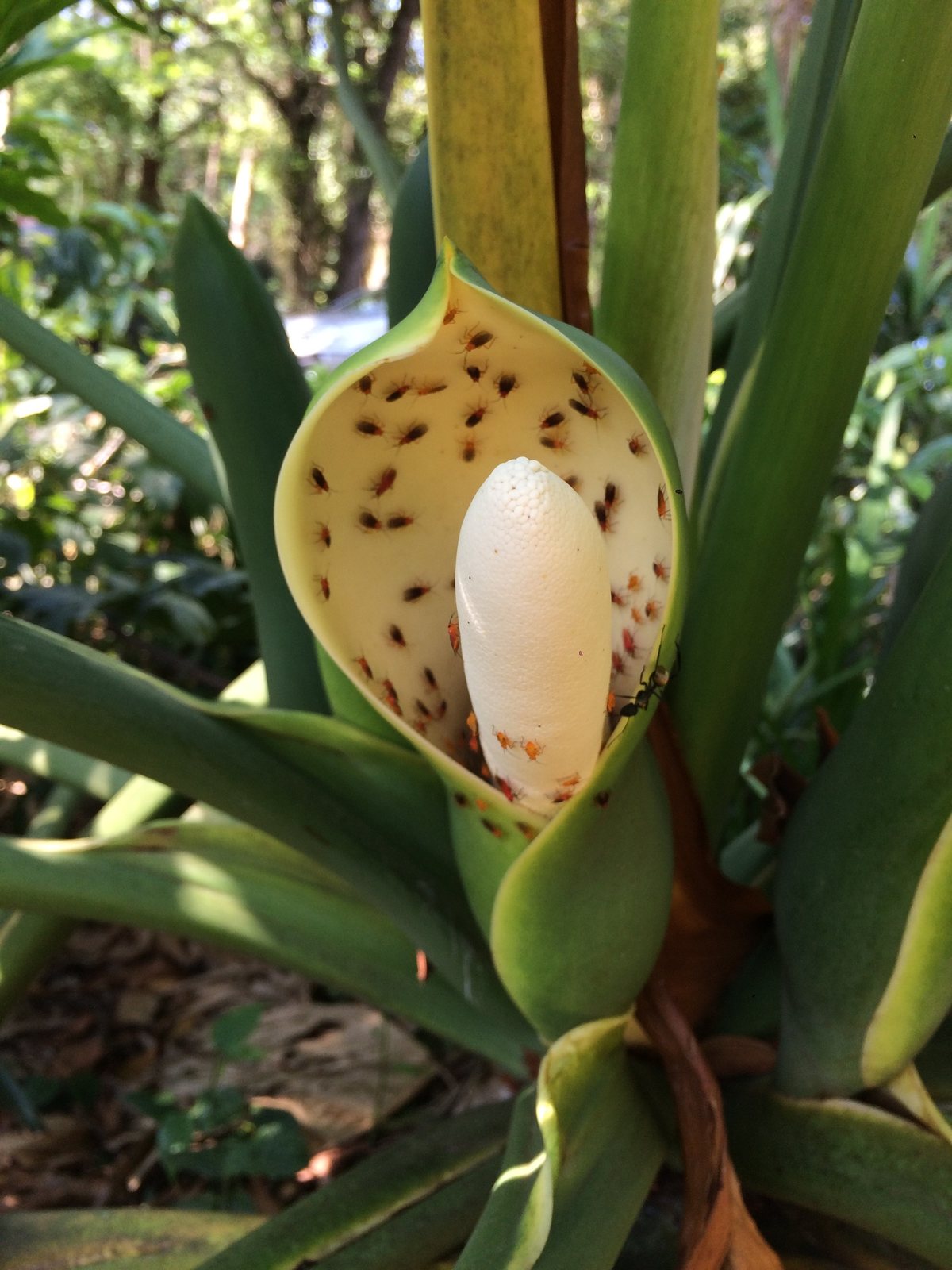
Wildlife: Offers cover for small animals in warm-climate gardens, but is not a dependable nectar plant for local pollinators. Flowers are beetle-pollinated in its native range.
Problems to watch for
- Spider mites in dry indoor conditions: rinse leaf undersides and use insecticidal soap labelled for the pest if needed.
- Mealybugs or scale: isolate affected containers, remove visible pests and treat with a suitable labelled product.
- Root rot from saturated soil: improve drainage, empty saucers and allow the surface to dry between waterings.
- Scorched or cold-damaged leaves: provide afternoon shade and frost-free shelter; remove damaged leaves after conditions improve.
Safety
Toxic to people, cats, dogs and horses if chewed. All parts contain insoluble calcium oxalate crystals that cause immediate mouth pain, drooling and difficulty swallowing; sap can irritate skin and eyes. Most exposures cause local irritation, but severe swelling or breathing difficulty requires urgent medical or veterinary attention.
Where it spreads. Recognised as an environmental weed in parts of south-eastern Queensland and north-eastern New South Wales, Australia. Do not dump stems or rooted material in bushland.
Easily confused with
Swiss cheese plant (Monstera deliciosa)
Mature leaves usually have enclosed holes as well as edge splits; it climbs rather than forming the same stout, self-supporting trunk.
Xanadu (Thaumatophyllum xanadu)
Forms a much smaller, dense clump with shorter leaf stalks and smaller, more regularly lobed leaves.
The name
The epithet bipinnatifidum refers to the deeply divided foliage, while split-leaf describes the same conspicuous leaf shape.
Propagation. Separate rooted offsets in spring or early summer, keeping roots attached to each division. Seed propagation is possible when fresh seed is available; leaf stalks alone will not produce new plants.
Checked against open data
- Accepted botanical name
- Thaumatophyllum bipinnatifidum
Sources: GBIF (CC BY 4.0). The care and design notes are LandscapeGPT's own.
See it in your own yard.
Upload a photo of your yard and see it redesigned with plants that suit your climate, each checked against your zone.