Swamp sunflower
Helianthus angustifolius. Family Asteraceae. Perennial.
Also called Narrow-leaved sunflower.
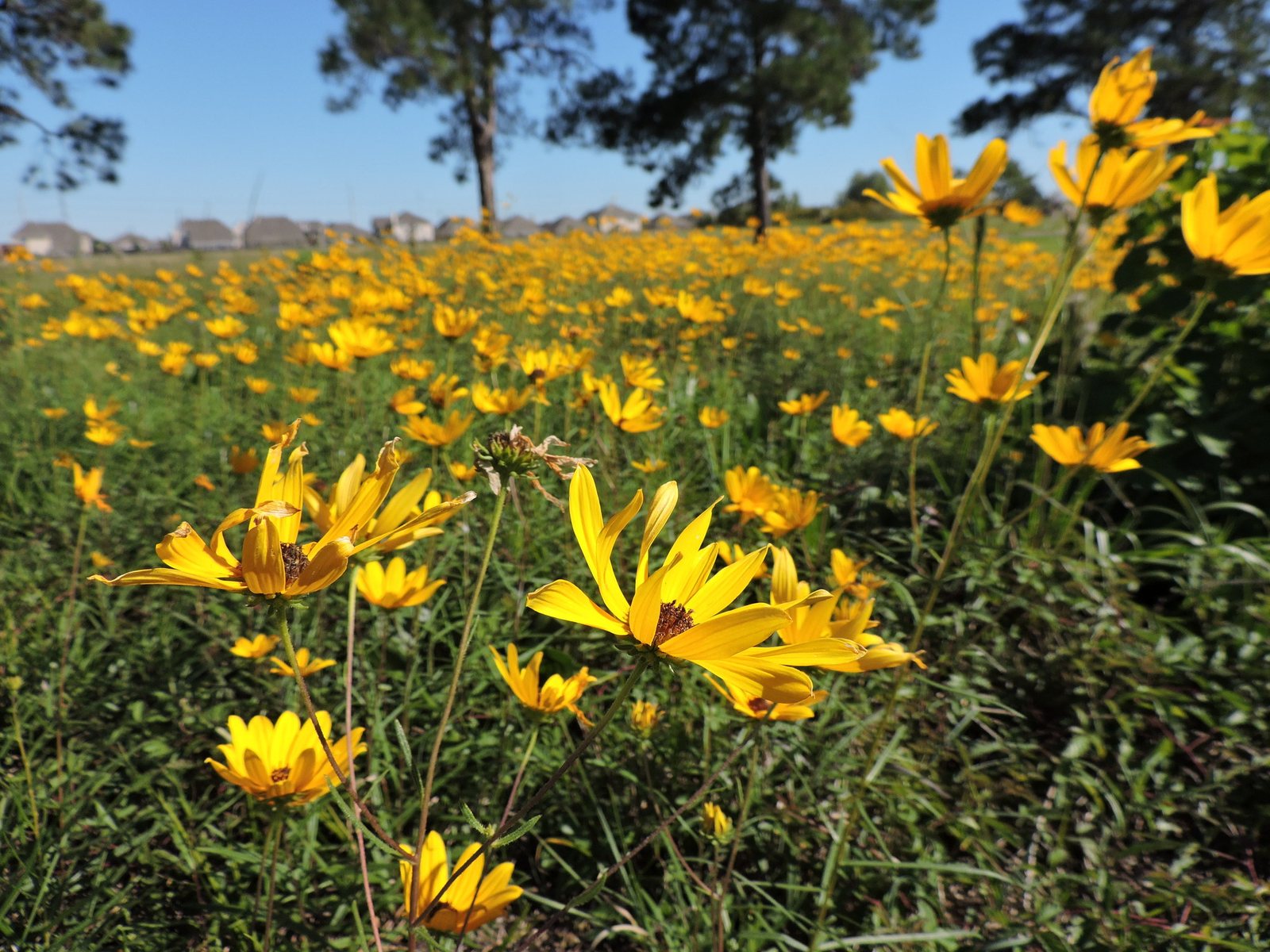
Swamp sunflower is a tall, spreading perennial native to the eastern and south-central United States, grown for masses of yellow daisies late in the season. It suits sunny, moist ground where its underground stems have room to spread; in cool regions, early autumn frosts can cut flowering short.
At a glance
- Sun
- Full sun; tolerates light shade but flowers less and may lean.
- Water
- Keep soil consistently moist while establishing. Established plants tolerate short dry spells, but grow best with regular moisture and can withstand periodic flooding.
- Soil
- Moist, humus-rich soil, including clay and sandy soil; prefers acidic to neutral conditions. Avoid permanently deep standing water.
- Height
- 5-8 ft (1.5-2.4 m)
- Spread
- 2-4 ft (0.6-1.2 m) initially, widening into larger colonies
- Flowers
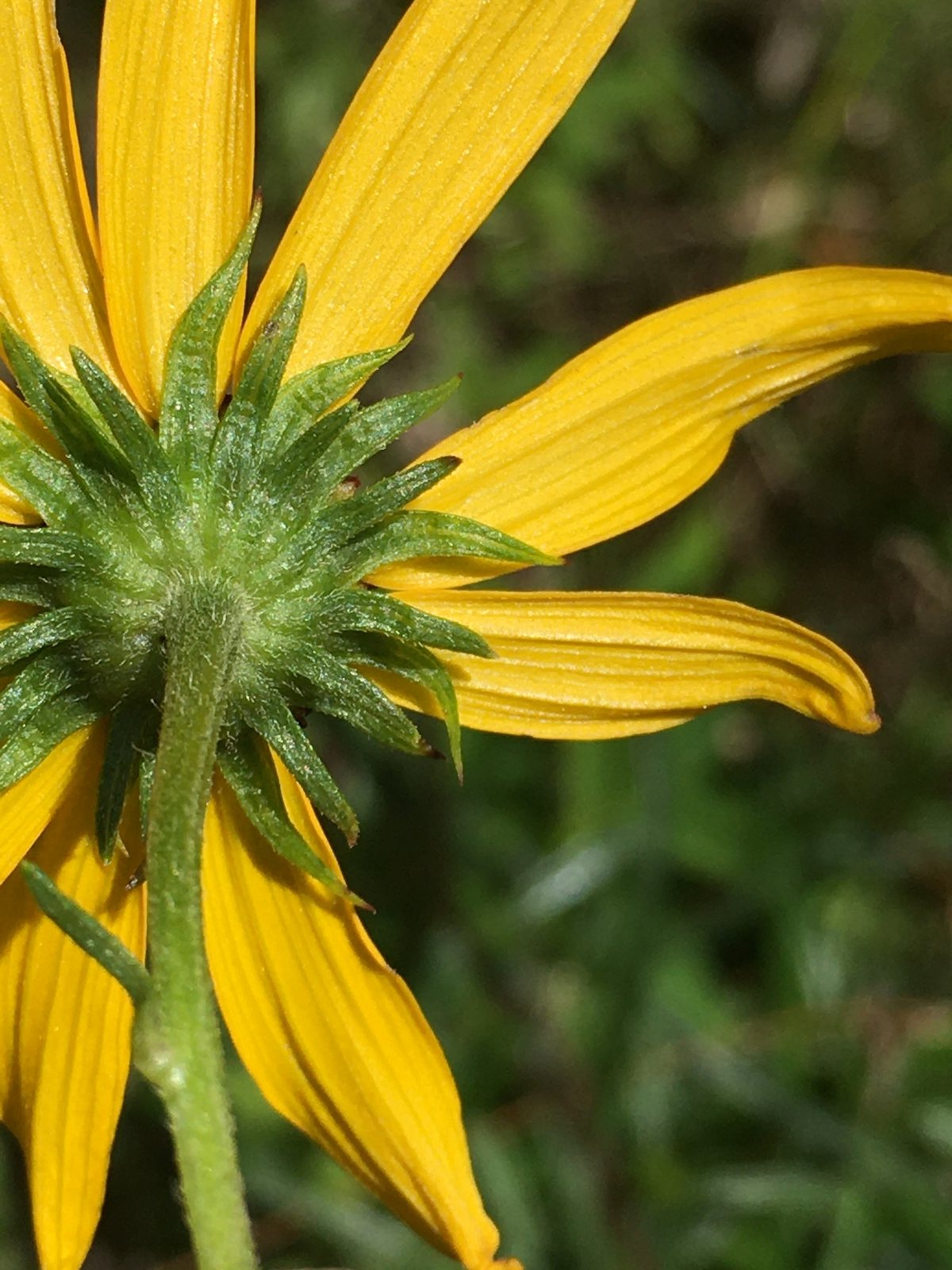
- Late summer to autumn, usually strongest in autumn; golden-yellow rays around dark brown centres.
- Foliage
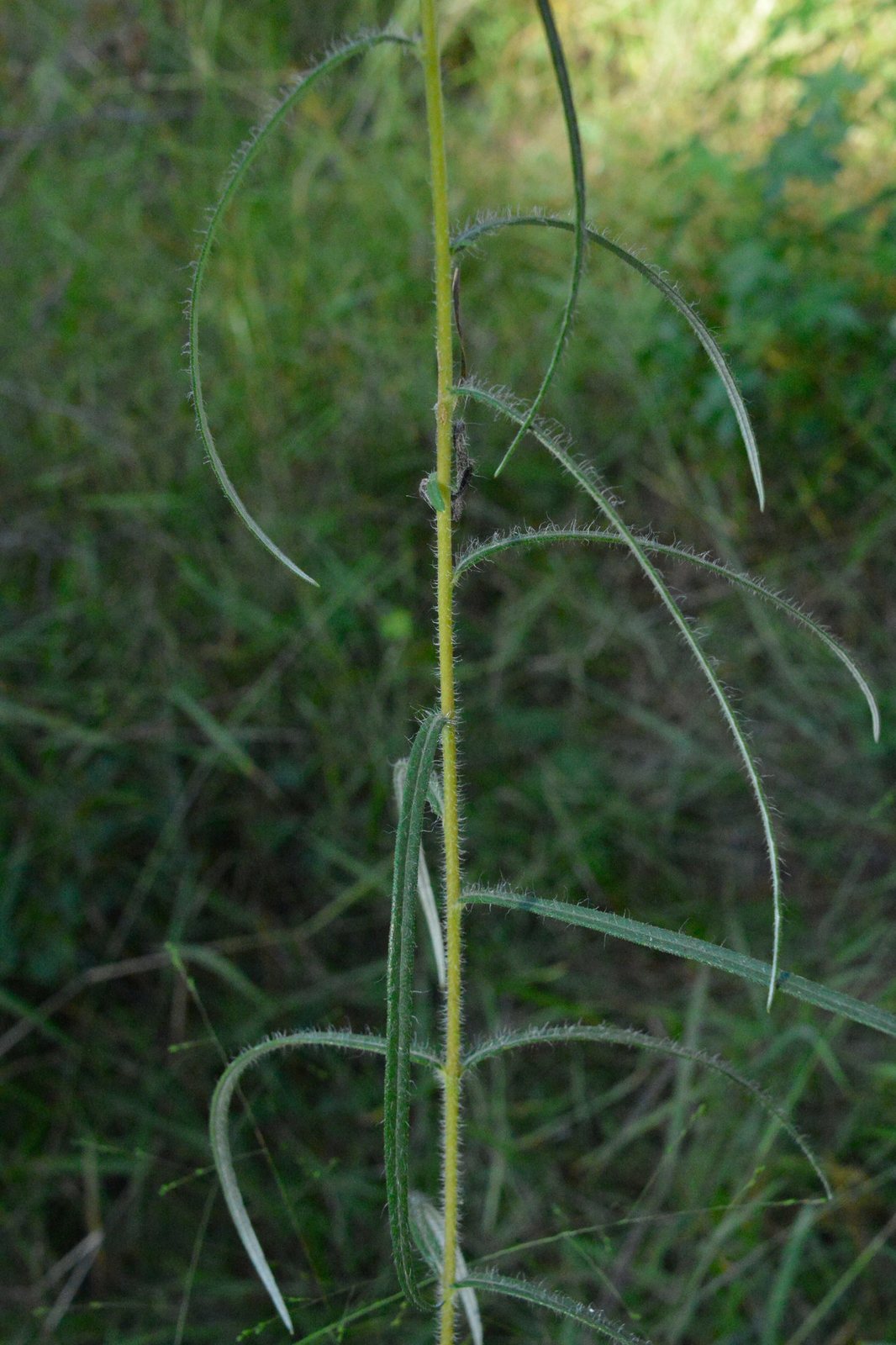
- Long, very narrow, rough-textured green leaves on upright, branching stems; dies back in winter.
- Growth
- Fast
- Care needed
- Medium
The year at a glance
- Pollinators
- Heat tolerant
- Wildlife
| J | F | M | A | M | J | J | A | S | O | N | D | |
|---|---|---|---|---|---|---|---|---|---|---|---|---|
| Flowers | ||||||||||||
| Fruit | ||||||||||||
| Plant |
Northern hemisphere months. In Australia, shift them by six.
- Difficulty
- Moderate
- Toughness
- Very tough
Will it suit your garden?
Pick your zone, country, light and whether you have pets.
Full sun is 6 or more hours of direct sun a day, part shade 3 to 6 hours, shade under 3.
How it grows
Planting day
1 ft (0.3 m)
After 1 year
4 ft (1.1 m)
After 2 years
6 ft (2 m)
full size
About 2 years to full size.
From a typical nursery size, at an average rate for this kind of plant. A rule of thumb, not a forecast.
Good to know
- Cats and dogs
- Safe
- Native to
- the US
- In the garden
- Spreads vigorously: plan to contain it.
- Growth rate
- Fast
Care
Jobs through the year
- WaterApr–May, Sep–Oct, every 14 days
- Soak established clumps when soil dries; new plants need more frequent watering.
- WaterJun–Aug, every 7 days
- Water deeply in dry weather to maintain regular root-zone moisture.
- FeedMar–Apr
- Apply a thin compost dressing; avoid high-nitrogen fertilizer that promotes flopping.
- MulchApr
- Mulch to conserve moisture, keeping emerging shoots clear.
- DivideMar–Apr
- Divide crowded clumps every two to three years and remove unwanted spreading rhizomes.
- PruneFeb–Mar
- Cut old stems near ground level before new shoots emerge; retain some hollow stems nearby for insects.
- PruneMay–Jun
- Optionally shorten stems by one-third before buds form for bushier, shorter plants.
- ProtectMay–Jun
- Install stakes or ring supports before exposed clumps become tall.
- Water new plants regularly through their first growing season; soak the root zone during prolonged dry weather.
- Apply a thin layer of compost in spring; avoid heavy nitrogen feeding, which encourages floppy growth.
- Mulch to conserve moisture, keeping mulch away from the emerging shoots.
- Support exposed clumps with stakes or a ring support before stems become tall.
- Divide crowded clumps in spring every two to three years, removing unwanted spreading shoots.
Pruning. For shorter, bushier plants, cut stems back by about one-third in late spring or early summer, before flower buds develop. Leave seedheads through winter if wanted for birds, then cut dead stems close to the ground in late winter or early spring.
Through the year
- Late winter
- Cut down old stems before new shoots emerge, leaving some hollow stems nearby as insect shelter.
- Spring
- Plant or divide clumps, water thoroughly, and remove shoots spreading beyond their allotted space.
- Spring
- Apply a thin compost dressing and moisture-conserving mulch.
- Late spring
- Shorten stems if a lower plant is needed, and install supports in exposed positions.
- Summer
- Water during dry spells and check lower leaves for mildew or rust.
- Autumn
- Leave some spent flowers to develop seedheads for birds.
In the garden
- Plant at the back of a large border for a tall yellow display after many summer flowers have finished.
- Use on the upper margins of ponds or in sunny rain gardens where soil stays moist but is not permanently submerged.
- Combine with asters and tall ornamental grasses for a loose, late-season planting.
- Allow colonies to develop in spacious wildlife gardens, away from small or slow-growing plants.
Garden styles it suits: Native meadow, Wildlife garden, Pollinator garden, Bog garden, New perennial (prairie) and Autumn colour.
Plant it with: Joe-Pye weed, New England aster, Switchgrass, Sneezeweed and Blue flag iris.
Wildlife: Flowers provide late-season pollen and nectar for bees, butterflies and other insects. Finches and other seed-eating birds use the mature seedheads.
Problems to watch for
- Flopping stems: provide full sun, avoid rich fertiliser, and support stems early or shorten them in late spring.
- Powdery mildew: improve spacing and airflow, water at soil level, and remove badly affected foliage.
- Rust: remove affected leaves and fallen debris; divide crowded clumps to improve airflow.
- Unwanted spreading: dig out surplus rhizomes in spring and divide regularly; avoid planting beside delicate border plants.
Safety
Not known to be toxic to cats, dogs, horses or people. No part is recognised as poisonous, although this ornamental species is not normally grown for food.
Where it spreads. Can spread aggressively by rhizomes in moist garden soil, particularly in warm regions such as the southeastern United States, where it is native. Give it space and remove unwanted shoots.
Easily confused with
Willow-leaved sunflower (Helianthus salicifolius)
Its long, narrow leaves are typically more densely arranged and strongly drooping, giving the stems a feathery appearance; swamp sunflower has a less densely clothed, more openly branching habit.
Jerusalem artichoke (Helianthus tuberosus)
Has much broader, usually egg-shaped leaves and conspicuous underground tubers; swamp sunflower has very narrow leaves and spreading rhizomes rather than these swollen tubers.
The name
Helianthus comes from Greek words meaning sun and flower, while angustifolius means narrow-leaved and the common name refers to its preference for moist habitats.
Propagation. Divide established clumps in spring, replanting rooted sections promptly. Seed can also be sown, but seedlings may vary; divide named cultivars to preserve their characteristics.
Checked against open data
- Accepted botanical name
- Helianthus angustifolius
- In the US and Canada
- Native in the lower 48 states.
- Native range
- Alabama, Arkansas, Florida, Georgia, Indiana, Iowa, Kentucky, Louisiana, Maryland, Mississippi, Missouri and New Jersey.
- Measured
- Soil pH 4 to 7.
Sources: GBIF (CC BY 4.0), USDA PLANTS and Trefle (CC BY 4.0). The care and design notes are LandscapeGPT's own.
See it in your own yard.
Upload a photo of your yard and see it redesigned with plants that suit your climate, each checked against your zone.