Sweet chestnut
Castanea sativa. Family Fagaceae. Tree.
Also called Spanish chestnut, European chestnut.
Sweet chestnut is a large, long-lived deciduous tree grown for its edible nuts, deeply furrowed bark and broad canopy. It suits large gardens and orchards with acidic, well-drained soil; reliable nut crops need warm summers and a second compatible tree for pollination.
At a glance
- Sun
- Full sun for good growth and nut production.
- Water
- Water young trees deeply during dry spells. Established trees tolerate some drought, but prolonged dryness reduces nut size and yield.
- Soil
- Deep, well-drained, acidic to neutral soil, preferably sandy or loamy. Avoid chalk, strongly alkaline soil and waterlogged ground.
- Height
- 60-100 ft (18-30 m)
- Spread
- 40-70 ft (12-21 m)
- Flowers
- Early to midsummer: long, creamy-yellow male catkins, with small female flowers near their bases. The flowers have a strong scent.
- Foliage
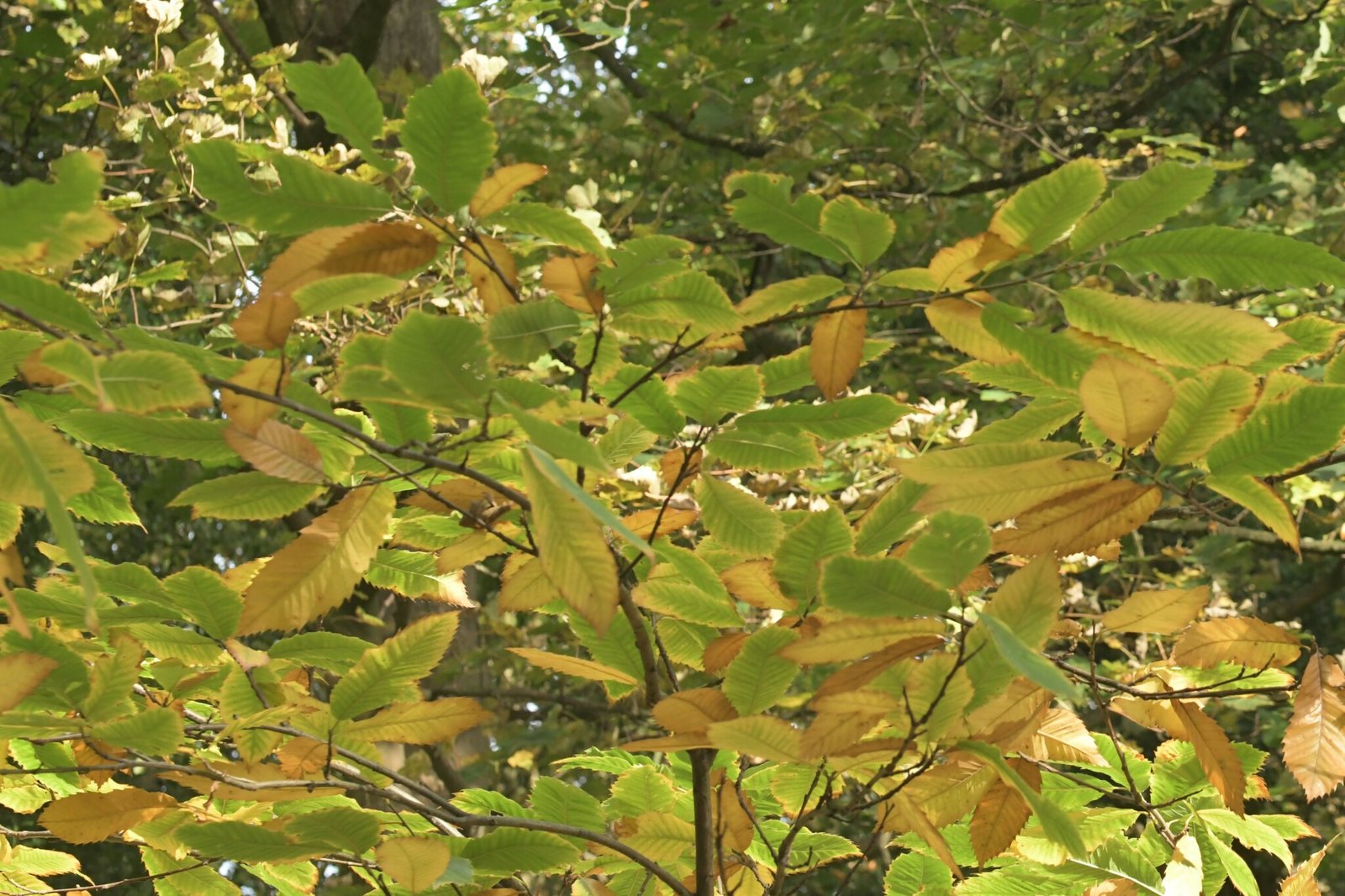
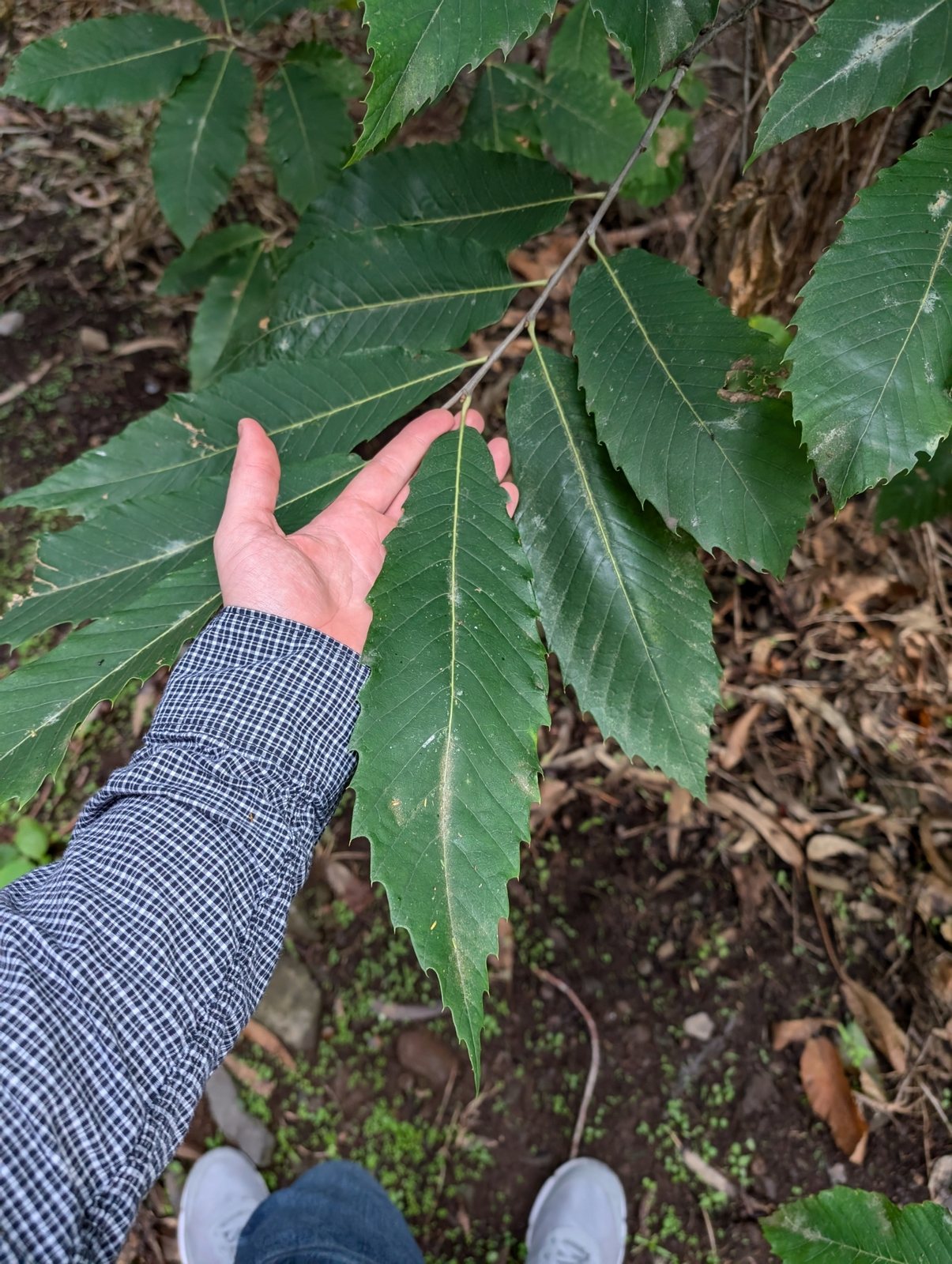
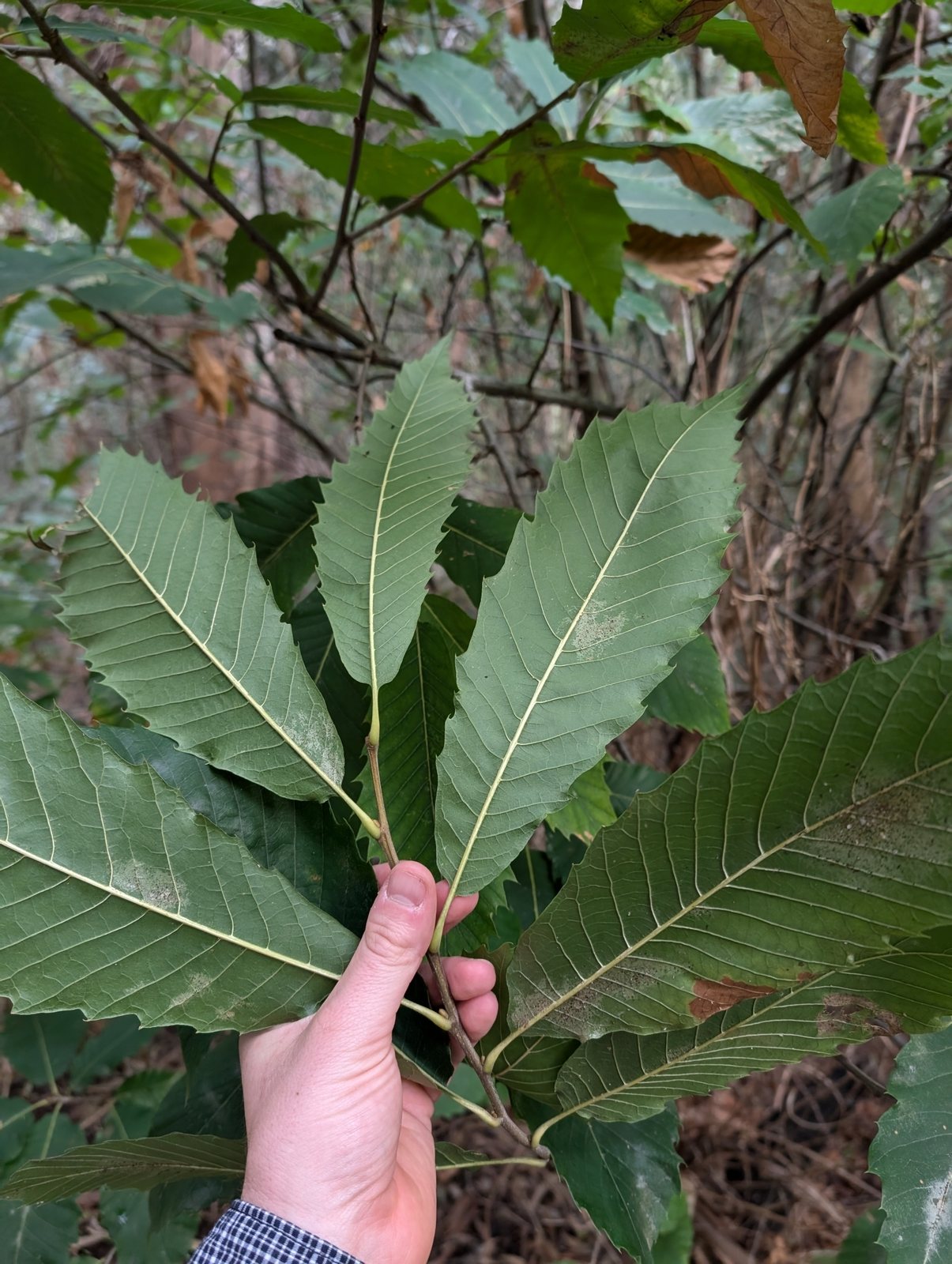
- Long, glossy green leaves with prominent veins and sharply toothed edges, turning yellow to brown in autumn.
- Growth
- Moderate to fast when young on suitable soil.
- Care needed
- Medium
The year at a glance
- Pollinators
- Drought tolerant
- Wildlife
- Edible
| J | F | M | A | M | J | J | A | S | O | N | D | |
|---|---|---|---|---|---|---|---|---|---|---|---|---|
| Flowers | ||||||||||||
| Fruit | ||||||||||||
| Plant |
Northern hemisphere months. In Australia, shift them by six.
- Difficulty
- Moderate
- Toughness
- Fairly tough
Will it suit your garden?
Pick your zone, country, light and whether you have pets.
Full sun is 6 or more hours of direct sun a day, part shade 3 to 6 hours, shade under 3.
How it grows
Planting day
9 ft (2.9 m)
After 1 year
14 ft (4.2 m)
After 2 years
18 ft (5.5 m)
After 3 years
22 ft (6.8 m)
After 5 years
31 ft (9.5 m)
About 16 years to full size.
From a typical nursery size, at an average rate for this kind of plant. A rule of thumb, not a forecast.
Good to know
- Cats and dogs
- Safe
- Growth rate
- Fast
Care
Jobs through the year
- WaterApr–May, Sep–Oct, every 14 days
- Water established trees deeply during prolonged dry spells; young trees need more frequent watering.
- WaterJun–Aug, every 7 days
- Water deeply if rainfall is scarce, especially during nut development; prioritize young trees.
- MulchMar–Apr
- Renew a broad organic mulch ring, keeping grass away and mulch clear of the trunk.
- FeedMar–Apr
- Feed only for poor growth or a confirmed deficiency; avoid excess nitrogen.
- PruneJan–Feb
- Train young trees with small cuts; mature trees usually need only professional removal of hazardous wood.
- HarvestSep–Nov
- Collect fallen ripe nuts promptly with thick gloves, remove burrs and refrigerate.
- Choose a permanent site well away from buildings, overhead cables and busy paths; the mature canopy is large and fallen burrs are prickly.
- Plant a second, genetically different, compatible chestnut nearby for dependable pollination; confirm that the chosen trees produce viable pollen.
- Water deeply during dry weather for the first two or three growing seasons.
- Maintain a broad mulch ring, keeping mulch clear of the trunk and grass away from young roots.
- Feed only if growth is poor or a soil test shows a deficiency; excess nitrogen encourages leafy growth rather than nuts.
- Stake young trees only where needed for stability, and remove ties and stakes once roots hold firmly.
Pruning. Train young trees in winter to develop a clear trunk and well-spaced main branches, removing competing leaders while cuts are small. Mature trees need little pruning; use a qualified arborist for large, damaged or hazardous branches.
Harvest
Collect nuts in autumn as the prickly burrs split and fall, using thick gloves; mature nuts are plump and brown, while empty shells feel light. Grafted trees commonly give a worthwhile first crop about 4-7 years after planting, while seedlings may take 10-20 years, with large differences between trees and climates. Gather promptly, remove the burrs and refrigerate the nuts because they dry out or mould readily.
Through the year
- Late autumn
- Plant dormant trees where the soil remains workable and well drained; in very cold regions, wait until spring.
- Winter
- Formatively prune young trees and inspect stakes, ties and damaged branches.
- Spring
- Renew mulch and clear competing grass from around young trees.
- Early summer
- Check flowering and inspect shoots for swollen galls or dieback.
- Summer
- Water young trees during drought and provide deep watering during nut development if rainfall is scarce.
- Autumn
- Collect fallen ripe nuts frequently and clear prickly burrs from paths and lawns.
In the garden
- Use as a specimen shade tree in a large lawn, allowing room for its broad mature crown.
- Plant compatible trees in a spacious nut orchard or edible landscape.
- Use along the sunny edge of a large woodland garden, with shade-tolerant planting beneath the outer canopy.
- Grow as a traditional coppice in a large managed woodland where repeated cutting and vigorous regrowth can be accommodated.
Garden styles it suits: Grand estate, Woodland, Backyard orchard, Edible landscape, Homestead and English country.
Plant it with: Hazel, Holly, Foxglove, Wood anemone, Hard fern and English bluebell.
Wildlife: Flowers provide pollen and nectar for insects. Squirrels, mice, birds and other wildlife eat the nuts, while old trees provide cavities and deadwood habitat.
Problems to watch for
- Chestnut blight causes bark cankers, orange fruiting bodies and branch dieback. Buy inspected stock, avoid bark injuries and seek local plant-health advice; there is no reliable homeowner cure, and the disease is especially limiting in North America.
- Ink disease, caused by Phytophthora, leads to root decay, thinning foliage and sometimes dark bleeding at the trunk base. Prevent it with excellent drainage and healthy planting stock; badly affected trees may need removal.
- Oriental chestnut gall wasp produces swollen galls on buds and shoots and can reduce growth and cropping. Check local reporting requirements and seek regional advice; routine garden spraying is usually ineffective.
- Few or poorly filled nuts usually result from inadequate pollination, cool summers or drought. Provide a compatible pollen-producing tree, choose locally proven cultivars and water during prolonged dry spells.
Safety
Sweet chestnut is not known to be toxic to people, cats, dogs or horses. The edible nuts are best cooked and peeled; raw nuts contain tannins and may cause digestive upset. Whole nuts and shells can cause choking or intestinal blockage in pets, and the sharp burrs can injure mouths and paws. Do not confuse the nuts with poisonous horse chestnuts.
Easily confused with
Horse chestnut (Aesculus hippocastanum)
Horse chestnut has hand-shaped leaves divided into separate leaflets and green husks with relatively few stout spines. Sweet chestnut has single, long, toothed leaves and burrs densely covered in fine, sharp spines;
American chestnut (Castanea dentata)
American chestnut generally has thinner, duller leaves with more strongly hooked teeth, while sweet chestnut leaves are usually thicker and glossier. Hybrids can be difficult to identify from leaves alone.
Chinese chestnut (Castanea mollissima)
Chinese chestnut usually has broader leaves with noticeably hairy undersides and hairy young shoots. Sweet chestnut leaves are generally longer and narrower, with much less hair when mature.
The name
Castanea is the Latin name for chestnut, and sativa means cultivated or sown.
Propagation. Sow fresh nuts after a moist winter chilling period, protecting them from rodents; do not let them dry out. Seedlings vary in nut quality and take many years to crop, so use grafted, locally suitable cultivars when reliable harvests matter.
Checked against open data
- Accepted botanical name
- Castanea sativa
- In the US and Canada
- Introduced in the lower 48 states.
- Native range
- Albania, East Aegean Is., Greece, Iran, Lebanon-Syria, North Caucasus, Transcaucasus, Turkey, Turkey-in-Europe and Yugoslavia.
- Measured
- Average height 1465 cm.
Sources: GBIF (CC BY 4.0), USDA PLANTS and Trefle (CC BY 4.0). The care and design notes are LandscapeGPT's own.
See it in your own yard.
Upload a photo of your yard and see it redesigned with plants that suit your climate, each checked against your zone.