Tall bluebells
Mertensia paniculata. Family Boraginaceae. Perennial.
Also called Tall lungwort, Northern bluebells, Panicled bluebells.
Tall bluebells is a clump-forming perennial native to northern and western North America, grown for clusters of nodding blue flowers above leafy stems. It suits cool, moist woodland gardens and shaded borders, but struggles in hot, dry sites.
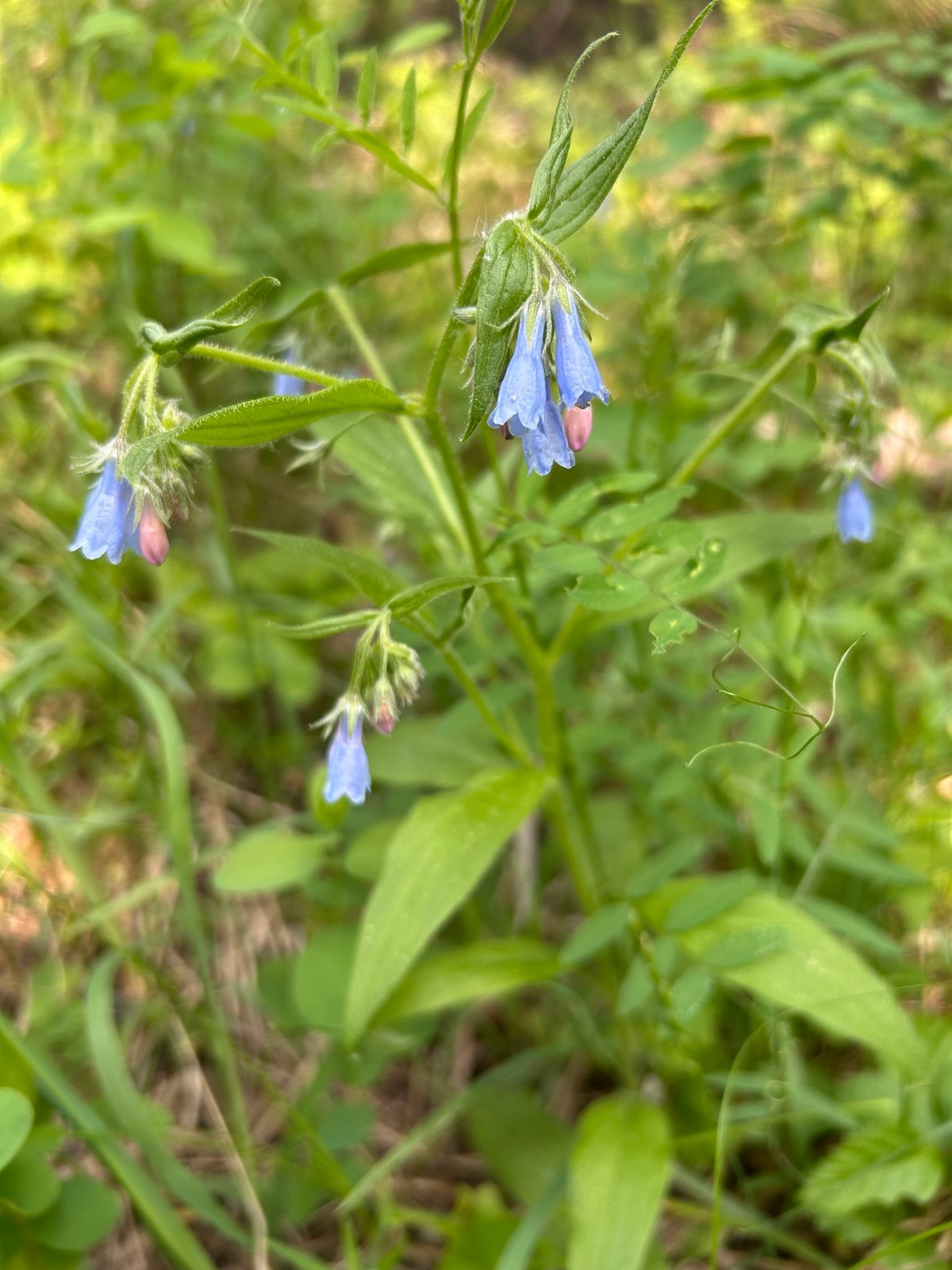
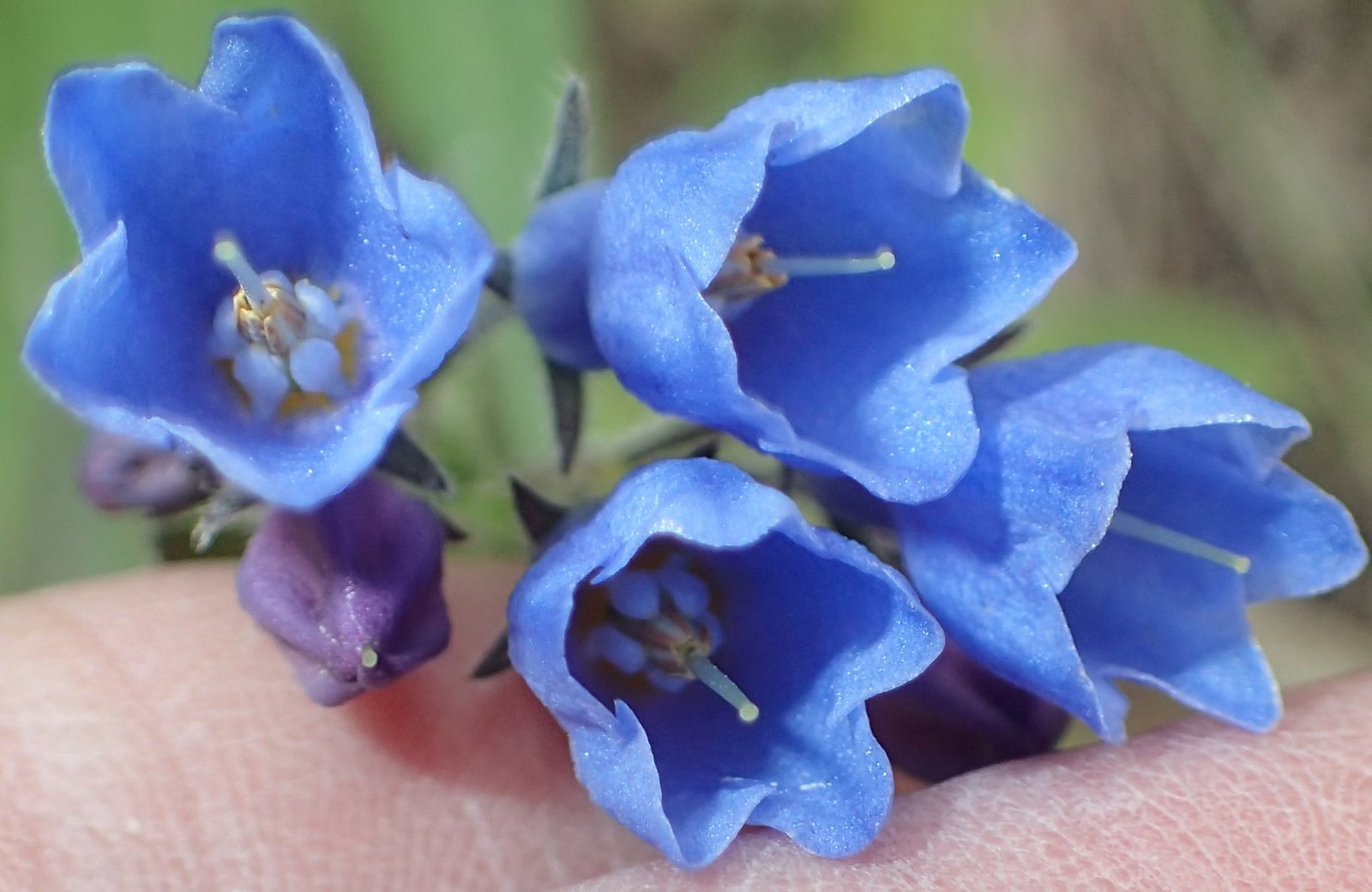
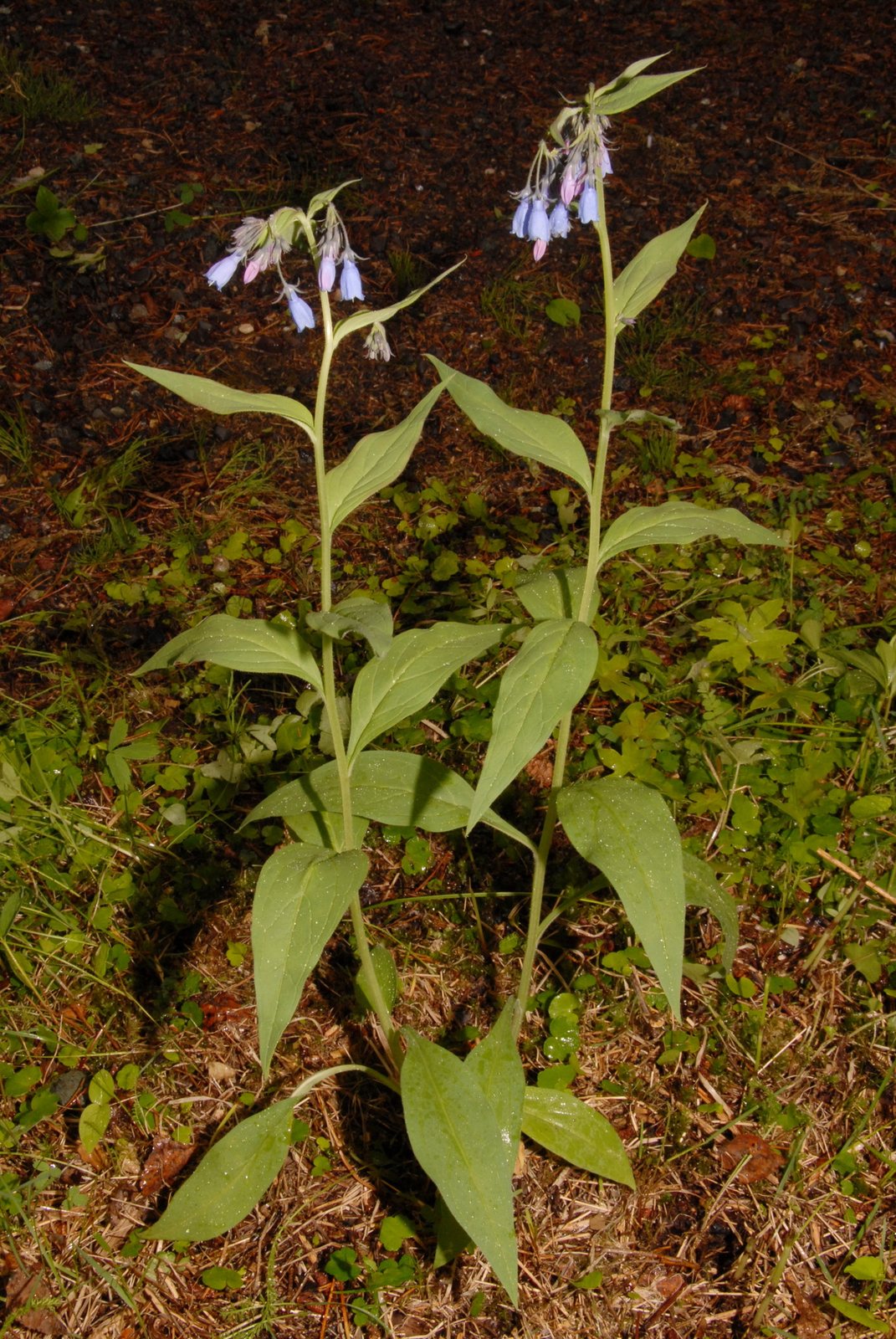
At a glance
- Sun
- Partial shade; tolerates full sun in cool climates if the soil stays moist.
- Water
- Keep evenly moist, especially during establishment and flowering; avoid prolonged drought and stagnant, waterlogged soil.
- Soil
- Humus-rich, moisture-retentive soil with good drainage; mildly acidic to neutral soil is suitable.
- Height
- 2-4 ft (0.6-1.2 m)
- Spread
- 1-2 ft (0.3-0.6 m)
- Flowers
- Late spring to midsummer, depending on climate; pink buds open into nodding sky-blue tubular bells.
- Foliage
- Deciduous, with pointed green leaves arranged along upright stems; leaves are often softly hairy and prominently veined.
- Growth
- Moderate
- Care needed
- Low
The year at a glance
- Pollinators
- Cold hardy
- Low allergen
| J | F | M | A | M | J | J | A | S | O | N | D | |
|---|---|---|---|---|---|---|---|---|---|---|---|---|
| Flowers | ||||||||||||
| Plant |
Northern hemisphere months. In Australia, shift them by six.
- Difficulty
- Easy
- Toughness
- Fairly tough
Will it suit your garden?
Pick your zone, country, light and whether you have pets.
Full sun is 6 or more hours of direct sun a day, part shade 3 to 6 hours, shade under 3.
How it grows
Planting day
1 ft (0.3 m)
After 1 year
1.6 ft (0.5 m)
After 2 years
2.3 ft (0.7 m)
After 3 years
3 ft (0.9 m)
full size
About 3 years to full size.
From a typical nursery size, at an average rate for this kind of plant. A rule of thumb, not a forecast.
Good to know
- Cats and dogs
- Safe
- Native to
- the US and Canada
- Growth rate
- Moderate
Care
Jobs through the year
- WaterApr–May, Sep–Oct, every 7 days
- Water established plants deeply when rain is insufficient to keep soil moist; young plants need closer checks.
- WaterJun–Aug, every 4 days
- In dry weather, keep the root zone evenly moist without waterlogging.
- MulchMar–May
- Top-dress with thin compost and leaf mould, leaving crowns uncovered.
- PruneFeb–Mar
- Cut remaining dead stems to ground level before fresh growth.
- DivideMar–Apr
- Divide only crowded clumps or those needed for propagation as growth begins.
- DeadheadJun–Jul
- Remove spent flower stems if self-seeding is unwanted.
- ProtectMar–May
- Check emerging shoots for slugs and use hand-picking or labelled iron-phosphate bait if needed.
- Water deeply during dry spells so the root zone does not dry out.
- Apply a thin layer of compost in spring; routine fertiliser is usually unnecessary.
- Mulch with leaf mould or shredded leaves, keeping mulch away from the crowns.
- Choose a cool, sheltered position rather than a hot wall or exposed, dry border.
- Divide established clumps in early spring only when crowded or when more plants are wanted.
Pruning. Remove spent flower stems if you want to limit self-seeding. Cut dead stems to ground level in late autumn or early spring, leaving green foliage intact until it dies naturally.
Through the year
- Early spring
- Cut away remaining dead stems and divide crowded clumps as growth begins.
- Spring
- Plant in moist, humus-rich soil and water thoroughly.
- Late spring
- Top up leaf-mould mulch and check young shoots for slug damage.
- Summer
- Water during dry spells, particularly while plants are flowering.
- After flowering
- Remove seed heads to reduce seedlings, or leave a few to ripen for propagation.
- Autumn
- Sow fresh seed outdoors and allow established plants to die back naturally.
In the garden
- Plant in loose groups beneath deciduous trees where the soil remains moist.
- Combine with ferns and sedges for a layered woodland border.
- Use behind shorter shade plants so its blue flowers rise above their foliage.
- Include in a cool, moist native planting within its North American range.
Garden styles it suits: Woodland, Wildlife garden, Cottage garden, Blues and silvers, Pacific Northwest woodland and Mountain lodge.
Plant it with: Lady fern, Maidenhair fern, Foamflower, Wild ginger, Tufted hair grass and Globeflower.
Wildlife: The flowers provide nectar and pollen for bees, particularly bumblebees. Its value is greatest in suitable gardens within its native North American range.
Problems to watch for
- Slugs and snails may damage emerging shoots; remove them by hand and use iron-phosphate bait according to the label if needed.
- Wilting and scorched leaves usually indicate dry soil or excessive heat; water deeply, mulch and provide afternoon shade.
- Root or crown rot can develop in stagnant soil; improve drainage and avoid burying the crown.
- Powdery mildew may occur in crowded, stressed plants; improve airflow and keep the root zone evenly moist.
Safety
Not known to be toxic to people, cats, dogs or horses, but reliable species-specific safety information is limited. No particular poisonous part is established; treat it as an ornamental rather than a food plant and discourage ingestion.
Easily confused with
Virginia bluebells (Mertensia virginica)
Usually shorter, with broad, smooth, blue-green leaves; it flowers earlier and normally becomes dormant in summer. Tall bluebells has more pointed leaves on taller, leafy stems and generally remains visible longer.
Common lungwort (Pulmonaria officinalis)
Forms low clumps of rough, often white-spotted leaves, with shorter flower stems and more open, funnel-shaped flowers.
Harebell (Campanula rotundifolia)
Has wiry stems, narrow upper leaves and open, flaring blue bells rather than the clustered tubular flowers of tall bluebells.
The name
Mertensia honours the German botanist Franz Carl Mertens, and paniculata refers to the branched flower clusters.
Propagation. Sow fresh seed outdoors in autumn; a cold winter period helps germination, which can be irregular. Divide established clumps carefully in early spring and replant promptly before the roots dry out.
Checked against open data
- Accepted botanical name
- Mertensia paniculata
- In the US and Canada
- Native in Alaska, Canada and the lower 48 states.
- Native range
- Alberta, Alaska, British Columbia, Connecticut, Idaho, Iowa, Manitoba, Michigan, Minnesota, Montana, Northwest Territorie and Ontario.
Sources: GBIF (CC BY 4.0), USDA PLANTS and Trefle (CC BY 4.0). The care and design notes are LandscapeGPT's own.
See it in your own yard.
Upload a photo of your yard and see it redesigned with plants that suit your climate, each checked against your zone.