Texas bluebonnet
Lupinus texensis. Family Fabaceae. Annual.
Also called Texas lupine, Buffalo clover.
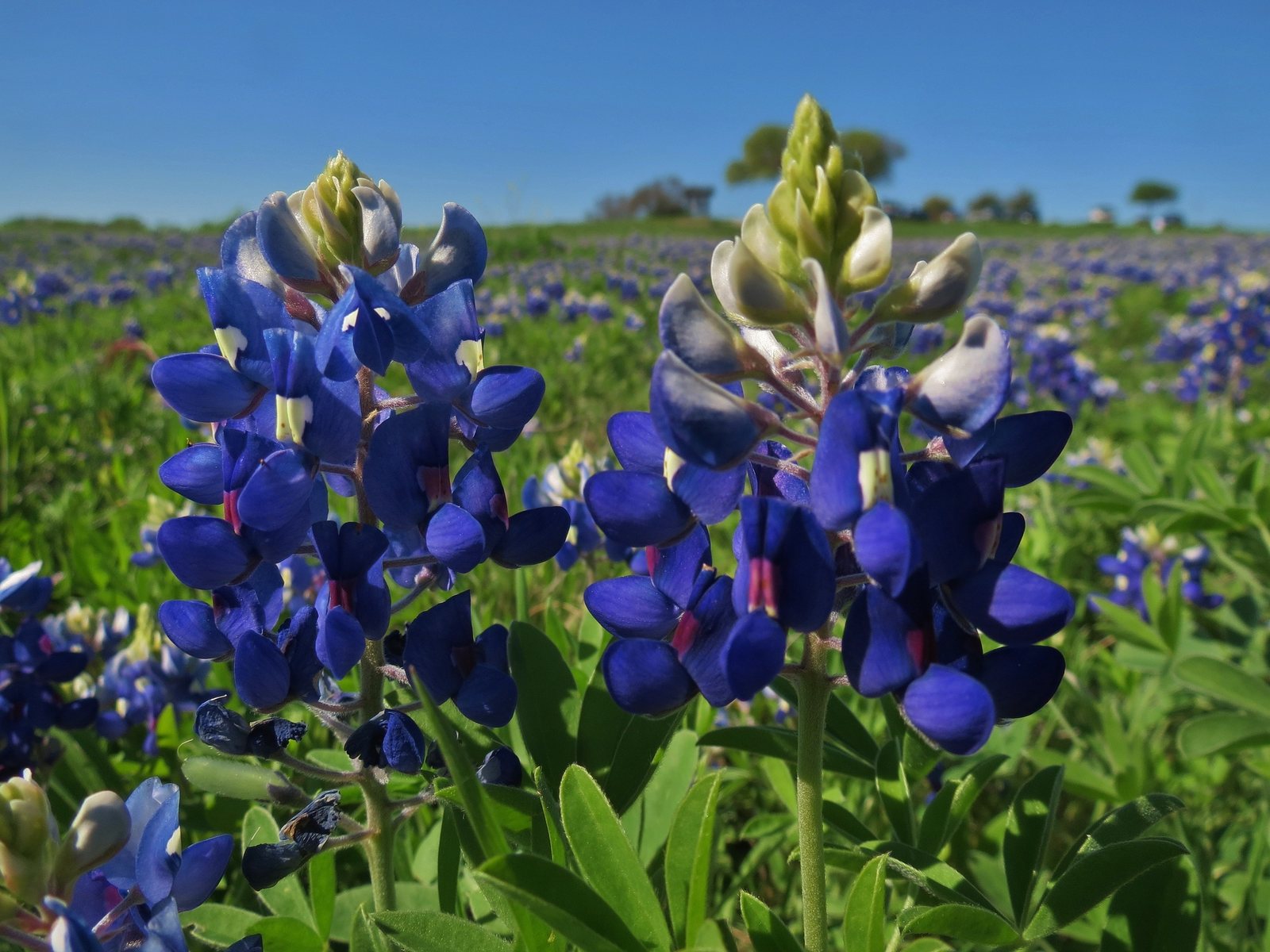
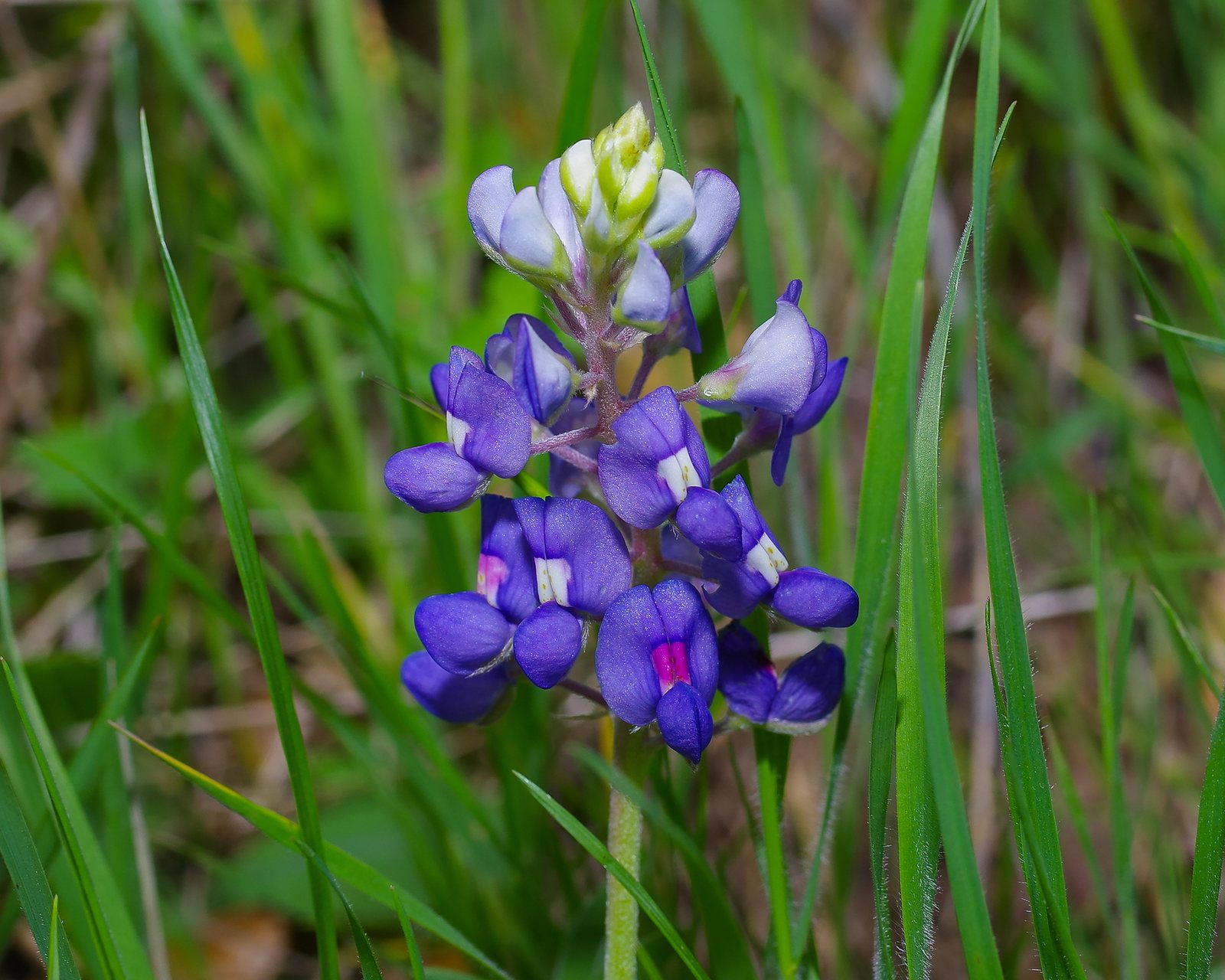
Texas bluebonnet is grown as an annual for its upright spikes of blue flowers with white tips above low clumps of divided leaves. Native to Texas and nearby parts of Mexico, it makes spring displays in sunny, freely drained ground. Autumn sowing works best in mild-winter climates; spring sowing is an option in colder regions, though flowering can be less reliable.
At a glance
- Sun
- Full sun, preferably at least 6 hours daily.
- Water
- Keep the seedbed lightly moist during germination; once established, water only during extended dry spells. Avoid persistently damp soil.
- Soil
- Well-drained sandy, gravelly or loamy soil, preferably neutral to alkaline. Tolerates relatively poor soil but struggles in waterlogged clay.
- Height
- 1-2 ft (0.3-0.6 m)
- Spread
- 0.75-1.5 ft (0.23-0.45 m)
- Flowers
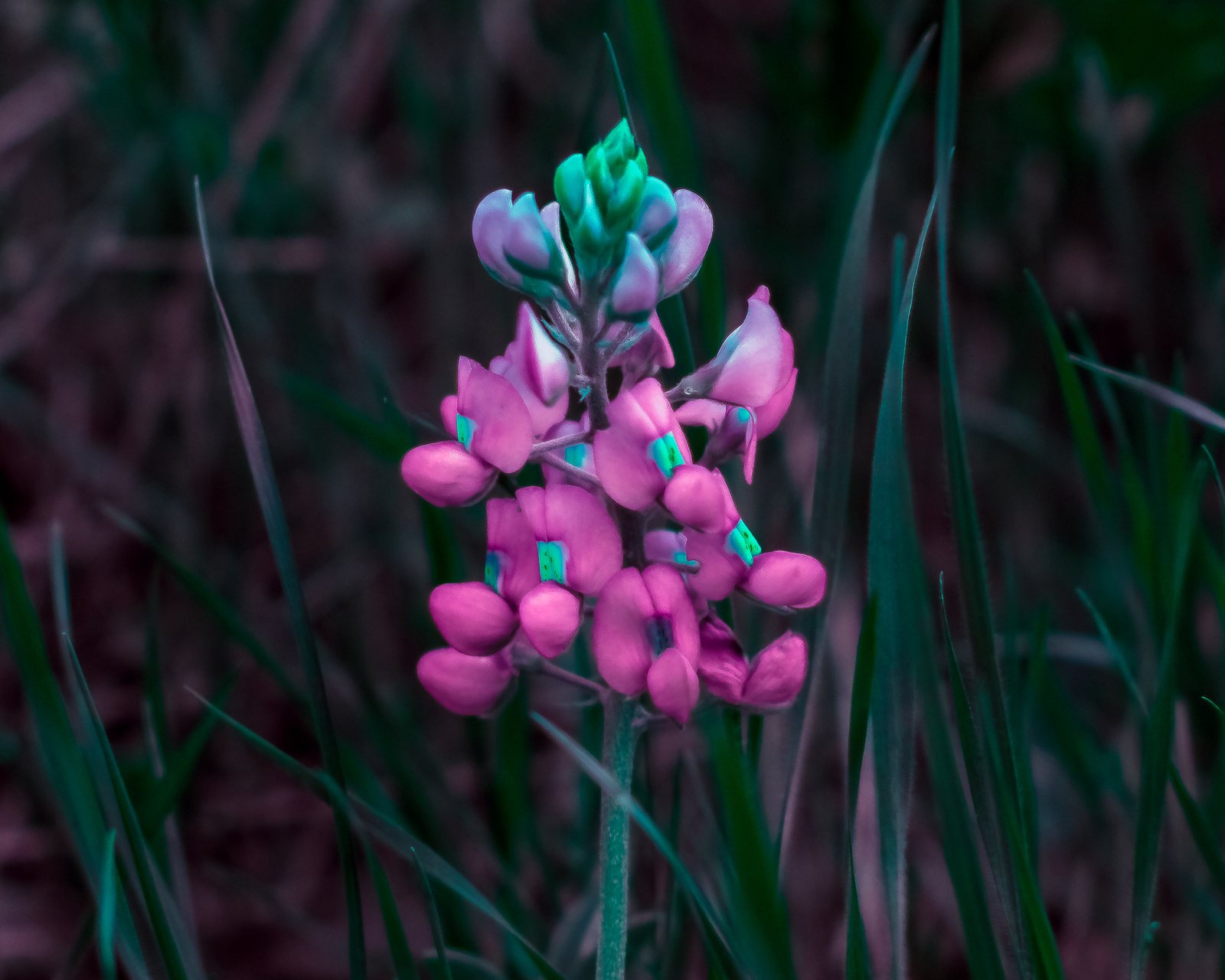
- Early to late spring in mild climates, later after spring sowing in colder regions. Usually blue with a white banner spot that often turns reddish-purple as the flower ages; occasional white or pink plants occur.
- Foliage
- Green, softly hairy leaves divided into usually five to seven narrow, pointed leaflets radiating from one point.
- Growth
- Fast during cool spring weather; completes its life cycle before or during summer.
- Care needed
- Low
The year at a glance
- Pollinators
- Drought tolerant
- Low allergen
| J | F | M | A | M | J | J | A | S | O | N | D | |
|---|---|---|---|---|---|---|---|---|---|---|---|---|
| Flowers | ||||||||||||
| Fruit | ||||||||||||
| Plant |
Northern hemisphere months. In Australia, shift them by six.
- Difficulty
- Easy
- Toughness
- Fairly tough
Will it suit your garden?
Pick your zone, country, light and whether you have pets.
Full sun is 6 or more hours of direct sun a day, part shade 3 to 6 hours, shade under 3.
How it grows
Planting day
0.5 ft (0.15 m)
After 1 year
1.5 ft (0.45 m)
full size
Full size in one season.
From a typical nursery size, at an average rate for this kind of plant. A rule of thumb, not a forecast.
Good to know
- Cats and dogs
- Toxic
- Native to
- the US
- Growth rate
- Fast
Care
Jobs through the year
- WaterMar–Apr, every 14 days
- Water established seedlings only if dry; check seedbeds frequently and keep lightly moist until germination.
- WaterMay–Jun, every 14 days
- Water established plants only during extended dry spells, allowing soil to dry between soakings.
- ProtectMar–Apr
- Protect young seedlings from slugs and remove leaves or thick mulch that smother them.
- DeadheadMay–Jun, every 7 days
- Remove spent spikes to limit self-seeding, or retain selected spikes for seed.
- PruneJun–Jul
- Cut or pull finished plants after any retained pods turn brown and dry.
- Sow directly into the final position; established seedlings dislike root disturbance.
- Water gently while seedlings establish, then let the soil dry between waterings.
- Do not routinely feed; rich soil and high-nitrogen fertiliser encourage foliage at the expense of flowers.
- Keep thick organic mulch away from seedlings and any ground where you want seed to germinate.
- Thin crowded seedlings to about 8-12 in (20-30 cm) apart.
Pruning. No formative pruning is needed. Remove spent spikes to reduce self-seeding, or leave pods until brown and dry before cutting or pulling out the finished plants.
Through the year
- Autumn
- In mild-winter regions, sow directly into open soil, pressing seed into good contact with the ground.
- Winter
- Check autumn-sown plants for standing water and clear fallen leaves that smother small rosettes.
- Early spring
- In cold-winter regions, sow as soon as the ground can be worked; thin established seedlings and remove competing weeds.
- Spring
- Enjoy flowering and water only if the soil becomes very dry.
- Late spring
- Leave selected flower spikes to form seed, or remove them before pods ripen if you do not want seedlings.
- Summer
- Collect dry pods before they split, then clear dead plants. Store seed somewhere cool and dry, away from children and animals.
In the garden
- Plant in broad drifts through sunny meadow-style areas for a concentrated spring display.
- Combine with Indian blanket and plains coreopsis so later flowers follow the bluebonnet season.
- Use along sunny gravel paths or at the front of dry borders, where drainage is good.
- Sow among widely spaced drought-tolerant perennials to fill spring gaps without creating permanent summer bulk.
Garden styles it suits: Texas Hill Country, Wildflower, Native meadow, Pollinator garden, Dry gravel garden and Southwestern.
Plant it with: Indian blanket, Plains coreopsis, Texas Indian paintbrush, Pink evening primrose, Mealycup sage and Little bluestem.
Wildlife: Flowers provide pollen for bees, especially bumblebees. It is not a suitable forage plant for livestock.
Problems to watch for
- Poor germination: the hard seed coat delays water uptake. Use commercially scarified seed, or lightly nick untreated seed away from the embryo before sowing; expect some untreated seed to germinate in later years.
- Root rot or damping off: improve drainage, avoid frequent watering and thin crowded seedlings. Remove affected plants.
- Slugs and snails eating seedlings: check young plants regularly and use barriers, hand removal or a locally approved bait as directed.
- Weak growth or little flowering: provide full sun, avoid nitrogen fertiliser and sow early enough for plants to develop during cool weather.
Safety
Treat all parts as toxic to people, cats, dogs and horses, especially the seeds and pods. Lupine alkaloids can cause digestive upset, weakness and neurological signs; substantial ingestion can be serious or fatal, particularly in livestock. Keep seed away from children and pets, and contact a poison service or veterinarian promptly after suspected ingestion.
Easily confused with
Sandyland bluebonnet (Lupinus subcarnosus)
Usually has more rounded leaflet tips, often with a small notch, and looser flower spikes. Texas bluebonnet has pointed leaflets and denser spikes.
Big Bend bluebonnet (Lupinus havardii)
Usually grows much taller, with elongated flower spikes and narrower leaflets. It is adapted to the desert conditions of western Texas rather than the broader range of garden conditions tolerated by Texas bluebonnet.
The name
Bluebonnet refers to the flowers' resemblance to a bonnet, while texensis means 'of Texas'.
Propagation. Propagate by seed, preferably sown directly outdoors. Sow in autumn where winters are mild or in early spring in colder regions. Scarification improves immediate germination; untreated seed may remain dormant for several years. Plants can self-seed where bare, well-drained ground remains available.
Checked against open data
- Accepted botanical name
- Lupinus texensis
- In the US and Canada
- Native in the lower 48 states.
- Native range
- Mexico Northeast, Texas and Louisiana.
Sources: GBIF (CC BY 4.0), USDA PLANTS and Trefle (CC BY 4.0). The care and design notes are LandscapeGPT's own.
See it in your own yard.
Upload a photo of your yard and see it redesigned with plants that suit your climate, each checked against your zone.