Texas lantana
Lantana urticoides. Family Verbenaceae. Shrub.
Also called Texas wild lantana, Calico bush.
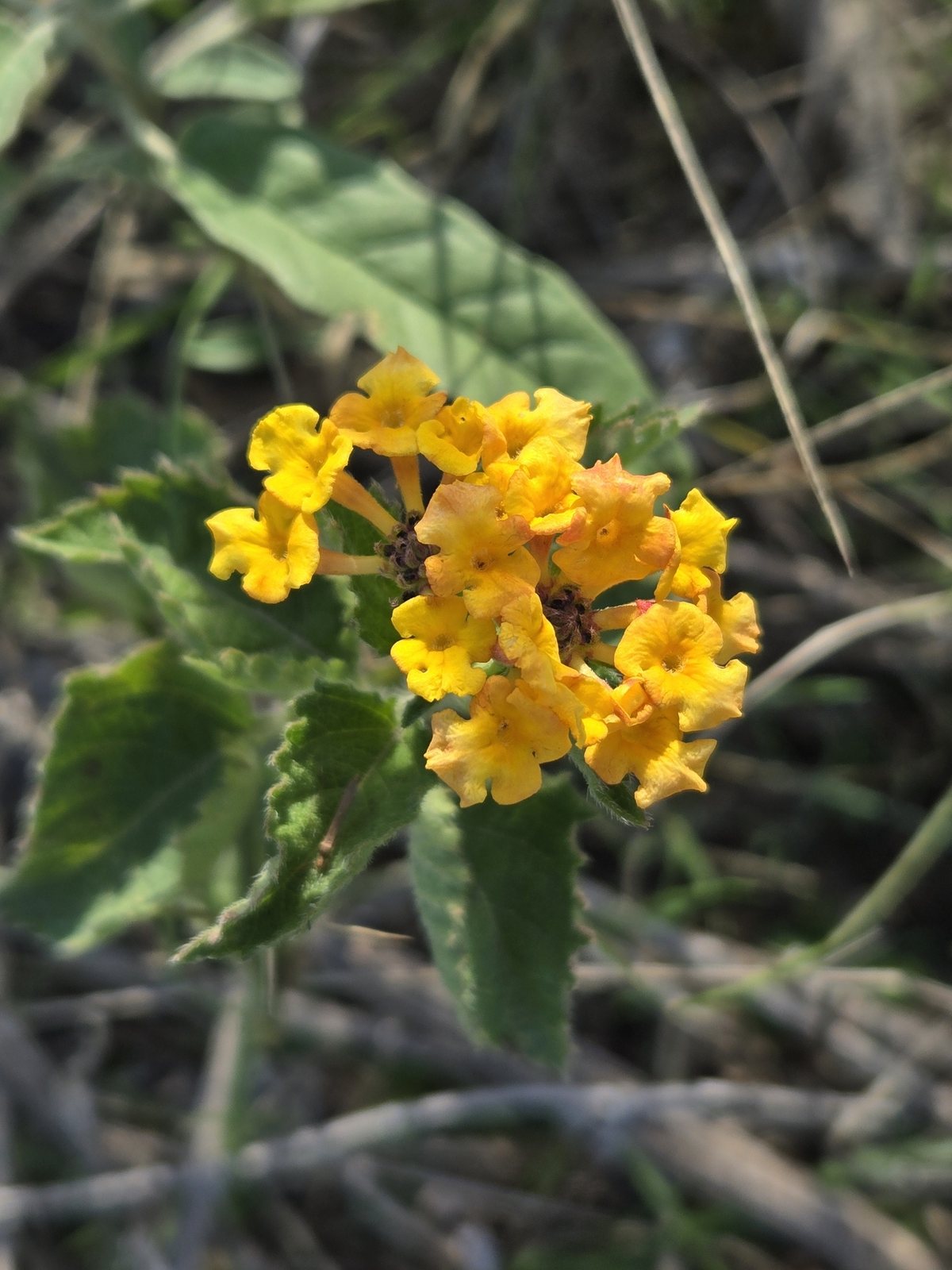
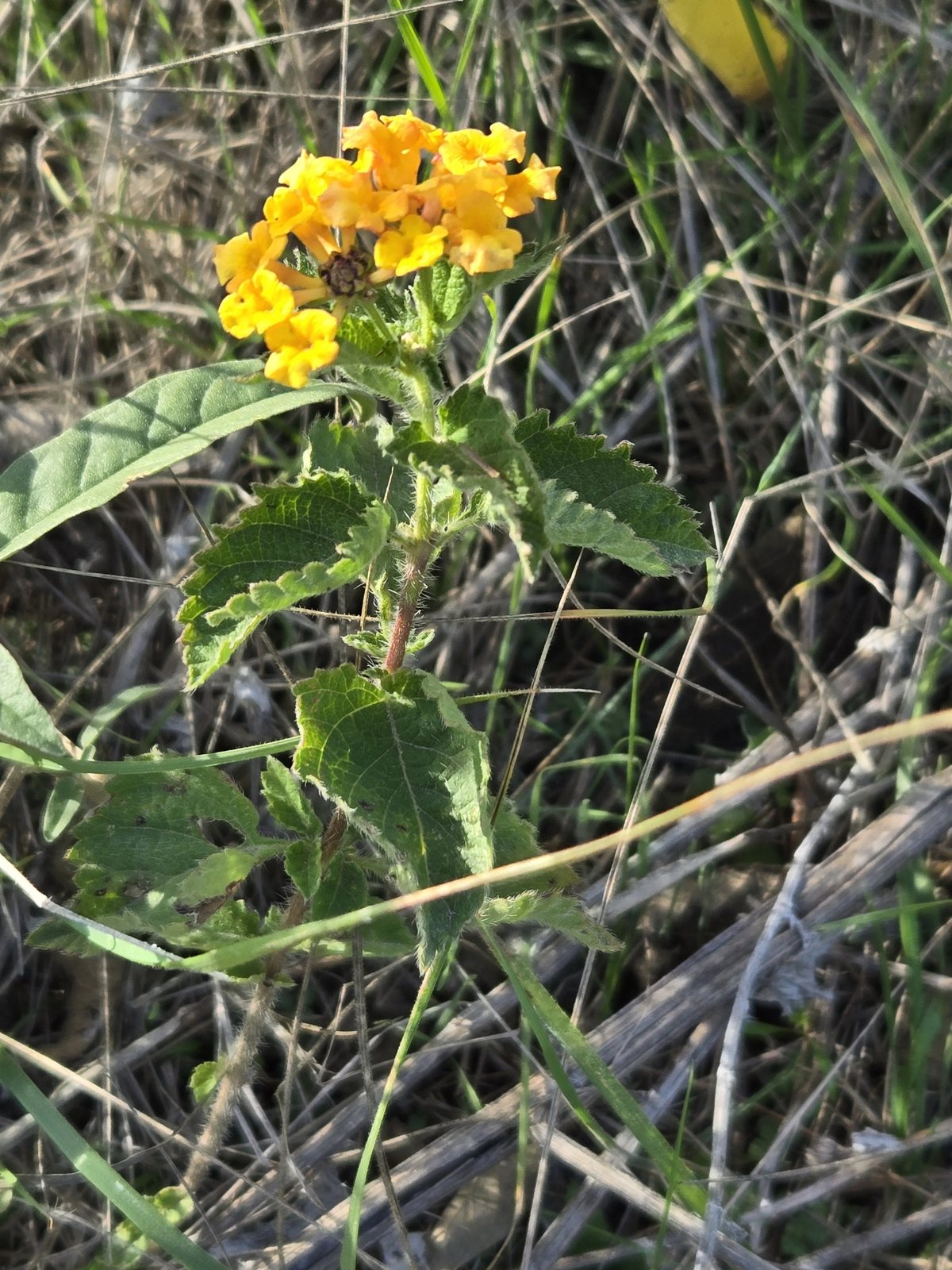
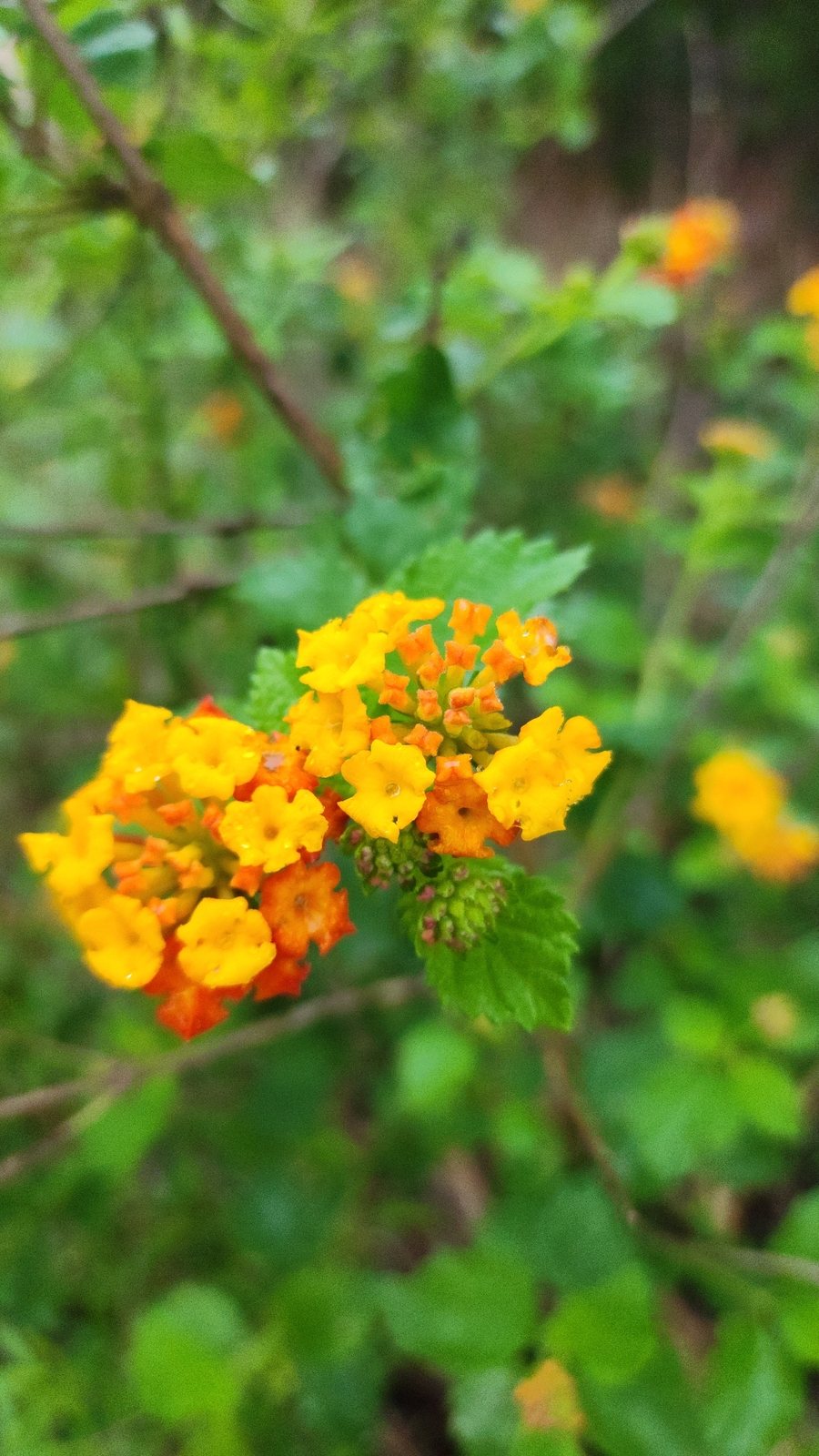
Texas lantana is a spreading, woody shrub native to the southern United States and northern Mexico, grown for clusters of yellow, orange and red flowers that attract butterflies. It tolerates heat, drought and rocky soil once established, but needs excellent drainage and usually dies back in freezing weather. In colder areas it can be grown as a seasonal annual or overwintered under frost-free cover.
At a glance
- Sun
- Full sun; tolerates light shade but flowers less freely.
- Water
- Low once established; water regularly through the first growing season, then deeply during prolonged drought.
- Soil
- Well-drained sandy, gravelly or rocky soil; tolerates limestone and alkaline soil. Avoid persistently wet ground.
- Height
- 2-6 ft (0.6-1.8 m)
- Spread
- 3-6 ft (0.9-1.8 m)
- Flowers
- Spring to autumn in warm climates, mainly summer to frost in cooler areas; clusters open yellow and age through orange to red.
- Foliage
- Opposite, toothed green leaves with a rough surface and a strong scent when crushed; usually deciduous after frost.
- Growth
- Fast in warm weather.
- Care needed
- Low
The year at a glance
- Pollinators
- Deer resistant
- Drought tolerant
- Heat tolerant
- Wildlife
- Low allergen
| J | F | M | A | M | J | J | A | S | O | N | D | |
|---|---|---|---|---|---|---|---|---|---|---|---|---|
| Flowers | ||||||||||||
| Fruit | ||||||||||||
| Plant |
Northern hemisphere months. In Australia, shift them by six.
- Difficulty
- Moderate
- Toughness
- Fairly tough
Will it suit your garden?
Pick your zone, country, light and whether you have pets.
Full sun is 6 or more hours of direct sun a day, part shade 3 to 6 hours, shade under 3.
How it grows
Planting day
1.6 ft (0.5 m)
After 1 year
2.3 ft (0.72 m)
After 2 years
3 ft (0.93 m)
After 3 years
4 ft (1.1 m)
After 5 years
4 ft (1.2 m)
full size
About 3 years to full size.
From a typical nursery size, at an average rate for this kind of plant. A rule of thumb, not a forecast.
Good to know
- Cats and dogs
- Toxic
- Native to
- the US
- Growth rate
- Fast
Care
Jobs through the year
- WaterMay, Sep–Oct, every 21 days
- For established plants, soak only during prolonged drought; water new plants more often.
- WaterJun–Aug, every 14 days
- Deep-water established plants only if dry; let soil dry between soakings.
- PruneApr–May
- After frost risk passes, remove dead stems and shorten surviving growth; wear gloves.
- MulchMay
- Apply a light mulch, keeping the crown clear and drainage unobstructed.
- ProtectSep–Oct
- Not reliably winter-hardy here; lift and pot before frost, then overwinter in bright, frost-free shelter.
- ProtectJan–Mar, Nov–Dec
- Keep overwintering plants frost-free and barely moist, never waterlogged.
- Plant after hard frosts have passed, in a sunny position with room for its spreading branches.
- Water deeply while roots establish; let the soil dry between waterings rather than keeping it constantly damp.
- Use a raised bed or freely draining container mix where winter soil stays wet.
- Avoid routine feeding in garden soil; excess nitrogen encourages leafy growth at the expense of flowers.
- Keep mulch clear of the crown and wear gloves when handling the rough leaves and stems.
- In Australia, check local lantana biosecurity restrictions before buying, moving or propagating plants.
Pruning. In late winter or early spring, after the worst frosts, cut dead stems back to healthy wood or near ground level where the top has died completely. Lightly shorten sprawling shoots during the growing season if needed.
Through the year
- Late winter
- Check drainage around the crown and remove accumulated wet leaves.
- Early spring
- Once severe frost is unlikely, remove dead growth and shorten surviving stems to shape the plant.
- Spring
- Plant after hard frosts, water thoroughly and apply a light mulch without covering the crown.
- Summer
- Water new plants during dry spells; give established plants a deep soak only when drought is prolonged.
- Late summer
- Take semi-ripe cuttings if you want replacement plants, subject to local restrictions.
- Autumn
- Move container plants into bright, frost-free shelter before freezing weather in cold regions.
In the garden
- Use as a loose flowering shrub in sunny, dry borders with salvias and ornamental grasses.
- Plant on well-drained slopes where its spreading growth can soften rocks and retaining walls.
- Include in a southern US native wildlife garden for long-season butterfly nectar.
- Grow in a large patio container where its warm flower colours can be seen closely, away from children and pets likely to eat berries.
Garden styles it suits: Texas Hill Country, Southwestern, Desert / xeriscape, Pollinator garden, Wildlife garden and Hot border.
Plant it with: Autumn sage, Mealycup sage, Red yucca, Blackfoot daisy, Little bluestem and Butterfly weed.
Wildlife: Flowers provide nectar for butterflies and other pollinating insects. Birds may eat the dark berries, but this does not make the fruit safe for people or pets.
Problems to watch for
- Root or crown rot in wet soil: improve drainage, keep mulch away from the crown and reduce watering.
- Poor flowering in shade or overfed soil: move to a sunnier position and stop high-nitrogen feeding.
- Lantana lace bugs causing pale, stippled leaves: inspect leaf undersides and, if damage is substantial, use insecticidal soap labelled for the pest without spraying open flowers.
- Whiteflies, especially under cover: check leaf undersides, rinse off small infestations and use labelled insecticidal soap if needed.
Safety
Treat as toxic to people, cats, dogs and horses if eaten, especially the leaves and unripe berries. Lantana poisoning can cause digestive illness and potentially serious liver injury; species-specific toxicity information for Lantana urticoides is limited, so do not regard ripe berries as edible. The foliage may also irritate skin. Seek medical or veterinary advice after ingestion.
Easily confused with
Common lantana (Lantana camara)
Both can have rough leaves and multicoloured flower clusters, and cultivated forms overlap strongly in appearance. Flower colour alone is not reliable;
Trailing lantana (Lantana montevidensis)
Usually forms a low, trailing mat with smaller leaves and lilac-purple flowers with pale centres, rather than an upright shrub with yellow-to-red clusters.
The name
The species name urticoides means nettle-like, referring to the resemblance of its rough, toothed leaves to nettle foliage.
Propagation. Take semi-ripe cuttings in summer and root them in a freely draining medium under sheltered conditions. Seed is possible but germination can be slow and uneven; seedlings may differ where other lantanas grow nearby.
Checked against open data
- Accepted botanical name
- Lantana urticoides
- In the US and Canada
- Native in the lower 48 states.
- Native range
- Mexico Central, Mexico Gulf, Mexico Northeast, Mexico Northwest, Mexico Southeast, Mexico Southwest, New Mexico and Texas.
Sources: GBIF (CC BY 4.0), USDA PLANTS and Trefle (CC BY 4.0). The care and design notes are LandscapeGPT's own.
See it in your own yard.
Upload a photo of your yard and see it redesigned with plants that suit your climate, each checked against your zone.