Texas sage
Leucophyllum frutescens. Family Scrophulariaceae. Shrub.
Also called Texas ranger, Cenizo, Barometer bush, Texas silverleaf.
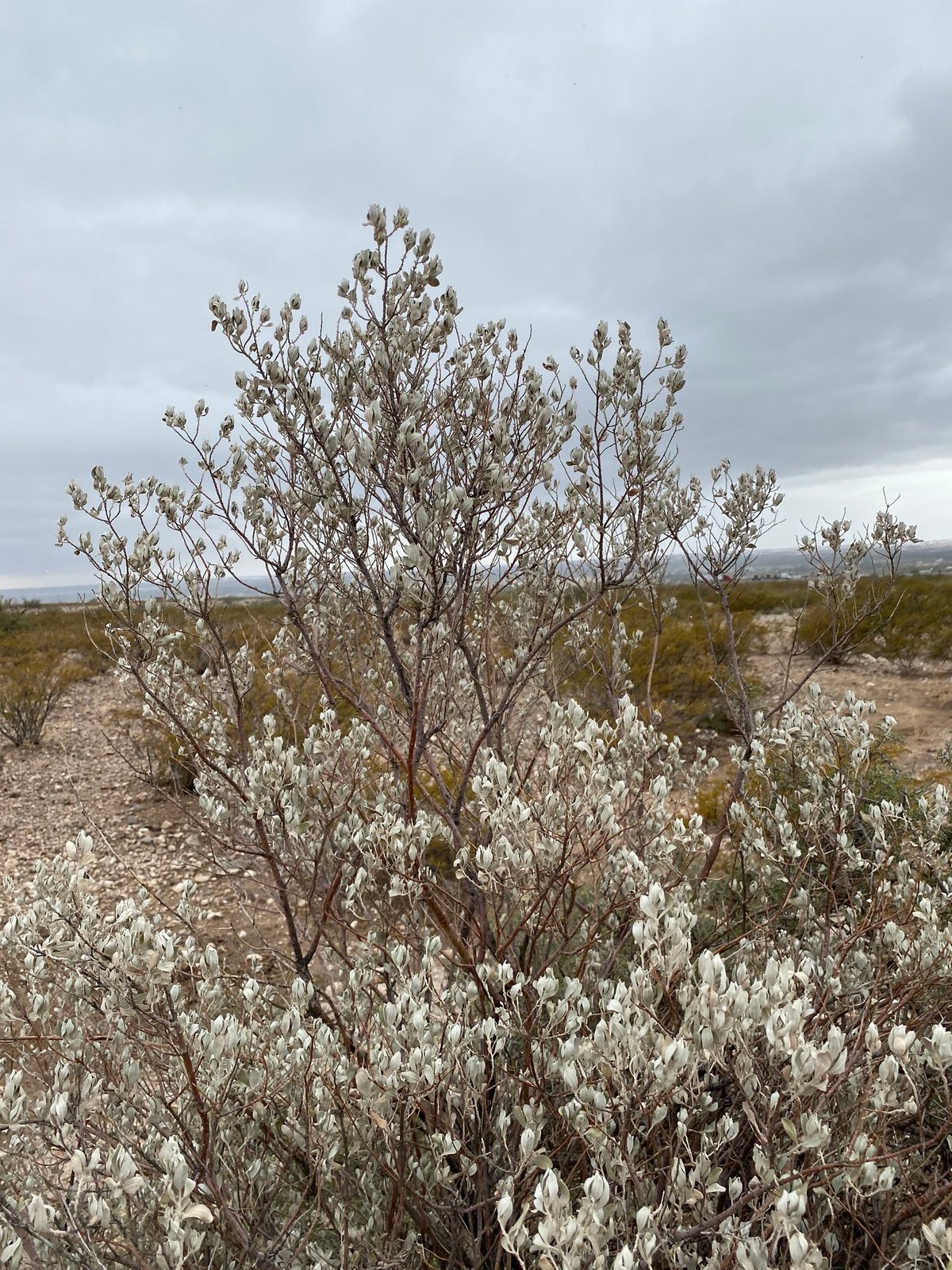
Texas sage is a drought-tolerant shrub native to Texas and northern Mexico, grown for its silvery leaves and flushes of purple-pink flowers after summer rain. It suits hot, sunny gardens with excellent drainage; cold, wet winters are a greater challenge than summer heat. Despite its name, it is not a culinary sage.
At a glance
- Sun
- Full sun; shade reduces flowering and produces loose, leggy growth.
- Water
- Low once established. Water young plants deeply, letting the root zone dry between waterings; established shrubs usually need supplemental water only during prolonged drought.
- Soil
- Well-drained sandy, gravelly or rocky soil, preferably neutral to alkaline. Tolerates poor soil but not persistent wetness.
- Height
- 5-8 ft (1.5-2.4 m)
- Spread
- 5-8 ft (1.5-2.4 m)
- Flowers
- Pink-purple to lavender, bell-shaped flowers in flushes from summer into autumn, often following rain or increased humidity.
- Foliage
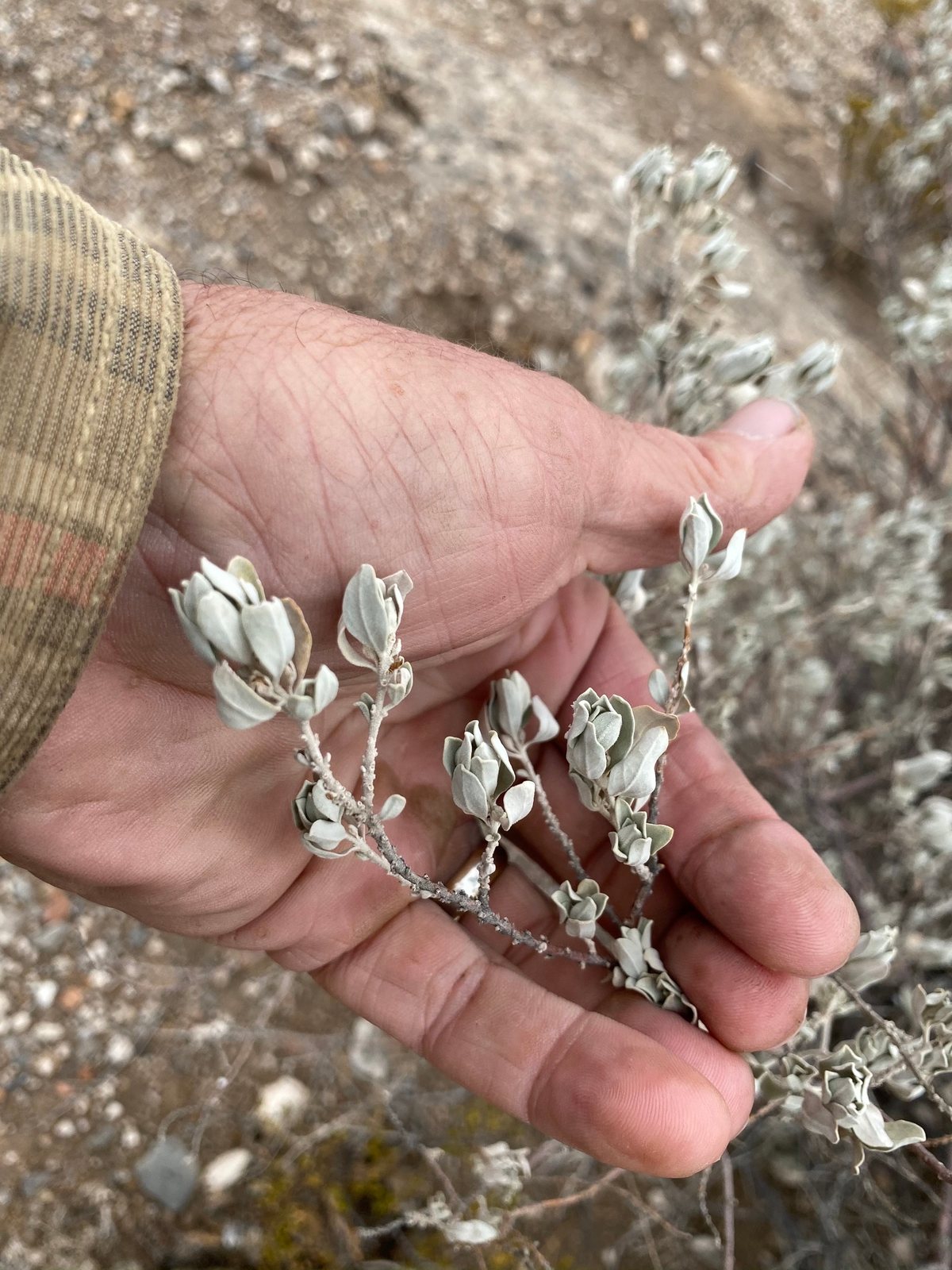
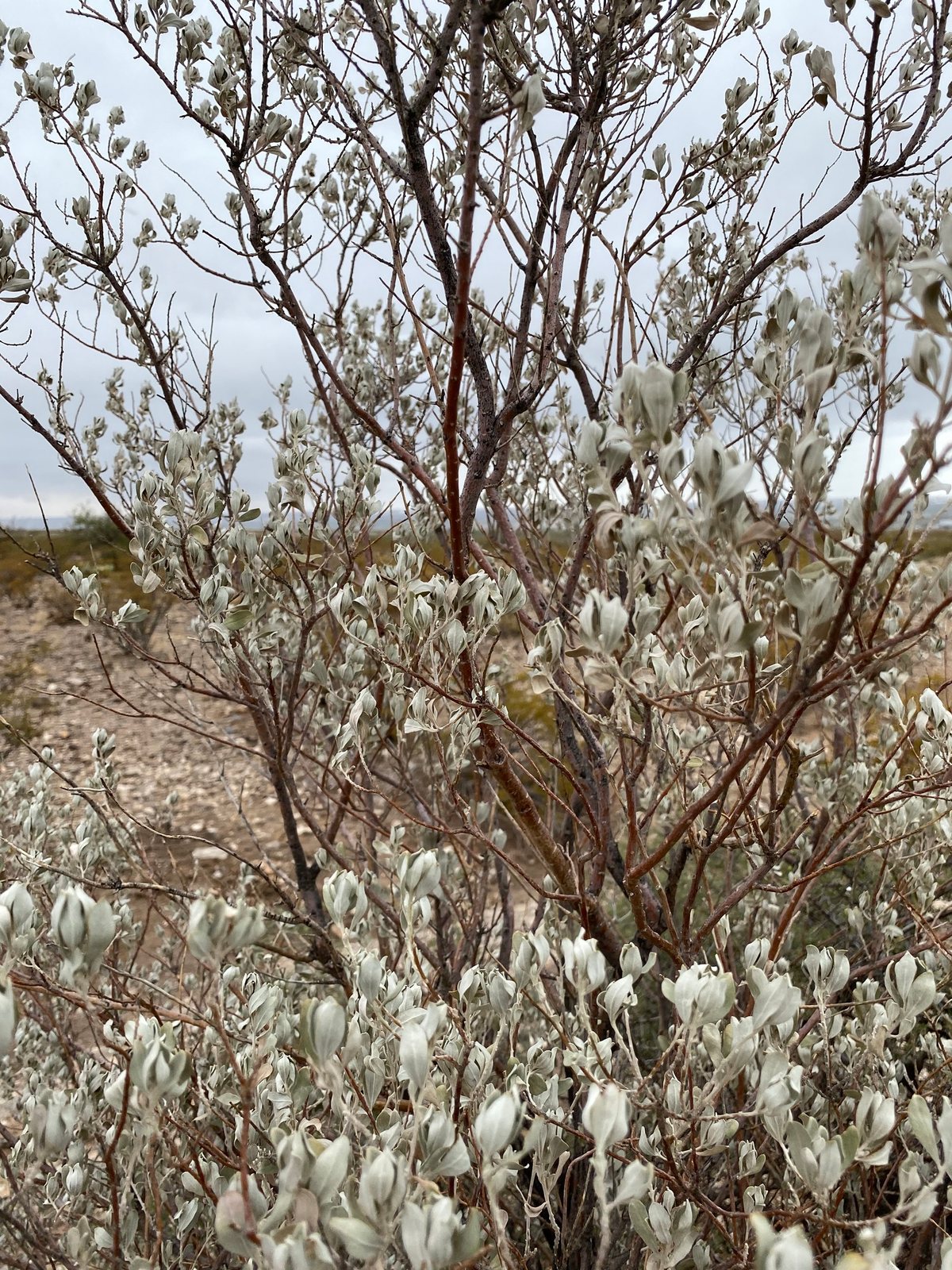
- Evergreen. Small, oval, softly hairy leaves, usually silver-grey to grey-green.
- Growth
- Moderate in warm conditions; slower in cool climates.
- Care needed
- Low
The year at a glance
- Pollinators
- Deer resistant
- Drought tolerant
- Heat tolerant
- Wildlife
- Low allergen
| J | F | M | A | M | J | J | A | S | O | N | D | |
|---|---|---|---|---|---|---|---|---|---|---|---|---|
| Flowers | ||||||||||||
| Plant |
Northern hemisphere months. In Australia, shift them by six.
- Difficulty
- Hard
- Toughness
- Fairly tough
Will it suit your garden?
Pick your zone, country, light and whether you have pets.
Full sun is 6 or more hours of direct sun a day, part shade 3 to 6 hours, shade under 3.
How it grows
Planting day
1.6 ft (0.5 m)
After 1 year
2.4 ft (0.72 m)
After 2 years
3 ft (0.95 m)
After 3 years
4 ft (1.2 m)
After 5 years
5 ft (1.6 m)
About 7 years to full size.
From a typical nursery size, at an average rate for this kind of plant. A rule of thumb, not a forecast.
Good to know
- Cats and dogs
- Safe
- Native to
- the US
- Growth rate
- Slow
Care
Jobs through the year
- WaterApr–May, Sep–Oct, every 21 days
- In zone 6–7 use a movable pot; water only when the root zone has dried.
- WaterJun–Aug, every 14 days
- Water deeply once dry; young plants and hot containers need checking more often.
- WaterJan–Mar, Nov–Dec, every 28 days
- In cool, frost-free shelter, water sparingly only when the root zone is dry.
- PruneApr–May
- Once new growth appears, remove dead wood and lightly shorten wayward shoots.
- MulchMay
- Apply a thin gravel mulch, keeping it clear of stems.
- ProtectJan–Apr, Oct–Dec
- Overwinter pots in bright, frost-free shelter with excellent drainage; outdoor survival is unreliable in zone 6–7.
- ProtectMay
- Move outdoors after frost risk passes and acclimate gradually to full sun.
- Plant after frost risk has passed, allowing room for the shrub's mature width.
- Water deeply during establishment, then reduce watering as roots develop.
- Avoid routine feeding; rich soil and excess nitrogen encourage weak, leafy growth.
- Use a thin gravel mulch, keeping it clear of the stems.
- In containers, use a gritty mix and unobstructed drainage holes; shelter from prolonged winter rain and frost.
Pruning. In spring, after damaging frosts have passed, remove dead wood and lightly shorten wayward shoots. Avoid repeated shearing, which spoils the natural shape and removes flowering growth.
Through the year
- Spring
- Check for frost damage and prune back to healthy growth once new shoots appear.
- Late spring
- Plant in a warm, sunny position after frost risk has passed.
- Summer
- Check young plants for dry roots; water deeply rather than giving frequent light sprinklings.
- Late summer
- Take semi-ripe cuttings from healthy, non-flowering shoots.
- Autumn
- Reduce supplemental watering as temperatures fall and check that drainage remains clear.
- Winter
- Keep container plants sheltered from severe frost and prolonged rain; avoid leaving pots in water-filled saucers.
In the garden
- Use as an informal screen or broad hedge in hot, dry gardens, leaving room for its natural rounded shape.
- Combine with agaves, yuccas and ornamental grasses for contrasting foliage and form.
- Plant in gravel borders beside paving, where its silver leaves soften hard surfaces.
- Use as a flowering backdrop for low-growing drought-tolerant perennials in sunny borders.
Garden styles it suits: Desert / xeriscape, Southwestern, Desert modern, Dry gravel garden, Modern Mediterranean and Low-maintenance.
Plant it with: Red yucca, Blackfoot daisy, Autumn sage, Blue grama, Butterfly agave and Damianita.
Wildlife: Flowers attract bees and other pollinating insects. The dense branches provide cover for small birds.
Problems to watch for
- Root rot in wet soil: improve drainage or move the plant to a raised, freely draining position; stop frequent irrigation.
- Sparse flowering and floppy growth in shade: move to full sun and avoid nitrogen-rich fertilisers.
- Frost damage: wait until spring growth begins, then remove dead shoots; use a sheltered site near the cold limit of its range.
- Cotton root rot in affected alkaline soils of the southwestern United States: sudden wilting may be fatal; remove affected plants and seek local advice before replanting susceptible shrubs.
Safety
Not known to be toxic to people, cats, dogs or horses; no parts are known to be poisonous. It is not a culinary herb, and eating plant material may still cause stomach upset.
Easily confused with
Common sage (Salvia officinalis)
Common sage has strongly aromatic, wrinkled leaves and flowers arranged along upright spikes; Texas sage has softly hairy leaves and flowers borne individually in the leaf axils.
Russian sage (Salvia yangii)
Russian sage has aromatic, often lobed leaves and airy sprays of small blue flowers; Texas sage forms a denser woody shrub with oval leaves and larger bell-shaped flowers.
The name
Leucophyllum means 'white leaf', referring to the pale hairy foliage, while frutescens means 'shrubby'.
Propagation. Take semi-ripe cuttings in summer and root in a freely draining medium. Seed can also be used, but seedlings may differ from the parent; propagate named cultivars by cuttings.
Checked against open data
- Accepted botanical name
- Leucophyllum frutescens
- In the US and Canada
- Native in the lower 48 states.
- Native range
- Mexico Gulf, Mexico Northeast, Mexico Northwest, Mexico Southwest and Texas.
Sources: GBIF (CC BY 4.0), USDA PLANTS and Trefle (CC BY 4.0). The care and design notes are LandscapeGPT's own.
See it in your own yard.
Upload a photo of your yard and see it redesigned with plants that suit your climate, each checked against your zone.